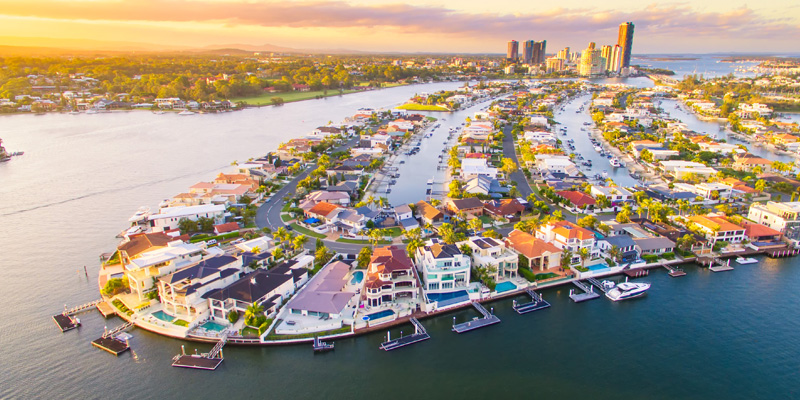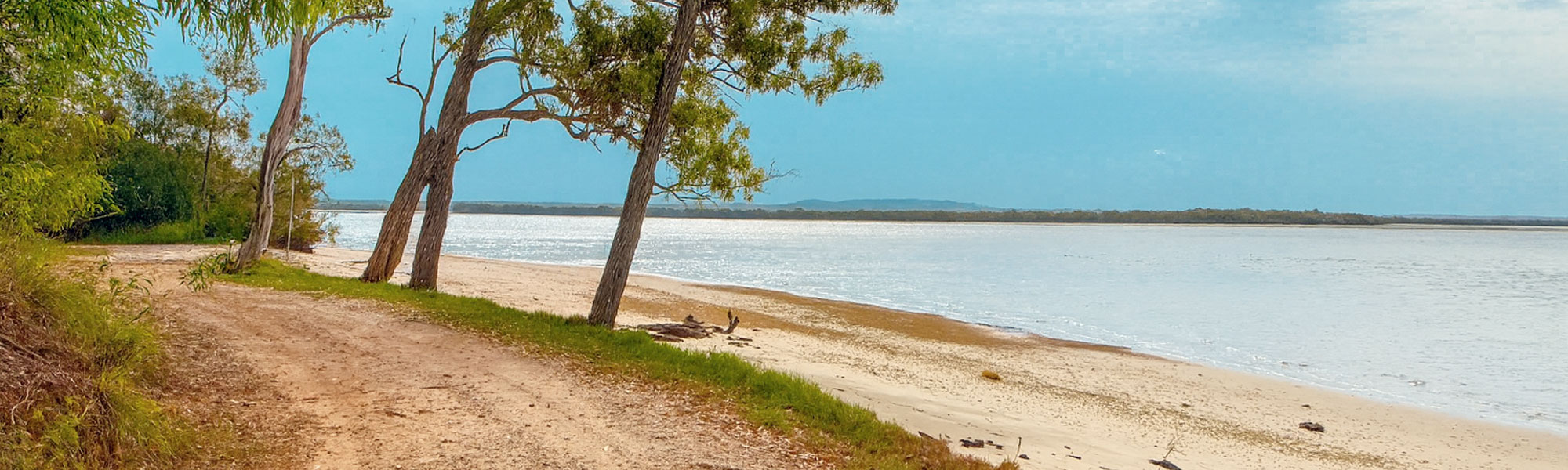
Step off the ferry onto one of the Southern Moreton Bay Islands (known locally as the SMBI islands), and the air immediately feels different. It is not just the salt, or the sound of water lapping at the jetty. It is the pace. The mainland recedes, the road noise vanishes, and life takes on an island rhythm. These are not holiday islands in the postcard sense, nor are they suburban estates simply divided by water. They are something in between - communities that stand apart, each with their own personality, history, and charm. For many, they are also one of the last affordable chances to live by the water in South East Queensland.
Not the Gold Coast - But Close Enough
The Southern Moreton Bay Islands are not within the Gold Coast City boundaries. Administratively, they fall under Redland City Council, which stretches from the mainland suburb of Capalaba across to North Stradbroke Island. That means services, planning rules, and local politics are tied to Redlands rather than Gold Coast City.
In lifestyle terms, however, the islands sit right in the overlap. To the south, the Gold Coast begins only a short drive away once you land back at Redland Bay, and many residents head down the M1 for work, shopping, or weekend outings. To the north, Brisbane is within commuting reach. The islands sit almost perfectly between the two, drawing on both cities while retaining a sense of separation from either.
This dual identity is part of the intrigue. They are not tourist-driven like the Gold Coast, nor metropolitan like Brisbane. They are instead semi-rural communities with their own culture - influenced by both, owned by neither. For newcomers this sometimes comes as a surprise, but for residents it is a point of pride: the islands stand on their own terms.
A Brief History
The islands have long been shaped by the tides. First Nations communities lived throughout the bay for thousands of years. Later, European settlers used the islands for farming and small-scale industries. Market gardens thrived on fertile soil, supplying vegetables and fruit to Brisbane. The ferries that now carry commuters once carried sacks of produce and crates of supplies. Remnants of that history linger in place names and old stories told at community gatherings.
That agricultural past is part of why the islands still feel so green. Streets are often wider than you'd expect for an area that looks semi-rural, lined with gums and coastal scrub. Vacant lots are common. Nature has not been crowded out.
The Ferry Crossing
Every resident has their own relationship with the passenger ferries. For some, they are a commute - a task that turns a workday into something framed by water. For others, they are rare excursions, as many retirees and remote workers can go days or weeks without needing to step on board.
There is something almost old-fashioned about waiting at the jetty, watching the ferry approach, greeting familiar faces. The crossing itself is short - and runs in two directions - clockwise around the SMBI islands and anti-clockwise, but it creates a feeling of boundary. The mainland becomes an outing. Returning to the islands feels like stepping back into calm.
Barges add another layer. They carry cars, building supplies, truck-delivered groceries, and trade vehicles. Anyone who has built a deck, renovated a bathroom, or moved furniture becomes well-versed in their schedules. Builders know to price in the time and cost of barging materials. It is not a deterrent - just a different way of doing things.
Seasons on the Islands
Summer brings families to the foreshore parks, where children can swim in shallow bays (use the dedicated swimming areas as the bay does have sharks) and barbecues sizzle. The days are long, the sunsets spill across the water, and fishing rods lean against jetties as locals try their luck for dinner.
Autumn is gentler, with cooler nights. Winter mornings arrive with mist hanging over the bay, a stillness that feels almost surreal.
Spring brings renewal. Gardens flourish. Each season carries its own personality, reminding residents that while the islands are close to the city, they belong to the natural rhythm of the bay.
Everyday Living
Shops and services are modest but personal. You can buy essentials without leaving the islands. For larger retail shopping, the mainland remains the destination. What seems a disadvantage to outsiders is, for residents, part of the balance. There is less impulse spending, less clutter of malls and chains. Life becomes simpler, anchored by routines rather than choices.
Deliveries are a modern lifeline. Couriers know the barges, and residents know to expect parcels at particular times. Groceries can be ordered online and delivery trucks arrive by barge. Far from being disconnected, islanders are inventive in finding ways to connect convenience with remoteness.
Schools and Family Life
Children grow up differently on the islands. They walk or ride bikes on quieter streets, play in foreshore parks, and build independence catching ferries with friends. Primary schools on Russell and Macleay provide a strong foundation, while older students make the mainland commute. Parents often describe ferry time as an unexpected blessing - a buffer between school and home where kids chat, decompress, and build resilience.
Sports are played on both sides of the water. Weekend matches can mean early ferries and long days, but families take it in stride, often turning them into outings. The shared challenge bonds families together, and children learn adaptability early.
The Islands
Russell Island (Canaipa) feels like the capital of the chain. It has the widest range of shops, the most varied housing stock, and the largest population. Its foreshore offers some of the most striking water views, while its inland streets retain a bushland charm. The mix of retirees, young families, and commuters gives it a lively, sometimes chaotic feel - but also a strong sense of opportunity.
Macleay Island has an easygoing energy. Cafés, galleries, and community events thrive here, and it has a reputation for being creative and welcoming. The causeway to Perulpa Island makes it feel larger, and Perulpa itself is like an island within an island - compact, residential, and beloved for its privacy. Perulpa is the smallest of the inhabited Southern Moreton Bay Islands, tucked off the eastern side of Macleay and connected to it by a short causeway. Blink and you might miss the turn, but those who live there wouldn't have it any other way. It is a pocket-sized retreat with its own identity, yet still close enough to Macleay's shops, cafés, and ferry terminal that residents never feel cut off. Views on Perulpa are a defining feature - from the eastern side you look across to North Stradbroke, and from the western side you can catch sunsets over the mainland. Because the island is small, almost every property has a relationship with the water, whether direct frontage or glimpses through trees.
Lamb Island feels the most like a village. With its gardening heritage and small community, it retains a slower pace. Locals know each other by name, streets feel quieter, and the sense of belonging is strong. It is the kind of place where neighbours still lend tools and look out for one another.
Karragarra Island is the retreat. It is the smallest, with sandy foreshore parks and a tranquil atmosphere. It feels peaceful, almost sleepy, and is often chosen by those seeking space, solitude, or a place to retire in peace.
Nature and Wildlife
The islands are alive with birdlife - birds fill the mornings with sound. Ospreys wheel overhead, pelicans line the jetties, and the cutest Bush Stone-curlews dash around streets and vacant blocks. Dolphins can sometimes be sighted.
Mangroves ring many shores - all protected, and providing nurseries for fish and protection from tides. Bushland reserves dot the islands, offering walking tracks and picnic spots. For those who love nature, the islands are more than just homes - they are living ecosystems.
Homes and Housing
Housing on the islands is eclectic. High-set homes with wide verandas catch breezes and views. Modest cottages sit on quiet blocks surrounded by bush. Waterfronts range from dream homes to simple fishing shacks. Vacant lots remain available, some cleared and ready to build, others fully vegetated.
This variety is part of the charm. There is no cookie-cutter feel. Each property reflects the personality of its owner, from artists' retreats to retirees' havens. The affordability remains one of the strongest drawcards - water views are within reach, and land sizes are often larger than their mainland equivalents.
Things are different here. There's no city wastewater connection, unlike the mainland, so all houses need septic systems installed, along with the engineering and approval process that this requires. It is an extra layer of planning, but it is also part of what keeps the islands semi-rural in feel - houses are more self-reliant, and the landscape less carved up by pipes and infrastructure.
Community Spirit
Markets on weekends are more than shopping trips - they are social hubs. People linger for chats and catch up on local news. There are music nights, plays, and gatherings. Clubs and volunteer groups thrive, from sailing clubs to garden collectives.
Because everyone relies on ferries and barges, there is an unspoken sense of shared challenge. Islanders look out for each other. They share rides, lend tools, and step in during storms. The sense of resilience is real, built from living in a place that demands cooperation.
Challenges and Realities
There is no denying the challenges. Ferry delays can frustrate commuters. Storms and king tides require preparation and sometimes cut services. Building costs are higher due to transport. Some residents find the slower pace stifling.
Yet these challenges are also what preserve the islands' character. The ferry that feels like an obstacle to some becomes a protective moat to others, keeping the islands from being overrun or overdeveloped.
The Future
Population growth in South East Queensland ensures the islands will continue to attract attention. With affordability pressures rising on the mainland, more people will look across the water. This will bring opportunities for better services, stronger transport, and more infrastructure - but also risks of losing the slow, simple lifestyle that defines the SMBI.
Many residents are protective of this balance. They welcome growth, but not at the expense of the very qualities that make the islands special. The future will be a negotiation between accessibility and preservation.
The Southern Moreton Bay Islands are not suburbs in disguise. They are communities with their own soul. They ask for planning, patience, and a willingness to live differently. In return, they give sunsets that spill across the water, neighbours who become friends, and homes that remain attainable. For some people, the ferry is a hurdle. For others, it is the threshold to a better life.
You might also like



Disclaimer: Every effort has been made to ensure the accuracy of the information provided, but we make no guarantees regarding its completeness or reliability. The data is presented for general informational purposes only and does not constitute financial, investment, or legal advice. We are not liable for any errors, omissions, or consequences arising from its use. Users should verify details with relevant sources and seek professional advice where appropriate for the most accurate and up-to-date guidance.