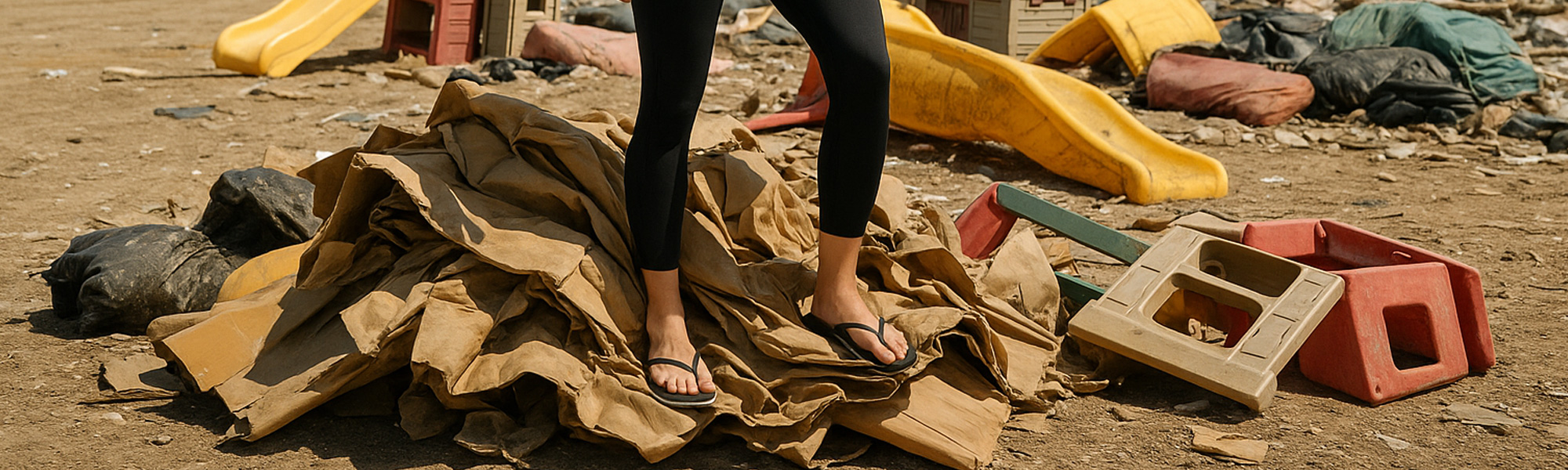
When a family moves house, there's one part of the yard that can stop everyone in their tracks - the play area. The cubby that's seen years of games, the swing set that creaked in the afternoon breeze, the cardboard creation that was built one weekend and became a favourite toy. These are more than structures; they're pieces of a family's story. Yet when it's time to move, they usually can't come along.
Removing them isn't just a practical task - it's an emotional one. The key is to handle both parts together: take things down carefully, and guide children through the moment so they see it for what it is - part of growing up, not a loss.
The Reality of Removal

Most play structures aren't designed to be moved. Years of weather, bolts sunk in concrete, rusted fittings and swollen timber make relocation almost impossible. In most cases, dismantling them means destroying them. That can feel harsh, but it's honest - and it's the safest, most responsible approach.
Old cubbies, slides, and climbing frames should be fully taken apart and disposed of through a skip bin or direct trip to the tip. On the Gold Coast, mixed waste bays at council transfer stations accept timber, plastic, and metal components. Any large cardboard creations, pool toys, and plastic tunnels that are cracked or sun-brittled belong in general waste. Recycling is possible for clean metal sections and flattened cardboard, but not for composite or painted timber.
The guiding rule is simple: if it's been outside long enough to weather, fade, or rust, it's no longer safe for re-use. Taking it apart completely avoids the temptation to reassemble something that's outlived its structural integrity.
Dismantling Built-In Equipment
For fixed swing sets, monkey bars, and climbing frames, start by inspecting how they're secured. Metal frames often have their legs concreted into the ground, while timber versions may be bolted to posts. Work systematically from the top down. Remove swings, chains, and attachments first, then unbolt or cut away crossbars.
Once the structure is loose, focus on the footings. Dig around the concrete pads until they're visible, then break them apart with a mallet or sledgehammer. Be prepared for effort - these sets are meant to stay put. Most homeowners find it easier to cut the legs off just above ground level, then lever out the remaining stumps and fill the holes with soil.
Timber that's been painted or treated must not be reused as firewood or compost edging. Treated pine in particular releases harmful fumes when burned and can leach chemicals into garden beds. Load these sections directly into a skip or transport them to the tip's timber bay. Metal parts, if clean and separate, can go to scrap recycling.
Taking Down Cubbies

Cubbies are where sentiment and practicality collide. They're often too large to move intact and too worn to rebuild. Before dismantling, take a few minutes with your children to visit it together one last time. Let them look inside, collect any forgotten treasures, and close the little door themselves. It helps create a sense of closure.
Then treat the job as demolition, not relocation. Start with the roof, then walls, then floor. Unscrew what you can, but don't hesitate to break panels apart when they're swollen or nailed tight. Stack the timber flat and clear away nails as you go. Plastic slides, pipes, and corrugated roofing can be cut into manageable lengths with a hand saw or reciprocating saw.
If you have young helpers, give them small tasks away from the main demolition - collecting screws, sweeping the deck, or holding the rubbish bags open. The message should be clear: this isn't a sad event, just part of preparing for the next stage. When everything's cleared and the ground is bare, you can even have them scatter grass seed to mark a fresh start.
Why Some Toys and Play Equipment Must Be Destroyed Before Disposal
Not everything can be removed gently, donated, or passed on once it reaches the end of its life. Some toys and play equipment need to be deliberately destroyed before disposal, not because they lack value, but because leaving them intact creates risk.
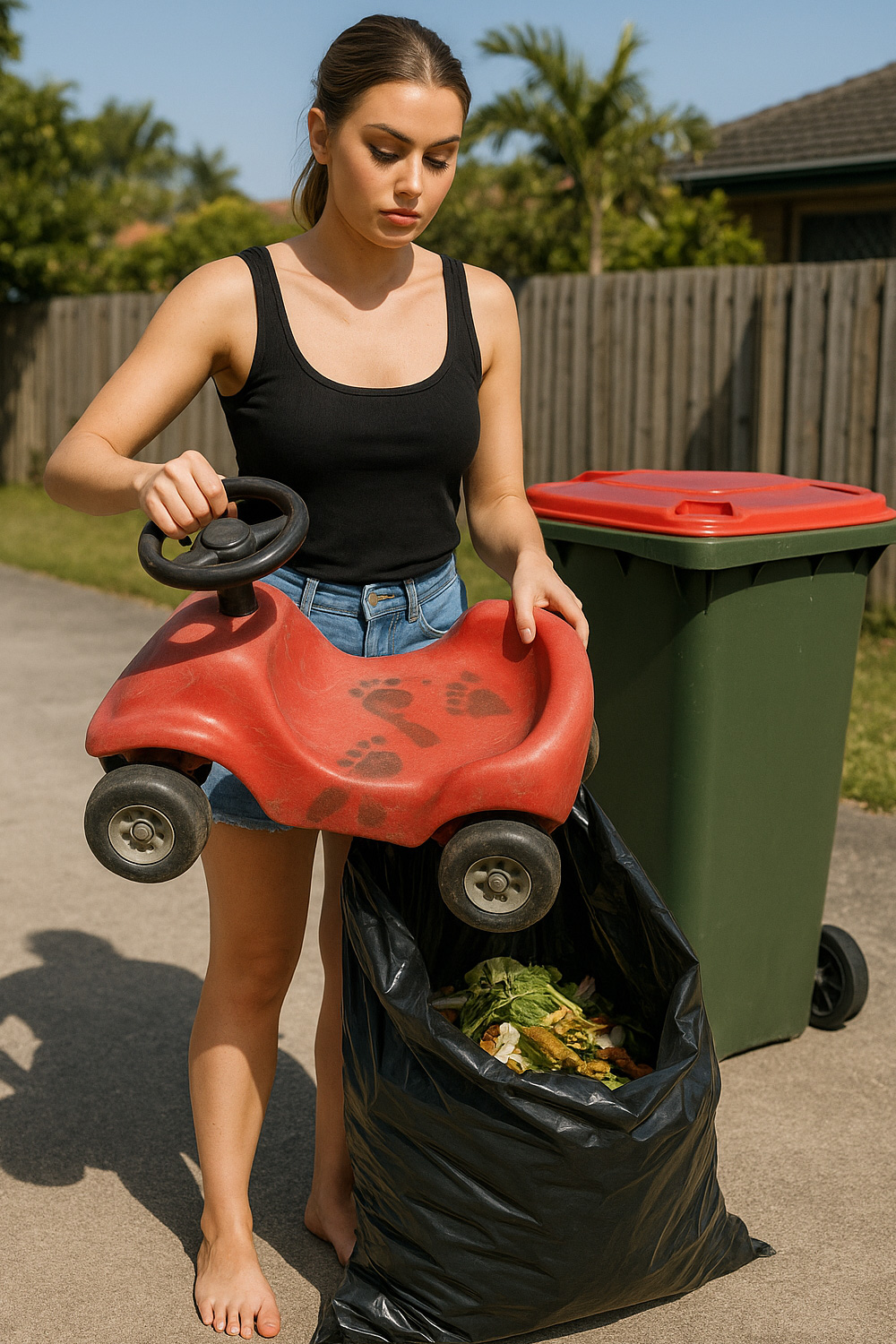
Outdoor use changes materials in ways that are easy to underestimate. Plastics become brittle, seams weaken, fixings loosen, and surfaces absorb moisture, dirt, and residue that cannot be properly cleaned out. Cardboard builds soften internally even when they still look solid. Inflatables trap water and bacteria inside seams. Timber and composite materials degrade unevenly, creating hidden weak points. Once this happens, the item is no longer predictable or safe, even if it still resembles a toy.
Safety standards also move on. Products that were acceptable years ago may no longer meet current expectations around stability, hygiene, or injury prevention. Passing those items on simply transfers the risk to another family. That is why many toys carry disposal warnings instructing parents to cut, crush, or disable them before discarding. Destruction is not excessive in these cases - it is the mechanism that prevents reuse.
There is also an emotional and practical reason to finish the job properly. Half-dismantled or partially removed play items linger in a child's mind as something that might come back. Fully breaking or collapsing an item draws a clear line between play and disposal. Once it no longer looks or behaves like a toy, children tend to accept its absence more easily than if it remains in an uncertain, in-between state.
Destroying unsafe or worn play equipment is not an act of carelessness. It is a responsible step that protects children, avoids passing problems on to others, and allows families to close one chapter cleanly before starting the next.
Crushing Cardboard Creations and Temporary Play Builds
Cardboard play builds sit in a category of their own. They're not fixed structures like cubbies, and they're not manufactured items like inflatables; they're home-made creations that have grown and changed with the children who built them. Forts, castles, tunnels, and multi-room box villages often become the most intensely loved objects in a backyard, not because they're expensive, but because they carry the imprint of the children's hands and imagination in a way manufactured toys never quite do.
When moving house or preparing a yard, these creations can be surprisingly challenging to remove. Even though they're made of cardboard, they behave much more like temporary furniture than recycling. Layers of taped joins, reinforced walls, and boxes nested inside one another give them strength far beyond a single carton. By the time they've been played in for weeks or months, they've absorbed moisture, dust, and the odd spill from outdoor play, making them too worn and too large for the recycling bin. They need to be fully collapsed and flattened so they can be taken to the tip as general waste.
Start by choosing a clear space. Cardboard creations don't fall in a predictable way; their walls shift and slump as pressure moves across them, and the whole structure often twists before it folds. A driveway, patio, or patch of firm lawn gives enough room to work steadily and safely. Take a moment to inspect how the build is held together. Tape seams, internal support boxes, and doubled-up panels give clues about where it will collapse first.

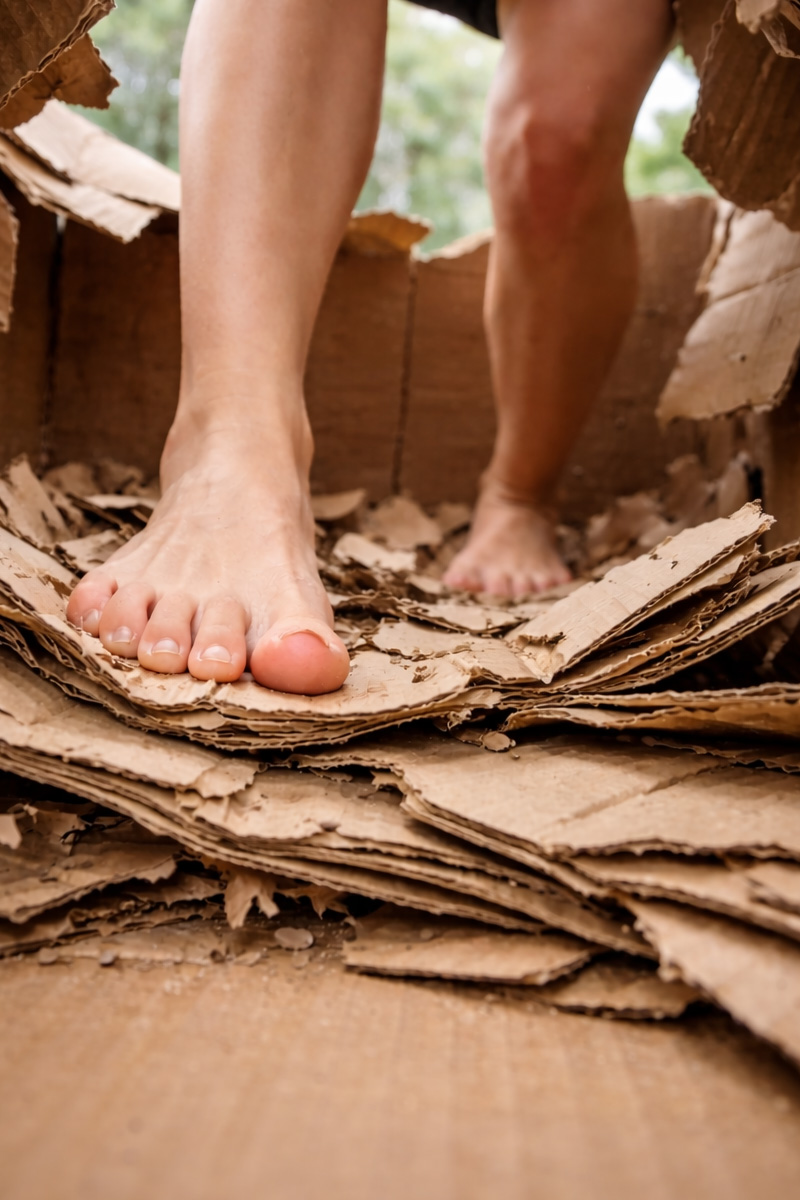
The destruction of the cardboard creation itself is usually done with the feet, using a mix of pressing, folding, and breaking down the walls by stepping directly on the joins. It's much like crushing ordinary cardboard boxes, only on a far tougher and more sprawling scale. The best approach is to work from the outside in, weakening the outer panels first so the structure stays steady while the key seams begin to give way. Once the first major wall collapses, the rest of the build follows with surprising speed. By the end, the once towering creation lies in a broad, softened heap of flattened panels that can be lifted easily and loaded into a trailer or car for a trip to the tip's general waste area. And because these builds are almost always covered in tape, paint, glue, stickers, soft drink spills, and all sorts of mysterious residues from weeks of play, they can't be recycled even if parts of them look clean.
This moment can carry more emotion than expected. Children often see these builds as part of their world, and watching them come down can feel confronting. A calm explanation beforehand helps - that the creation can't be moved safely, can't last forever, and needs to be finished properly so the family can prepare for the next home. Once the cardboard lies flat and the play shape is gone, most children accept it quickly; seeing it treated as rubbish makes the ending clear rather than uncertain.
Because cardboard creations vary enormously, and because families often need extra guidance on handling the emotional side, the practical side, and the Gold Coast disposal rules, you may want a more detailed walkthrough. For a complete, step-by-step guide to softening, collapsing, and disposing of large cardboard play builds without distress, see our full feature: Disposing of Cardboard Forts and Large Play Builds: The Parent's Ultimate Guide to a No-Distress Breakdown.
Destroying Inflatable Play Equipment

Large inflatables - backyard pools, jumping castles, and water slides - don't age gracefully. The Gold Coast sun, sand, and constant moisture quickly break down their seams, making them unhygienic and unsafe to keep. Once they've reached that stage, they can't be recycled, resold, or safely stored. The only proper way to deal with them is to destroy them on-site and place the remains into the general waste bin.
Start by cutting a hole somewhere near the middle of the surface - big enough to fit a foot through. There's no need to deflate it first; the air will rush out as you work. Step into the hole, press your foot down, and while holding the material down, use your hands to tear the plastic apart. The material will usually split into large panels with each step or pull. Continue tearing until the inflatable comes apart into manageable sections.
As each panel separates, fold or roll it loosely and place it straight into the red-lid general waste bin. If it's too large, load the pieces into a skip or trailer for disposal at a council transfer station. The goal isn't neatness - it's containment. Old inflatables can harbour mildew, bacteria, and residue from pool water or sunscreen, so handling and destroying them quickly keeps things hygienic.
If children are watching, explain simply that old inflatables have to be destroyed because they can't be cleaned properly and can make people sick. Let them help by folding or carrying smaller pieces if they want to be involved, but keep the pace calm and deliberate. Once it's gone, the space looks cleaner, the air smells fresher, and the backyard instantly feels ready for its next chapter.
Keeping Children Calm and Involved
Play equipment carries emotional weight. Children may cry, hesitate, or get angry when they see something familiar being destroyed. That's natural. The best way to manage it is to involve them just enough to understand what's happening.
Explain why each piece has to go. Keep the tone practical, not apologetic. If they're old enough, let them help with some of the easy tasks - unscrewing, sweeping, or placing small parts in the bin. When they can see their own role in the change, it becomes less of a loss and more of a shared family project.
Sometimes children might ask to keep a piece of what's being taken away - a section of their cubby, a piece from their cardboard creation, or part of an old inflatable - but it's important to explain that once something has been broken, crushed, or stepped on, it's rubbish and can't be kept. Old materials are unsafe, unhygienic, or full of sharp edges, and the rule stays the same no matter what it was made from. Knowing there's a clear boundary helps children accept that the process is final and necessary.
For younger children, a small goodbye ritual can make the moment gentler. Take a quick photo together, or let them have one last step inside before the crushing begins. A simple moment of "Thanks for the fun" helps them recognise that the cubby or castle had its time. Reassure them that there will always be other chances for play - a tent in the lounge room, a blanket fort on a rainy afternoon, or whatever their imagination sparks next. They learn that saying goodbye to something loved doesn't erase the good memories attached to it.
The Backyard After
When the last screws and panels are gone, the yard will feel strangely open. That patch of bare ground - once filled with laughter, creaks, and muddy footprints - will look empty for a moment. But soon it becomes something else: a blank space ready for the next family's story.
Taking down play equipment isn't just about clearing space for sale or moving day. It's about doing the responsible thing safely, without sentiment turning into risk. When it's handled calmly, with children included and everything properly disposed of, it becomes a small but meaningful lesson in closure - how to finish one chapter neatly before the next begins.
Step-by-Step Cardboard Cubby Disposal
Cardboard cubby houses and play forts can look deceptively light, but once taped, layered, and reinforced, they often need a deliberate approach to break down cleanly for recycling. This method prioritises control, comfort, and minimising mess, while also giving children time to understand what is happening and keeping them safely out of the way.
Handled much like ordinary cardboard boxes, the structure is broken down by crushing it with your feet. The process is quick, convenient, and effective, allowing the cardboard to fold, crease, and collapse naturally under your body weight rather than being torn apart by hand.
This should always be done barefoot. Beyond comfort, bare soles provide significantly better grip and control on cardboard surfaces, letting you feel how panels flex and give as weight is applied, and making it easier to bring the structure down safely and decisively.



You might also like





Disclaimer: Every effort has been made to ensure the accuracy of the information provided, but we make no guarantees regarding its completeness or reliability. The data is presented for general informational purposes only and does not constitute financial, investment, or legal advice. We are not liable for any errors, omissions, or consequences arising from its use. Users should verify details with relevant sources and seek professional advice where appropriate for the most accurate and up-to-date guidance.