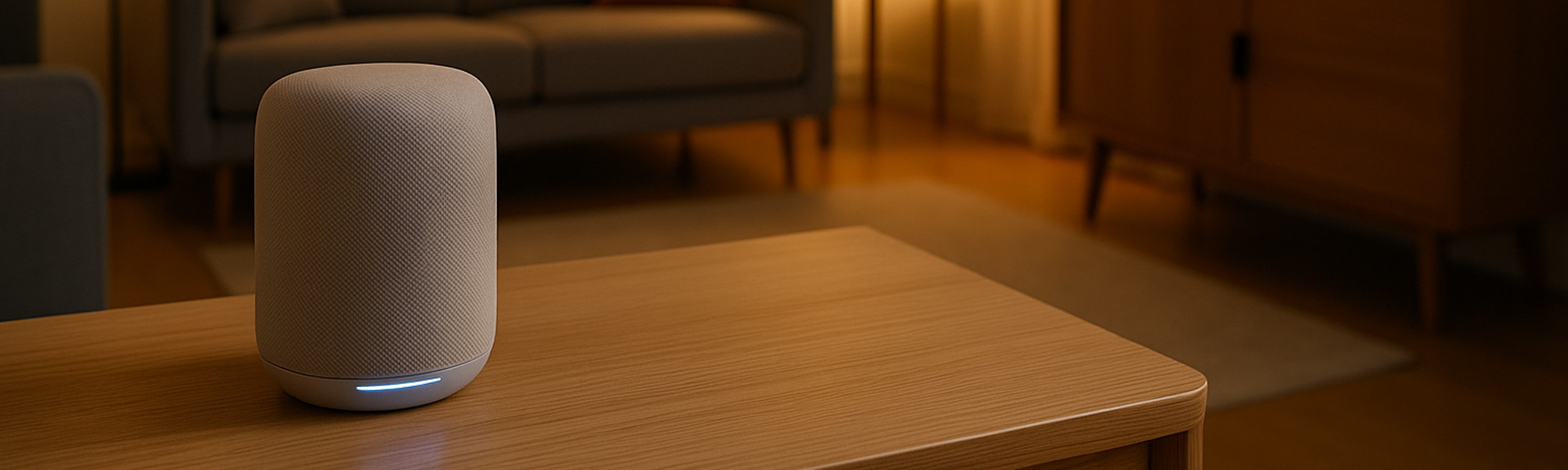
Home automation used to belong to the world of glossy brochures and professional installers, the kind who arrived with tool belts, tablet checklists and a quiet confidence that everything would be routed through a proprietary hub - creating an integrated high-end home automation setup. But the last decade has flipped this landscape entirely. Today, the smartest homes are often created not by technicians in uniforms, but by the homeowners themselves. A phone, a Wi-Fi network and a handful of well-chosen devices are all it takes to build a seamlessly automated lifestyle.
What makes the self-setup world so compelling isn't just the lower price or the freedom to change things later. It's the creativity it unlocks. Everyday households are now orchestrating lighting scenes, custom automations, whole-house audio, energy analytics, smart locks, climate control and garden watering schedules without ever calling a professional. The experience feels like discovering a hidden control panel for your home, revealing how intuitive and personal everyday routines can become.
This guide explores that world from the ground up - from the simplest first steps to the more advanced, deeply integrated systems that tech-centric homes now rely on. It also walks you through the major ecosystems you'll encounter along the way, helping you choose the path that best fits your home, your personality and your willingness to experiment.
The Foundation: A Smart Home Begins With Connection
Every DIY smart home starts with one quiet truth: none of it works without a stable network. Wi-Fi is still the backbone for most consumer systems, and the reliability of your experience rises or falls with its quality. A good mesh system is worth its weight in gold, spreading coverage across every interior corner, outdoor area and garage so your devices never fall into dead zones.
Most homeowners don't realise that motion sensors, smart locks, light switches and security cameras often have very different requirements. Some prefer low-power protocols like Zigbee or Thread. Some use Wi-Fi exclusively. Some need Bluetooth for initial pairing. The key takeaway here is that the "smartness" of your home is not just about the gadgets you buy, but the invisible network that carries them.
This is where the first major ecosystem names appear on the horizon: Apple Home, Google Home, Amazon Alexa, Samsung SmartThings, and increasingly Matter, the new interoperability standard aiming to let devices speak a common language. These ecosystems aren't just apps on your phone - they're the orchestration layers that determine how your devices behave, communicate and evolve.
The Simple On-Ramps: Smart Bulbs, Plugs and Switches
The beauty of home automation is that you don't need to start big. A single smart bulb in a bedside lamp is often enough to spark the curiosity that grows into a whole-home transformation. Pair it to Google Home, Alexa or Apple Home, and suddenly you can dim lights, run routines or have them fade out gradually after you've walked to bed.
Smart plugs tell a similar story. Plug in a lamp, a fan, a dehumidifier or a holiday decoration, and it becomes part of the rhythm of your home. Many people discover that automating one stubborn everyday task - such as turning off entry lights when they leave or keeping a fan running for exactly the right amount of time - becomes the gateway to deeper experimentation.
These early steps teach you two things. First, that automation works best when it solves tiny problems you didn't realise were problems. Second, that every device speaks the language of its ecosystem differently, and choosing your platform early can save a lot of trial and error later.Sensors: The Hidden Beating Heart of the Smart Home
If smart lights are the entry point, sensors are where the home starts thinking for itself. Motion sensors that trigger lights only when you walk into a hallway. Contact sensors that notify you if a cupboard or sliding door is left open. Temperature sensors that guide air-conditioning schedules. Humidity sensors that activate a bathroom fan precisely when it matters.
Sensors feel almost invisible, but they quietly form the logic of the entire system. They also mark the point where the choice of ecosystem becomes more meaningful. Apple users often lean into HomeKit-compatible Thread and Bluetooth sensors. Alexa users often rely on Wi-Fi or Zigbee sensors. SmartThings users mix all of the above. Matter is slowly bridging these worlds, but it's still early enough that picking one core ecosystem is the most reliable strategy.
The practical takeaway is that sensors bring automation from a set of manual triggers to a subtle, fully ambient system. They're the difference between telling your home what to do and having it anticipate you.
Ecosystems Explained: Choosing Your Digital "Language"
Apple Home
Best for users who value privacy, simplicity and tight integration across iPhone, iPad, Mac and Apple Watch. Apple Home excels at clean interfaces, reliable automations and dramatic ease of use, especially with Matter and Thread devices. The tradeoff is that Apple-only homes can find themselves limited in device variety compared with other ecosystems.
Google Home
Ideal for households that rely heavily on Google Assistant, Nest devices or a mixed Android environment. Google Home has polished routines, excellent camera and display integrations, and a layout that suits families accustomed to shared account usage.
Amazon Alexa
Still the most diverse ecosystem in terms of sheer device compatibility. Alexa supports everything from high-end smart switches to simple no-name plugs. The voice controls remain strong, and the flexibility appeals to tinkerers who like to mix brands.
Samsung SmartThings
The most "power-user" friendly out of the major ecosystems for DIY owners who want deeper customisation. SmartThings integrates Zigbee, Z-Wave, Thread, Wi-Fi and cloud services more comfortably than most ecosystems. Enthusiasts love it, but it requires a touch more understanding to unlock its full potential.
Matter
The rising universal standard that promises cross-ecosystem harmony. Matter aims to eliminate the device-compatibility guessing game by letting products work with Apple, Google, Alexa and SmartThings all at once. It's still maturing, but is fast becoming the safest choice if you want future-proofing.
Tuya (Smart Life)
One of the most expansive DIY ecosystems, Tuya powers thousands of rebadged smart devices sold worldwide under different brands, all united through the Smart Life app. Its strength is depth: highly detailed automation rules, flexible triggers, broad device types and advanced routines that let tech-minded users build complex behaviours without needing a hub. It integrates cleanly with Google, Alexa and Apple (via Matter-enabled devices) and remains one of the most versatile choices for custom, low-cost DIY automation.
You don't have to choose perfectly, but you should avoid spreading across all ecosystems at once. Pick one as your anchor, then branch outward gradually.
Lighting Scenes: The Gateway to a Truly Automated Home
Lighting is still the soul of smart home design. The delight of walking into a softly lit kitchen at dawn, or watching living room lights fade into a warm evening setting automatically, has a powerful effect on how a space feels.
Simple automations can tell lights to turn on at sunset, or adapt colour temperature to match your circadian rhythm. More advanced households link motion sensors to hallways, wardrobes, pantries and bathrooms so that lights quietly follow your movement instead of relying on switches.
This is one of the first areas where smart bulbs and smart switches diverge. Bulbs offer colour, dimming and quick setup. Switches retain full manual control even if the smart system goes offline. In many homes, the most elegant solution is a mix of both.
Security and Access: Cameras, Doorbells and Smart Locks
Modern DIY home security has reached a level where most households no longer need a professional installer unless they have specialised requirements. Battery doorbells, wireless cameras and smart locks integrate seamlessly into all major ecosystems.
The most interesting evolution in recent years is how these devices now speak to one another. A doorbell press can turn on the entry lights, pause a robot vacuum, send a snapshot to the household's phones, and unlock the gate or garage if approved. A smart lock can automatically arm or disarm your security mode based on who arrives home and which phone is detected.
Security no longer needs to be an isolated system. In a well-tuned ecosystem, it becomes part of the choreography of daily life.
Climate Control, Energy and the Higher-Tech Layer
The next phase of DIY home automation is found in climate control, energy usage and whole-home intelligence. Smart air-conditioning controllers let your system pre-cool the home before you return, or reduce energy consumption when no one is present. Smart meters and energy monitors show granular real-time usage. Weather automations raise or lower blinds, adjust fans, or prepare the house for a heatwave long before you feel it.
This is where the more advanced ecosystems truly shine. Google excels at predictive routines. SmartThings thrives on conditional logic. Alexa handles complex multi-step routines easily. Apple Home combines privacy with beautiful, intuitive control.
Once you control climate and energy, the home becomes not only more convenient but significantly more efficient.
Integrating Entertainment and Daily Rhythm
Entertainment is often overlooked in home automation conversations, yet it's one of the richest areas of self-setup innovation. Smart speakers that follow you from room to room. TVs that change brightness based on ambient light. Music that greets the household differently in the morning, evening or on weekends.
In many homes, routines become a kind of soundtrack to everyday life. Lights dim with the Netflix scene. Kitchen speakers automatically lower their volume when a doorbell rings. You can choreograph your home exactly the way you want it to behave.
The Future: AI-Assisted Homes and True Interconnection
The next wave of DIY automation is already forming: AI-driven reasoning that lets your home interpret behaviour instead of waiting for instructions. Lights that learn your patterns. Sensors that adapt based on season, time and mood. Automations that evolve based on your routines instead of fixed rules.
Matter is expanding, Thread is becoming the preferred networking layer, and AI assistants are learning to build automations from natural language requests instead of rigid logic blocks.
The home is shifting from a programmed system to an adaptive companion.
Your Home, Your Rules, Your Imagination
Self-setup smart homes are no longer a niche project for hobbyists. They are mainstream, affordable and surprisingly approachable, even for people who start with just one light bulb or plug. What makes them so compelling is that they grow naturally. Every device adds a new sense of possibility. Every automation solves one tiny friction. Every sensor unlocks a small moment of convenience that becomes part of your day.
And the best part? There is no fixed "correct" way to automate your home. Whether you lean into Apple's clean ecosystem, Alexa's device variety, Google's intelligence, SmartThings' depth or Matter's interoperability, the right system is the one that feels intuitive and empowers your home to behave the way you want it to.
The modern home is no longer static. It listens, thinks, adapts and responds. And it's never been easier to build that world with your own hands.
You might also like




Disclaimer: Every effort has been made to ensure the accuracy of the information provided, but we make no guarantees regarding its completeness or reliability. The data is presented for general informational purposes only and does not constitute financial, investment, or legal advice. We are not liable for any errors, omissions, or consequences arising from its use. Users should verify details with relevant sources and seek professional advice where appropriate for the most accurate and up-to-date guidance.