
On the Gold Coast, recycling isn't just a duty - it's a rhythm that matches the easy, sunlit lifestyle of the city. With warm weather, tropical gardens, and an indoor-outdoor lifestyle, even the small everyday habits can become surprisingly satisfying. Recycling works best when it's a whole-family routine, woven into daily life in ways that feel good and not forced.
Crush Cardboard Boxes and Cartons With Your Feet Straight Away

Cardboard boxes and cartons are some of the most space-hungry recyclables, so emphasise the importance of dealing with them properly. Delivery boxes, shoe boxes, cereal packets, and juice cartons can overwhelm a bin if tossed in whole. The trick is to deal with them immediately.
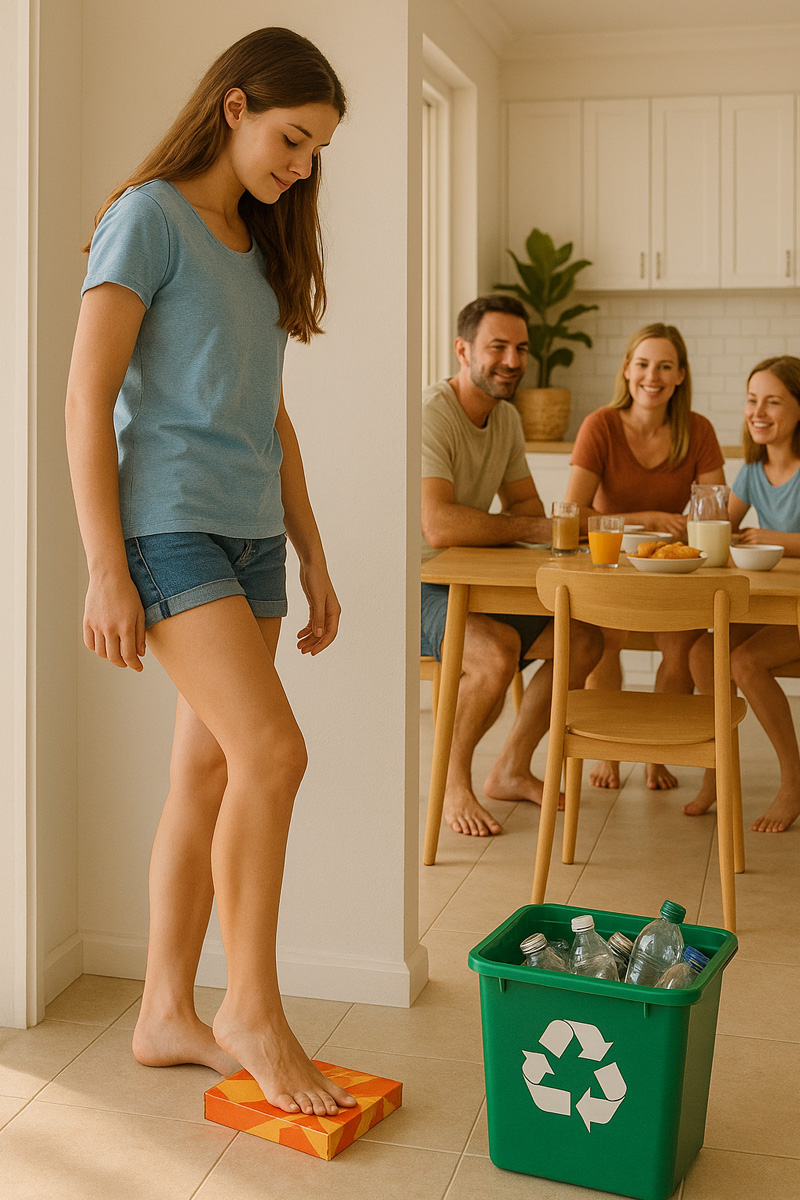
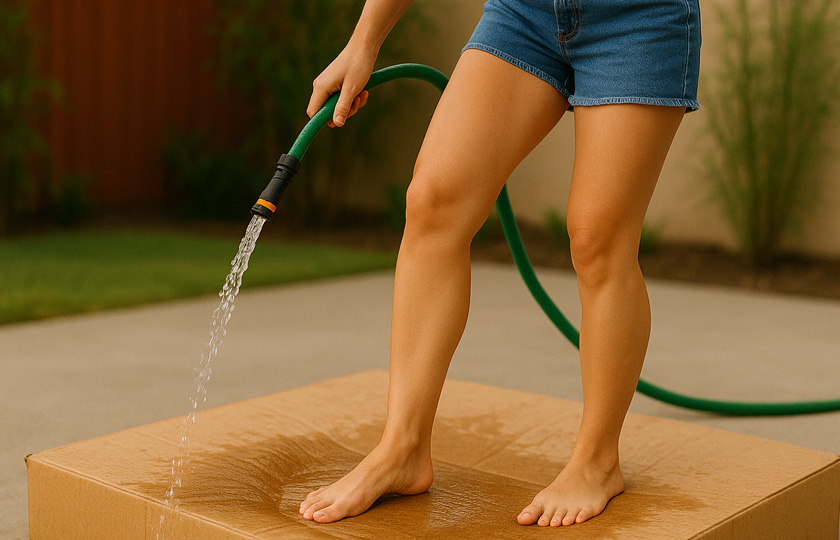
Crushing boxes as soon as they're empty makes all the difference - and it doesn't have to feel like a chore. Tread down a box barefoot and you'll know: it feels incredible. Make it an enjoyable part of your family culture. And a tip for those in the know - egg cartons placed upside down are often a family favourite - their twelve peaks feel surprisingly good as they crumple under the soles of the treader! Whatever the type of box, it's a small, tactile pleasure that turns a mundane task into something the whole family can enjoy - sometimes even making everyone look forward to the next box just for the fun of it.
Remember not to bag recycling. Have a small recycling bin in the kitchen, or set up a "crush pile" in a tucked-away corner of the house where the family can drop their boxes on the floor, tread them down with their feet, and walk away. Routinely carry them outside and discard loose into your kerbside bin. It keeps recycling simple, visible, and part of the everyday flow.
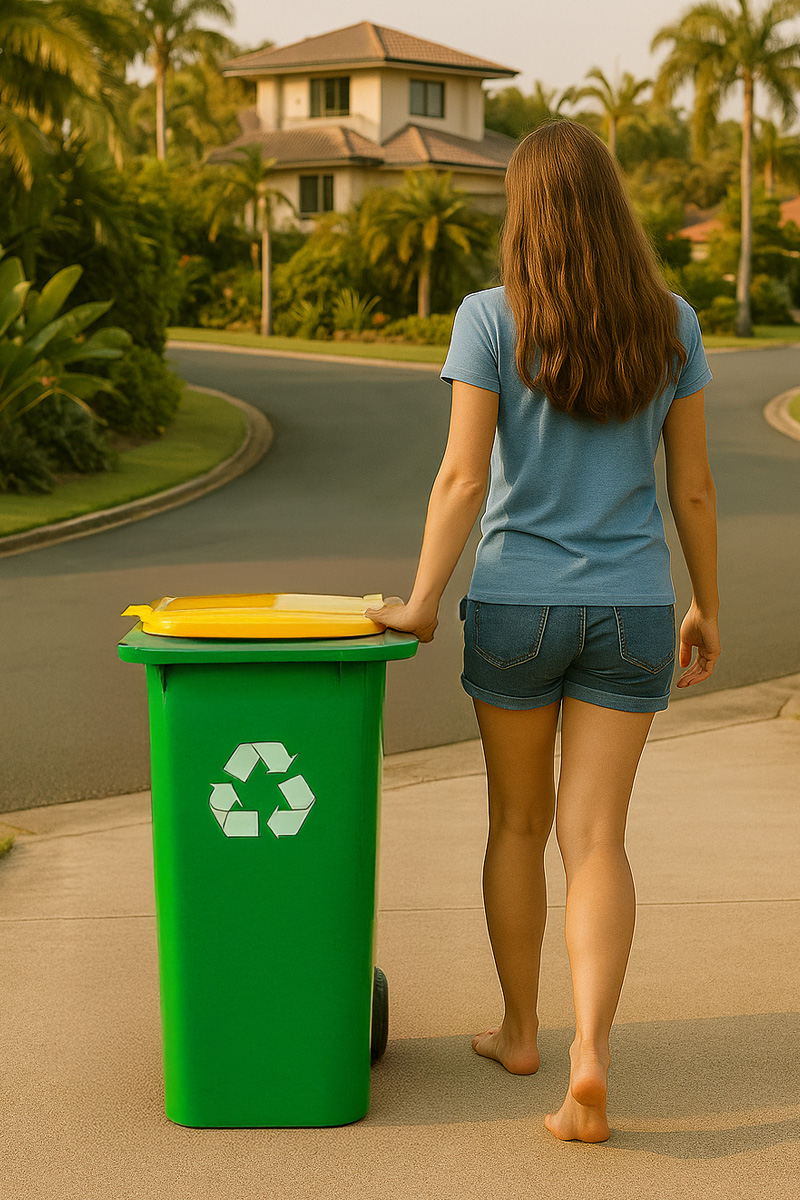
Know Your Bin Colours
The Gold Coast runs on a clear three-bin system, and learning the colours is the first step for every household:
- Yellow lid - for recycling cardboard, cartons, paper, bottles, and cans.
- Lime green lid - for garden waste only: lawn clippings, palm fronds, hedge trimmings. (Never kitchen scraps-no food, no leftovers, no peelings. Those belong in compost at home, or in the red bin if you don't compost.)
- Red lid - for general household waste that can't be recycled.
Once everyone in the family knows the rules, mistakes drop away and bins fill the way they should.
Bottles and Cans
Glass bottles, plastic bottles, and aluminium cans are everyday staples. Rinsing them out isn't mandatory, but doing so helps discourage pests. Then drop them into the yellow-lid bin.
The Green Bin: Garden Waste Only
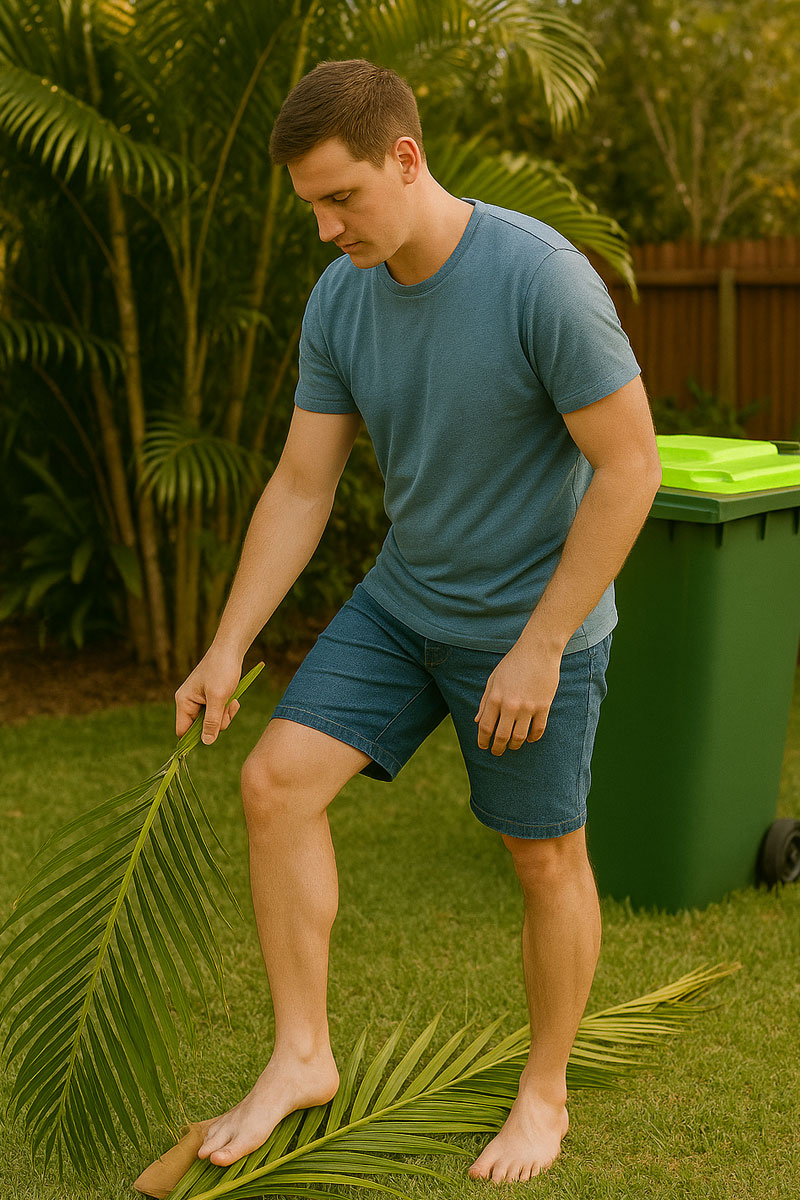
The lime-green-topped bin is one of the unsung heroes. This bin is for garden clippings, hedge trimmings, palm fronds, grass cuttings, and leaves. That's it.
It's important to remember: the green bin is not for kitchen scraps. No fruit peelings, no leftover food, no coffee grounds. Food attracts pests and disrupts the composting process. Instead, think of the lime-green bin as part of the garden cycle-what you prune, mow, and sweep up outdoors goes in, and the council turns it back into mulch and compost. Getting the kids to help gather leaves or offcuts teaches them that garden waste has its own life after the bin.
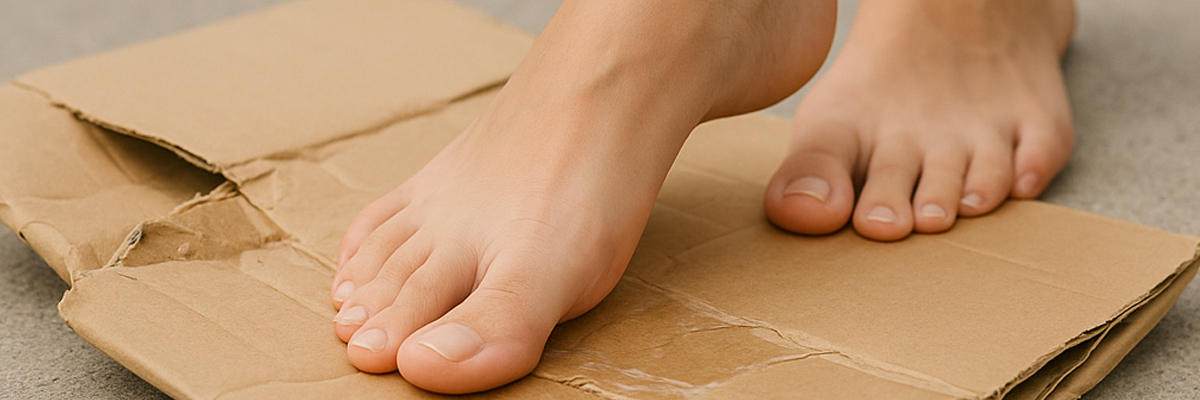
Smart recyclers crush their boxes barefoot. It's faster, softens the cardboard, and makes everything fit better - saving up to 30% more bin space. And people always agree - the feeling of soft cardboard giving way beneath your feet - it's just incredible! A small, guilty pleasure that somehow makes recycling feel good.
Find out How to Properly Crush Your Boxes »
Keep It Visible and Simple
The easiest way to keep good habits is to make them second nature:
- A basket in the kitchen for bottles and cans.
- A reminder to crush boxes and cartons the moment they're empty.
- A family routine of swapping tasks.
Each step adds up to bins that are fuller, neater, and easier to manage.
A Lifestyle, Not a Chore
Recycling doesn't need to be treated as a burden. It's part of a household's rhythm - rolling out the bins under a soft evening sky, rinsing bottles after breakfast, pressing down on a cereal box and feeling it collapse under your feet. It's amazing how a simple action can make a difference for your household, your neighbourhood, and your city. And when even the most ordinary everyday moment crushing of a box becomes something everyone looks forward to, recycling no longer feels like work at all.
Good Family Recycling Habits
A couple of good habits can make recycling in your family a breeze.
You might also like


Disclaimer: Every effort has been made to ensure the accuracy of the information provided, but we make no guarantees regarding its completeness or reliability. The data is presented for general informational purposes only and does not constitute financial, investment, or legal advice. We are not liable for any errors, omissions, or consequences arising from its use. Users should verify details with relevant sources and seek professional advice where appropriate for the most accurate and up-to-date guidance.