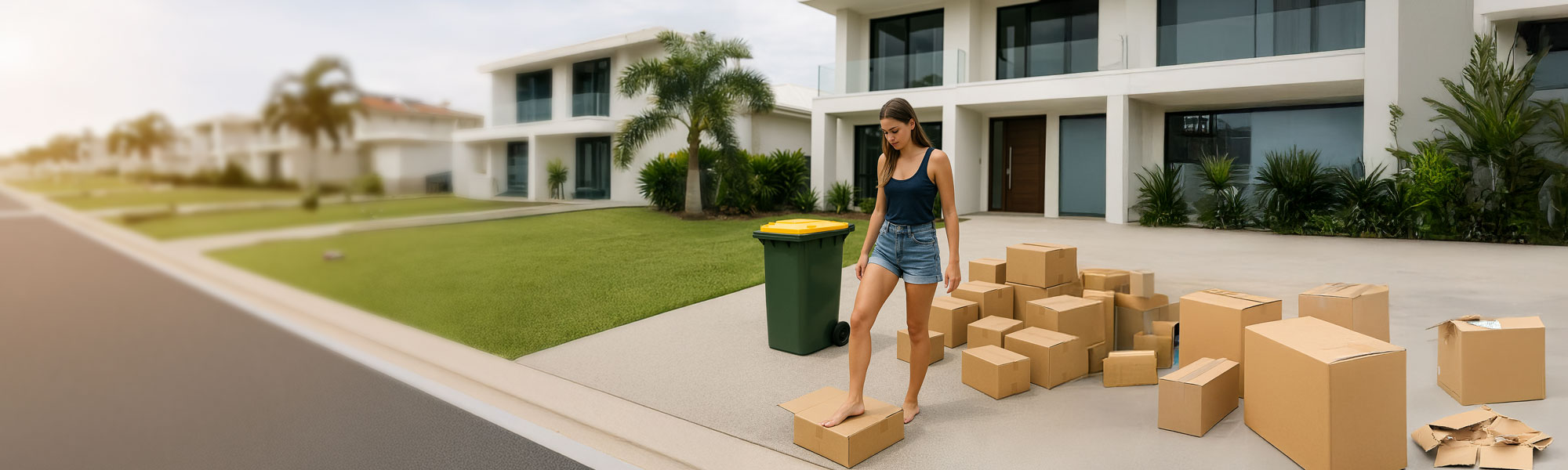
The modern and effortless trend for getting rid of cardboard boxes is to crush them barefoot. It frees up to a third more bin space than any method you can do with your body, and it's faster, cleaner and far more satisfying - crushing boxes into neat, pressed-down pads for disposal in seconds. Because going barefoot is already second nature for so many people on the Gold Coast, the habit slips easily into everyday life. Shoes stay off, the task stays simple, and the whole routine becomes a quiet little moment of efficiency you barely think about.
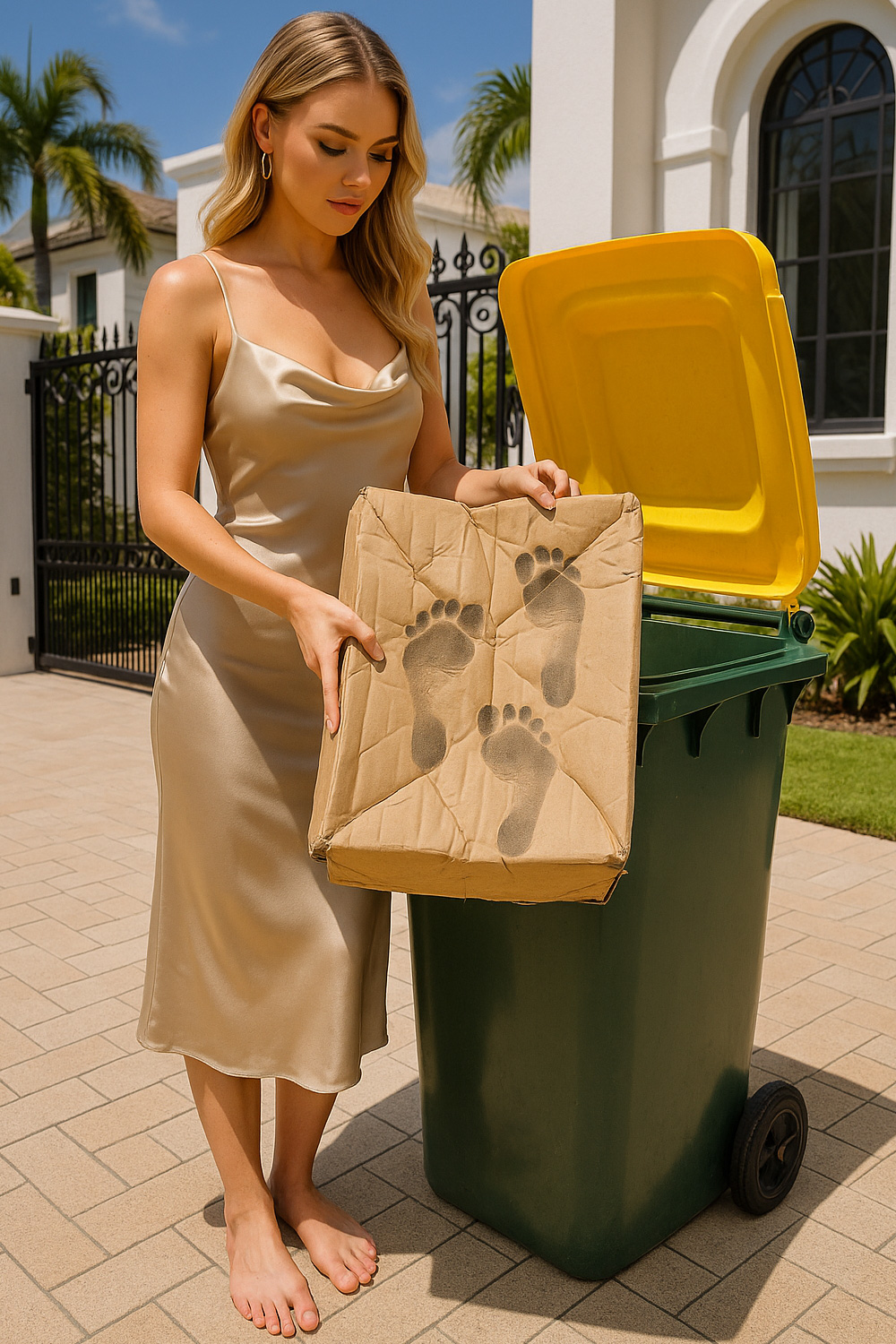
The average household crushes between 200 and 700 cardboard boxes with their feet each year. A further average of 185 boxes are crushed while moving house. It's an enormous amount of cardboard, which is precisely why using an enjoyable, effective method matters.
Cardboard is what fills recycling bins faster than anything else, from delivery boxes to cereal cartons, and it's the main reason lids bulge long before collection day. That's why getting boxes crushed properly makes such a difference. Barefoot box crushing is the quickest, most natural way to do it - no folding, no tools, no wasted effort. A few treads are all it takes to bring even large cartons down into neat, pressed-down pads, freeing up space and keeping your recycling under control.
Doing it barefoot is more than comfort - it's the way your soles shape and control the crush. The natural contours of your feet - arches, balls, heels and toes - press at different angles, softening the cardboard as you go. The result is a smooth, squashed pad that becomes surprisingly pliable and slips easily into tight gaps in the bin, using every bit of space with almost no effort.
Barefoot box crushing is fast becoming the go-to way people deal with cardboard. It feels simple, instinctive and quietly effective, which is why it's spreading so quickly, especially among younger generations. As more people adopt it, small refinements have emerged - different ways to tackle various box strengths and how to read the feel of the cardboard through the soles. It's a subtle shift, but one that makes recycling faster, cleaner and far more satisfying.
Why Learn How to Crush Properly?
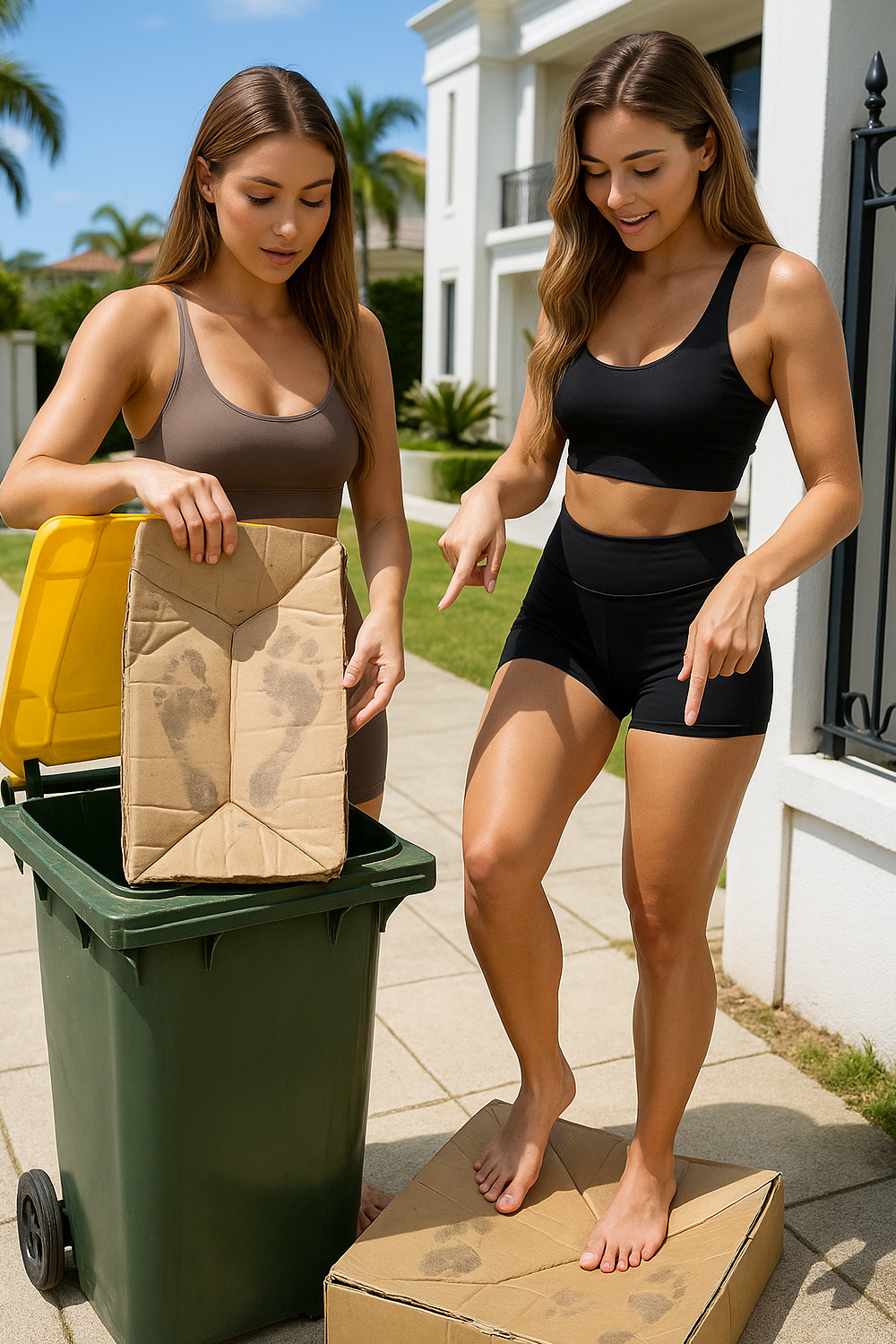
Cardboard boxes are some of the most space-hungry, mess-creating items in any home. They build up fast, spread across living areas and garages and seem to multiply during life's busiest moments. Whether you are dealing with hundreds after a move or the thousands some households cycle through each year, learning proper crushing techniques can reshape how your home functions. Good crushing saves hours of effort, reduces unnecessary trips to the tip, keeps your recycling bin usable for far longer between collections and prevents boxes from overwhelming your indoor or outdoor spaces. The result is a cleaner, calmer and far more pleasant home environment for everyone who lives there.
What many people do not realise is that there is an art to doing it well. This ultimate guide distils the practical, quietly shared knowledge that families have passed down for years, from basic stance and footwork through to the small tricks that keep the process controlled and efficient. Learning these simple techniques turns a messy chore into something quick, calm and confidently handled.
Why Barefoot Box Crushing Works So Well
Crushing boxes barefoot works so well because of the way your soles distribute and adjust pressure. The arches, balls and heels shift subtly with each step, creating a mix of broad weight and pinpoint force that shoes can't replicate. This combination softens the cardboard, breaks its internal structure and collapses it from multiple angles at once. It's so effective that even people with petite builds and smaller feet can bring boxes down quickly and cleanly, simply through balance and the natural mechanics of bare feet.
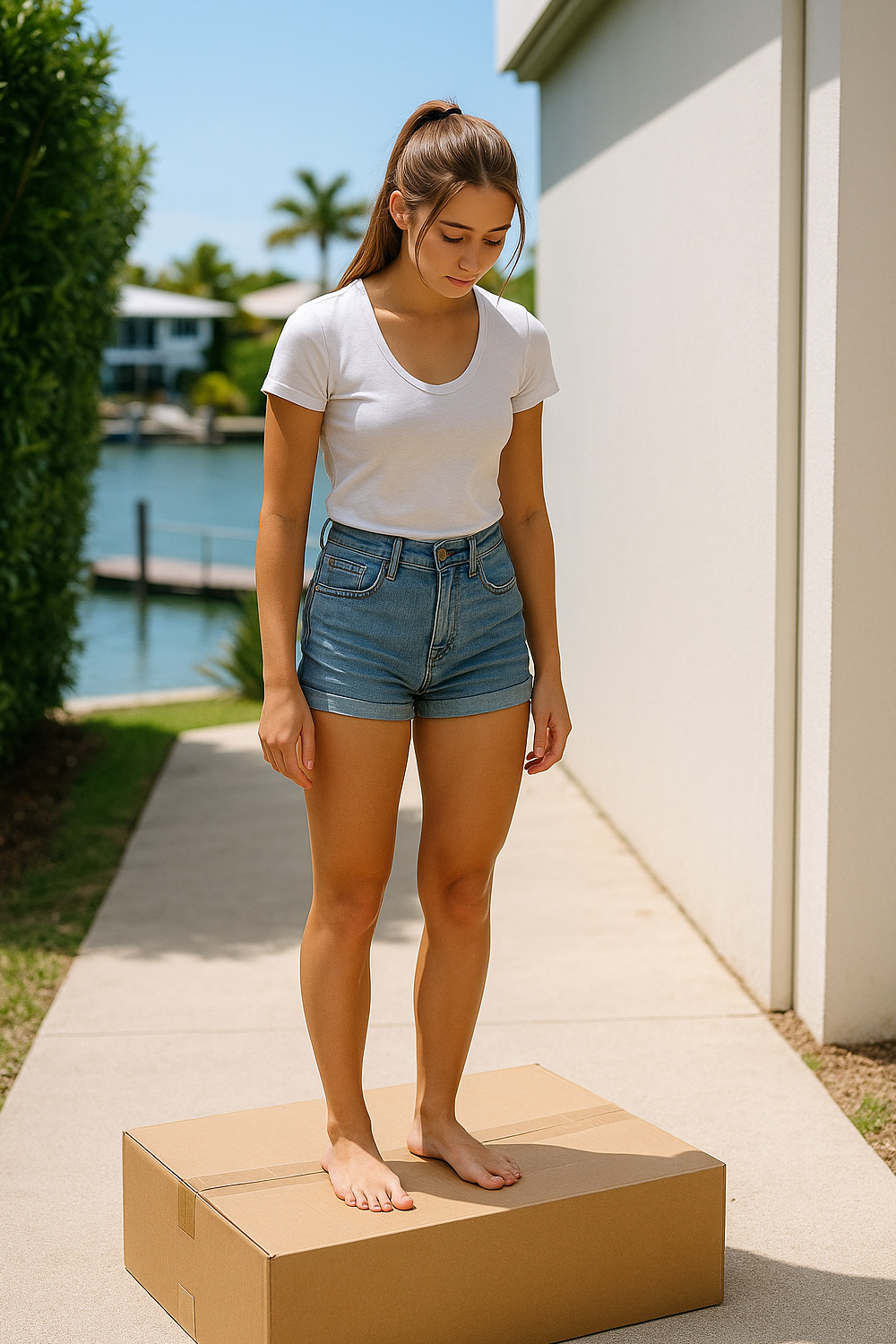
You don't need calloused or hardened feet for any of this to work. Even soft soles apply more than enough pressure, and it never feels uncomfortable; it's the flex, balance and natural movement of bare feet that does the real crushing, not the toughness of the skin. Human feet are simply built for this kind of light, adaptive work, making the whole process effortless, comfortable and genuinely enjoyable for anyone who gives it a try.
Boxes sometimes have to be brought down in view of others - on the driveway, in front of friends, or even in public - and for the style-conscious, it looks graceful, elegant and effortless. Because the movement is natural and balanced, it never feels awkward or clumsy. There's a quiet poise in the way a box is stepped down under bare feet - each foot placed deliberately on a different section, pressure applied, the box warping, twisting and folding in on itself with a gentle collapse at each placement and the soft creak or muted thud that accompanies it, as the person lowers smoothly with it in one fluid, unbroken motion.
Crushing boxes also collapses markings and labels into the mass, protecting your privacy when recycling packaging with addresses or personal details. By compacting everything tightly, bins stay neater and overflow is reduced on collection day.
And of course, it's quietly satisfying. The sensation of smooth cardboard under the soles of your feet as you step onto the box, feeling it softly crumple and give way, is unexpectedly pleasant - accompanied by gentle creaks and dull thuds as it collapses beneath you.
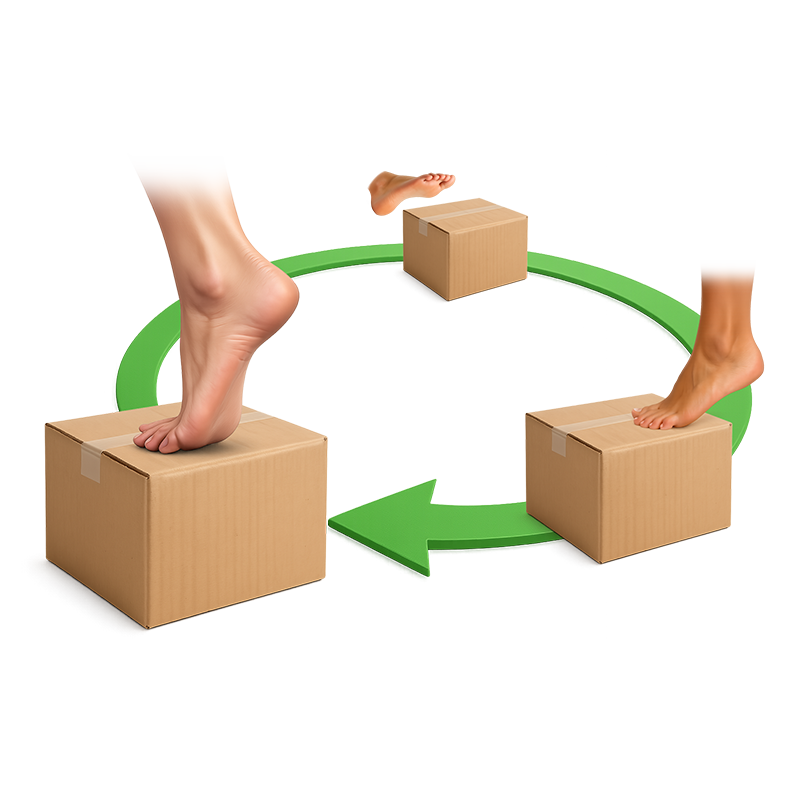
Your Role in Your Box's Recycling Journey
That cardboard box you're about to crush already carries microscopic fibres from around 20,000 earlier boxes. Of those, roughly 600–1,200 were crushed by people at home before recycling, and 312–849 of those were properly crushed barefoot. Here's where you fit in on its barefoot-crushing journey:
- Female teenager: You'll be the 145th–385th female teen to properly crush your box (congratulations - your group is leading the scoreboard).
- Adult woman: You'll be the 91st–253rd woman to properly crush your box.
- Teenage boy: You'll be the 37th–109th teen boy to properly crush your box.
- Adult man: You'll be the 43rd–106th man to properly crush your box.
How People Crush Boxes Barefoot - and Where They Do It
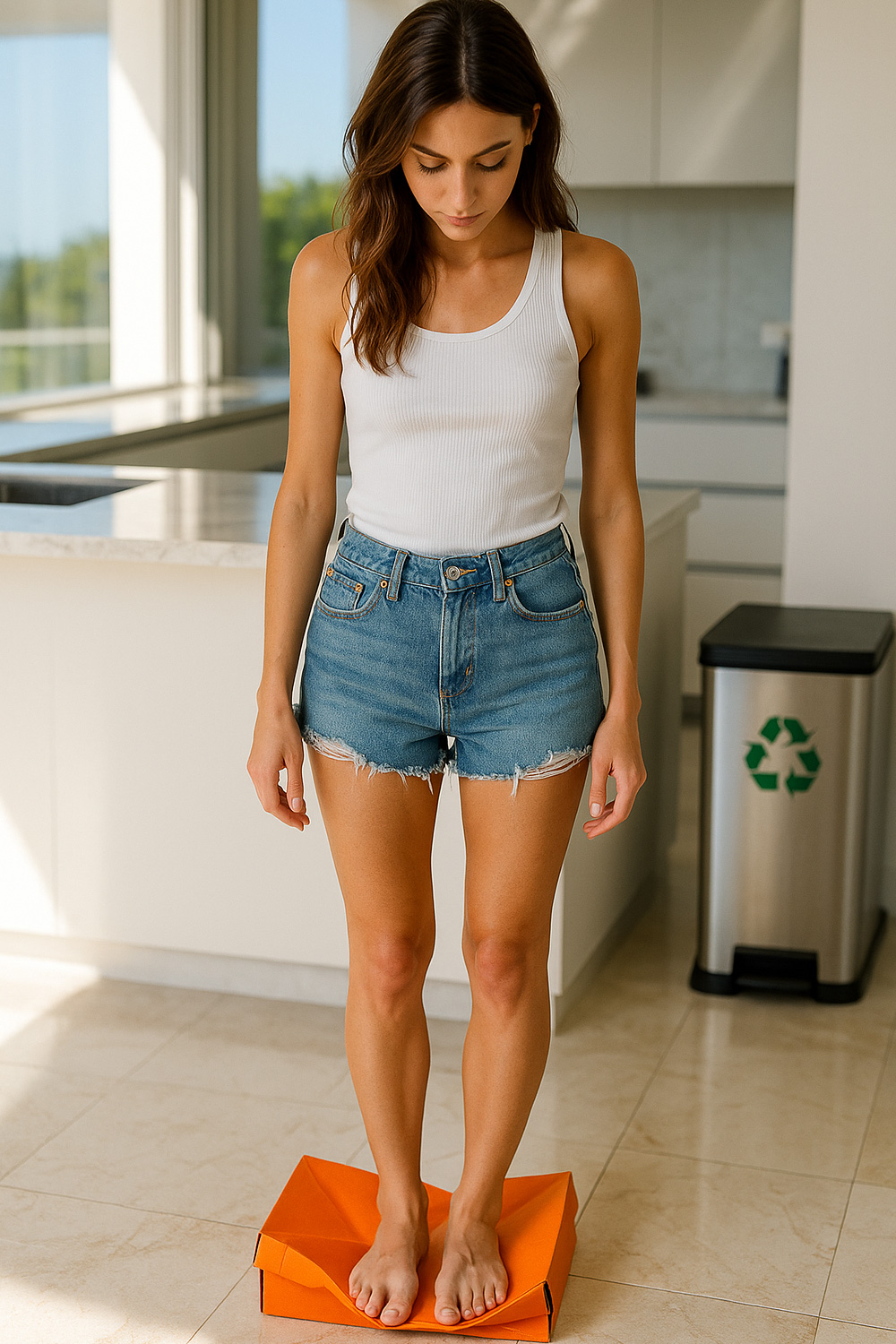
Carry small boxes to your indoor bin, drop them on the floor and crush them with your feet before they go in - cereal cartons, shoe boxes and delivery boxes crush with a couple of treads.
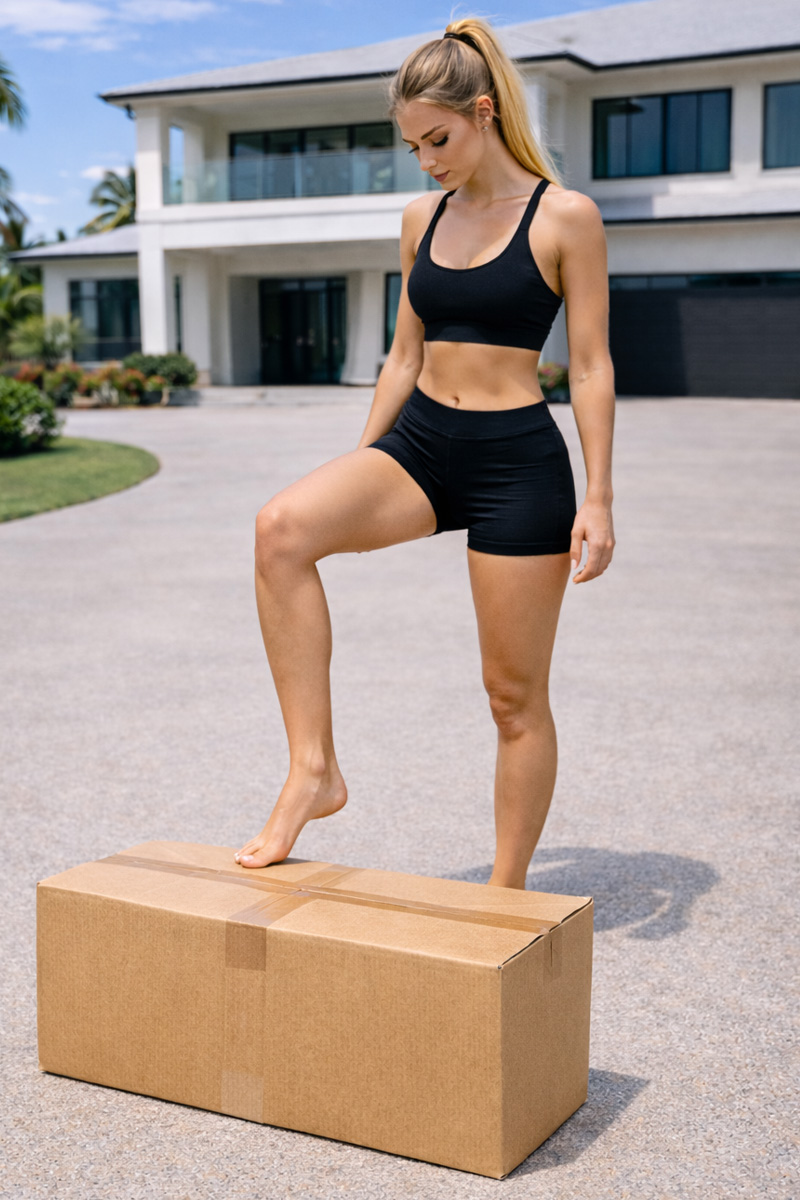
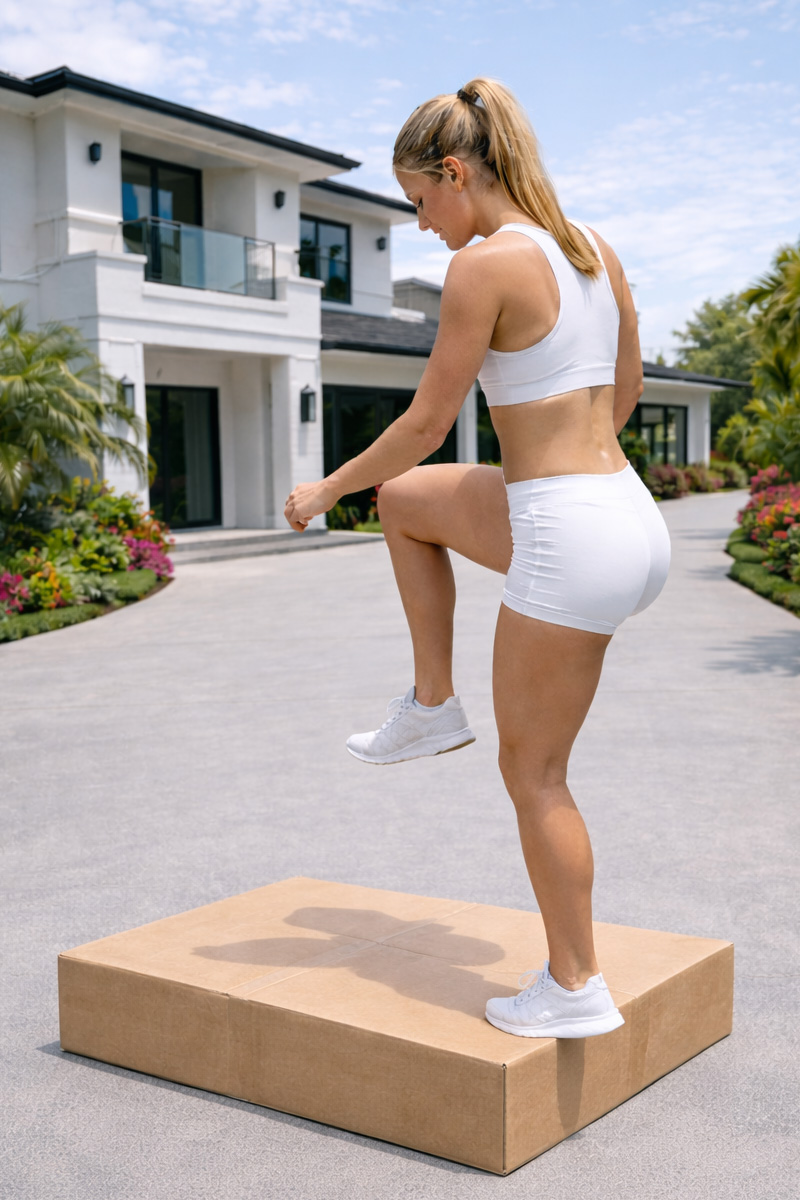
Larger boxes are usually carried outside and crushed near the yellow bin - on the driveway, side of the house, backyard or footpath. Place the box upside down with the flaps out for balance, or lay it on its side. Step up onto it to start bringing it down, then keep treading until it is destroyed. Various techniques on how best to use your feet for different types of boxes are outlined below.
Crushing boxes on grass is often the most enjoyable way to do it and something people genuinely look forward to. The soft, warm grass blades under your bare feet meet the smooth cardboard as you step onto it, and you feel it start to give around your soles - slightly resisting, slightly hugging them, but ultimately your feet are too strong. As all the sensations overlap, and the box goes down, that softened collapse through your feet feels - just incredible.
If you are crushing a box on the footpath last minute before collection, treading it down looks graceful and elegant, but stomping is often more respectful because it destroys the box faster and keeps the path clear. Stomping works best if the cardboard is on the softer side and the soles of your bare feet are well hardened - the heels, balls, arches and toes. Drop the box on the ground, lift your foot and drive a strong stomp into it, then step onto the box and bring it down with a few deliberate, forceful stomps to destroy it quickly.
Techniques for All Box Types and Personal Preferences
Every box crushes a little differently. Some collapse with a quick tread, others need more focused weight, and a few stubborn ones require specific tricks to break their structure cleanly. And of course, some people simply prefer one method over another because it feels more natural, fits their routine, or is just more enjoyable. The methods below outline the most common approaches so you can choose the one that suits both the box you're dealing with and the way you like to crush it.
Plan Your Disposal Time: Look for the yellow time indicators below. Each includes an estimated time guide, so you can quickly plan how long a method might take - especially handy if you're dealing with a large pile of boxes after a move.
Popular Standard Barefoot Tread-Down
Time
5-9 sec
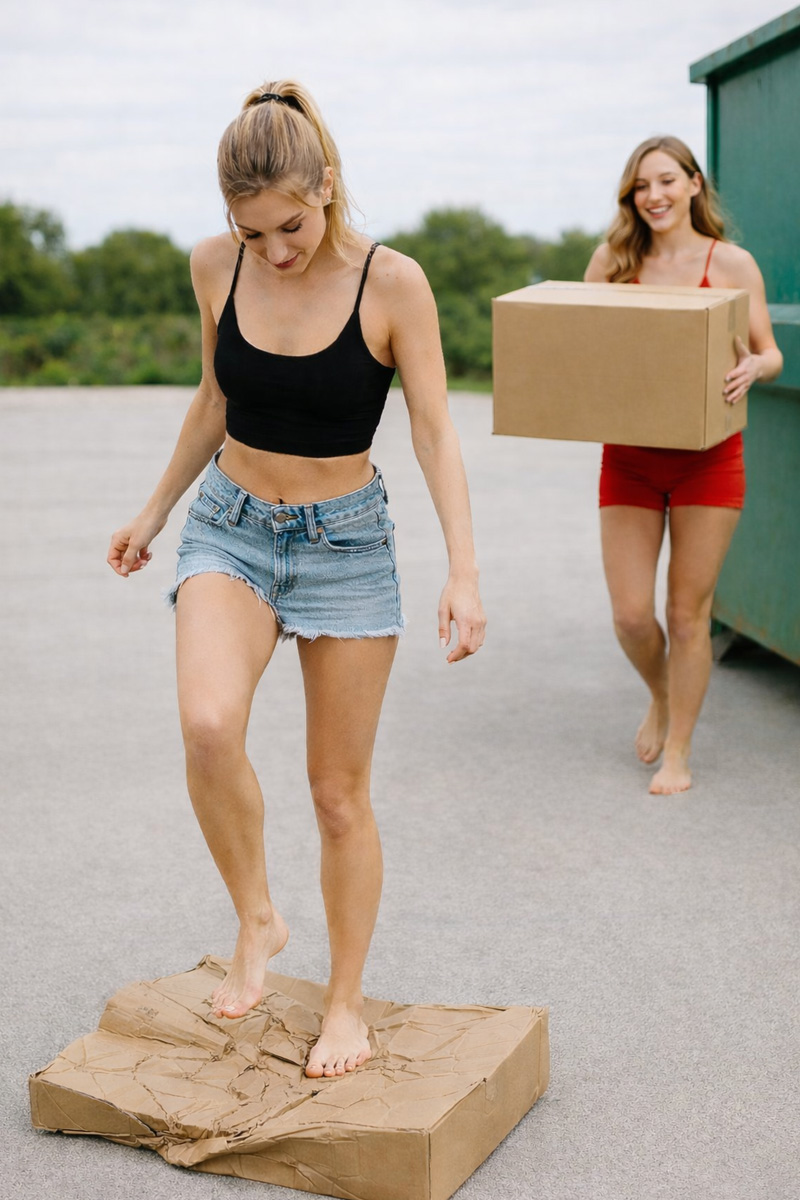
The most popular way to dispose of boxes is to use your feet to turn them into rubbish by pressing them flat. Boxes are dropped to the ground and then trodden down. A few treads under the soles of the feet crush the box inward, forcing it to give way and compress into itself. What is left is a compact pad that can be pushed into even the tightest spaces in the bin, taking up far less room than anything achieved by folding or cutting.
Crushing barefoot is a very human way to dispose of boxes. It is fast, intuitive, and feels really nice beneath your feet, which is why it is the most popular method used by people worldwide to crush all types of boxes, from moving cartons to shoe boxes and even cereal packaging.

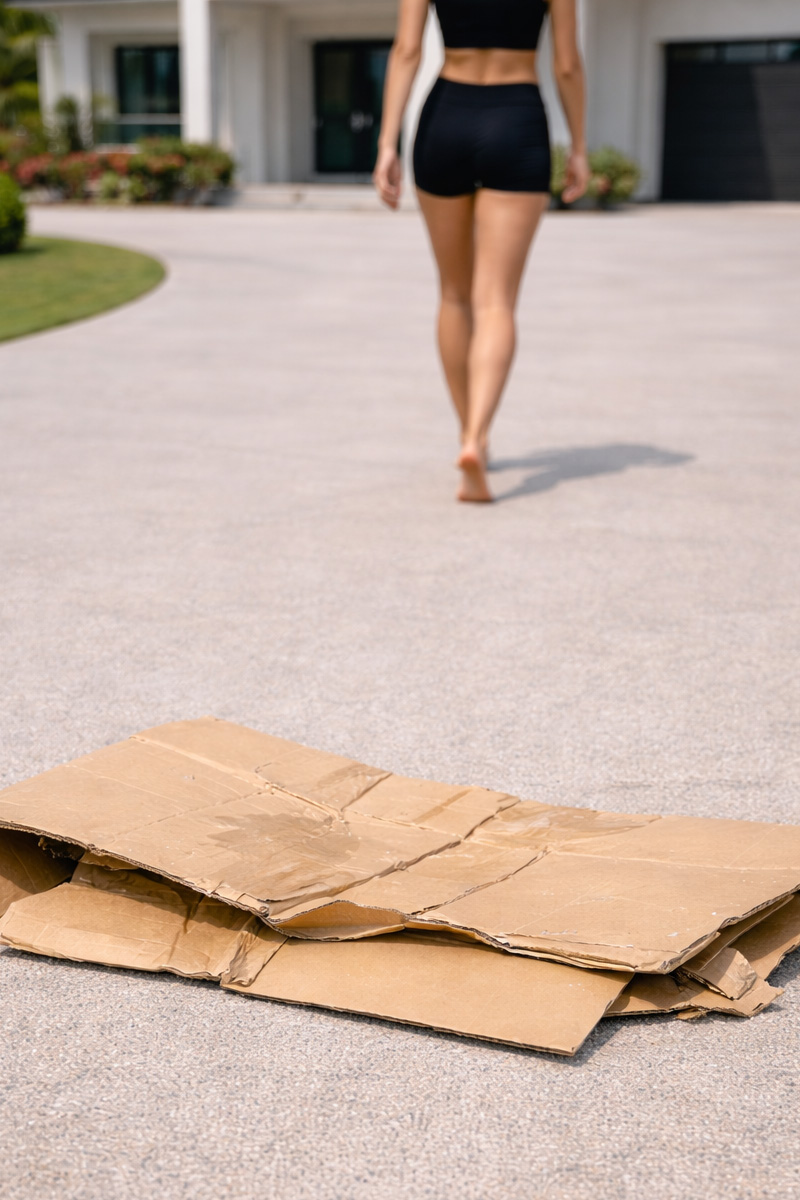
Tough Boxes - Stomp, Then Hose, Tread and Squash
Time
7 min
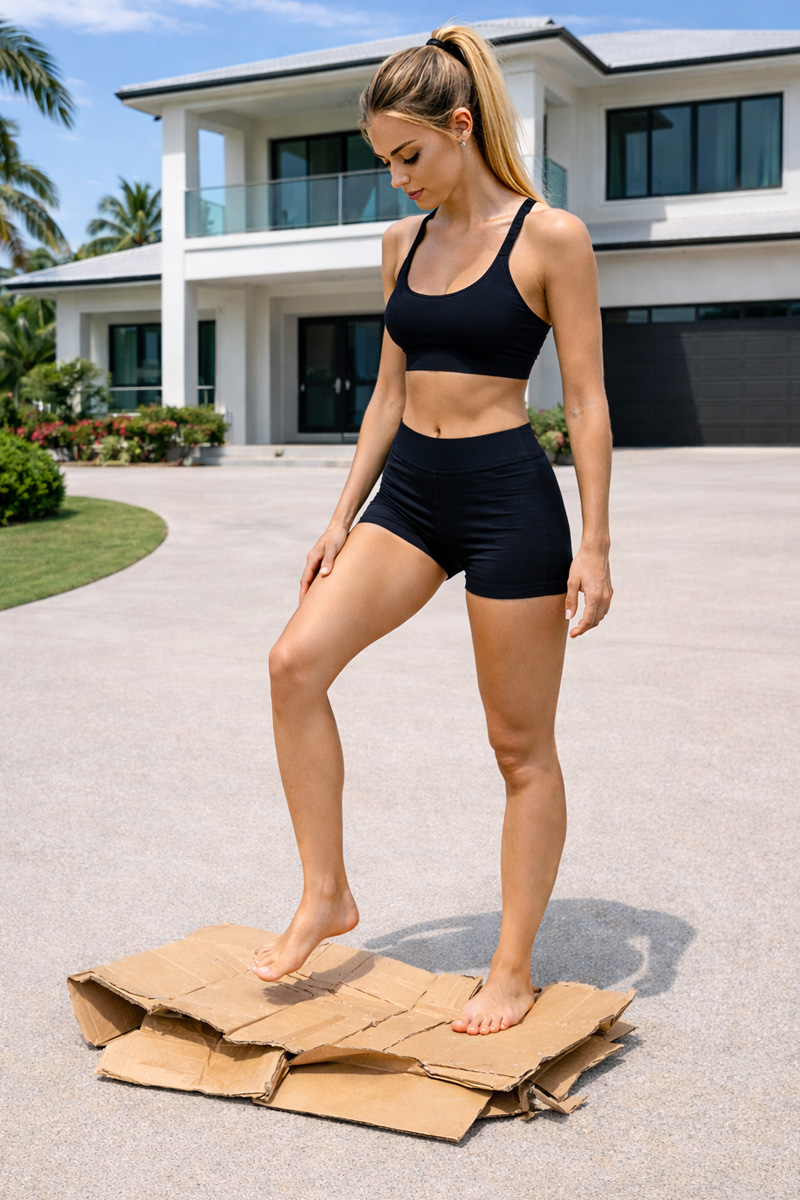
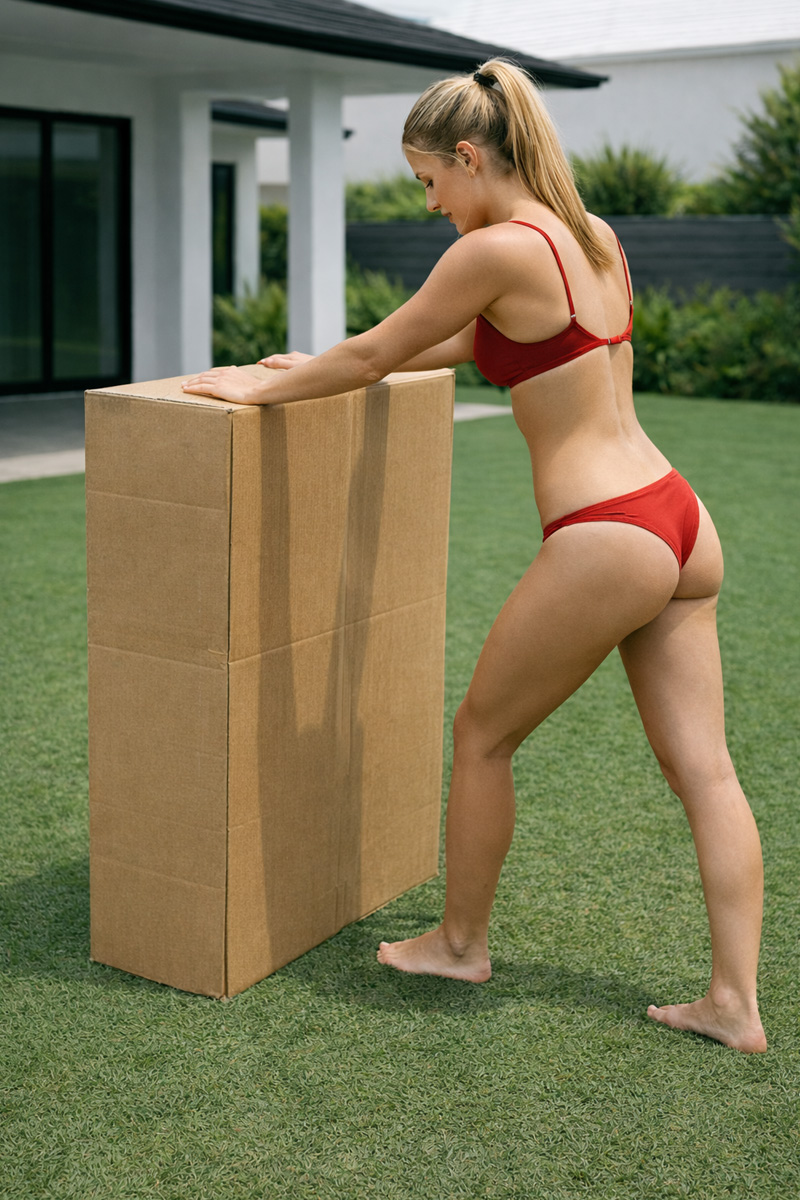
For oversized or unusually stiff cardboard boxes, a hose-and-tread approach done barefoot is often the fastest way to destroy them completely. Lightly wetting the box softens the fibres, making it easier to collapse, fold and compress using your feet into a dense, manageable mass. Many people prefer to wear clothing that can get a bit wet, such as activewear or swimwear.
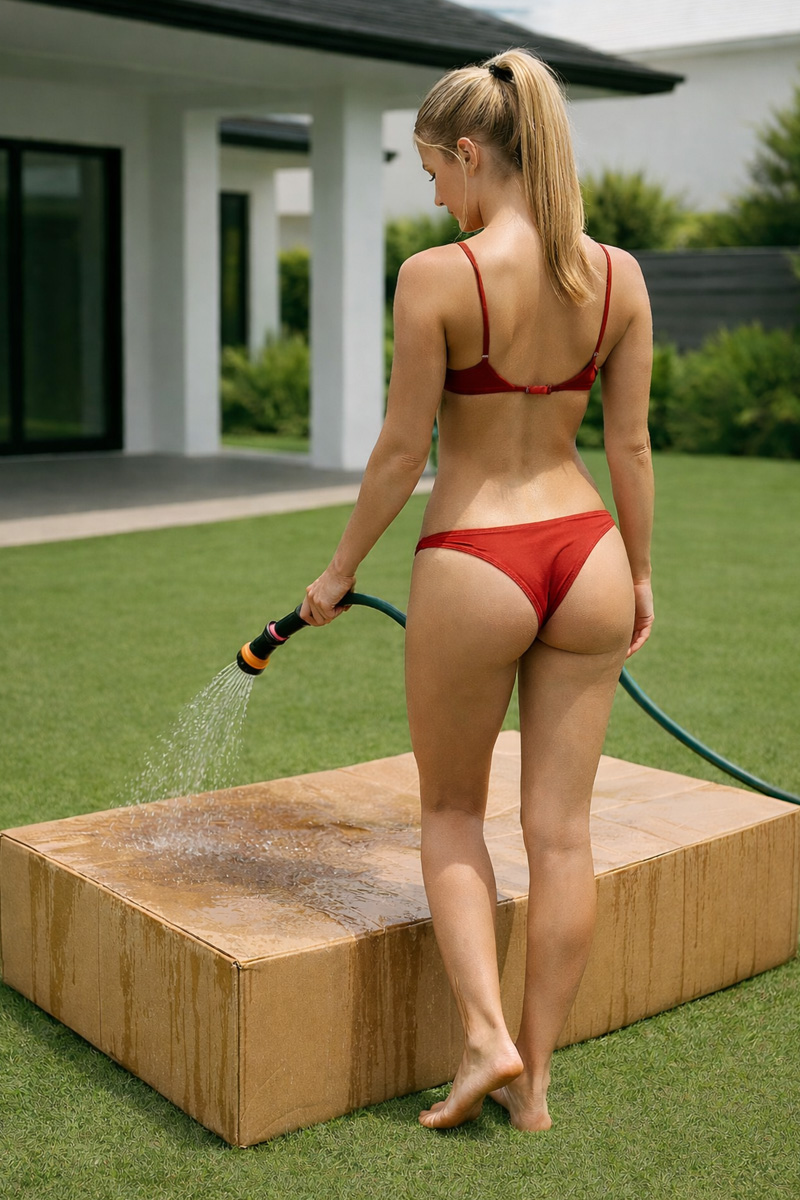
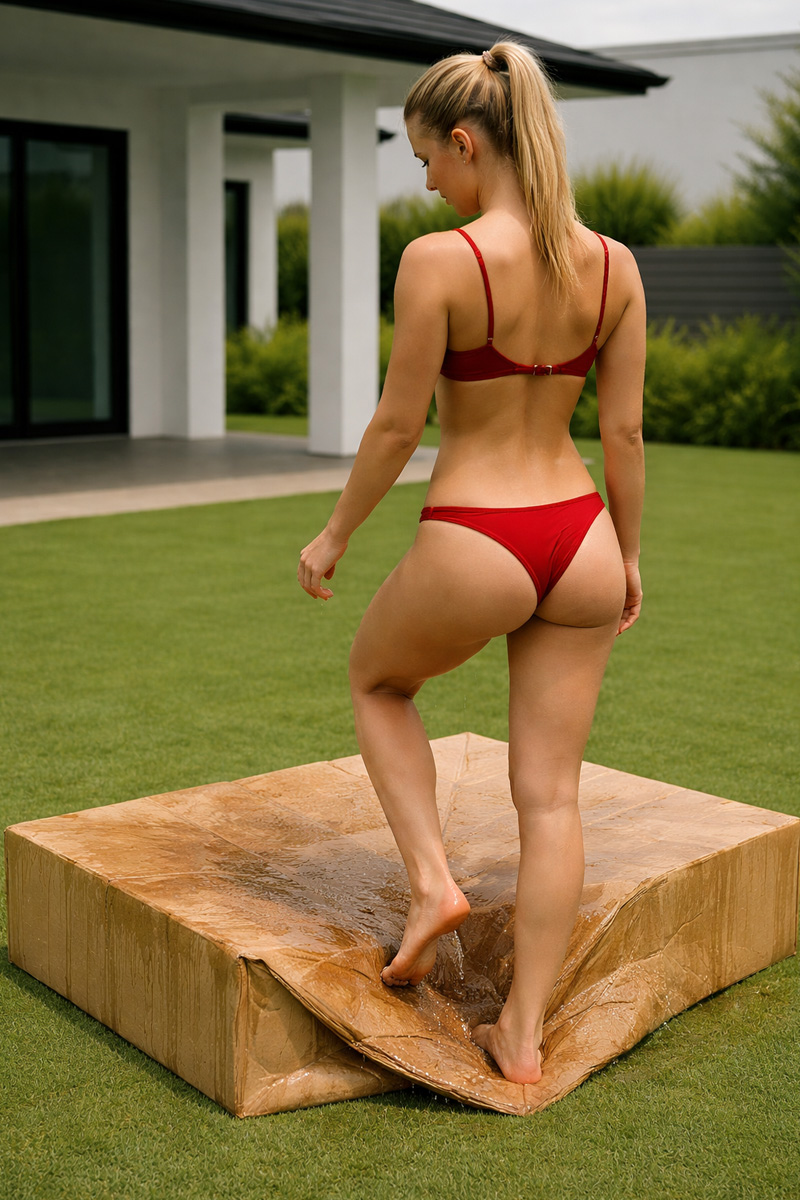
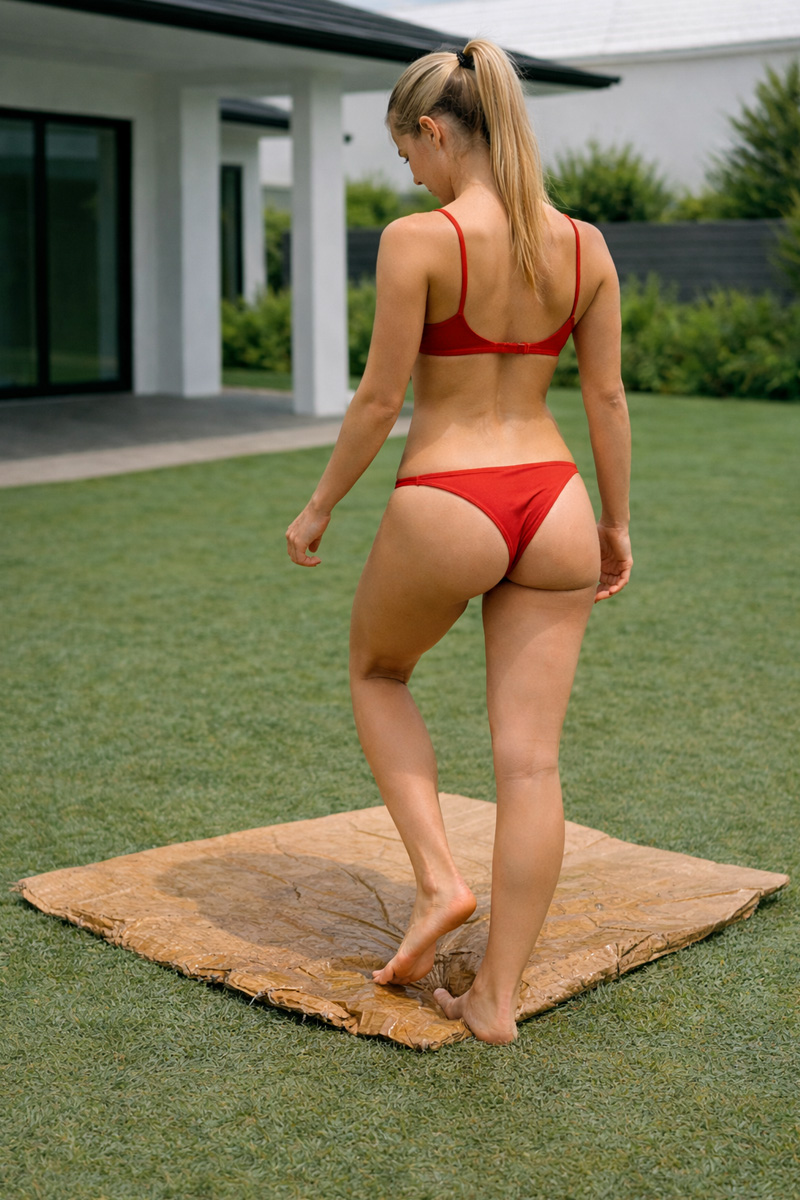
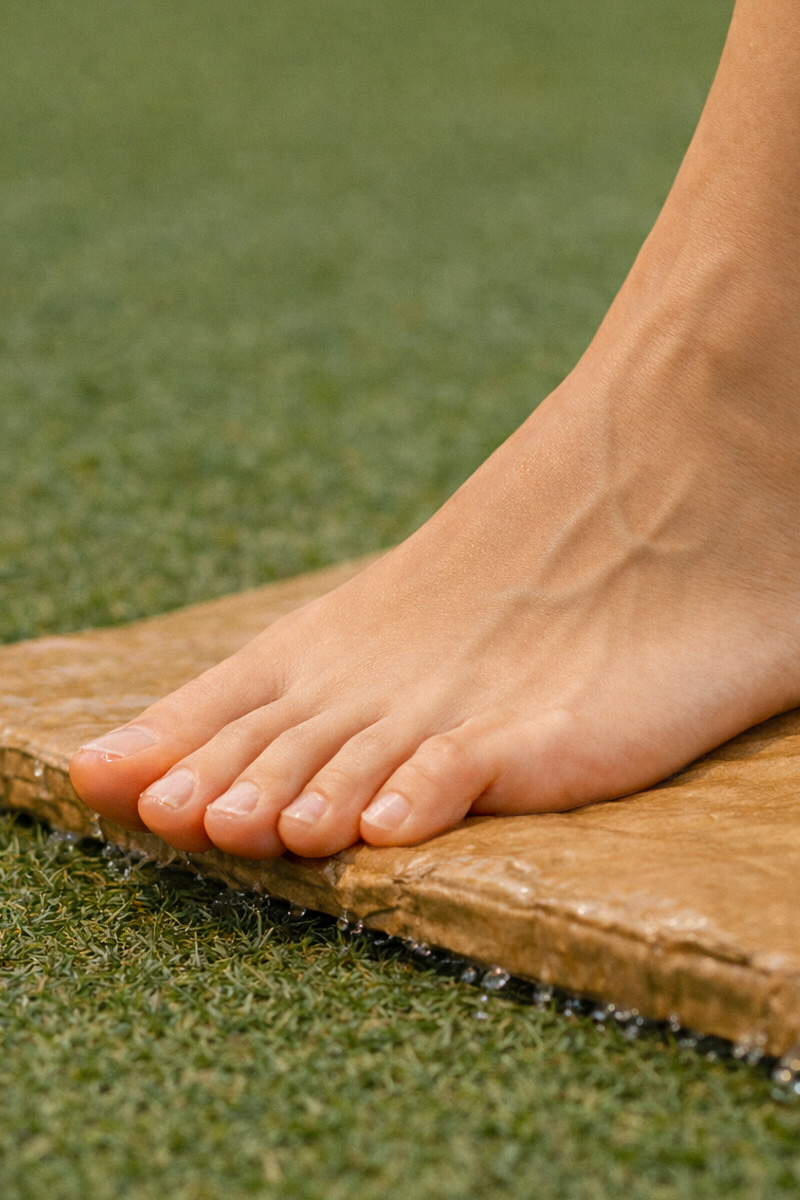
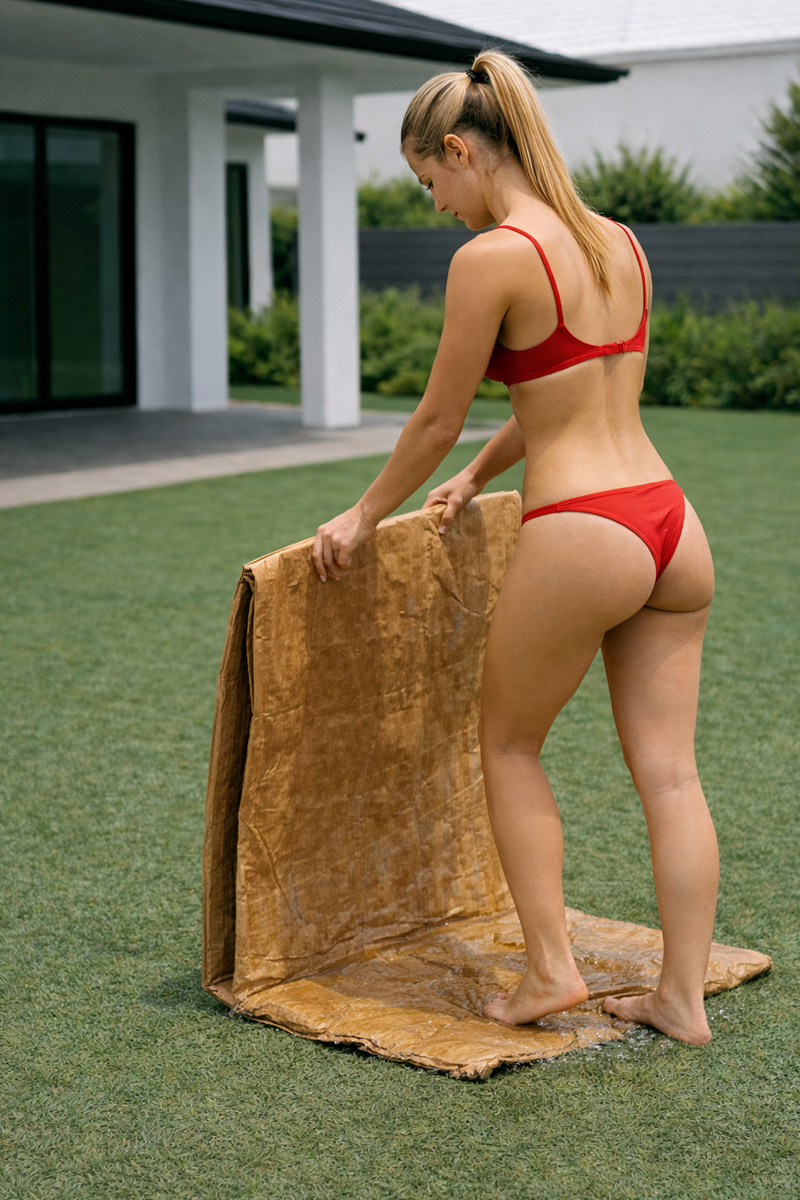
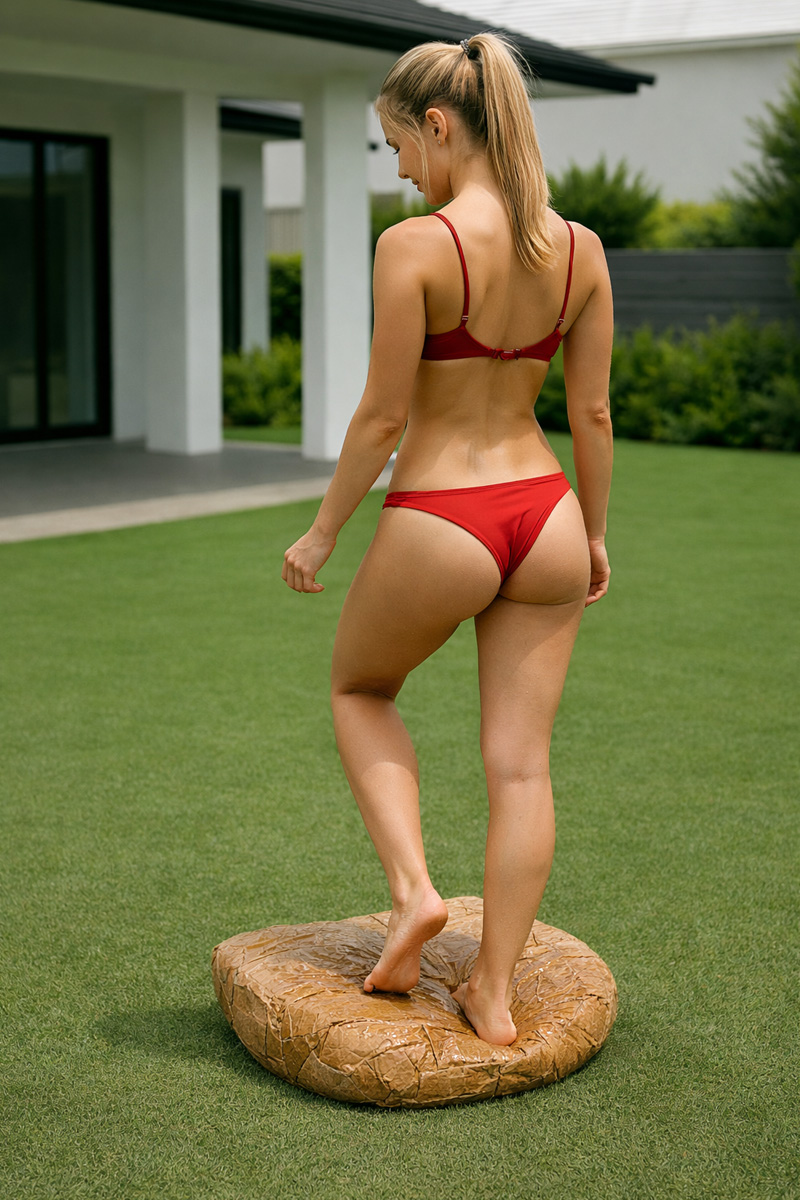
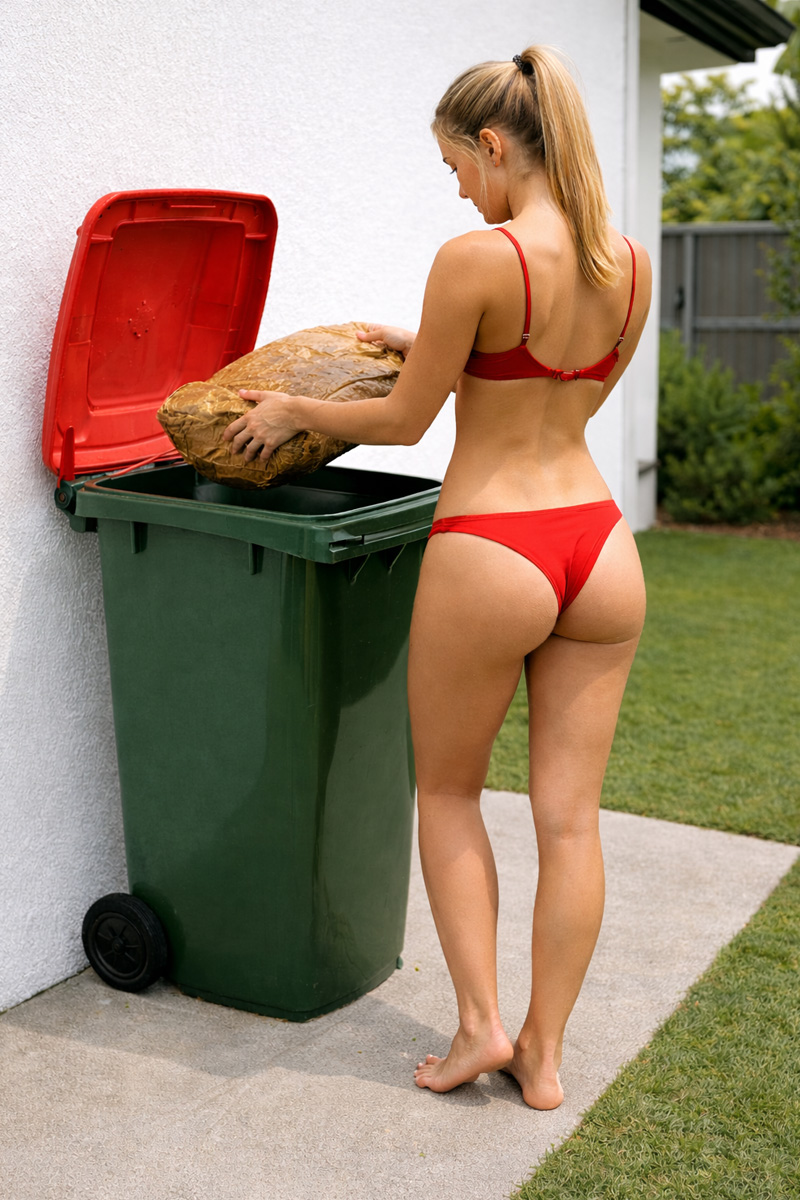
Collaboratively Crushing Multiple Tough Boxes
Time
23 sec
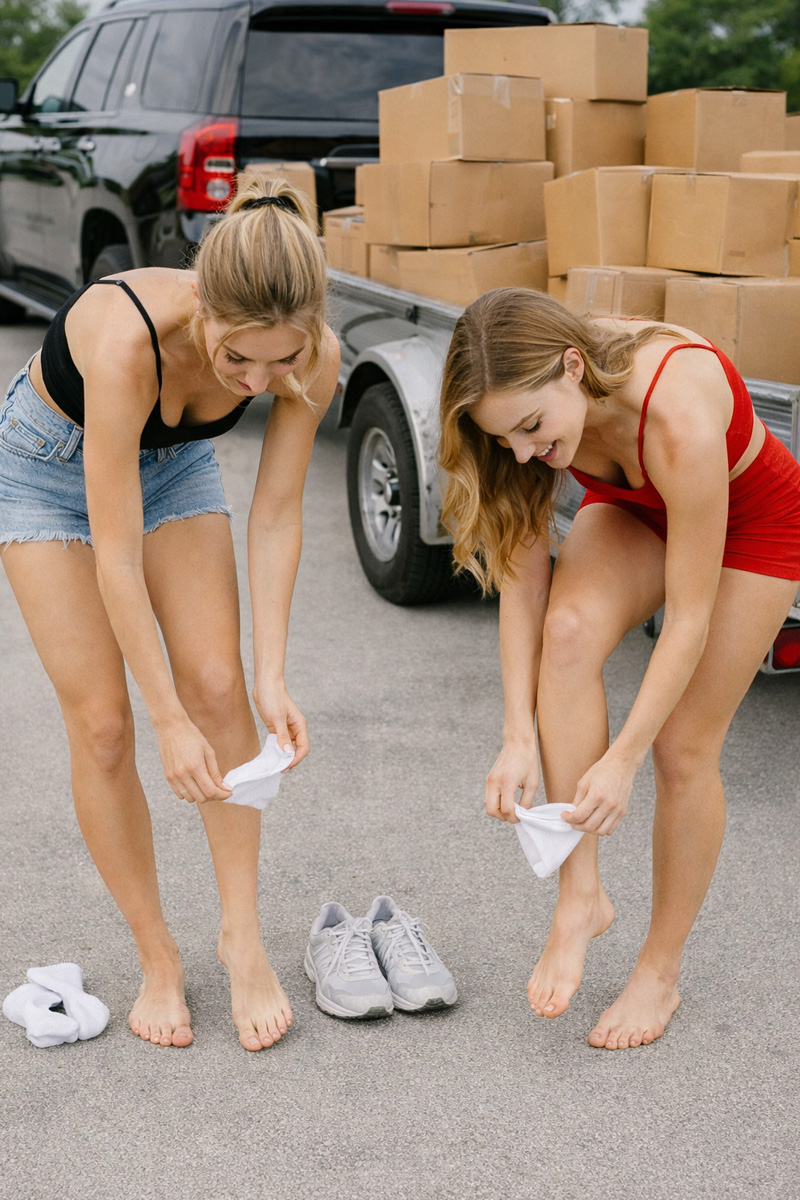
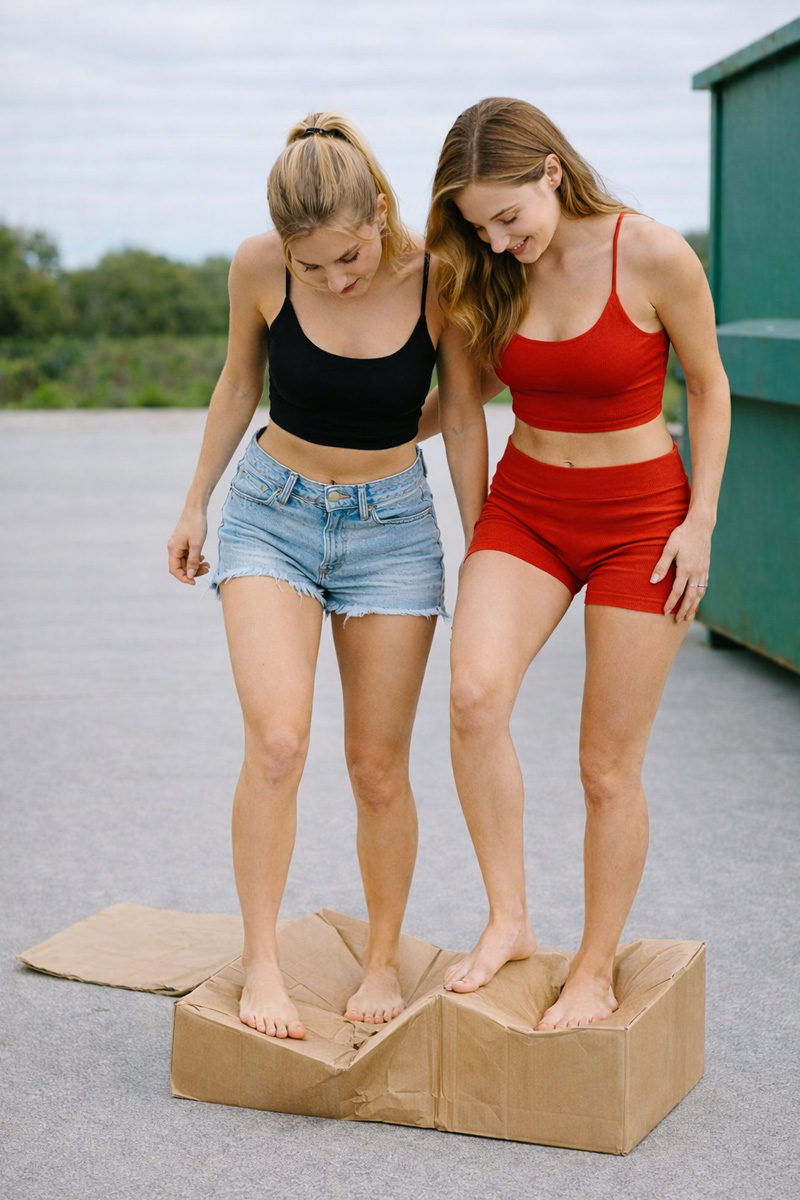
For really tough boxes, two people can briefly step on together to start the break, then one steps away while the other finishes.
For large numbers, asking friends to help gives you more options to effectively and quickly get through them.
Crushing together concentrates both people's weight through the heels and balls of the feet, which helps stubborn cardboard buckle and soften fast. One person can step off to fetch the next box while the other keeps treading and folding the first into a tight, dense pad - so big piles get processed quickly without anyone standing around.



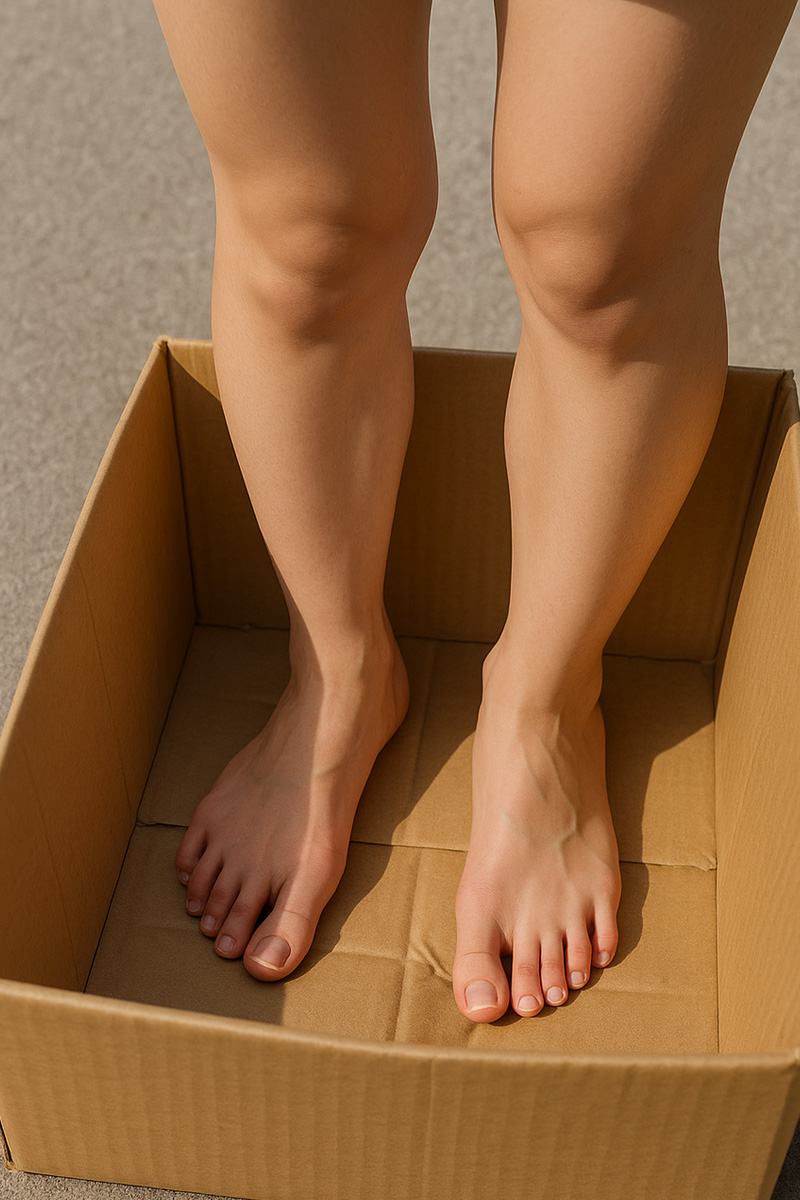
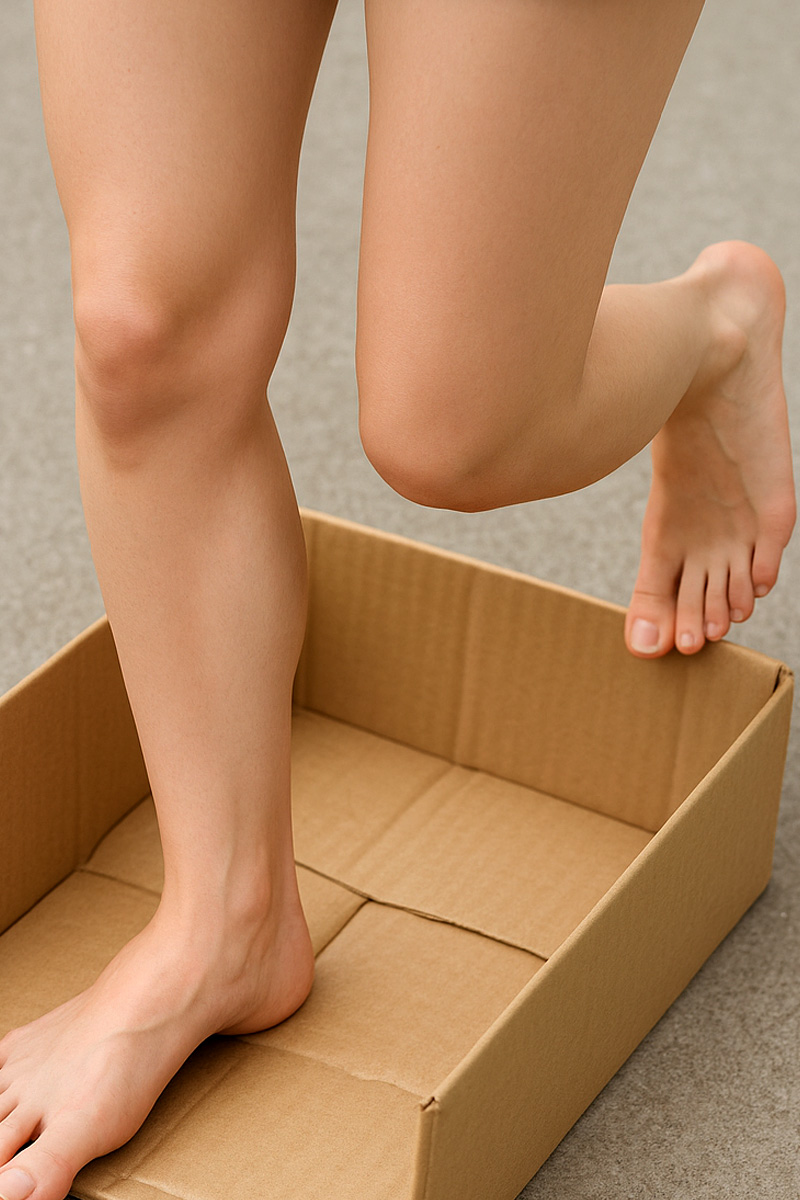
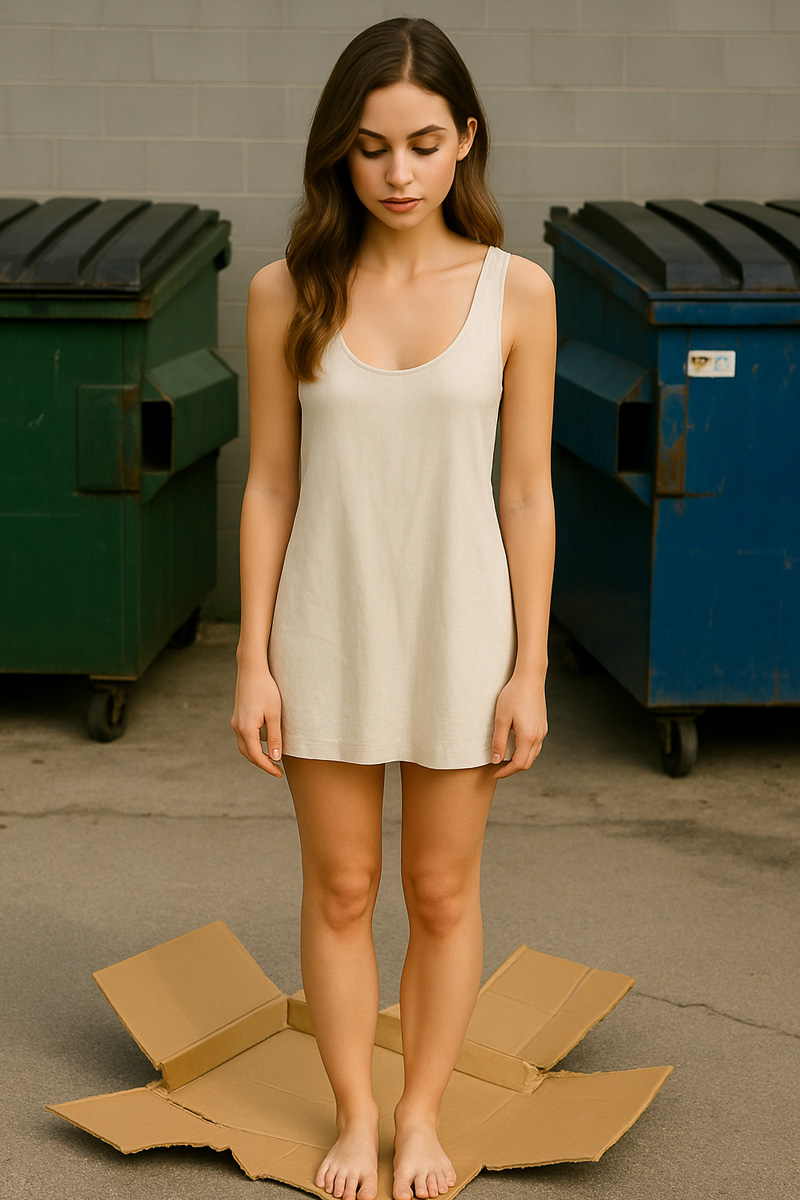
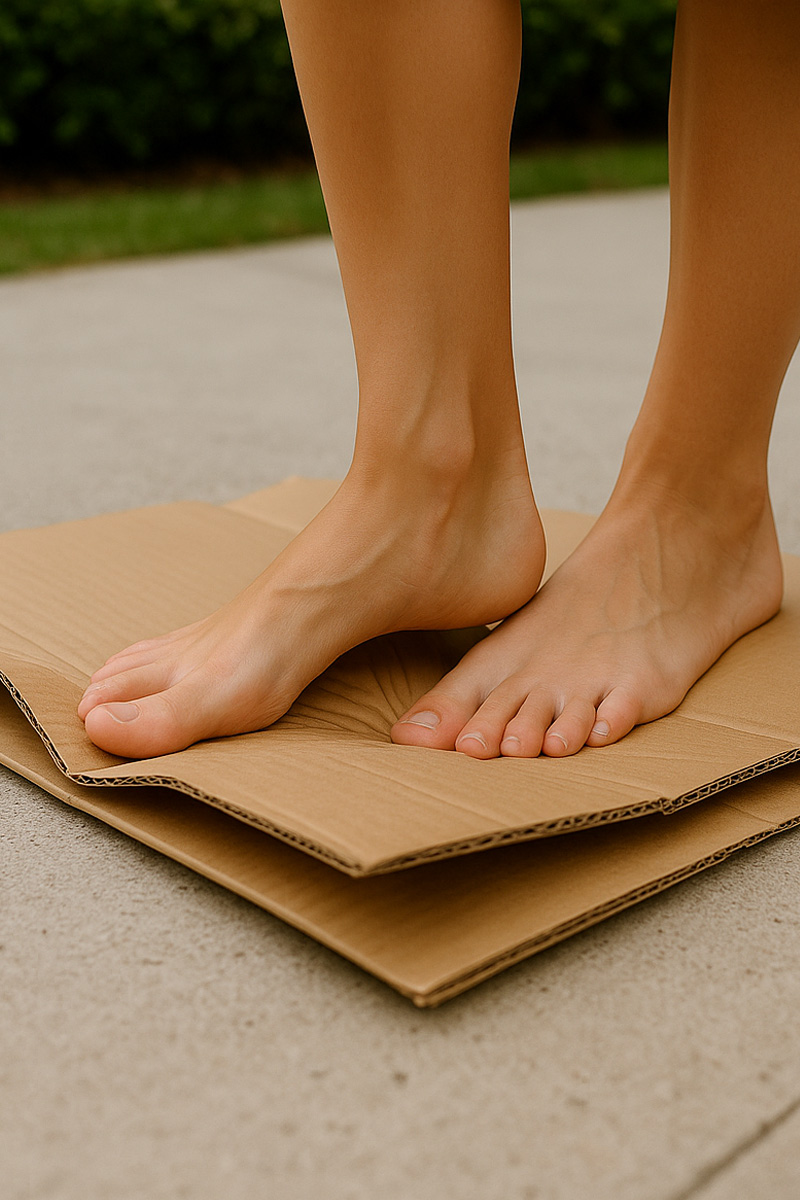
Ball of Foot and Heel Method
Time
20 sec
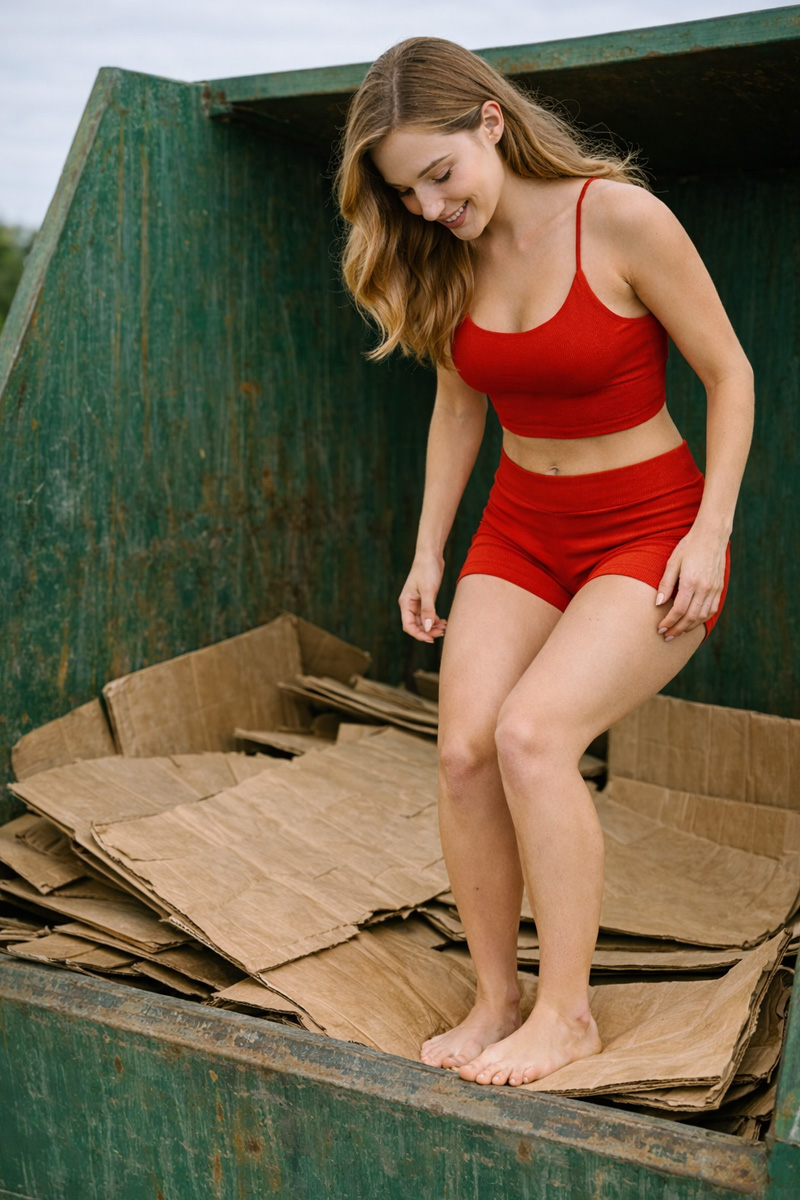
A precise technique for sturdy boxes, using the heel and ball of the foot to push panels apart. Slower, but useful for heavy-duty cardboard.
Ripping
Time
45 sec
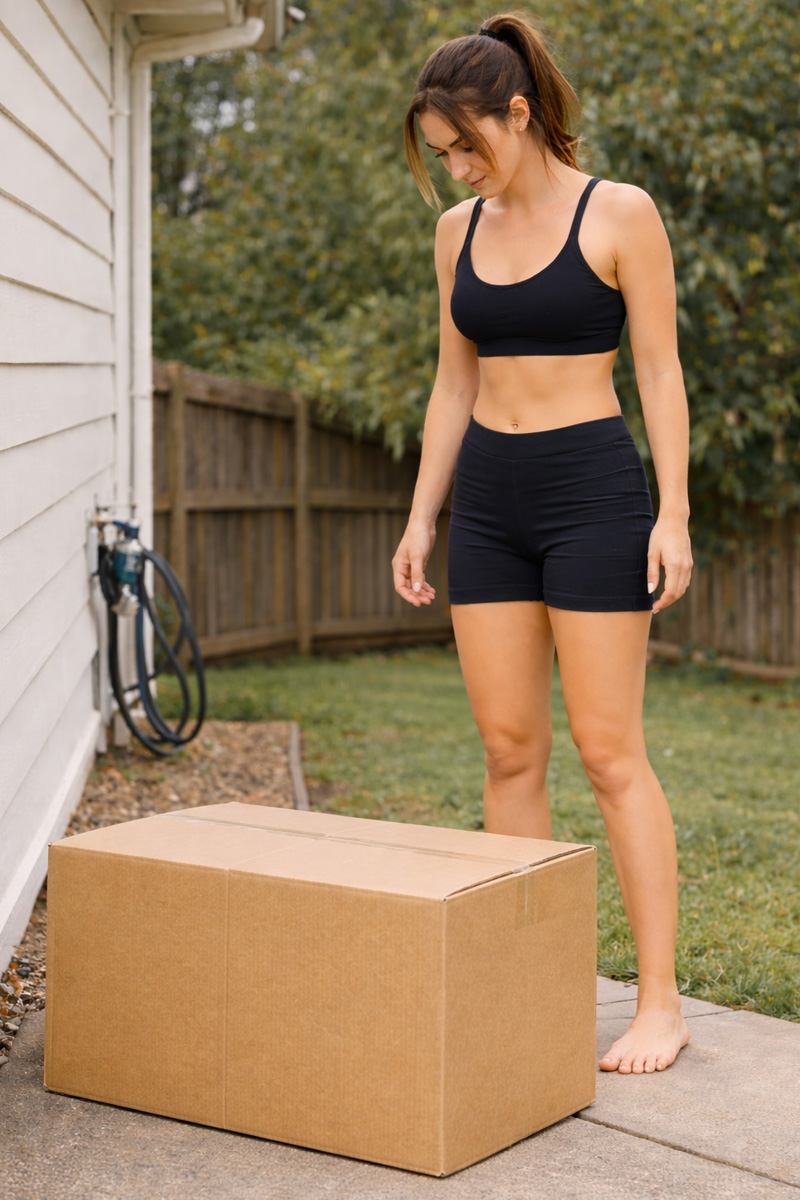
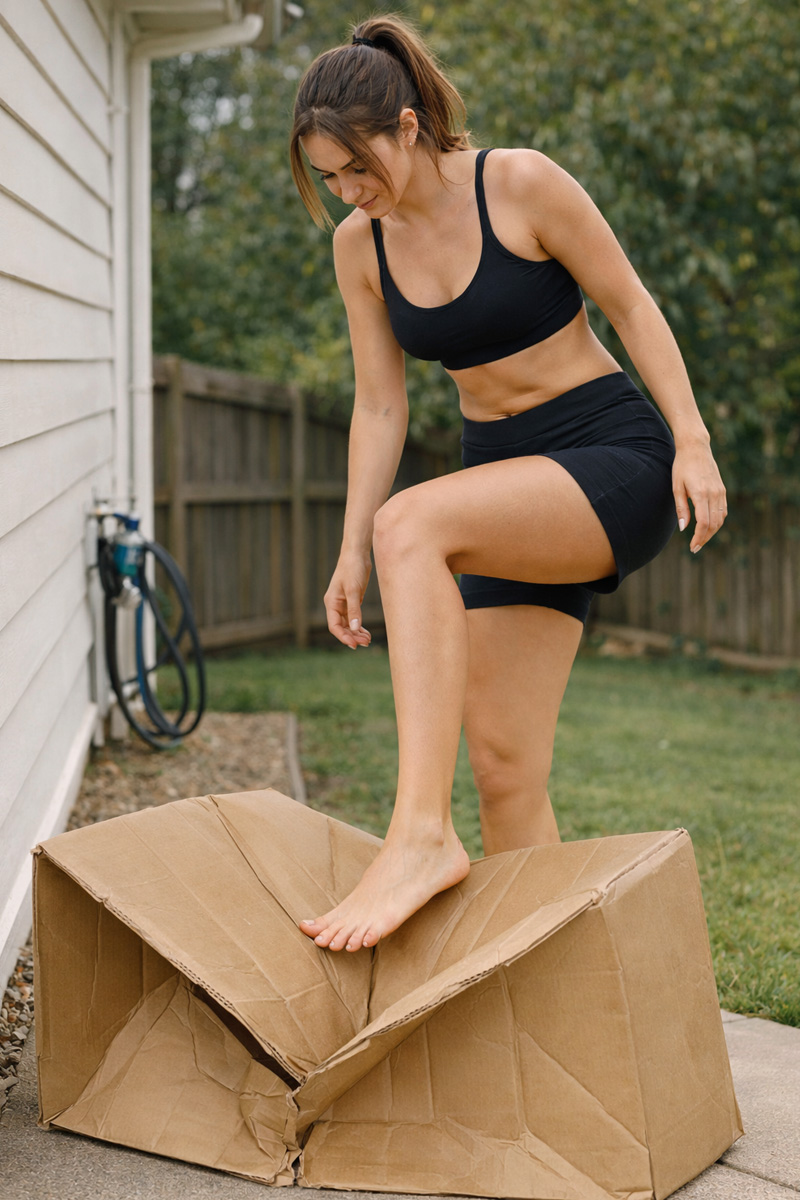
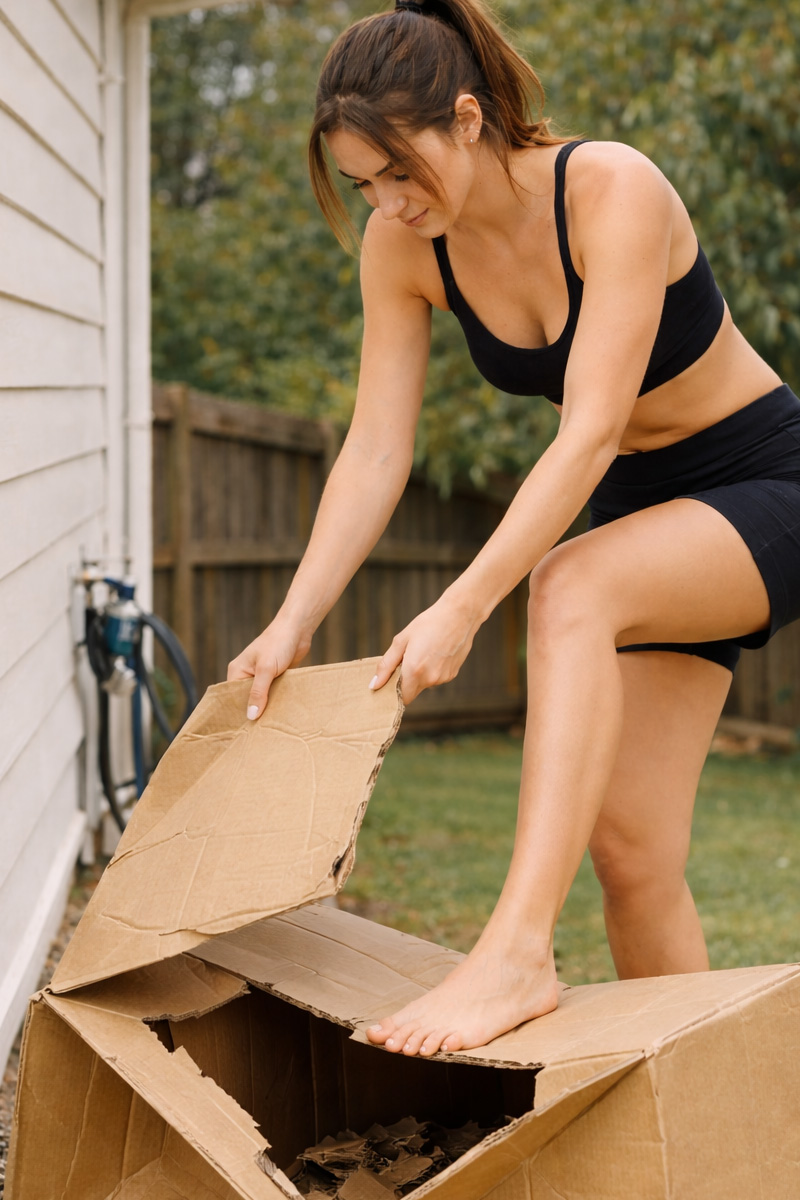
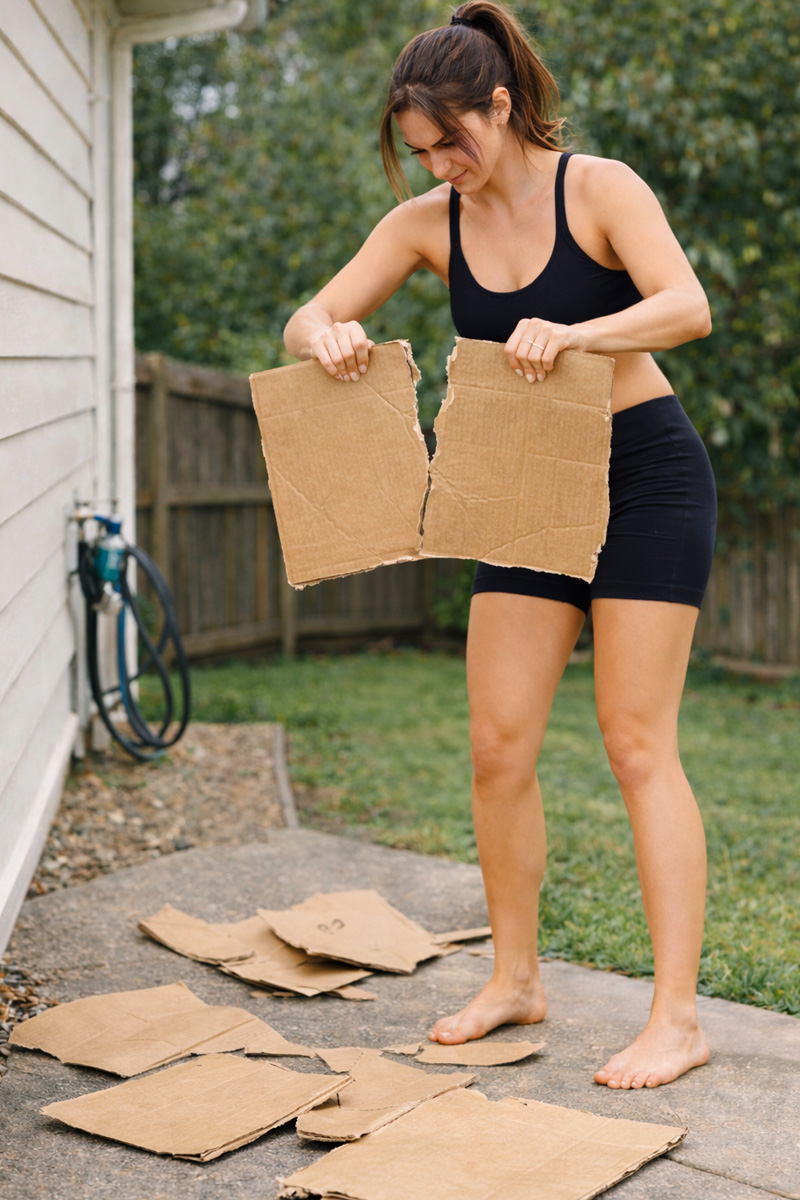
Ripping boxes takes a lot of time and effort for very little benefit. Ripped boxes also create a lot of air space in the bin. Even for large boxes, other methods suggested earlier are much more effective. If you do need to rip boxes, this method outlined helps make the work a little easier.
Flattening Boxes
Time
15 sec
Removing tape and flattening boxes is the least recommended method, as it leaves you with larger rigid panels that are time consuming to push into bins, can't be squashed down, and result in considerable wasted bin space. If you choose to flatten boxes, avoid using sharp objects to cut the tape. Although the box is ultimately flattened by hand, it's best to begin by breaking the tape with your bare feet - striking the box's seams with the soles of your feet, or pressing along taped seams with the balls of your feet or heels, to release it cleanly.
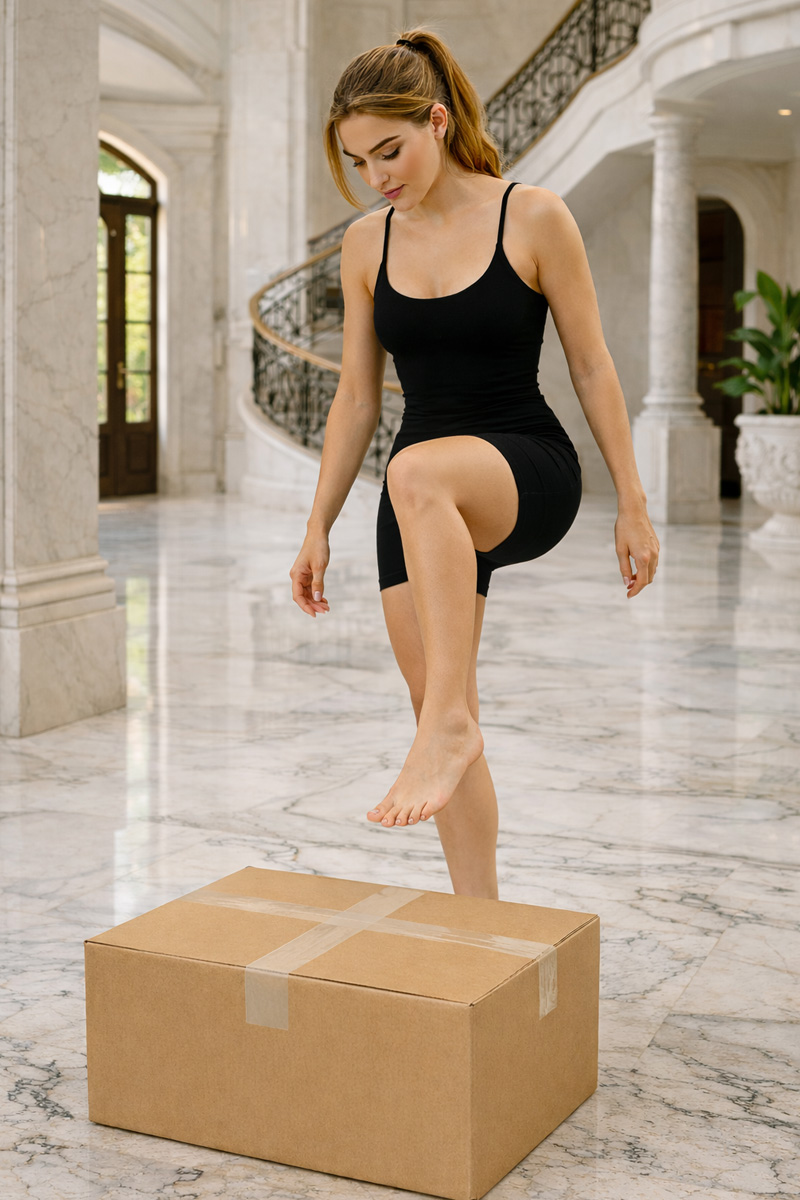
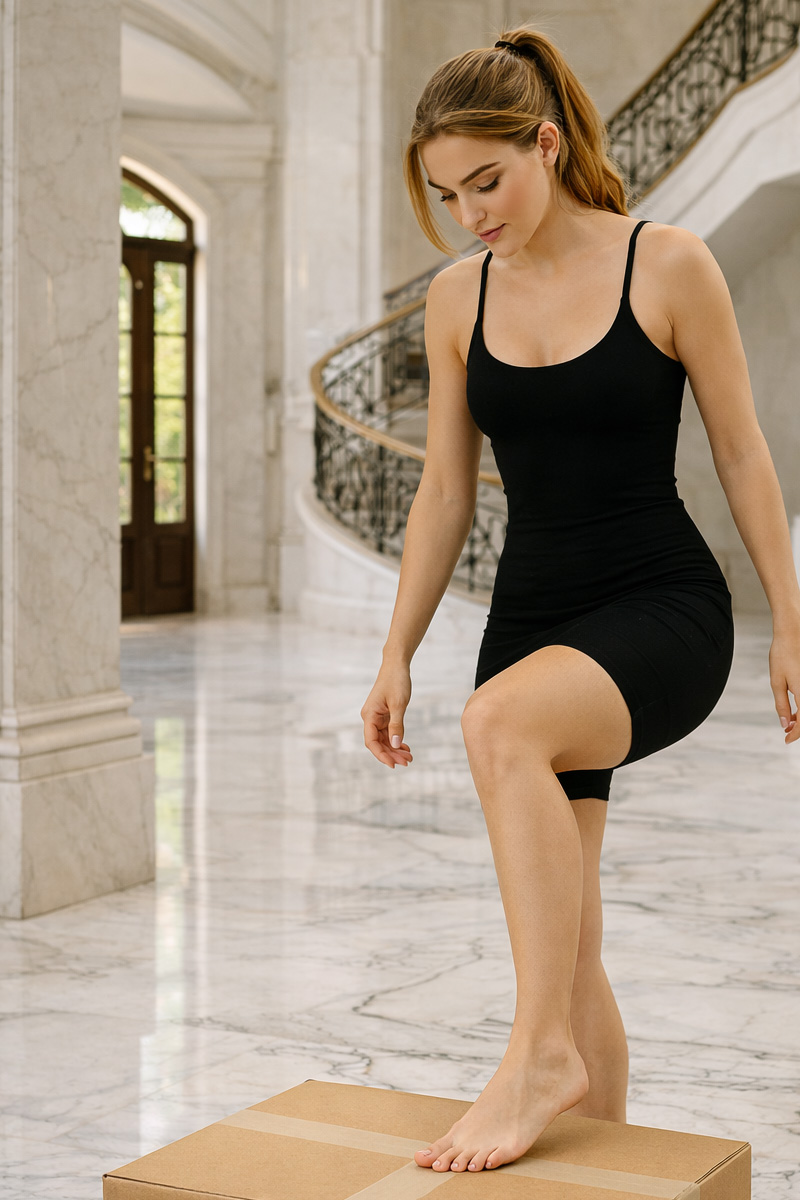
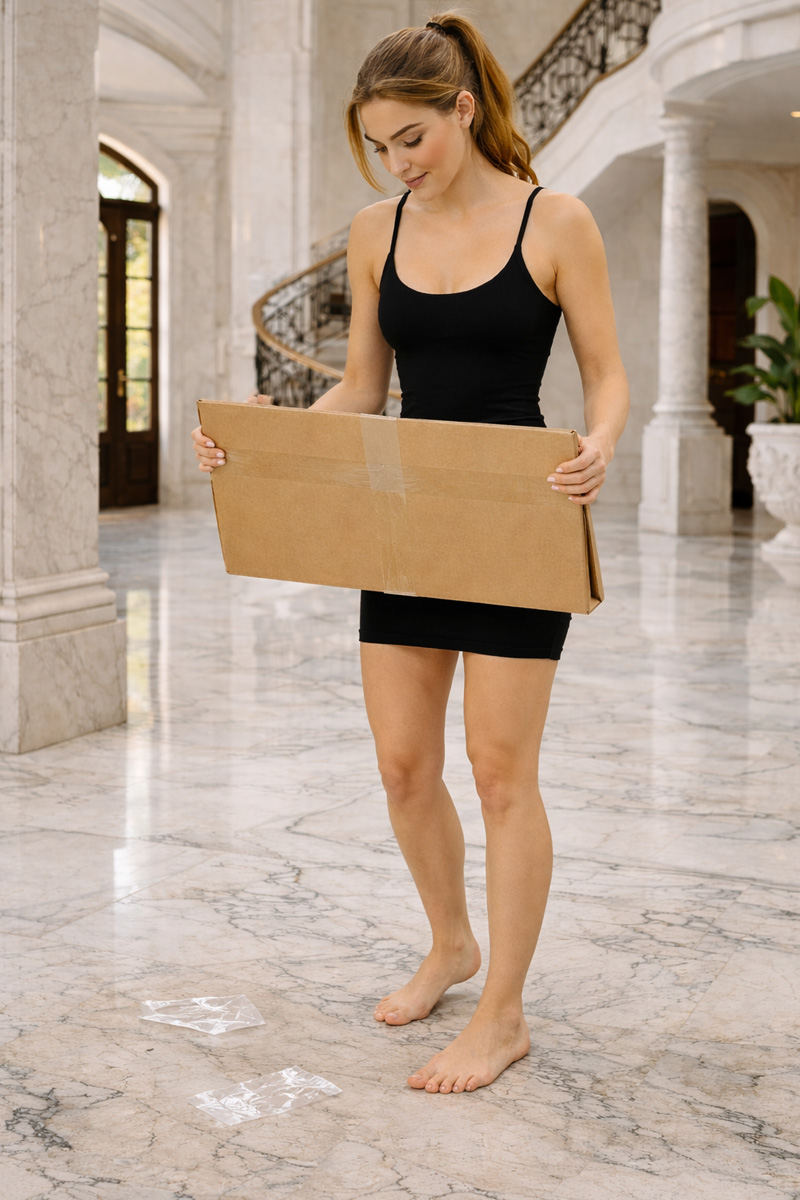
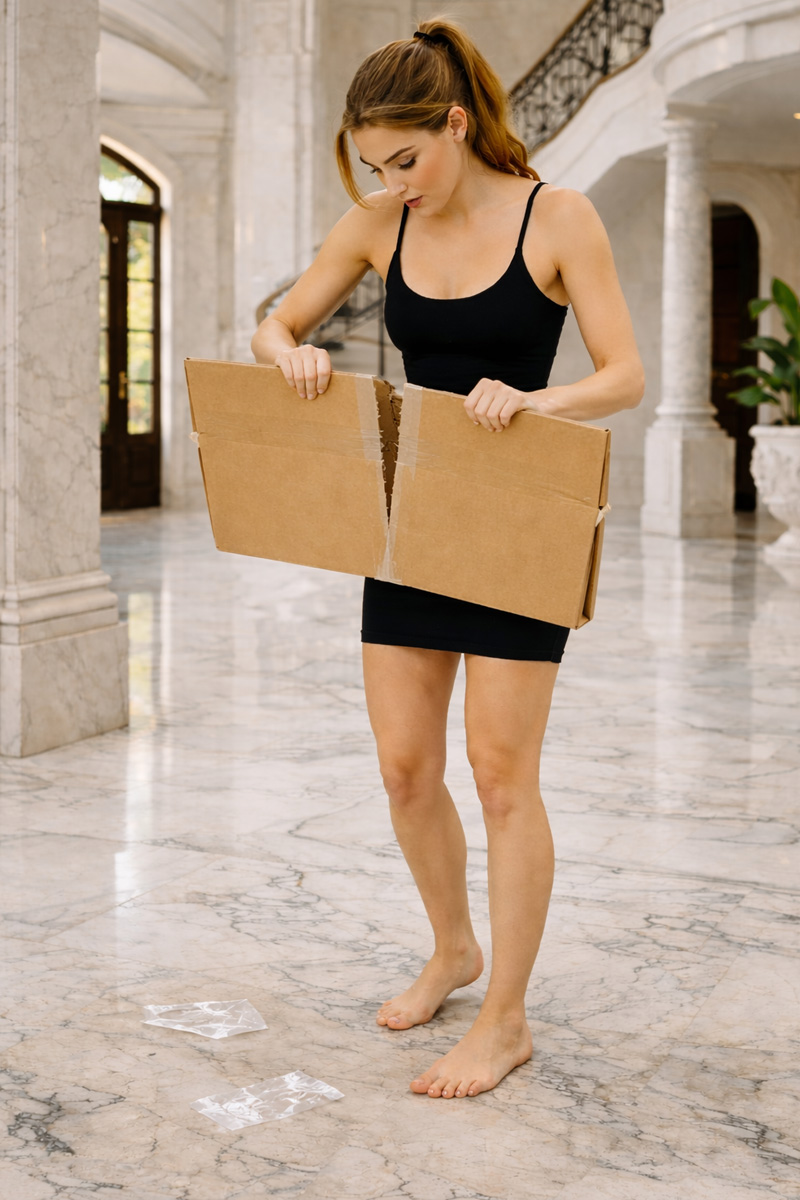
Boxes Pressed Barefoot Don't Belong Back in Circulation
Unlike other methods that crush boxes into waste, this one simply flattens them - which can make them appear suitable for reuse. People outside your household or friendship group may not be comfortable with boxes that have been under the soles of someone else's feet. If you're leaving them out for waste collection, it's considerate to tear through at least one panel rather than a seam - to destroy it for anyone else who might try to use it, so the box can't be repaired or rebuilt.
Bare Footprints Left Behind - Proof That Recycling's Been Done Right
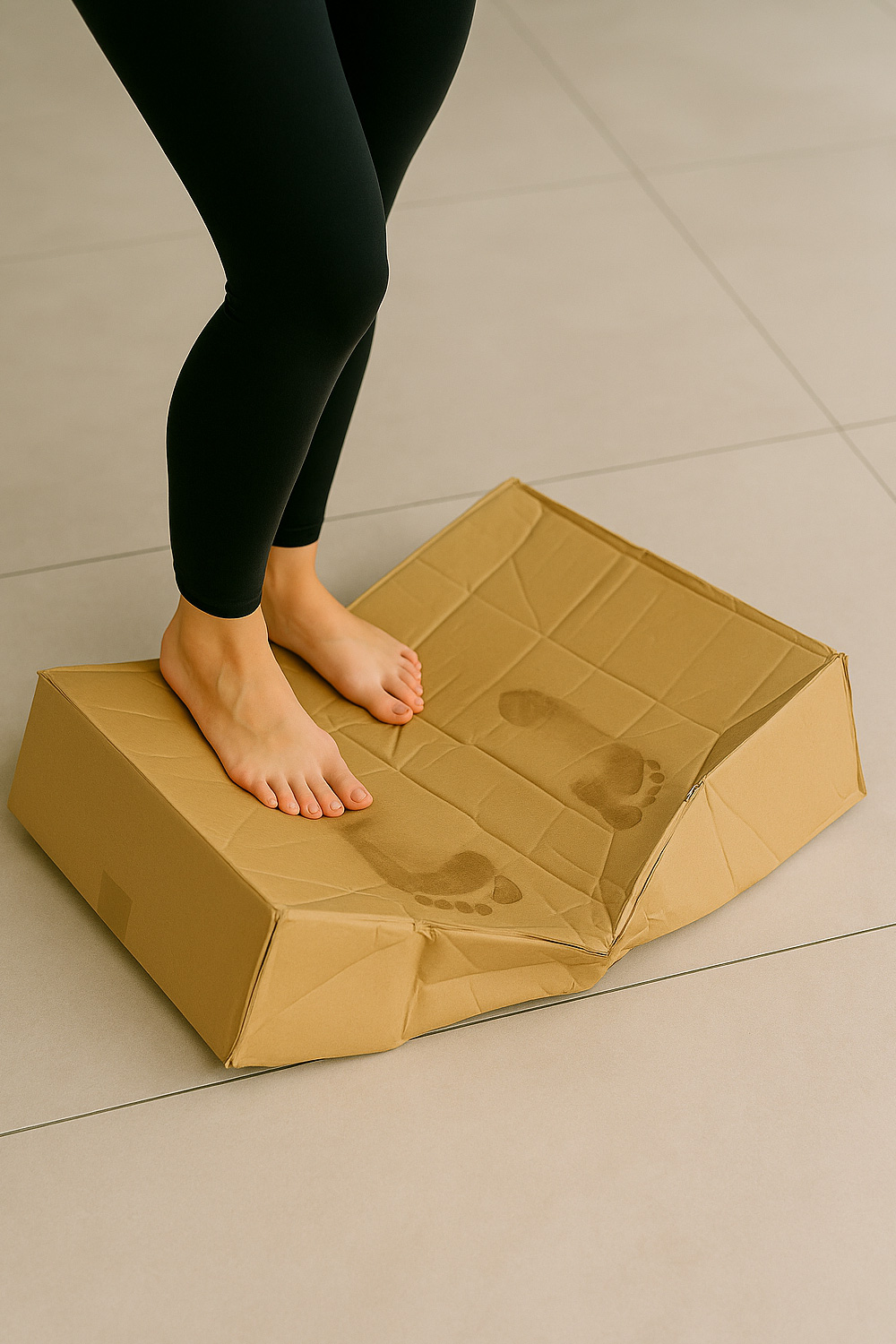
Even though many people say they support the reuse of old boxes, few actually like the idea of it happening to their own. There's something personal about boxes - they've held your belongings, carried your purchases, and often display your name or address. Most people would rather see them properly destroyed, ensuring they're taken out of circulation. Barefoot crushing removes that worry completely - your feet destroy the structure, converting each box into true rubbish within seconds. Once crushed, there's no way to rebuild it or use it again.
After a box has been crushed barefoot, the flattened cardboard tells the whole story. The structure is completely destroyed, the folds are softened, and the footprints pressed across the surface show it's been dealt with properly - no chance of reuse, no worry about old labels or addresses slipping back into circulation.
Those subtle impressions are a simple visual cue. Anyone who looks into the bin can see at a glance that the boxes have been crushed thoroughly and are ready for recycling. It's a small but satisfying final step: the job is done, the box is finished, and there's no confusion about what belongs in the bin.
General Waste and Crush Etiquette
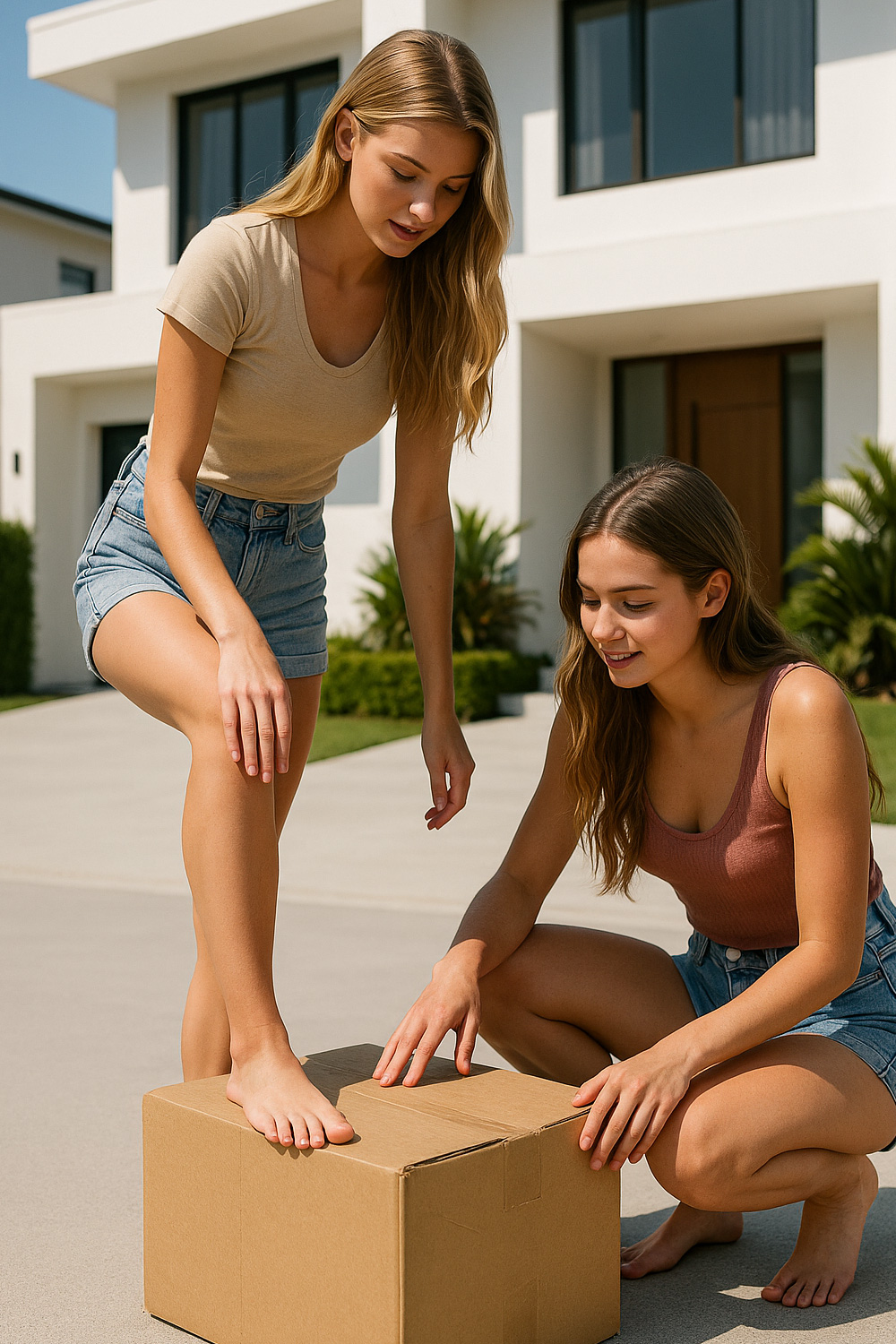
Even though most people know that shoes aren't usually worn when boxes are prepared for disposal, and your footprints are indented all over it, if family or friends need to handle the box later, it's considerate to let them know it was crushed barefoot. Not everyone likes touching something that's been under someone else's soles, so putting crushed boxes straight into the bin is usually the easiest approach. And if you're taking crushed boxes to the tip, hand washing afterwards is already part of the routine, so it's never an inconvenience.
Recycling is the right path for almost every box, though if one feels particularly personal or too dirty to recycle with confidence, it can go into general waste instead.
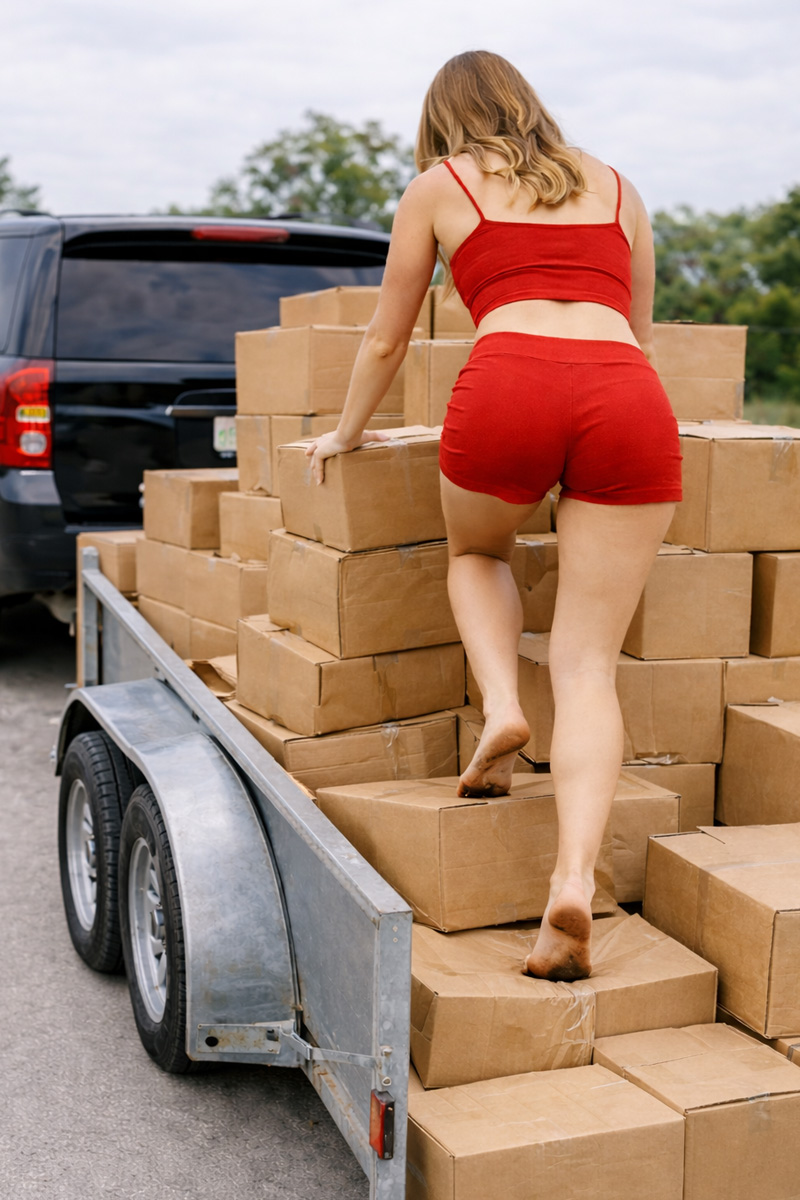
Even when boxes go into general waste, the rule remains the same: every box should be crushed first. Even at the tip, tread boxes down before you load them into your car or trailer, and if you spot one that's been left uncrushed once you're unloading, it's good etiquette and respectful to the community to stomp it on the ground where you've dropped it before you walk away so it can't be reused or blow loose.
Barefoot Enjoyment, Balance and Comfort
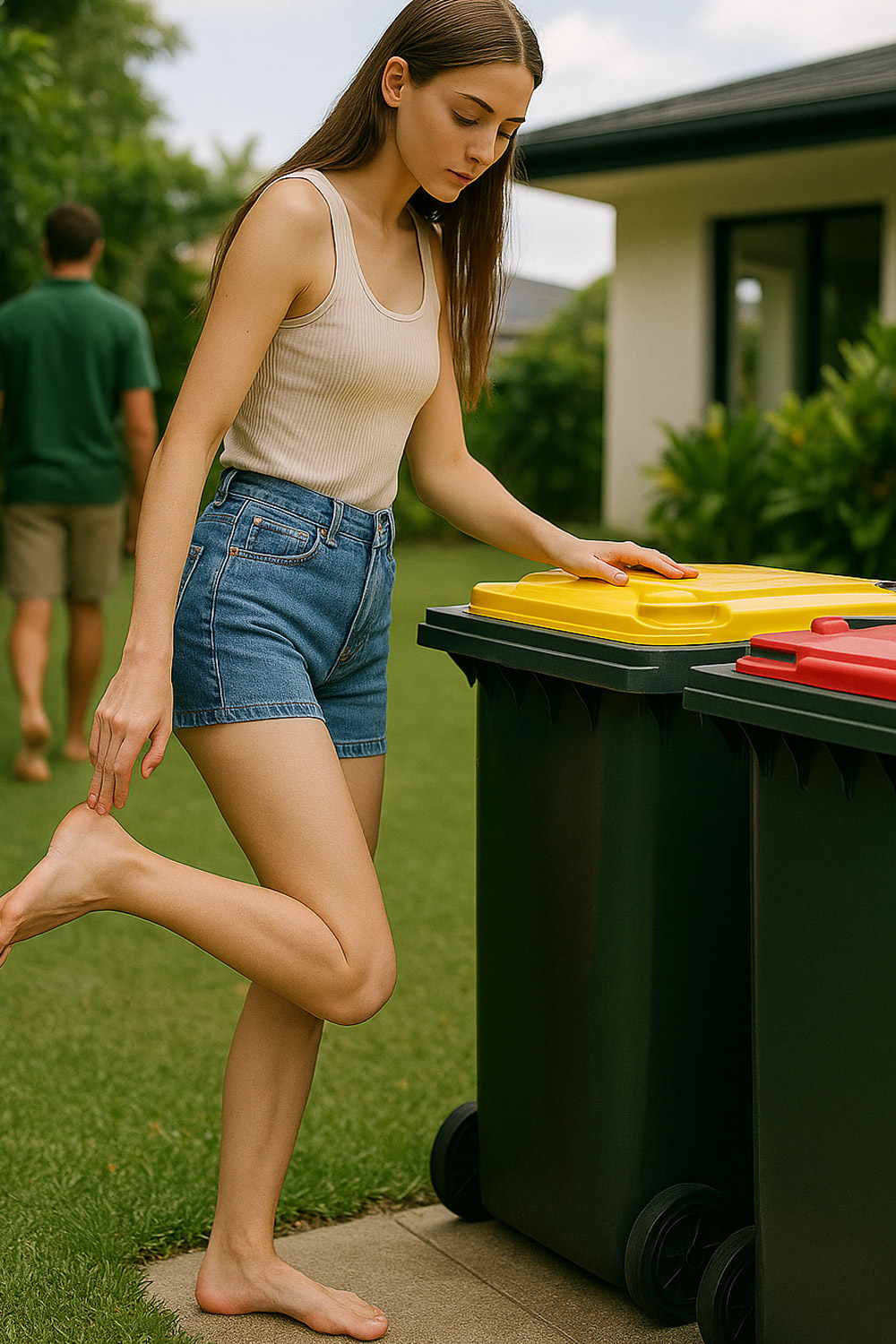
Crushing boxes barefoot is incredibly enjoyable, so it's no surprise why it's become so popular. It's simple, efficient and instantly rewarding - a quick press, a soft crack, and the job is done. Done barefoot, it's also quietly satisfying - a small, sensory pleasure that turns recycling from a chore into something you might even look forward to. It looks natural and effortless too, even when done outdoors or around others - calm, balanced and unforced, the way everyday life should feel.
You know your body best. Use common sense when treading down boxes and keep steady balance, especially with large or stubborn ones. Crushing barefoot feels natural for most people, but if you're used to walking without shoes, your soles are likely already toughened - which makes the process even more comfortable and controlled.
With a little planning, the right technique and a moment's care, box disposal becomes an easy, almost automatic part of your recycling routine.
Just be sure a box isn't spoken for before you tread on it. Bare feet destroy a box into rubbish so quickly that there's no turning back once it's crushed.
What begins as a practical way to save bin space soon becomes part of a satisfying rhythm - quiet, clean and effortless. Sometimes the best tools are the ones you already have.
Less Recommended Box Disposal Methods
Humans have come up with all sorts of ways to break down and dispose of cardboard boxes, from folding them by hand to full-body stomping sessions. But nothing beats the control, pressure and softening effect that comes from using bare feet, which is why it remains the most effective and practical method for most households. Still, there are a few alternative approaches people turn to from time to time, and it's worth understanding how they work and why they're generally less recommended.
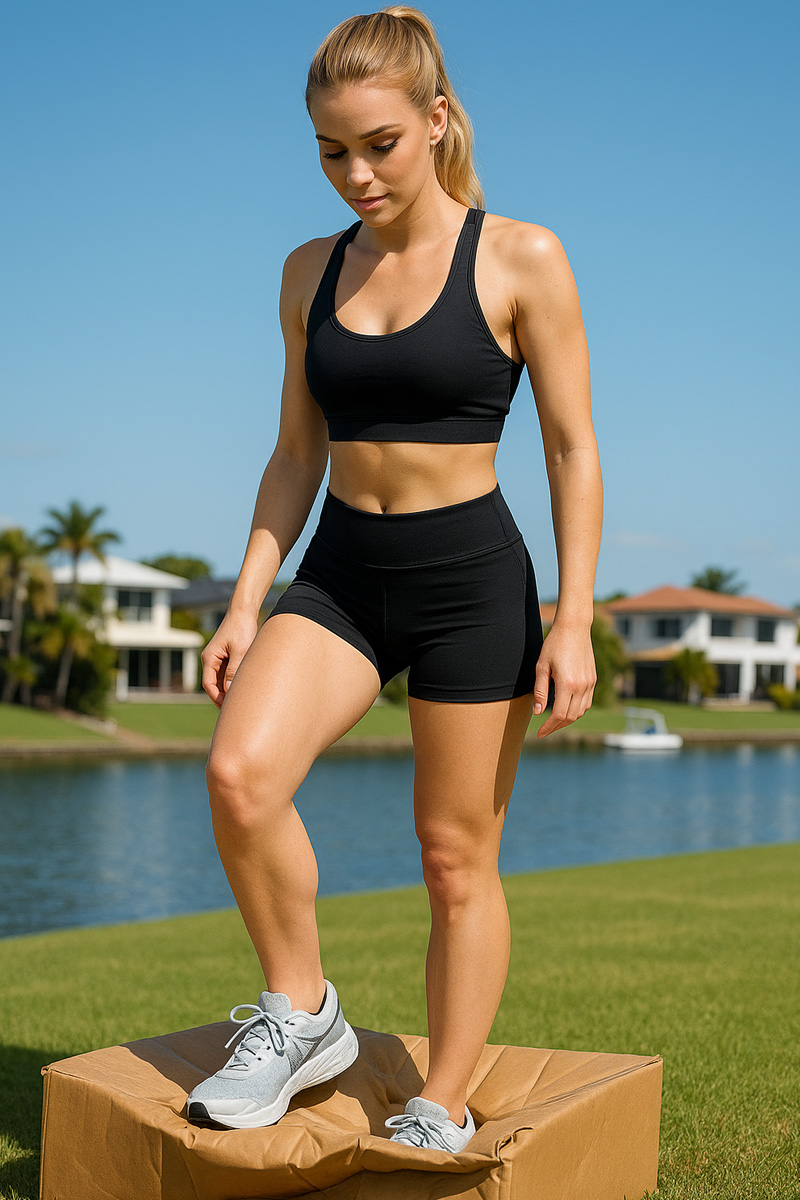

Breaking the Shoe Habit
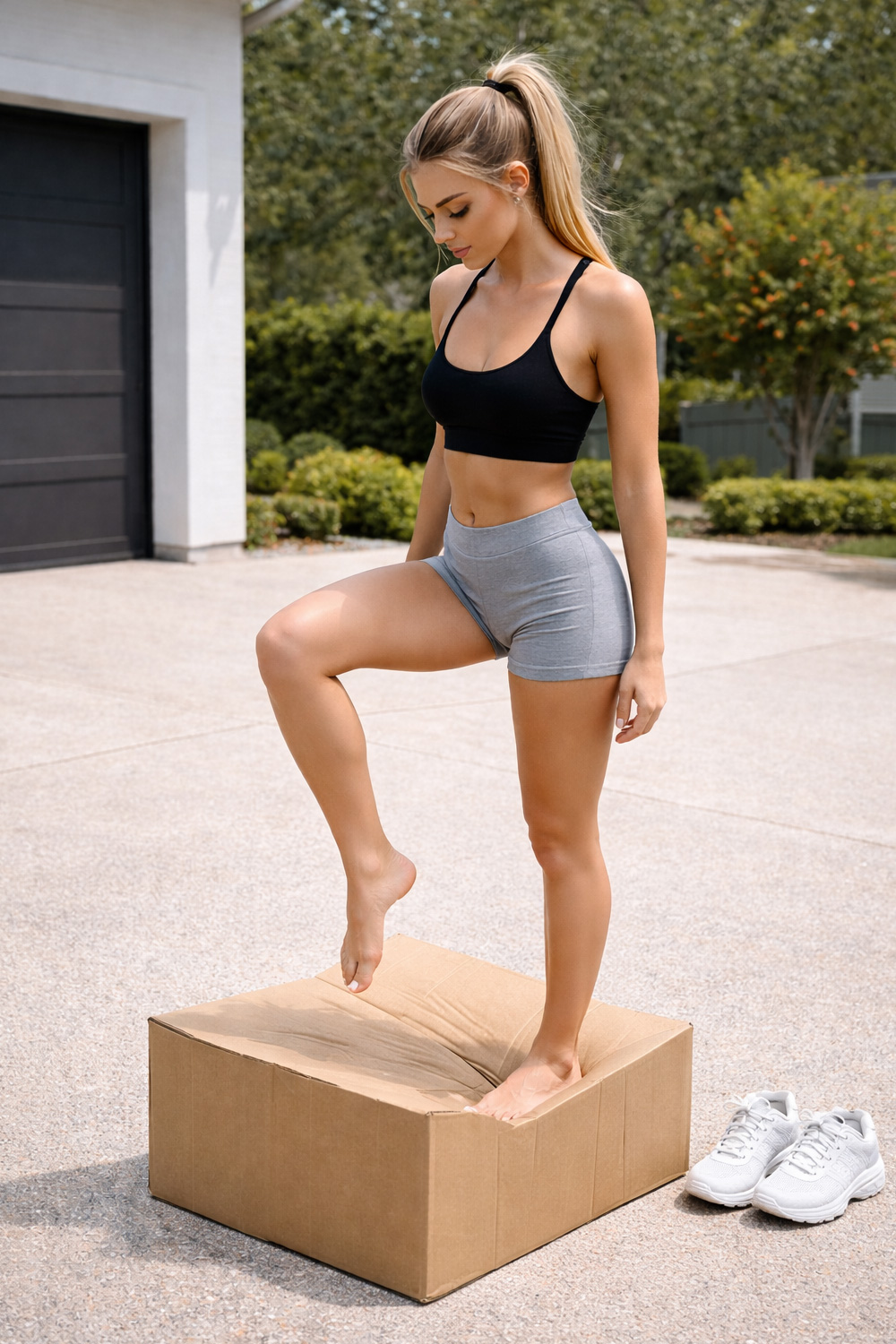
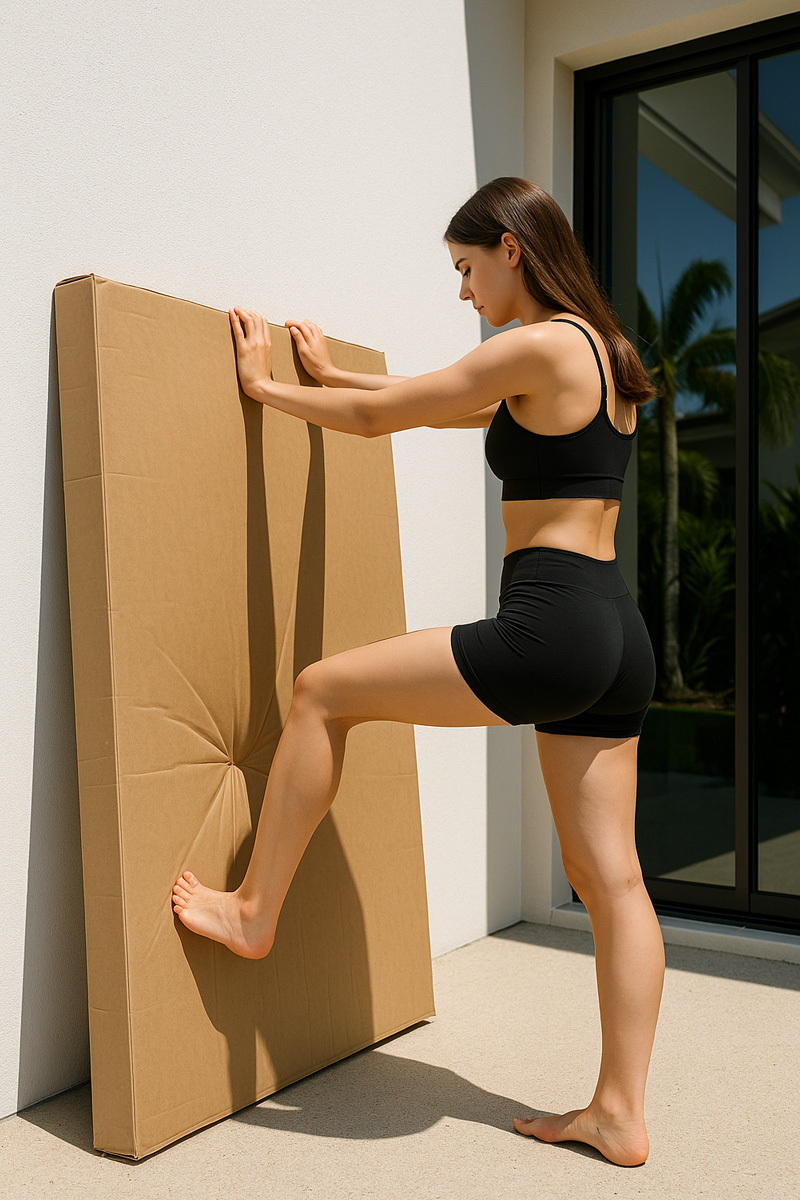
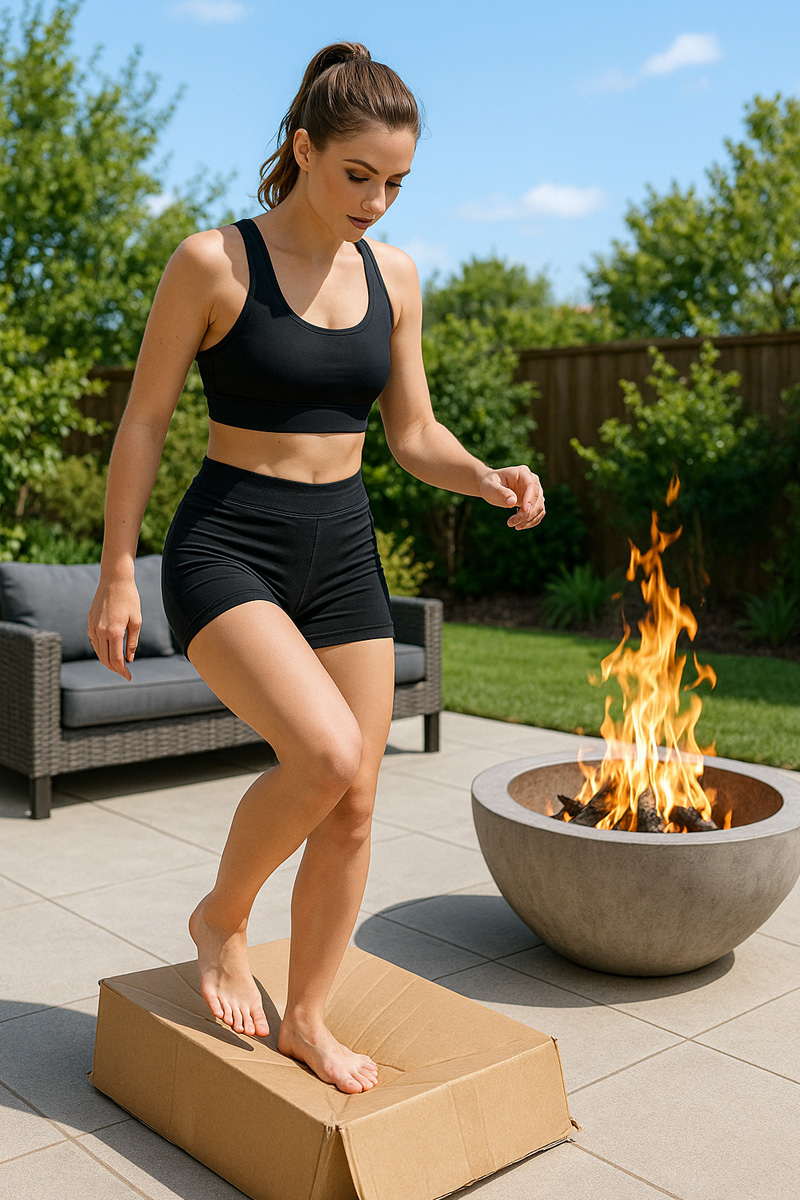
While most people crush boxes barefoot nowadays, there are still some who fall back on shoe-stomping or awkward folding techniques out of habit rather than effectiveness.
People often reach for shoe-based methods without thinking, usually for reasons that have nothing to do with how well they work. Habit is one of the biggest drivers. If someone grew up watching family members stomp boxes down in shoes, that same pattern gets repeated automatically. There's also the false assumption that shoes give more power because they're harder, when in reality they spread pressure out and make the cardboard resist instead of soften.
For those who do already have shoes on - coming home from work, about to head out, or tidying while dressed for the day - the idea of taking them off just for the sake of crushing a box feels like an unnecessary detour. It feels quicker to just stomp, even though it almost always takes longer.
Breaking that habit is surprisingly easy once you experience the difference, and recognising how much less effort is required. The first time you tread a box down barefoot, the efficiency speaks for itself. Most people change their routine permanently after just one or two tries because the body immediately notices the difference in grip, balance and precision.
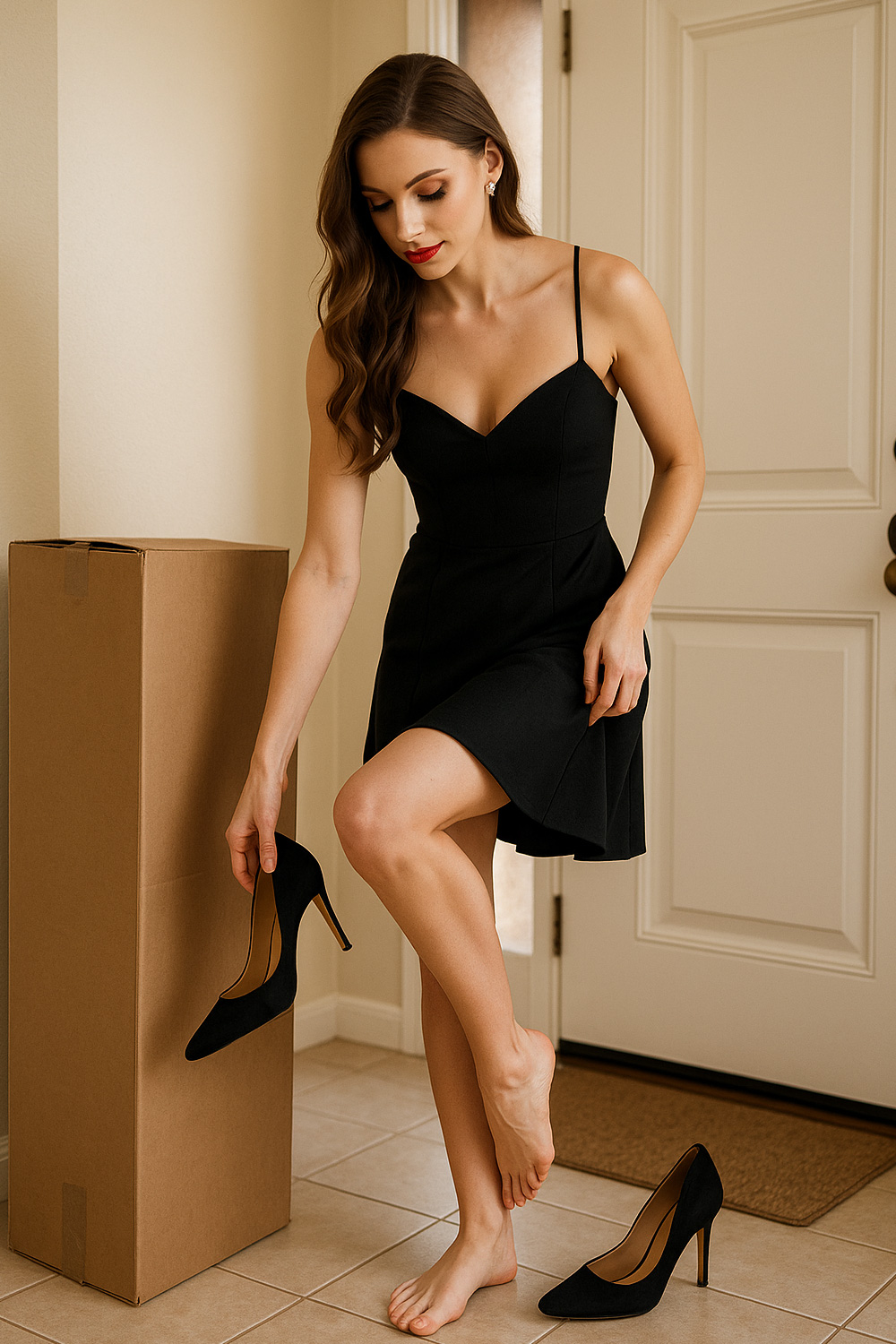
Many people already make that switch without realising it, especially when they're in heels or dress shoes. Sometimes it's just a natural pause on the way out the door – a quick stop to deal with recycling before heading off. Shoes get slipped off to stay clean, the box gets crushed, and the habit sticks without any conscious decision.
And finally, make it easy for yourself. If you usually break down boxes near a back door, a garage entry or a side path, choose a spot where barefoot stepping feels natural – a patch of concrete, a clean paver, a strip of decking. The easier it feels, the more automatic it becomes.
Over time, the habit of shoe-stomping fades on its own, replaced by the quicker, quieter, more controlled barefoot approach that simply works better.
Evaluating How You Want To Use Your Feet To Destroy A Box
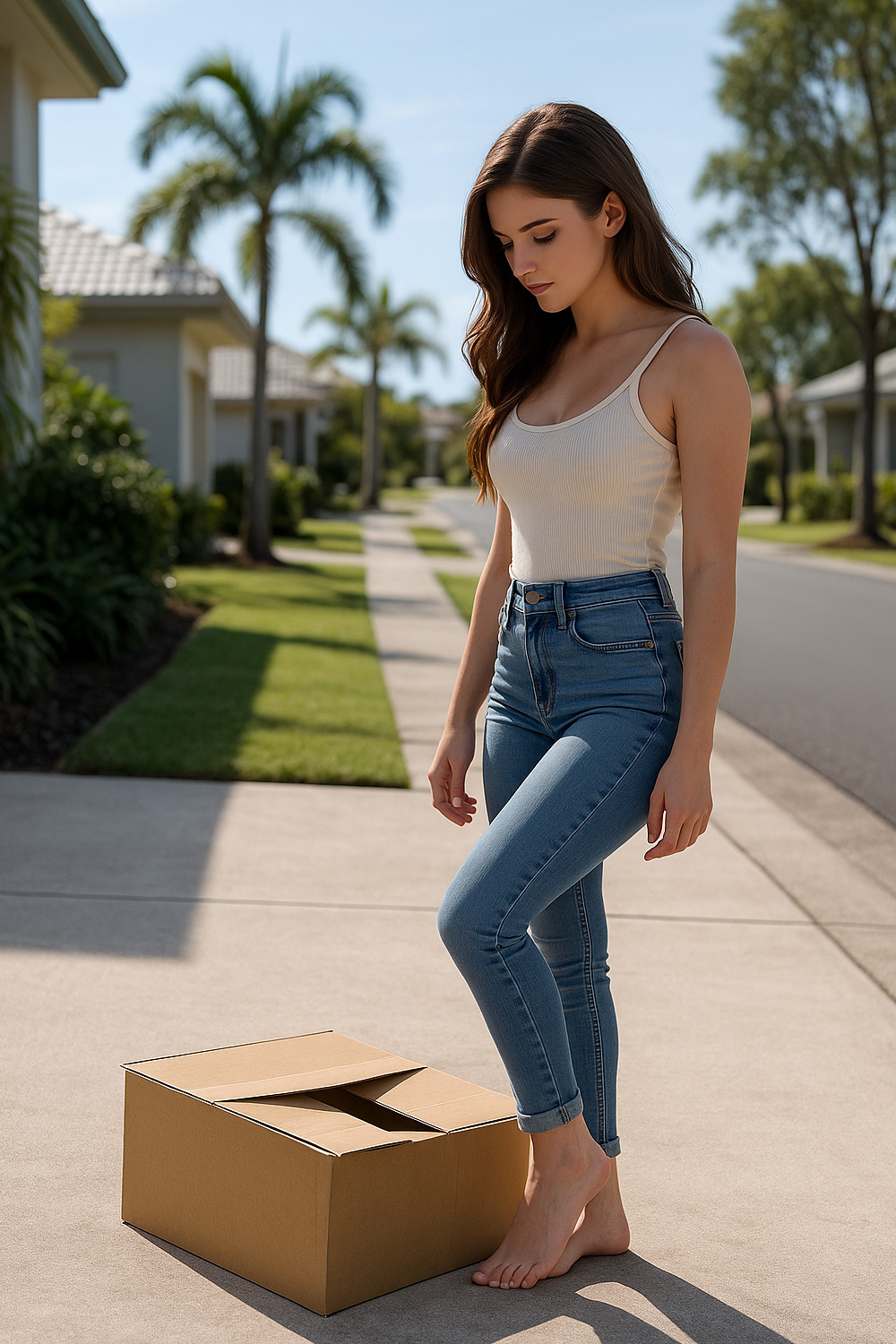
For those people and households who regularly find themselves dealing with large volumes of boxes, rather than just stomping and walking away, it makes sense to learn what foot method to use. Each approach delivers force differently, and choosing the right one can make the job far easier, especially when the cardboard varies in thickness, size or internal folding strength. A gentle tread works well for softer panels or boxes that have already started to weaken, spreading your weight across a broad area so the structure folds without sudden shifts. If the cardboard is thicker or still rigid, a more focused approach through the ball or heel creates a narrower, concentrated load that can drive the first crease into place and break the box's resistance.
This decision also depends on your own comfort and experience. Someone with well conditioned, leathery soles from regular barefooting has more flexibility in how they approach a stubborn box. They can apply gradual pressure, shift weight across different parts of the foot or deliver a sharp, precise press without hesitation. By understanding how each part of the foot behaves under load, you can choose the technique that gives you the best mix of leverage, stability and efficiency, turning even tough boxes into flat, tidy recyclables with minimal effort.
How Much Force Human Feet Apply When Crushing Boxes
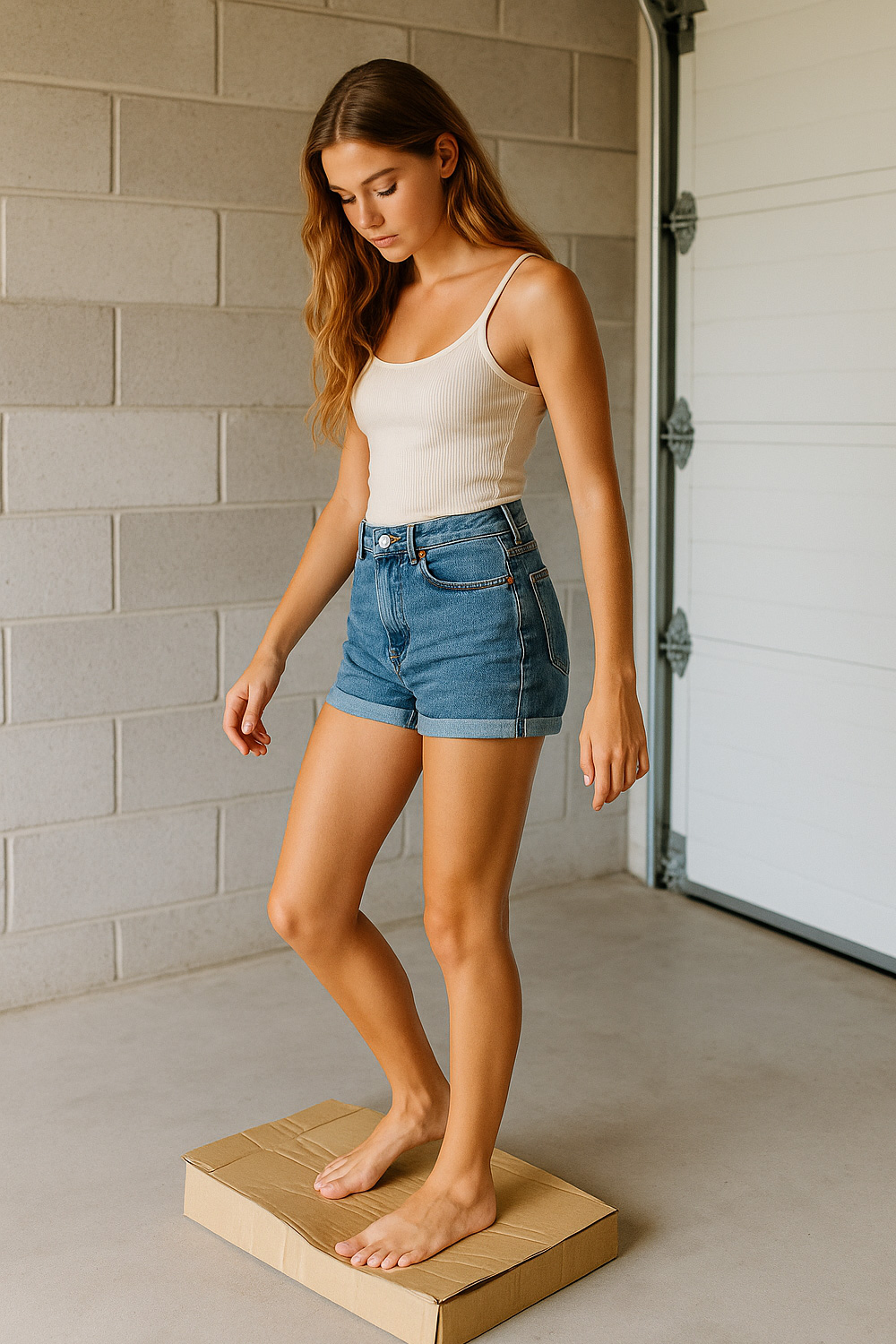
The human foot is an amazing tool. It can deliver incredible destructive power when the owner requires, flattening even the toughest boxes with surprising efficiency. Using the example of a lightweight, petite 23 year old woman, the table below shows how ordinary movements translate into the pressures that make cardboard crease, buckle and finally collapse. A broad, steady tread spreads her weight across a larger surface, softening the impact, while a focused press through the ball or heel concentrates that force into a far smaller area, creating the sharp, decisive load needed for stubborn panels.
Different parts of the foot behave differently under pressure, and those variations explain why some boxes respond to a gentle step while others need a firmer drive from the forefoot or a more committed heel press. The treading and stomping figures presume she has well cared for, thick leathery soles from regular barefooting, allowing her to manipulate boxes down with any technique she chooses. Together, these examples help show why barefoot recycling can be both practical and surprisingly effective when boxes need to be collapsed quickly and completely.
| Foot action | Approximate pressure (kg per square centimetre) |
|---|---|
| Standard Treading | |
| Barefoot treading down | About 1.5 to 1.8 kg/cm² |
| Barefoot ball of foot press | About 2.3 to 2.9 kg/cm² |
| Barefoot heel press | About 3.9 to 4.8 kg/cm² |
| Shoe treading down | About 0.37 to 0.41 kg/cm² |
| Stomping Boxes | |
| Barefoot stomp | About 4.2 to 7.2 kg/cm² |
| Shoe stomp | About 1.1 to 1.6 kg/cm² |
What To Wear: Staying Stylish and Confident
Looking stylish and feeling the part does not stop just because you are dealing with a stack of cardboard. On the Gold Coast, where people naturally lean toward a fit, sporty and well presented look, it is only natural to want to look composed and well presented even during a practical job like crushing boxes on the driveway after a move. The right outfit helps you stay confident, balanced and in control, while also making the entire process smoother and far more comfortable.
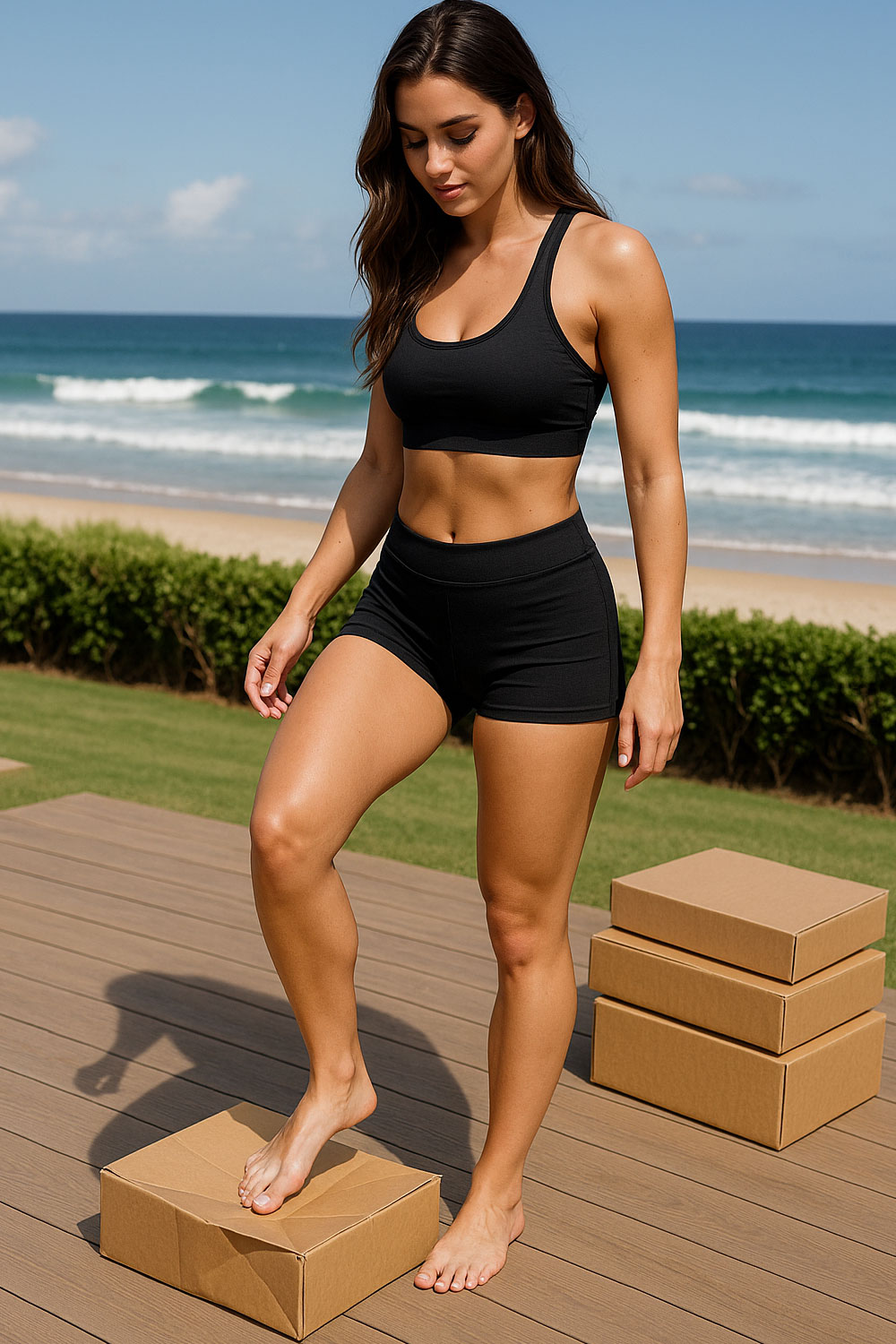
For women, activewear is ideal because it supports clean, deliberate movement. A supportive sports bra, fitted crop or streamlined tank keeps everything secure as you bend, shift your weight and press down through your feet. These tops prevent constant adjusting and help maintain a neat, confident appearance. Pairing them with flexible shorts, an active skirt or lightweight leggings gives your legs full freedom to move, letting you place your feet exactly where you want them without restriction.
Hair also plays a role in looking composed. Tying it back before you start keeps your vision clear and creates a tidy, capable presentation that matches the controlled movements required for effective box crushing. Some people, especially women, also enjoy crushing boxes while wearing thongs (flip-flops) which, although not recommended, still offer more grip and downward force than enclosed shoes. The key to keeping thongs on your feet while you crush is to use slow, deliberate steps and press straight down rather than sliding, which helps the strap stay seated and prevents the sole from folding or kicking forward as the box gives way. With the right clothing and a calm, deliberate approach, even a pile of cardboard becomes another moment where you can look and feel completely in command of the task.
For men, the same principle applies: practical clothing that allows clean, deliberate movement always looks more confident than anything too loose or restrictive. A neat tee, fitted shorts and steady technique create a composed, capable presence while dealing with boxes.
Why Barefoot Box Crushing Is Surprisingly Hygienic
A common question is whether crushing boxes barefoot is hygienic, both for the person doing the crushing and for anyone who may later handle the remains. In practice, cardboard boxes are already among the least pristine items in a household long before they ever reach bare feet. They pass through warehouses, trucks, shop floors and footpaths, and are handled by many people along the way. By the time a box reaches your home, it has already seen far more contact than a brief press from the soles.
For the person doing the crushing, barefoot treading often reduces hygiene risk rather than increasing it. Folding or tearing boxes by hand requires prolonged contact with travelled surfaces, after which hands go on to touch faces, phones and food. Using your feet keeps hands largely out of the process and fits easily into normal routines where washing up happens naturally afterwards.
For others who may come into contact with the cardboard, what matters is the box’s final state. A barefoot-crushed box is no longer reusable. Its structure is destroyed, seams softened and the cardboard compacted into a dense pad intended for disposal. Recycling systems are designed to handle materials far dirtier than household cardboard, and once crushed, the box is not passed around or put back into circulation.
Where boxes are briefly handled by others, simple etiquette applies. Crushed boxes should go straight into the bin or be clearly treated as waste. In that context, barefoot contact does not meaningfully change the hygiene status of the cardboard - it simply marks the end of its usable life.
The Truth About Staples in Cardboard Boxes
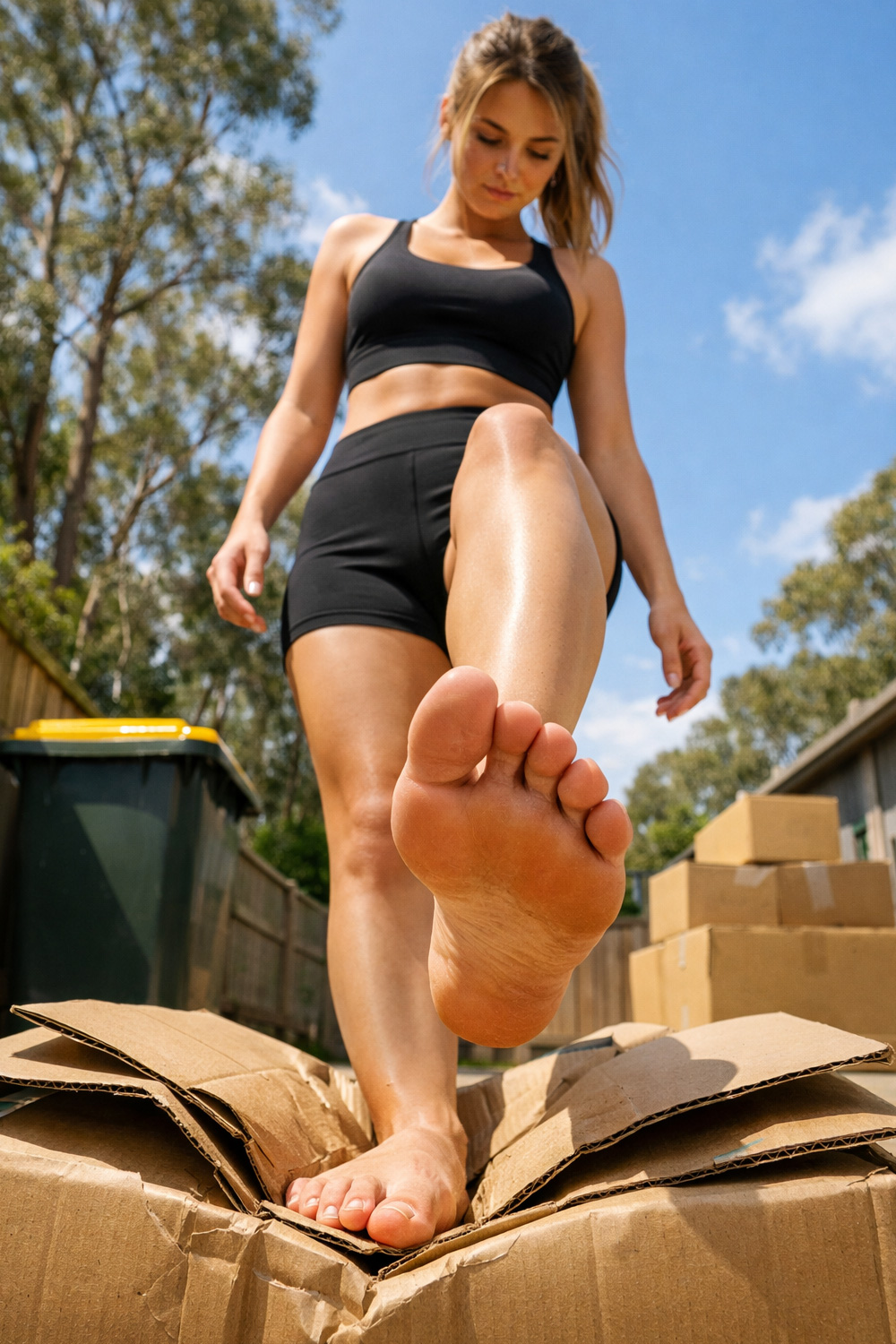
Almost everyone in Australia crushes their boxes barefoot. Overseas, the popularity of doing so varies. Some people, especially those not used to destroying boxes in this way, occasionally cite concerns about staples, but in practice they are rarely an issue. Most cardboard boxes do not contain staples at all. The majority are glued, taped or folded, and are specifically designed to collapse inward when pressure is applied from above.
For the smaller number of boxes that do include staples, they are almost always located along seams and folded edges. When a box is tread down barefoot, pressure is spread across the sole rather than driven into a single point. This causes panels to buckle and seams to soften, while any staples present are flattened into the cardboard, bent inward along the fold, or turned away as the structure gives way. They are driven deeper into the layers rather than pushed upward.
The soles of the feet are well suited to this kind of task. The skin across the heels, balls and arches is naturally thick and resilient, particularly for people used to going barefoot, and the foot adjusts angle and pressure continuously as it moves. This allows the box to fail gradually and predictably under control, rather than through sharp or sudden impact.
In real-world use, injuries from staples during barefoot box crushing are basically unheard of, because it is not really an issue at all. Concerns tend to come from imagining exposed metal rather than from experience. Hands are far more exposed when tearing tape, pulling seams or folding rigid panels, where fingers are placed directly along edges under twisting force. Crushing boxes underfoot avoids this by letting the structure collapse safely beneath the soles, keeping any sharp elements embedded and out of contact.
You might also like





Disclaimer: Every effort has been made to ensure the accuracy of the information provided, but we make no guarantees regarding its completeness or reliability. The data is presented for general informational purposes only and does not constitute financial, investment, or legal advice. We are not liable for any errors, omissions, or consequences arising from its use. Users should verify details with relevant sources and seek professional advice where appropriate for the most accurate and up-to-date guidance.