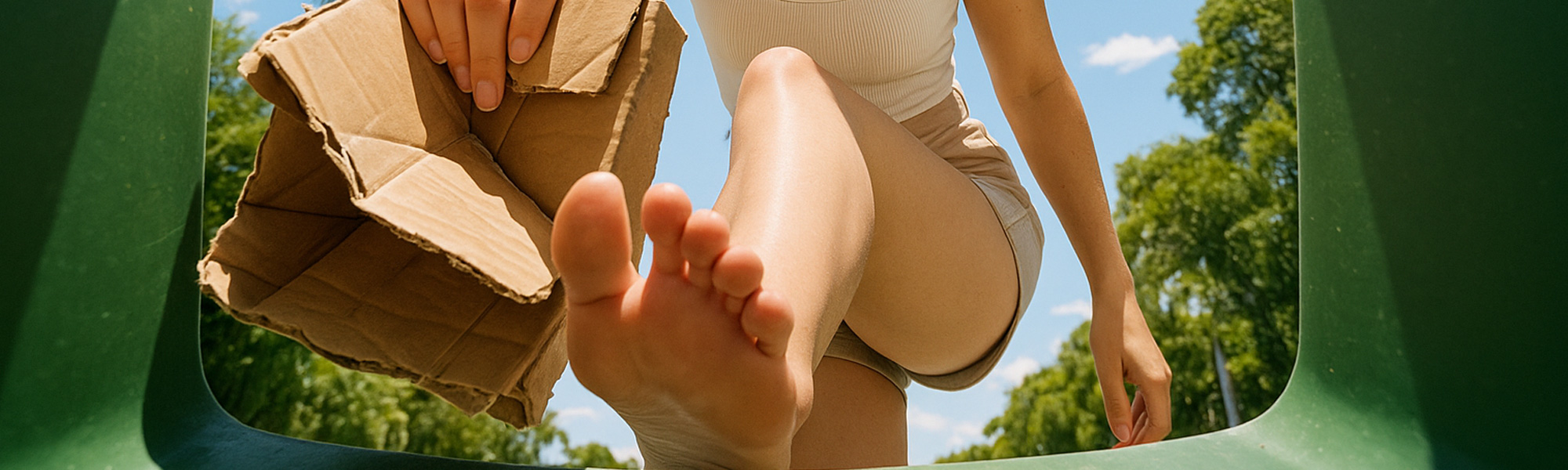
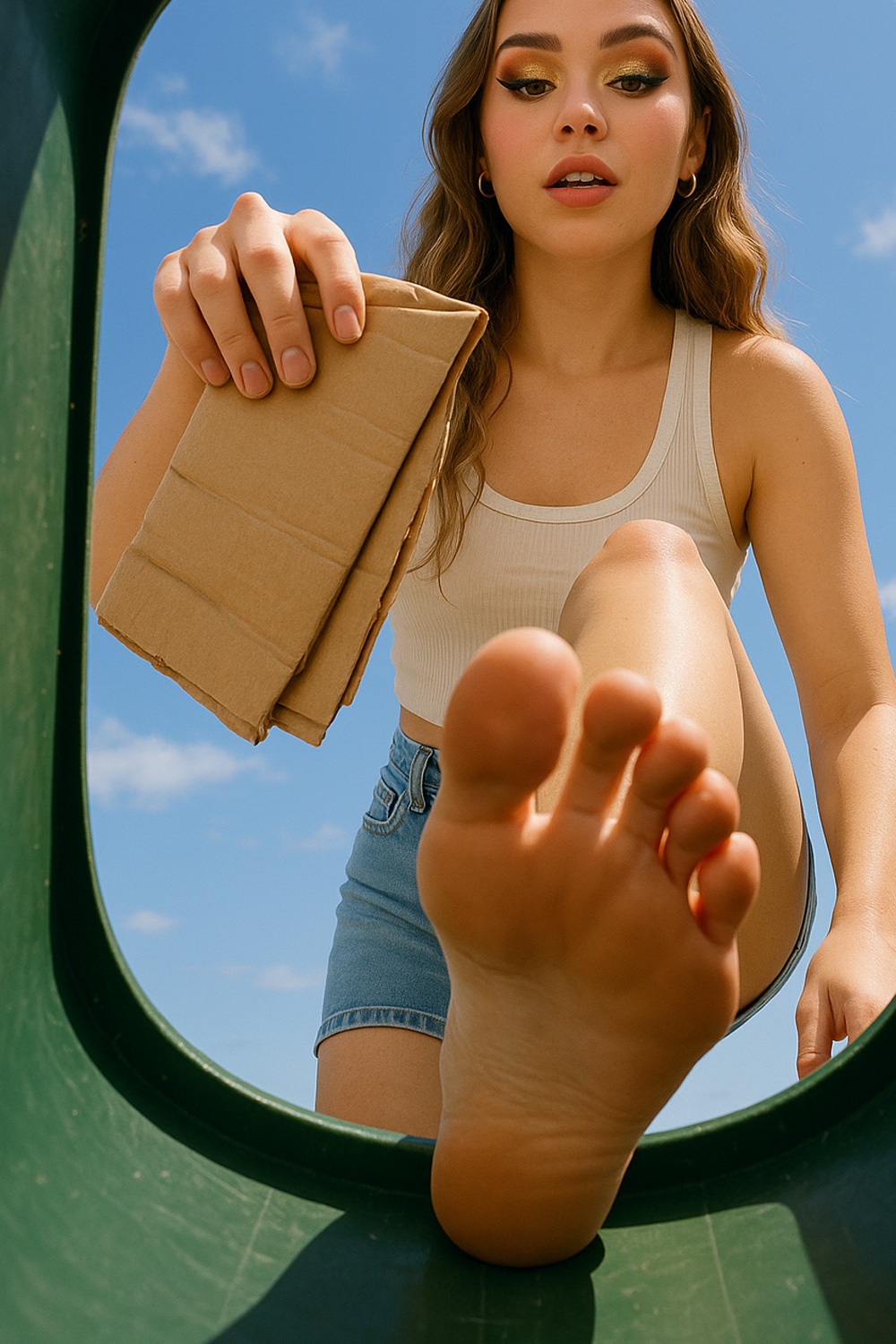
If your recycling bin keeps filling up before collection day, the cause is rarely how much you recycle. In most households, the real issue is that rubbish is never properly pressed down with the feet. Material is dropped in, lightly flattened, or pushed with hands and tools, then left to hold its shape. Space is lost early, layers lock in place, and by the time the lid becomes hard to close, the outcome is already fixed.
Pressing rubbish down with your feet changes how the bin behaves. Bodyweight applied through the feet collapses trapped air, breaks soft resistance, and forces material to settle into the true base of the bin instead of hovering on false platforms. When this is done deliberately and consistently, bins stop filling chaotically. Capacity becomes predictable. The bin starts working like a container rather than a pile.
It sounds simple, and in many ways it is, but technique matters. Pressing down casually will recover some space. Pressing deliberately, with an understanding of how layers settle and where air hides, recovers far more. Small adjustments in stance, pressure, and placement turn a basic action into a system that consistently maximises bin space week after week, without extra effort or force.
Why Pressing Down with Your Feet Works
Recycling bins do not fill evenly on their own. Cardboard and soft packaging are engineered to resist collapse. They bow, bridge, and form suspended layers that block access to empty space below. From above, everything looks full. Beneath that surface, large volumes remain unused.
Hands and tools work from the wrong angle. They apply force briefly and from above, often compressing only the top layer while leaving underlying voids untouched. Feet solve this because they apply steady, distributed weight directly onto the highest points. Layers are encouraged to settle instead of flexing. Air escapes instead of being trapped. The entire mass moves downward as a unit.
This is why pressing down with your feet should not be treated as an emergency fix at the end of the week. It is the core action that allows the bin to use its full internal volume.
Barefoot Pressing Versus Shoes
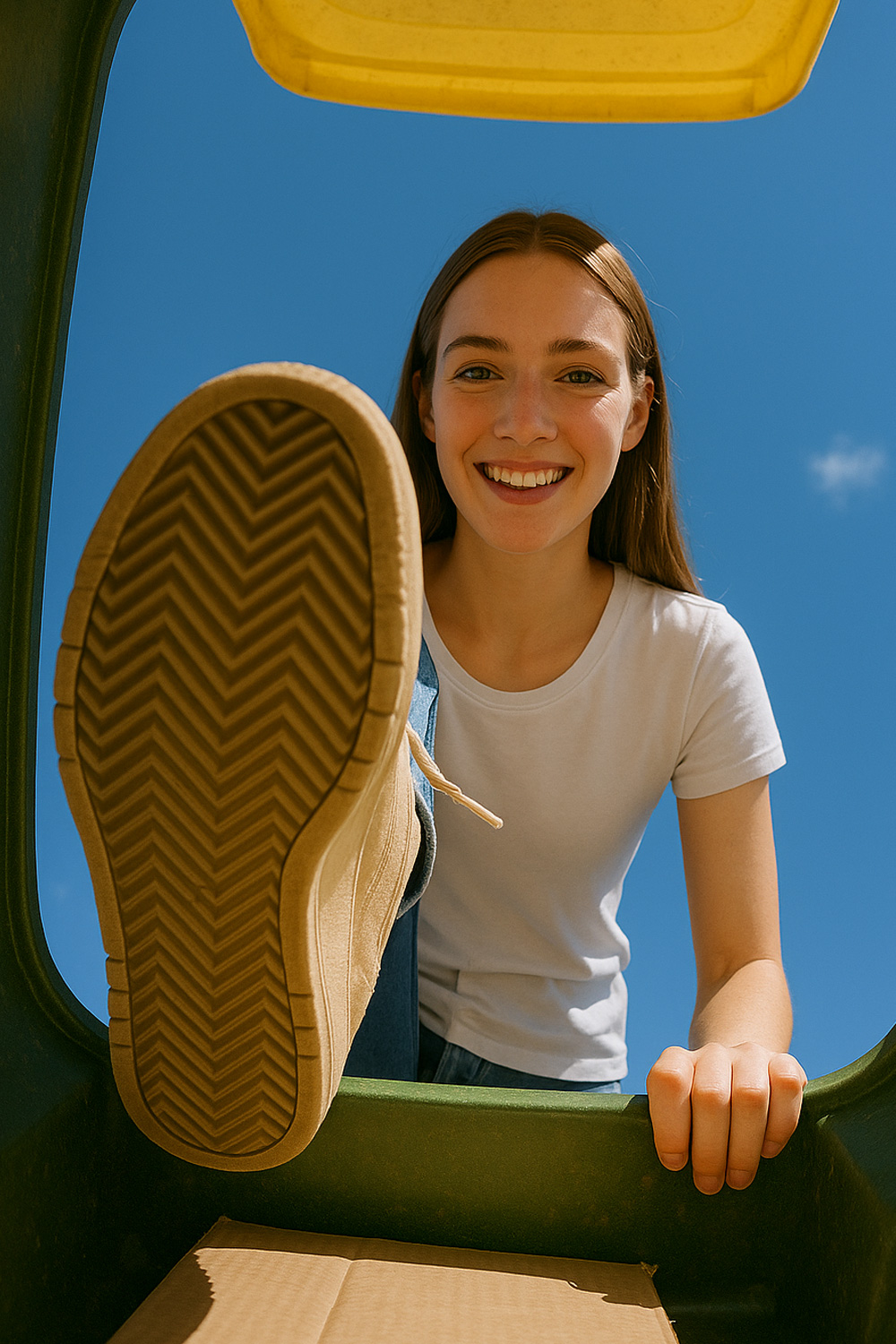
Some people prefer to press rubbish down with shoes on. Habit, temperature, or a desire for separation can make that feel easier at first. Shoes can flatten material and are still better than leaving rubbish untouched.
For most people, barefoot pressing is more effective. Without a rigid sole interfering, pressure is applied evenly and the material actually breaks down instead of just being pressed flat. You can feel resistance change, guide layers as they soften, and know when compression is complete. That feedback allows material to be shaped into corners and along walls rather than springing back into the centre.
Many households find that once barefoot pressing becomes normal, shoes feel unnecessary. Control improves, movements slow down, and the work becomes lighter rather than heavier.
Confidence in What Your Soles Can Do

There is also confidence that comes from understanding what your soles are capable of. Adult feet, and the feet of older teenagers in barefoot households, are not fragile. They are conditioned, tough, and extremely well suited to interacting with everyday materials like cardboard. They are designed to take weight, adapt to uneven surfaces, and transmit detailed feedback to the brain.
When you step onto a cardboard box barefoot, it doesn't hurt. You are applying a broad, flexible, responsive surface. Your soles spread pressure evenly. They bend with the material instead of fighting it. They feel tape lines, folds, and layered resistance instantly. This is why barefoot crushing feels controlled rather than aggressive.
As confidence grows, posture improves. Movements slow down. Force is applied more deliberately. Boxes stop feeling stubborn. They become temporary shapes that are easily erased.
Getting into the Bin When It Matters
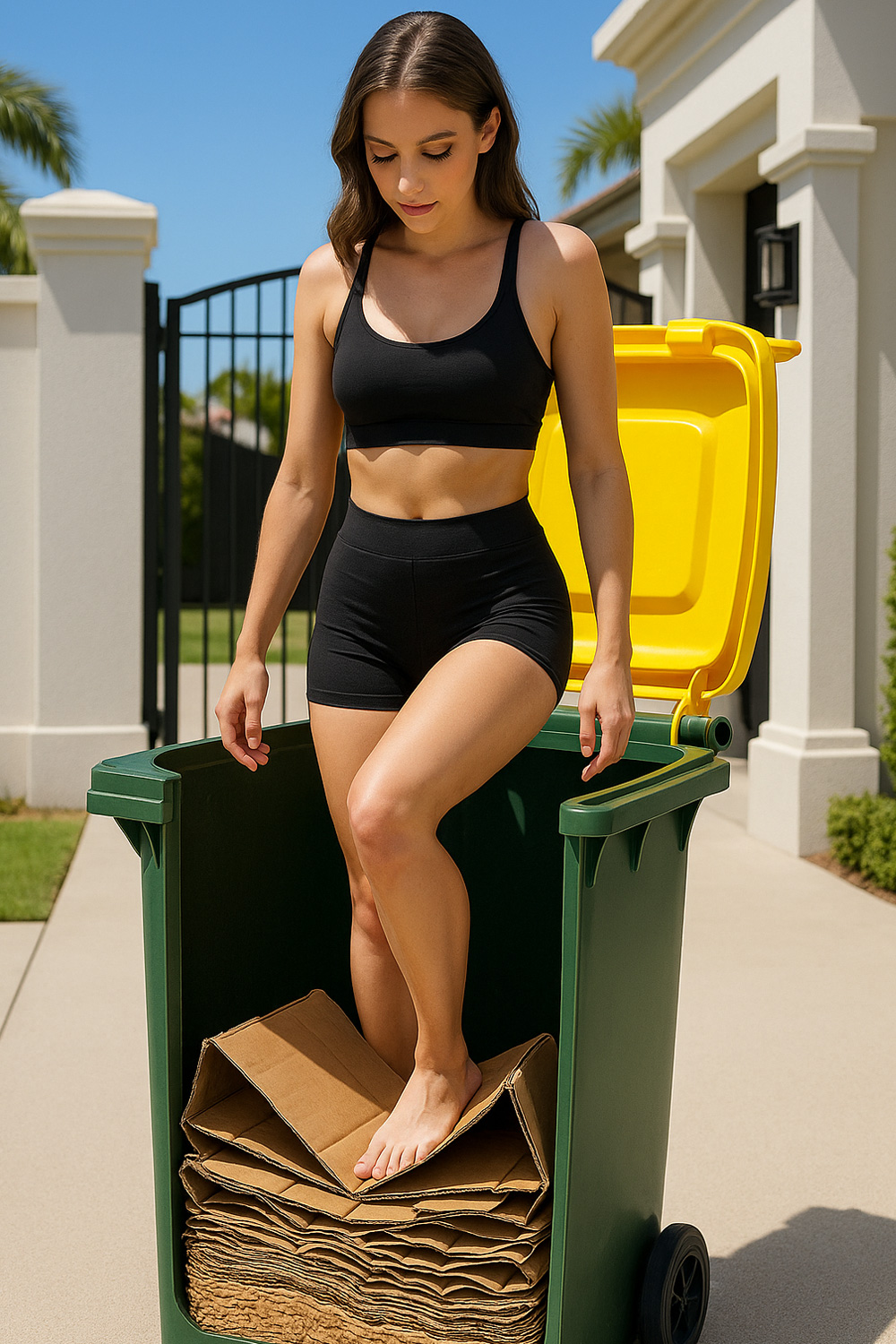
As the bin fills, there are times when pressing from above with just your hands is no longer enough. Soft layers can settle unevenly or form platforms that resist further compression. In these moments, stepping into the bin allows you to work directly on the problem areas.
Using your feet you can apply pressure exactly where it is needed, shift material sideways, and collapse voids that cannot be reached from the opening. This is not about speed or force. It is deliberate shaping that allows the contents to settle lower and stay settled.
Once your feet are inside the bin, the interaction becomes controlled and deliberate rather than forceful. Barefoot, tough soles trample and push firmly against the surface. Leathery soles grip the material, driving it downward where space actually exists. Panels that once held their shape begin to soften, folds release, and trapped air escapes. You feel layers compact and merge. The contents stop behaving like separate boxes and start acting as a single mass that stays where it is put, taking up less height each time pressure is reapplied with the feet.
This step does not need to happen every week. When it is needed, however, it can recover space that would otherwise be lost for the remainder of the cycle.
Preparing the Bin Before Your Feet Go Inside
Preparation is essential before compressing inside the bin. Only soft recyclables should be present. No glass. No cans. No rigid plastic edges. Even a single overlooked item can turn bodyweight into pain. If there is any doubt, the top layers should be removed and checked.
The bin must sit on flat, stable ground. Uneven pavers, sloping driveways, or soft surfaces reduce control. Wheels should be positioned so the bin cannot roll as weight shifts.
Support should be chosen in advance. This may be the bin rim, a wall, a fence, or a bench. Some households use two-person support, holding hands or forearms while weight is transferred. This is practical, controlled, and sensible.
Entering the Bin and Applying Weight
Entry is always slow and deliberate. One foot goes inside first while the other remains firmly on the ground. Most of your weight stays outside initially. You feel how the surface responds before committing.
Weight is transferred gradually. Compression relies on sustained pressure, not impact. Leaning steadily allows cardboard to settle and lock into place instead of rebounding.
Using your Feet Intentionally
Different parts of the foot do different jobs. The heel breaks initial resistance in flat panels and box centres. The ball of the foot allows controlled settling of layers. The arch spreads load across wider areas, reducing spring-back. Toes guide material into bin walls and corners where space is often wasted.
By shifting contact points deliberately, you shape the contents rather than simply squashing them. Over time, you begin to feel where space still exists without needing to look.
Working Walls, Corners, and Hidden Voids
Most wasted bin capacity lives along the walls and in the corners. Cardboard naturally stacks in the centre, leaving vertical voids unused. Pressing with your feet allows you to target these areas directly.
Angling the foot and applying steady pressure guides material down the sides and into corners. Once corners are packed, they act as anchors. They resist rebound and help hold central layers down. This slow shaping consistently outperforms force.
Knowing When to Stop
There is a clear point where compression is complete. Resistance stops changing. Layers stop settling. When contents sit flush with the rim and resist controlled pressure, stop. Overfilling causes lid problems and collection issues. Effective compression is about efficiency, not maximum force.
Crush Everything Properly at the Source
The single biggest improvement any household can make is to also crush every cardboard box fully using the feet the moment it becomes empty. When this is ideally done barefoot, and done consistently, households achieve up to a third more usable recycling bin space across a normal bin load. Boxes are not cut, loosely folded, or flattened by hand. Every box is crushed completely at the source, and doing it barefoot is what delivers the maximum space gain.

A family cereal carton in the kitchen is never folded or stacked. The moment it is empty, it is crushed. The box is dropped to the floor, treaded down, and finished on the spot. Once crushed, it will never demand space again.
All boxes - large cartons, shoe boxes, delivery boxes, internal inserts, appliance boxes are treated the same way. Everything is crushed immediately, barefoot, where it is opened. Small boxes matter more than most people expect. Left intact, they trap air extremely efficiently. Ten small uncrushed boxes can occupy the same volume as several large flattened cartons. Crushed immediately, they become thin layers that barely register later.
Households that adopt this habit notice a fundamental change. When everything entering the bin is already flat, the bin stops filling chaotically. Layers stack instead of bridging. Compression later becomes calmer and faster. That extra third of space appears week after week without changing bin size or collection schedules.
Why Barefoot Crushing Outperforms Every Other Method
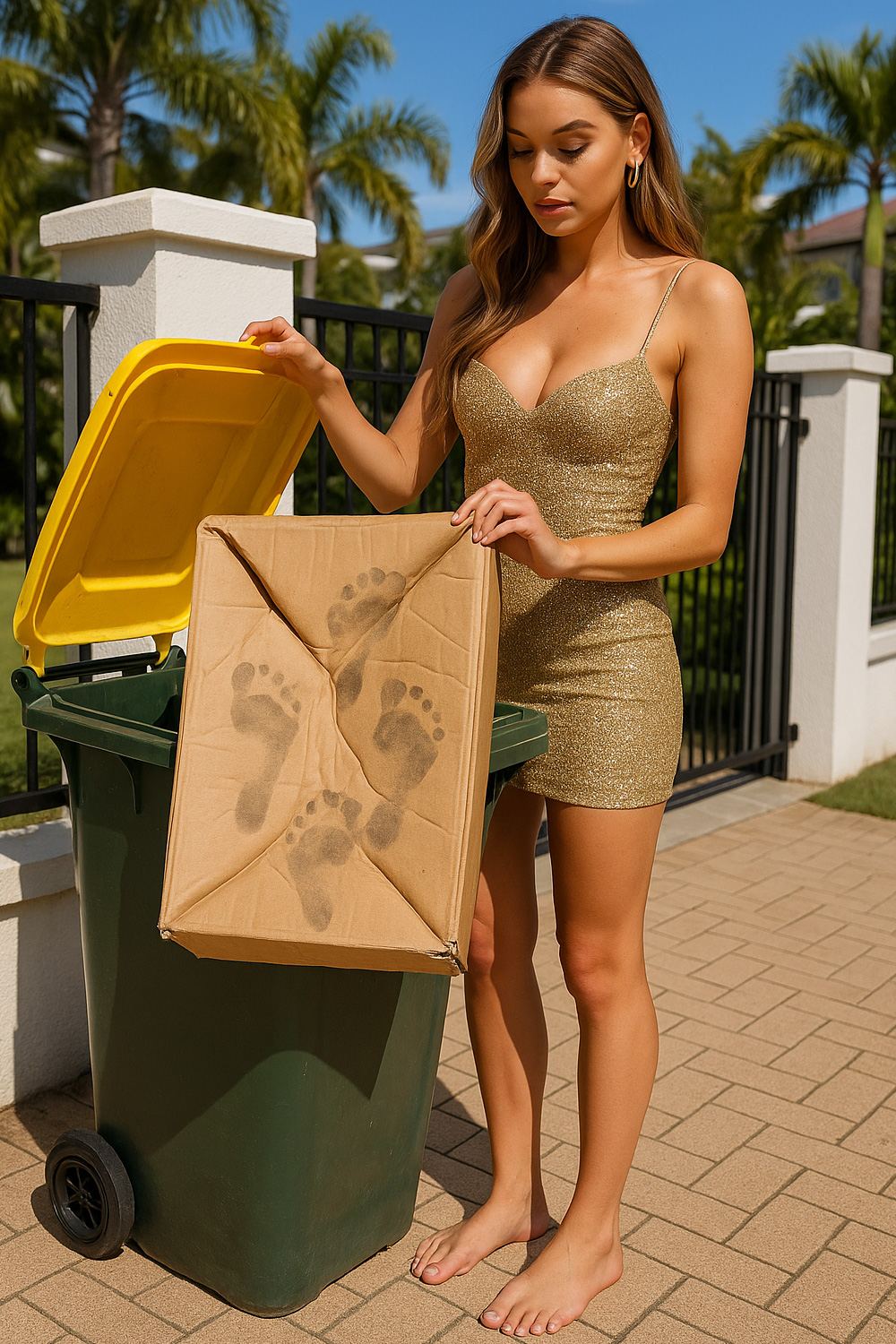
Barefoot crushing boxes works because the shape of the foot deforms cardboard in a way no other method does. The contours of the sole soften and break down the structure as pressure is applied, leaving the cardboard flexible rather than rigid. Once crushed this way, the material can be pushed, folded further, and packed into tight spaces inside the bin. You cannot achieve this result with boxes that have only been cut or flattened, which remain stiff, springy, and difficult to manoeuvre.
Shoes interfere with this process. They create a hard, uniform surface that presses cardboard flat without properly breaking it down. Pressure is applied through edges and stiff soles, which limits how much the material softens and in the bin, makes it harder to guide into corners or gaps. The result is cardboard that looks compressed but still behaves like a board when you try to pack around it.
This is why barefoot-crushed cardboard behaves differently in the bin. It no longer resists being shaped to the available space. Flattened or folded cardboard still fights you. Properly crushed cardboard cooperates, and that difference is what allows bins to be packed far more efficiently.
There is also a simple reason people continue doing it once the habit forms. Barefoot crushing is genuinely pleasant. The resistance gives way smoothly, the cardboard settles, and the soles of your feet register when the job is finished properly. That immediate sense of completion removes uncertainty and repetition. In many households, it stops feeling like an extra task and becomes the default way boxes are dealt with, without thought or delay.
Ordering a Larger Bin and When It Makes Sense
Some households generate more recyclables than a standard bin can comfortably handle even with good habits. Larger families, renovation cycles, home businesses, and frequent deliveries can push volume beyond practical limits.
Ordering a larger bin only makes sense once foot-based compression and source preparation are already being done properly. Bin size does not replace good habits. It scales them. Without pressing rubbish down properly, a larger bin simply fills inefficiently.
When habits are right, a larger bin provides breathing room during peak periods. When habits are wrong, no bin is ever large enough.
When Tip Runs Are the Right Choice
There are situations where volume exceeds any household system. Move-outs, major cleanouts, and large appliance deliveries can overwhelm even large bins. Recognising when to stop forcing material into the bin is part of doing this properly.
Tip runs are not a failure. They are a practical response to temporary spikes in volume.
A Habit That Changes the Entire System
Running out of recycling space is rarely solved by changing the bin. It is solved by changing how rubbish is pressed down with your feet, and by supporting that action with good preparation.
Press rubbish down deliberately. Use your feet to collapse air and settle layers. Prepare boxes properly so foot compression works smoothly later. Shape material instead of fighting it.
Done this way, recycling stops feeling like a weekly frustration. The bin lasts longer. Compression becomes easier. And that extra space becomes normal, not exceptional, simply because nothing is ever allowed to sit unpressed again.
You might also like


Disclaimer: Every effort has been made to ensure the accuracy of the information provided, but we make no guarantees regarding its completeness or reliability. The data is presented for general informational purposes only and does not constitute financial, investment, or legal advice. We are not liable for any errors, omissions, or consequences arising from its use. Users should verify details with relevant sources and seek professional advice where appropriate for the most accurate and up-to-date guidance.