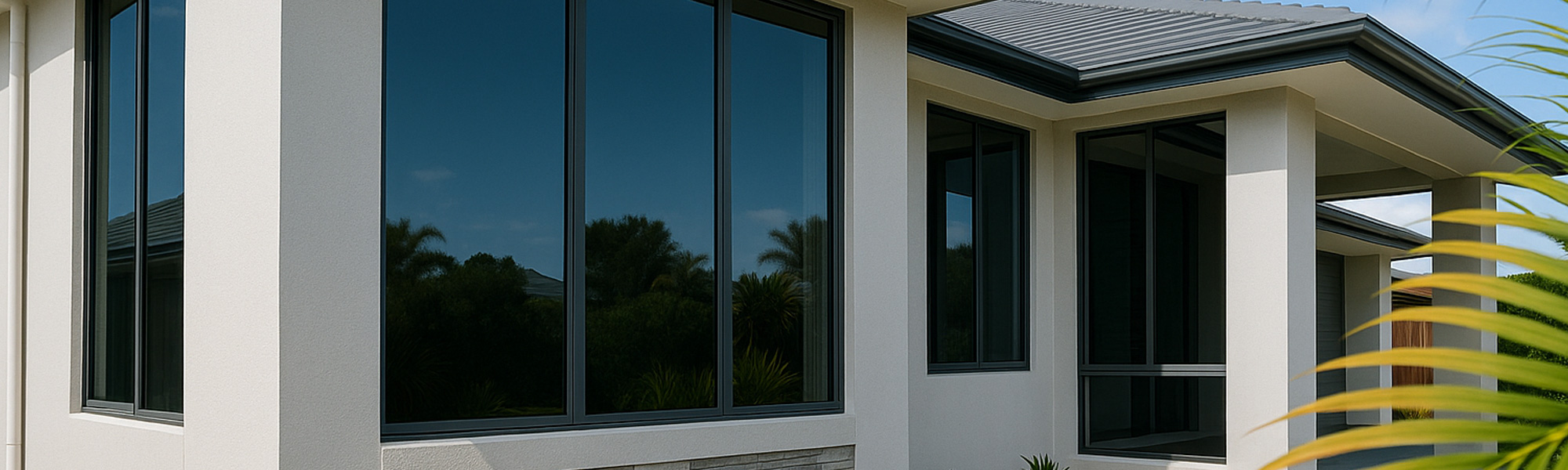
For most homeowners, windows are simply part of the backdrop of a house. They frame the outside world, soften the daylight, and give each room its sense of scale. But the glass itself is doing far more than most people ever notice. Its clarity, thickness, heat performance, privacy qualities, and safety features shape the comfort and resilience of a property in ways that ripple through daily life. Nowhere is this more relevant than in Australia's warm, high-UV environment, where a few careful decisions about tinting can dramatically reduce heat gain, protect furnishings, and add measurable security value.
Window tinting has become one of the most versatile solutions available, blending aesthetics with performance. And because tint technology has evolved far beyond the basic automotive tints most people picture, homeowners now have an entire catalogue of options that range from subtle solar control films to heavy-duty security layers designed to hold fractured glass in place during break-ins or storms.
Solar Control Films - Cooling the Home Without Darkening It
Australian summers aren't just warm. They're relentless. Rooms with large windows can feel like they're absorbing the entire afternoon sky, especially on the Gold Coast where sunlight often has a hard, bright edge in the middle of the day. Solar control films were designed for exactly these conditions.
Most modern solar films filter heat through selective reflection rather than raw darkening. This means they can block a huge portion of infrared heat before it reaches the interior while allowing the visible light spectrum to keep shining through. A high quality film can reduce solar heat gain by 40 to 70 percent depending on its engineering, and the difference is instantly noticeable in any room with western exposure.
The other practical benefit is UV rejection. Furnishings fade fast in strong Australian sunlight. Flooring, curtains, sofas, dining chairs, timber cabinetry, artwork, photographs, and even wall paint all suffer gradual bleaching without UV protection. Solar films cut out almost all the UV component of sunlight without altering the character of a window. From the street, a house still looks like a house, not a tinted vehicle. From inside, the natural daylight remains crisp rather than dim.
For homeowners who want heat control without shifting the colour or mood of their rooms, this is often the best option.
Privacy Tints - Subtle by Day, Moodier at Night
Privacy tints create the familiar one-way visibility effect that so many Gold Coast homes rely on, especially in suburbs where the block sizes are narrower or the living spaces run close to the street. During the day, these films allow full outward views with reduced visibility inwards, thanks to the contrast between bright exterior light and the softer light inside.
However, the same physics reverses at night. When the interior lights are on and the yard is dark, privacy tints no longer work. It's a common surprise for homeowners who assumed the effect was permanent. Privacy tints are best used on windows where night-time privacy is already managed by blinds or curtains.
The advantage is simplicity. They gently dim glare without feeling gloomy, they add a sleek finish to the glass, and in the right setting they strengthen the architectural lines of a home. They're also one of the most affordable options, making them ideal for large surface areas like sliding doors or picture windows.
Decorative and Frost Films - Style, Screens, and Softened Light
Some windows need to be beautiful, not just functional. Bathrooms, front entries, internal glass partitions, and stairwells often require privacy with a softer, more diffused light. Frosted and decorative films have become extremely popular because they look like etched glass without the expense of replacing panels.
A frosted film scatters the light into a gentle glow, removing harsh silhouettes and creating separation between spaces. It's perfect for bathrooms where natural light is valuable but transparency is not. For entry doors and sidelights, frosted patterns can be combined with clear strips or shapes to create a contemporary look while still blocking direct lines of sight.
There are also textured and patterned films that imitate everything from linen to bevelled glass. These are used not just for privacy but for interior design. In modern open plan homes, film can turn a plain internal window or balustrade into a standout feature, all while being far more affordable than custom glass.
Low-E Tints - Energy Efficiency in Both Seasons
Low-E (low emissivity) films are still gaining traction in Australia, but they are already standard in parts of Europe and North America. Their purpose is to regulate heat transfer in both directions. In summer, they reflect heat outward like a solar control film. In winter, they reduce heat loss from the inside by controlling how much radiant heat escapes through the glass.
This is particularly relevant for homeowners trying to reduce energy bills. Air conditioning and heating systems rely on stable building envelopes, and untreated glass is one of the weakest points in any house. Low-E films strengthen that envelope.
Unlike standard solar films, many Low-E options are almost invisible, which is ideal for architectural homes that rely on large expanses of crystal-clear glass. They're also increasingly favoured for waterfront properties where strong UV is constant but owners still want to enjoy clear views across the water without colour shifts or mirrored finishes.
Security Film - Strengthening the Weakest Point of the Home
Security film is one of the most misunderstood tinting categories because it looks similar to other films yet behaves completely differently. These films are thick, multilayered laminates designed to hold fractured glass together if the window is struck, shattered, or forced. They don't stop the glass breaking, but they prevent it from disintegrating. This changes the behaviour of the window in three major ways: it delays forced entry, reduces projectile hazards, and keeps the interior sealed long enough to take action.
For break-ins, this delay is vital. Most opportunistic intruders rely on the speed of breaking a window and reaching in. Security film slows this dramatically. A window might still break on the first impact, but the shards stay bonded in place, turning the panel into a flexible sheet that must be cut or beaten through repeatedly. In many cases, the time and noise become deterrents and the attempt ends there.
From a safety perspective, laminated security films reduce the risk of injury during accidental breakage. Whether it's a ball thrown near a patio door, a fallen tree branch during a storm, or even a trip that sends someone into a glass panel, the film holds the broken pieces together instead of letting them explode into the room.
This alone has made security film increasingly common in family homes near active outdoor areas such as pools, decks, and heavily used sliding doors.
The other advantage is cyclone and storm resilience. While security film is not a substitute for cyclone-rated windows, it adds a valuable layer of protection by preventing glass from blowing inward at the first moment of failure. On the Gold Coast, where storm seasons can deliver sudden, sharp gusts, this provides real peace of mind.
How Films Are Installed - Why Professional Application Matters
Some homeowners assume tinting is as simple as sticking a film onto a window with soapy water. Professional installation is radically different. Films must be trimmed to the exact measurements of each panel, including curved or irregular edges, bonded with pressure and specialised tools, and squeegeed to remove every micro bubble. Any trapped debris, uneven edges, or small misalignments become impossible to fix once the adhesive cures.
Security film is even more technical. To work correctly, it needs to be anchored to the window frame using structural bonding. Without this, the film can still hold the shattered glass together but may not resist forced entry as effectively because the entire sheet can pop inward as one piece.
A skilled installer will also help match the right film to each room, explaining how each one behaves in different light conditions. That advice is essential because tinting is not one universal solution. Bedrooms, living rooms, bathrooms, sliding doors, clerestory windows, and home offices all have different uses and different exposure profiles.
What to Expect After Installation
Films have a curing period during which small haziness or water pockets are normal. Depending on the film thickness and weather conditions, this can last anywhere from a few days to several weeks. Once cured, the film becomes indistinguishable from the glass surface.
Cleaning is simple. Mild soapy water, a soft cloth, and no abrasive tools. Security film and thicker laminates can handle more robust cleaning than people expect, but gentle methods always extend the life of the adhesive.
High quality films easily last ten to twenty years, and many carry warranties linked to UV resistance, colour stability, and adhesive performance.
Choosing the Right Film for Your Home
Every home has a different light signature. On the Gold Coast, the afternoon glare on west facing windows is the most common trigger for seeking tinting. For others, it's night-time street visibility, homes oriented toward neighbours, or glass walls that overheat a living zone by midday. Security concerns are rising too, especially in areas with high pedestrian visibility or large sliding doors opening directly onto the yard.
The most reliable approach is to consider tinting room by room. The living room might need solar control. The front entry might need frosted separation. The upstairs bedrooms might benefit from privacy tints. The patio sliders might warrant security film. A good installer can survey the house and create a blend of films that feel seamless while serving completely different purposes.
What you get in return is a more comfortable, more private, and more resilient home. The windows look the same, but the way the house behaves changes entirely. In a climate like ours, that's not just a convenience. It's a genuine property upgrade with real long term value.
You might also like




Disclaimer: Every effort has been made to ensure the accuracy of the information provided, but we make no guarantees regarding its completeness or reliability. The data is presented for general informational purposes only and does not constitute financial, investment, or legal advice. We are not liable for any errors, omissions, or consequences arising from its use. Users should verify details with relevant sources and seek professional advice where appropriate for the most accurate and up-to-date guidance.