
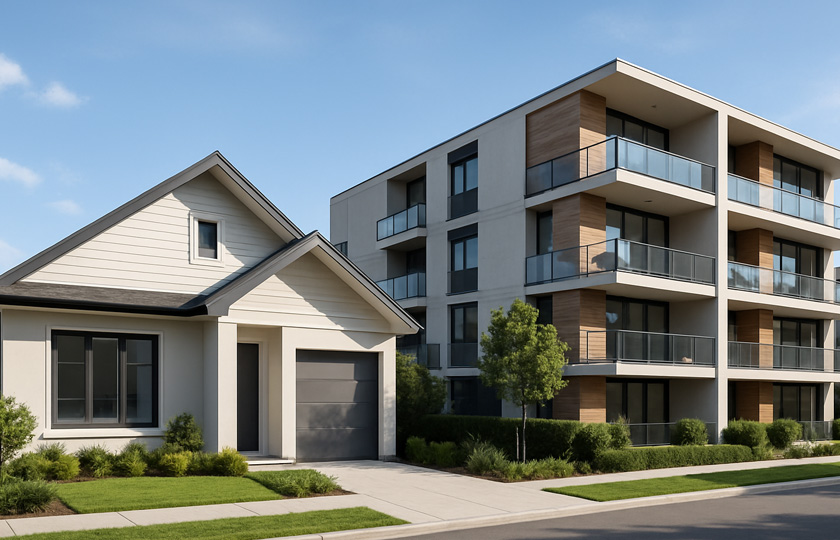
The Gold Coast property market is constantly evolving. From the glittering high-rises of Surfers Paradise to the leafy suburban streets of Helensvale, buyers face an ongoing question: should I be looking at a house or an apartment? Both options have their appeal, and both are influenced by shifting demographics, lifestyle trends and affordability pressures.
Before we go further, an important note: this article provides general insights into market activity and lifestyle preferences. It is not financial advice, and individual buyers and investors should always seek professional guidance tailored to their circumstances.
The Classic Appeal of the House
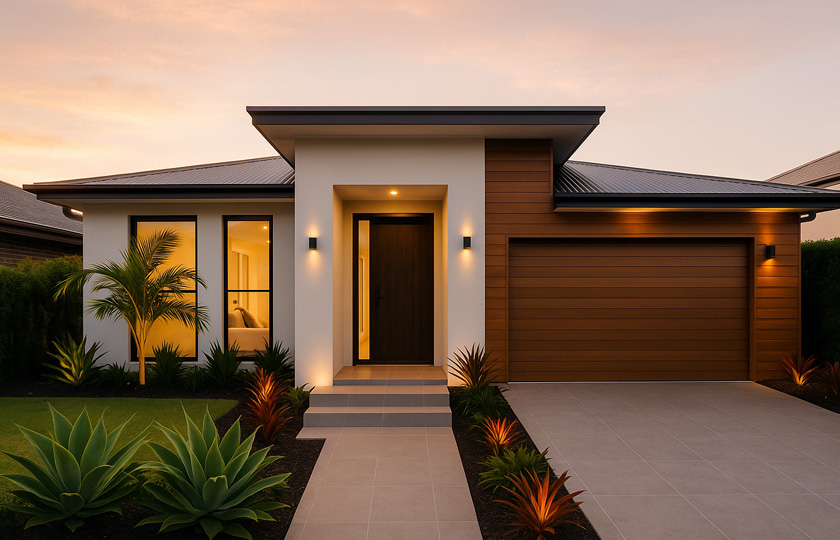
For generations, the freestanding house has been the great Australian dream. Space, privacy, a backyard and room for the family dog are all powerful drawcards. On the Gold Coast, demand for houses continues to hold strong in suburbs where families are looking for schools, community, and space to grow.
Areas such as Helensvale, Coomera, Upper Coomera and Robina are popular with young families and upgraders. These suburbs often provide larger block sizes, easy access to schools and sporting facilities, and transport links that make commuting manageable. The appeal of houses is also tied to lifestyle: plenty of space for outdoor entertaining, pools, and the ability to renovate or extend over time.
Houses are also viewed as long-term family homes. Buyers often talk about "putting down roots" in a suburb, building community connections, and seeing themselves in the same property for decades. That sense of permanence remains a key reason why houses hold enduring appeal.
The Rise of Apartment Demand
On the other side of the equation, the Gold Coast is home to one of the most dynamic apartment markets in the country. Towering complexes in Broadbeach, Surfers Paradise and Southport dominate the skyline, offering everything from compact one-bedroom investments to luxury penthouses overlooking the ocean.
Apartments cater to a very different demographic. Downsizers are drawn to low-maintenance living where the building takes care of gardens and pools. Young professionals often prefer the convenience of being close to work, cafes, and nightlife. Investors, too, are attracted to the rental demand that comes from proximity to beaches, universities and transport.
Recent years have seen a marked rise in apartment demand, particularly in lifestyle-driven precincts. Buyers talk about wanting to "lock up and leave" while travelling, or about choosing a view and location over yard space. For many, it's about maximising lifestyle and minimising chores.
Affordability and Accessibility
One of the biggest forces shaping the choice between houses and apartments is affordability. As house prices across the Gold Coast climb, apartments provide a more accessible entry point into popular suburbs. For first-home buyers, units in Southport or Labrador may be considered by them to be more within reach, whereas houses in the same area could feel out of range.
Affordability also plays a role for investors. Apartments often come with lower upfront costs, which can make rental yields more attractive relative to purchase price. At the same time, buyers need to weigh ongoing body corporate fees and building maintenance.
Lifestyle and Demographic Trends
The choice between a house and an apartment is rarely just financial. Lifestyle plays a central role. Families with children will continue to seek houses, while retirees, couples, and younger buyers are often more flexible.
Interestingly, the Gold Coast has also seen a rise in multi-generational living. Houses with dual living spaces or granny flats are appealing to families wanting to keep parents or older children close. Meanwhile, the influx of interstate and overseas buyers chasing a coastal lifestyle keeps demand for apartments high.
Demographic change is another driver. As the population ages, downsizing will remain a powerful force. At the same time, students and young professionals are shaping rental demand in central hubs.
Short-Term Dynamics vs Long-Term Outlook
It is important to remember that the balance between houses and apartments is not fixed. Historically, in periods of rapid price growth, apartments tend to attract more attention as buyers seek affordability. When the market steadies, families often return to houses as the long-term option.
Looking ahead, infrastructure and planning will play their part. Light rail expansion makes apartment living more appealing in connected suburbs, while motorway improvements make houses in outer areas more accessible. The balance is constantly shifting, shaped by broader economic conditions and local lifestyle trends.
What Buyers Should Consider
For buyers, the decision is personal. Space, location, and budget all play a role. Some will prioritise a backyard and room for children, while others will see the appeal of an ocean view and weekend lifestyle at their doorstep. The key is to weigh what matters most to you day to day, and to think about how your needs may evolve in five or ten years.
What Sellers Can Highlight
For sellers, the key is to understand the mindset of likely buyers. House buyers often respond to words like "family-friendly", "room to grow" and "community". Apartment buyers are drawn to "low maintenance", "lock-up-and-leave convenience" and "resort-style amenities". Framing the property in line with lifestyle expectations helps attract the right audience.
A Market of Two Stories
Ultimately, the Gold Coast market tells two stories at once. The traditional demand for houses remains steady, especially in suburbs with schools, backyards, and family infrastructure. At the same time, the modern appetite for apartments is stronger than ever, particularly in lifestyle hubs where views, convenience and vibrancy are the key selling points.
Rather than one option being "better" than the other, the reality is that both play vital roles in meeting the diverse needs of a growing and changing city.
You might also like




Disclaimer: Every effort has been made to ensure the accuracy of the information provided, but we make no guarantees regarding its completeness or reliability. The data is presented for general informational purposes only and does not constitute financial, investment, or legal advice. We are not liable for any errors, omissions, or consequences arising from its use. Users should verify details with relevant sources and seek professional advice where appropriate for the most accurate and up-to-date guidance.