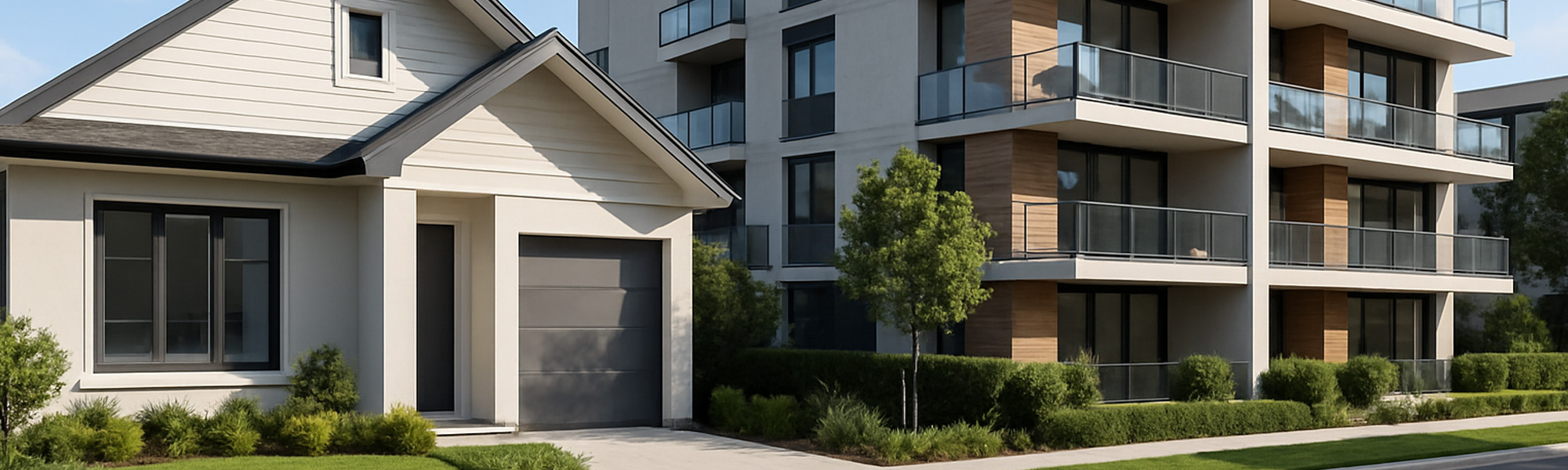
Buying your first home is one of those moments where anticipation, relief and uncertainty sit together. You've spent years saving, planning and imagining what life will feel like once you have a place that's yours, yet one question almost always stands in the way before anything else can begin: should your first step be a house or an apartment?
It sounds simple, but the choice runs deeper than price tags or floor plans. It touches lifestyle, responsibility, future ambitions and the kind of daily existence you picture for yourself. First homes influence how you feel in your space, how you move through your week, how you grow and how your finances develop. Understanding how each option behaves in real life helps you choose with confidence rather than guessing and hoping for the best.
The First-Home Starting Point
Most first-home buyers juggle two competing thoughts. One is the excitement of finally owning something real, solid and personal. The other is the awareness that this first property is unlikely to be the forever home. It's a stepping stone that shapes the next phase of your life, so the question becomes less about perfection and more about what genuinely fits your current situation and the near future.
Some people want simplicity and ease because their routines revolve around work, lifestyle and movement. Others want space, privacy and the freedom to create a home that evolves over time. Houses and apartments aren't opposites; they simply offer different versions of living. Seeing those versions clearly is what matters.
Why Many First Buyers Start With an Apartment
An apartment is often the most accessible entry point into the property market. The lower purchase price means deposits are more manageable, mortgage repayments sit within reach and the jump into ownership feels achievable much sooner. For many people, this early entry is what allows them to start building equity instead of waiting.
Apartment living appeals to those who like a clean, uncomplicated lifestyle. There's no lawn care, no weekend repairs to fences or exteriors, no scramble to organise trades for major outdoor upkeep. Building management handles the structure around you so you can focus on the day-to-day rhythm of your life.
One consideration that often slips past first-time buyers is the cost of strata or body corporate fees. These charges vary depending on the building, its age and the quality of its shared facilities, but they form part of your ongoing budget. While they keep maintenance simple and cover the upkeep of amenities, they do add a regular cost that sits alongside your mortgage and should be factored in from the start.
Many modern complexes offer features that would be incredibly costly in a standalone home. Pools, gyms, landscaped communal spaces and secure parking all become part of everyday living for a fraction of what they'd cost individually. For some first-home buyers, this ease and amenity blend perfectly with how they live and socialise.
From an investment perspective, apartments tend to deliver stable rental demand. They don't usually deliver the same long-range capital growth as houses, but well-located, well-managed buildings can still perform strongly. For buyers who know they'll eventually upgrade, an apartment can be a smart, practical first move.
The trade-offs revolve around space and flexibility. There's less room to personalise the layout, fewer places to store belongings and no land to call your own. For some, this is freeing; for others, it becomes restrictive after a few years. Knowing which of those groups you belong to helps clarify the decision.
Why Some Buyers Choose a House First
A house offers a very different kind of first-home experience. There is something quietly powerful about having land, even a modest block, and knowing the space around you is fully your own. Houses invite personalisation, creativity and long-term planning. You can plant gardens, host gatherings outdoors, add features gradually or simply enjoy the privacy of rooms that aren't pressed against shared walls.
Long-term financial performance is also a major draw. Land is the element that appreciates most reliably over time, and houses carry that advantage. Even older homes on small blocks have shown strong growth through cycles because the land remains in demand. Renovation potential adds another layer of control for buyers who like shaping their home over time.
Emotionally, houses provide a sense of grounding. Natural light through windows, air moving across your yard, space for pets and the feeling of being slightly tucked away from the world all contribute to a quieter, more private style of living that many people value deeply.
But the responsibilities are real. Every repair, every piece of maintenance, every garden task becomes yours. Costs can arrive suddenly, and first-home buyers with tight budgets can find these irregularities stressful. Houses also require higher deposits and larger loans, so they demand stronger upfront financial stability.
How This Decision Looks on the Gold Coast
When you place the house versus apartment question into the Gold Coast market, the picture becomes clearer and more grounded. The region has a blend of beachside towers, lively dining and lifestyle hubs, established inland suburbs and outer-ring family areas, and each shapes what a realistic first purchase looks like here.
Apartments are often the most accessible starting point, especially for buyers who want modern living near beaches or activity centres without the price pressure of owning land. Their values tend to fall comfortably within the qualifying thresholds for first-home incentives and stamp duty concessions, which can significantly reduce entry costs. For many new buyers, this combination of lifestyle and affordability makes apartments a natural first choice. The strong rental market further supports their appeal when it comes time to move up to a larger home.
Houses on the Coast operate in two tiers. The premium coastal and canal-front properties are well beyond first-home budgets and rarely fit any government incentive criteria. They belong to a completely separate segment of the market. The realistic first-home options sit in the inland suburbs and established neighbourhoods where land sizes are moderate, communities are settled and prices remain within the brackets that allow buyers to access grants and concessions. These areas offer space, privacy and the long-term growth benefits of owning land without the multi-million-dollar price tags of prestige locations.
Government incentives subtly influence these decisions. Because many high-value coastal areas exceed the caps, first-home buyers naturally gravitate toward modern apartments or well-priced inland houses where support is available. This focuses attention on parts of the market that genuinely match both lifestyle and budget, rather than aspirational areas that sit far beyond first-home territory.
In this market, both choices make sense depending on how you want to live. If you want ease, amenity and a streamlined base, an apartment matches that life. If you want space, outdoor living and a home that grows with you, an inland house aligns far more closely with that vision.
Lifestyle As the Quiet Decider
Beyond finances and market behaviour, lifestyle often answers the question long before you consciously do. Picture yourself in each setting. Do you want a space you can lock up without thinking twice, or a home that you adapt and shape over time? Do you need quiet and privacy, or do you feel energised by living close to activity? Are you someone who enjoys gardening, outdoor dinners and having room to spread out, or do you prefer compact living that keeps life simple?
Your instincts about how you actually live will be more reliable than any checklist.
Thinking Five Years Ahead
A first home shapes your next step. Apartments often suit shorter periods before an upgrade, while houses reward longer stays where you can build value slowly and steadily. Neither is inherently better. What matters is choosing the option that supports the life you want now and the direction you're aiming for.
So Which Should You Choose?
If you want simplicity, low maintenance, predictable costs and modern lifestyle convenience, an apartment may be your smoothest entry into ownership.
If you want space, privacy, land, the ability to personalise and stronger long-term growth potential, a house will likely be the better fit.
There is no universal answer. The right choice is the one that feels real, workable and aligned with the way you actually live.
This article provides general information only and does not take into account your personal financial circumstances, goals or needs. Property decisions can carry financial risk and outcomes vary between buyers, locations and market conditions. Before purchasing a home or investment property, consider seeking independent financial, legal and professional advice tailored to your situation.
You might also like



Disclaimer: Every effort has been made to ensure the accuracy of the information provided, but we make no guarantees regarding its completeness or reliability. The data is presented for general informational purposes only and does not constitute financial, investment, or legal advice. We are not liable for any errors, omissions, or consequences arising from its use. Users should verify details with relevant sources and seek professional advice where appropriate for the most accurate and up-to-date guidance.