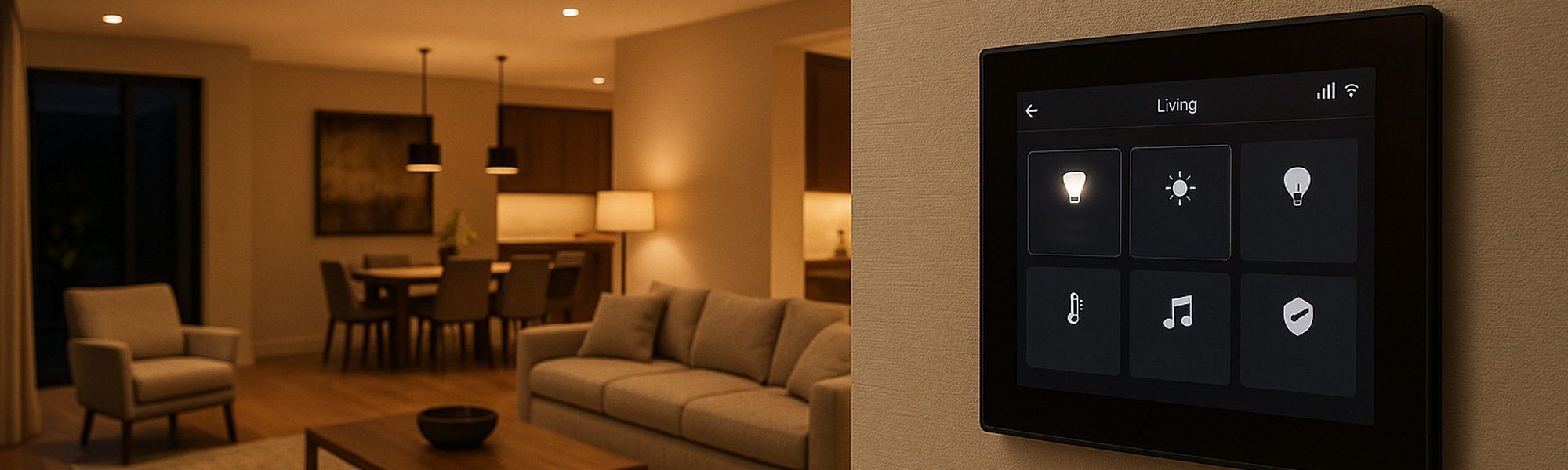
For all the creativity and freedom offered by self-setup smart home systems, there is another tier of automation entirely. It sits in the realm of integrated lighting control, engineered cabling, high-fidelity audio distribution, climate zoning, enterprise-grade networking and beautifully orchestrated interfaces. This is the world of professional installation, where the home is not simply a collection of smart gadgets, but a deliberately designed system that behaves as one.
It's a world that looks seamless on the surface yet relies on deep technical planning behind the walls, in the ceiling cavities and throughout the network backbone. For homeowners who want absolute reliability, unified design, and a system that can evolve over the lifetime of the house, professional automation is not simply a luxury service. It's an architectural element.
Why High-End Automation Exists: Beyond Gadgets, Toward Infrastructure
Professionally installed smart homes differ from DIY systems in the same way a commercial cinema differs from a living room soundbar. You can assemble something good on your own, but an engineered solution creates consistency, longevity and deeply integrated performance.
The biggest conceptual shift is that everything is wired, structured, and centrally orchestrated before the walls are even painted. Cat6 and fibre lines run to every key zone. Lighting circuits are purpose-built for digital dimmers. Racks are installed where AV, networking and processing hardware can live quietly and reliably. Automation processors sit at the centre like a conductor guiding every subsystem.
This infrastructure is what lets the finished experience feel so effortless. A single button can set lighting for the evening, warm the house, turn on music in the kitchen, bring up pathway lights outdoors and lock the doors down the side of the home. And nothing stutters or drops out because the foundation beneath it is rock solid.
The Flagship Brands: Control4, Crestron, Savant and KNX
In the professional automation landscape, four major ecosystems dominate, each with its own philosophy, strengths and ways of approaching the smart home.
Control4 has become the approachable middle ground, offering powerful automation with a user-friendly interface. It's highly customisable yet familiar enough that homeowners can learn it in minutes. Control4 thrives in medium to high-level builds where seamless integration matters most.
Crestron is the choice for those who want the Rolls Royce of control systems. It excels in bespoke, fully customised interfaces, commercial-grade reliability and large homes with complex lighting, AV and shading requirements. Crestron installations are almost always engineered by highly specialised integrators.
Savant brings an Apple-like polish to the high-end space, with a strong focus on whole-home scenes, beautifully designed interfaces and premium audio-visual performance. It often appeals to homes where aesthetics and fluidity matter as much as technical strength.
KNX, meanwhile, is the global building automation standard used in commercial properties, luxury homes and architectural builds that prioritize longevity and openness. KNX is decentralised, meaning its reliability is exceptional, and its ecosystem of compatible devices is enormous. It's often chosen by architects and engineers rather than gadget-enthusiasts.
These systems are not plug-and-play. They're engineered environments where every keypad, dimmer module, amplifier and sensor is configured by a trained professional who ensures the entire home responds instantly and predictably.
Lighting Control: The Signature of a Well-Engineered Home
In high-end automation, lighting is the centrepiece. It begins with how the wiring itself is planned. Instead of every light running back to a traditional wall switch, circuits are routed to centralised dimming modules in a single rack or cupboard. This lets keypads replace standard switches, offering multiple lighting scenes that feel architectural rather than merely functional.
A kitchen might have a Morning scene with bright, natural tones. Dinner might dim to warm ambience. Entertaining might open pathways through the living and outdoor areas with subtle highlights that make the home feel larger and more inviting. Because the dimming hardware is centralised, the fading and sequencing feel impossibly smooth.
Professionally installed lighting systems are also more durable, able to handle large LED loads, mixed fixtures, outdoor circuits and complex dimming types. They're designed to age gracefully with the home, not get outpaced by yearly gadget releases.
Audio-Visual Distribution: The Home as a Soundstage
One of the most dramatic differences between DIY and professional installations lies in audio and video.
Instead of separate speakers and separate TVs that each have their own remotes, the home becomes a unified media system. Music can play in one room or ten rooms with perfect synchronisation. Hidden speakers blend into ceilings or walls. Outdoor zones flow cleanly from indoor spaces. Video distribution allows a single rack of streaming devices and media players to serve every TV in the home without clutter.
Professionally installed systems also allow deeper calibration. Audio can be tuned to the acoustics of each room. Media rooms and theatres can be engineered with acoustic treatments, projector calibration and reference-level sound signatures.
AV becomes a silent infrastructure, not a pile of boxes taking over your living space.
Climate Control, Energy and Automated Comfort
Advanced automation takes climate control to a level DIY systems can't match. Entire homes can be zoned for highly efficient heating and cooling. Window sensors, temperature sensors and occupancy detection feed into a central logic system that constantly adjusts airflow and temperature.
You might walk into a room that has pre-cooled based on your movements through the house, or return home to find the AC has activated because your geolocation and time of day match your arrival pattern. When connected to blinds and shading systems, the home can reduce heat load before it ever reaches the air conditioner.
In warmer climates, humidity sensors may trigger extraction fans. In colder regions, smart hydronic systems keep floors warm on winter mornings. The goal is not simply comfort, but energy efficiency driven by predictive understanding of how the household lives.
Enterprise Networking: The Unseen Engine of Reliability
High-end automation thrives on professional networking hardware. Enterprise-grade Wi-Fi, structured cabling, managed switches and secure VLANs ensure that each subsystem communicates flawlessly.
Unlike consumer routers, these networks isolate security cameras, smart devices and entertainment systems so that no single device can overload the network or cause interference. In large homes, outdoor areas, garages and pool zones receive the same stable coverage as living spaces.
This backbone is why professional automation feels so unshakeably stable. The network is engineered with the same mindset as a small office, and the result is responsiveness that remains consistent for years.
Security, Access and Surveillance: A Unified Approach
Professional installations can integrate door locks, alarm systems, cameras, gates and intercoms into a single control layer. Instead of juggling multiple apps, the homeowner controls security from one interface, and events can trigger powerful, multi-system automations.
A late-night doorbell press might activate a pathway of soft lighting to the entry while pulling up the nearest camera on the touchscreen. If someone approaches while the house is armed, the system can record footage, flash external lights, or notify the owner based on pre-set rules.
The strength here lies in unification. Each component is chosen and configured to work harmoniously, not bolted on later.
Automation Logic and User Interfaces: Scenes, Schedules and Deep Customisation
While DIY systems rely on pre-built routines, professionally installed homes are fully custom-programmed. Integrators design scenes tailored to the household's lifestyle. Keypads can be engraved with personalised labels. Touchscreens can be themed to the home's architecture.
These systems also allow advanced conditional logic: season-aware scenes, multi-sensor decision-making, time-offset rules for sunrise and sunset, and context-based overrides. The home becomes not merely responsive but predictive.
Some homeowners prefer minimal interfaces, letting the home act automatically. Others want deep control accessible from touchscreens. The beauty of a professionally installed system is that both approaches can coexist.
Service, Updates and Long-Term Reliability
One of the biggest unspoken benefits of professional automation is serviceability. Systems like Control4, Crestron and KNX are designed for decades of uptime. Integrators offer remote diagnostics, performance monitoring and ongoing updates.
Because all infrastructure lives in centralised racks, hardware can be replaced or upgraded without tearing apart walls. A system designed today can adapt to new lighting trends, new audio formats and new interfaces long after installation.
This long-term mindset stands in contrast to the consumer device cycle, where products are replaced every year or two. In a professionally automated home, the backbone remains timeless, even as the interfaces evolve.
Who Professional Automation Is For
High-end automation is not about having more gadgets. It's about achieving a specific architectural quality: a home that feels cohesive, intentional and quietly intelligent.
It suits homeowners building new houses or undergoing major renovations. It suits those who value aesthetics and want keypads instead of cluttered walls of switches. It suits families who want unified security, lighting, climate, entertainment and access without dozens of apps.
It is also ideal for forever homes, where long-term reliability matters more than short-term novelty.
When a Home Becomes an Ecosystem
Professionally installed automation represents the peak of smart living. It is elegant, robust and profoundly integrated, shaped by specialists who treat the home as an ecosystem rather than a collection of devices.
Where DIY systems excel at creativity and experimentation, professionally installed environments excel at stability, longevity and refinement. They vanish into the architecture, leaving behind a home that feels alive in the most unobtrusive way.
If the DIY smart home is about exploration, the professionally installed smart home is about mastery. It's the difference between assembling tools and commissioning a crafted system designed to grow with you for decades.
You might also like




Disclaimer: Every effort has been made to ensure the accuracy of the information provided, but we make no guarantees regarding its completeness or reliability. The data is presented for general informational purposes only and does not constitute financial, investment, or legal advice. We are not liable for any errors, omissions, or consequences arising from its use. Users should verify details with relevant sources and seek professional advice where appropriate for the most accurate and up-to-date guidance.