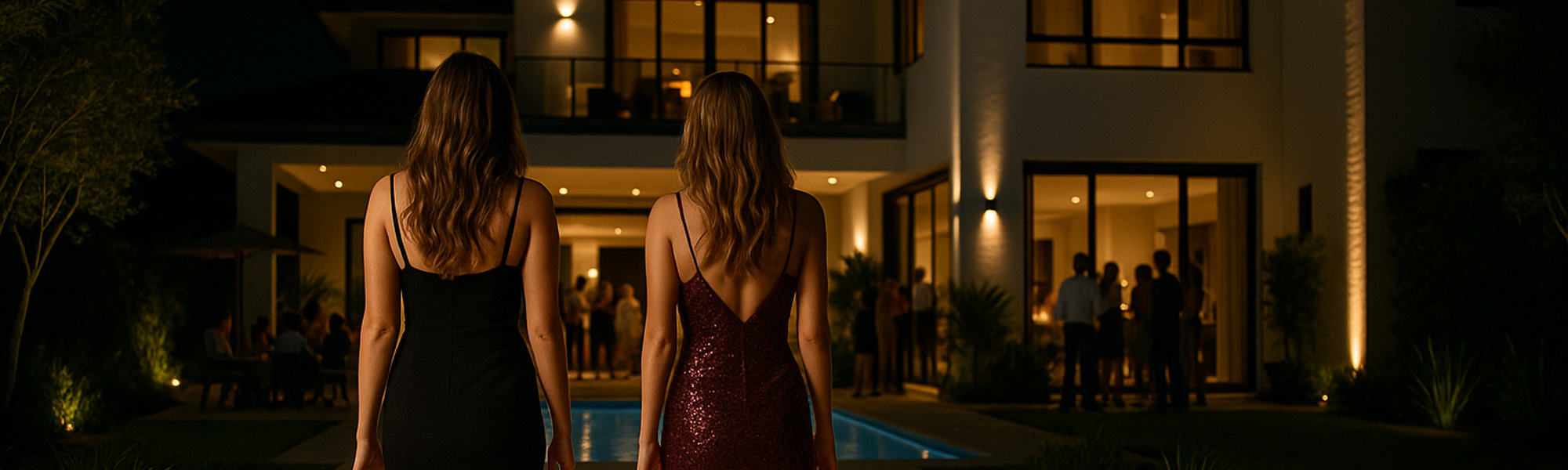
Hosting a party at home sits in an awkward space between private enjoyment and shared impact. You are entitled to have friends over, celebrate milestones, and use your own space. At the same time, neighbours experience your party without opting in, and the line between a lively gathering and a nuisance is thinner than most hosts realise. On the Gold Coast in particular, housing density, outdoor living, hard surfaces and warm night air all magnify sound and activity. Successful hosting is not about being timid. It is about understanding how disruption actually occurs and designing around it.
Understanding How Noise Really Travels At Night

Most hosts think in terms of volume alone, but volume is only one part of the equation. Human voices carry further than music, especially when laughter spikes or conversations become animated. At night, cooler air layers allow sound to travel horizontally rather than dispersing upward, which means a conversation that feels normal inside your home can sound intrusive two houses away. Outdoor areas amplify this effect because concrete, tiles, fences and pool surrounds reflect sound rather than absorbing it.
Bass frequencies deserve special attention. Low-frequency sound passes through walls, floors and ground far more efficiently than mid or high frequencies. A speaker placed directly on a tiled floor or against a shared wall can transmit vibration into neighbouring homes even when the music does not seem loud inside your own. Elevating speakers, pulling them away from boundaries, and angling them inward reduces this transmission dramatically. The goal is not silence but containment.
Choosing Spaces That Work With Your Neighbours, Not Against Them
Where people gather matters as much as how many people attend. Front-facing areas, driveways, balconies and boundary-adjacent patios expose sound directly to neighbours and the street. Rear living areas, internal rooms and spaces shielded by vegetation or structures contain noise far better. As the evening progresses, gradually encouraging people indoors or into more acoustically forgiving spaces can keep energy high while impact drops.
Surface choice also plays a role. Grass absorbs sound and foot movement. Concrete and decking reflect it. If guests are milling around, chatting or dancing, encouraging that movement onto softer surfaces reduces both airborne noise and vibration. Indoors, rugs, curtains and upholstered furniture make a noticeable difference. Bare rooms with hard floors and minimal furnishings act like echo chambers once they fill with voices.
Managing Music Without Killing The Atmosphere
Music should support the party, not compete with it. When guests have to talk over the soundtrack, voices rise, laughter sharpens, and the entire sound profile becomes more disruptive. Keeping music at a level where conversation remains easy prevents this escalation. It also allows you to reduce volume later without the party feeling like it has been shut down.
Playlist choice matters more than hosts often acknowledge. Tracks with heavy bass or sudden drops draw attention and trigger volume creep. A consistent, mid-range sound keeps things smooth. If you are using multiple speakers, synchronising them at lower volume rather than relying on a single loud source avoids hotspots that tempt people to turn things up.
Preventing Complaints By Controlling Access And Escalation
For larger gatherings, complaints rarely start with music volume. They start when numbers get out of control. Uninvited guests increase noise, extend departure times, spill onto the street and create exactly the kind of unpredictable behaviour that neighbours interpret as disorder rather than celebration. This is why invitation control is not about exclusivity, it is about containment. Clear guest lists, private invitations rather than public posts, and a closed-door policy once the event begins are practical neighbour-protection measures. For school formals, milestone birthdays, after-parties or anything involving younger guests, someone must be explicitly responsible for the door. That role is not symbolic. It prevents crashers, limits crowd size, and stops the event from drifting into surrounding streets where complaints are most likely to originate.
For events that are clearly larger than normal household gatherings, pre-emptive police notification can also reduce complaint risk when used correctly. A brief, non-emergency heads-up that a private event is taking place, with expected numbers and a clear finish time, establishes intent and management rather than disorder. This does not invite scrutiny. It does the opposite. If a neighbour does call, authorities already know the event is finite and planned, which often leads to calmer, proportionate responses instead of escalation. This approach is particularly relevant for teenage events or functions likely to attract attention, where perception matters as much as reality. A party that appears controlled is far less likely to become a problem than one that looks like it has taken on a life of its own.
Reducing Neighbourhood Rubbish And Spillover Mess

Rubbish is one of the fastest ways a party annoys people who were not invited, because it lingers long after the noise stops. The most effective control is preventing waste from leaving your property in the first place. Bottles, cans and drink containers carried onto the street are far more likely to be dropped, forgotten or tipped into neighbouring gardens than anything kept inside. For larger events, especially where alcohol is involved, it is reasonable to set the expectation that drinks stay on the property and empties are returned to a designated area. This is not about policing guests. It is about stopping the slow outward drift of rubbish that makes the event feel uncontrolled to anyone living nearby.
Shoes deserve specific attention because they create a surprisingly common problem, particularly at events with younger guests. Many women arrive in heels or dress shoes, remove them once inside, and then leave barefoot at the end of the night without retrieving them. Those shoes often end up abandoned on verges, in neighbouring gardens, or near driveways, where they become someone else's cleanup issue. One simple way to prevent this is to encourage guests to leave shoes in their cars and arrive barefoot instead. This removes the risk of lost footwear entirely and avoids the late-night scramble to find matching pairs in dim light. It also reduces foot traffic noise on the street during departures, which further lowers the chance of complaints.
Controlling Arrivals, Departures And Street Impact

One of the biggest sources of neighbour frustration is not the party itself but what happens around it. Car doors slamming, engines idling, groups chatting on the street, and people saying loud goodbyes can wake entire households long after the music has stopped. Encouraging earlier arrivals reduces late-night disruption, and gently reminding guests to keep street activity brief and quiet helps more than most people expect.
Parking chaos is another trigger. Cars blocking driveways, clustering noisily, or forcing neighbours to manoeuvre around them creates irritation even if noise levels are otherwise reasonable. Thoughtful parking guidance, even informally communicated, shows awareness beyond your own property line.
Another factor that often goes unnoticed is how unfamiliar movement feels to neighbours at night. People walking up and down the street, headlights sweeping across bedroom windows, doors opening and closing repeatedly, and small groups lingering by cars all signal disturbance even when voices are kept down. Reducing this impact is less about control and more about flow. Staggering departures, discouraging loitering, and avoiding repeated trips back and forth between house and street helps the evening dissolve gradually rather than peaking again just as neighbours are trying to sleep.
Setting Expectations With Guests Before Problems Arise
Guests usually follow the tone set by the host. If you treat noise, movement and cleanup as irrelevant, guests will too. If you model awareness without making it awkward, most people mirror that behaviour. Small cues matter. Closing doors rather than leaving them wide open. Turning music down slightly before it becomes a problem rather than reacting after. Redirecting loud conversations indoors instead of shushing them.
Alcohol changes perception, which is why proactive management works better than correction. Once people are tired or intoxicated, their sense of volume and time erodes. Planning the flow of the night so it naturally winds down avoids sudden, noisy endings that catch neighbours at their most sensitive hours.
Ending The Night Without Creating A Second Disturbance

Many neighbour complaints are triggered during cleanup, not the party itself. Glass bottles tipped into bins, furniture scraped across concrete, chairs stacked, boxes crushed, and excited chatter as the last guests leave all sound far louder late at night than they do during the day. A quiet ending means leaving most physical cleanup for daylight hours.
Setting aside internal rubbish containers for the night prevents clattering outside. Leaving furniture where it is until morning avoids dragging sounds that travel straight through still air. If something must be dealt with immediately, doing it slowly and on softer surfaces reduces impact significantly.
A final, often overlooked source of disturbance is the social wind-down itself. As the music stops and guests drift out, conversations tend to grow louder rather than quieter, fuelled by tiredness and lowered awareness. Front yards, driveways and the street become echo chambers, especially where hard surfaces and boundary walls reflect sound back toward neighbouring homes. Encouraging goodbyes to happen inside, keeping outdoor lights low, and gently ushering the last exchanges away from property boundaries helps prevent a calm night from ending with a single sharp spike that carries further than anything earlier in the evening.
Morning-After Cleanup And Why It Matters More Than You Think

The state of your property the next morning shapes how neighbours remember your event. A calm, tidy environment signals respect and closure. A scattered mess suggests the disruption is ongoing. Balloons deserve specific attention. When popped, fragments spread easily into lawns, garden beds and surrounding areas. Collecting them carefully is not only the right thing to do for the health of the environment and wildlife, but prevents pieces migrating into neighbouring spaces or drains.
Rubbish breakdown should be handled with the same awareness as the night before. Crushing boxes, shifting bins and rearranging outdoor areas early in the morning can be just as irritating as late-night noise. Waiting until general daytime activity resumes keeps your cleanup from becoming the next disturbance.
Walking the immediate area beyond your own boundary is a step many hosts skip. Checking the verge, street and neighbouring edges for stray cups, wrappers or balloon remnants shows consideration that neighbours notice, even if they never mention it.
Communication As A Pressure Release Valve
A brief heads-up to immediate neighbours changes how everything else is perceived. It does not need to be formal or apologetic. Simply letting people know you are hosting and will be mindful of noise reframes the event as managed rather than chaotic. People tolerate inconvenience far better when it feels finite and acknowledged.
If something does go wrong, a quick follow-up apology carries more weight than silence. Most resentment festers not from the disturbance itself but from feeling ignored afterward.
Preventing Neighbour Complaints By Inviting Them Or Treating Them To A Night Out

If you know your party will be audible regardless of how well it is managed, the most effective way to prevent neighbour annoyance is to remove the sense that they are trapped by it. That means either inviting neighbours into the event or deliberately giving them a reason to be elsewhere at the same time. This works because irritation is driven less by noise itself than by surprise, lack of agency and the feeling of being imposed upon. An invitation, even if declined, reframes the situation as considered and finite. A neighbour who understands what is happening and when it ends is far less likely to interpret sound as disrespectful.
Where an invitation would clearly be unwelcome, actively helping neighbours avoid the disruption is often the smarter move. Movie tickets, a dinner voucher or event tickets scheduled for the same night remove them from the impact zone entirely and are often more effective than any technical noise control, particularly for families with young children, shift workers or early risers. This only works when framed as foresight rather than guilt. You are not buying forgiveness or permission. You are acknowledging impact and planning around it. By making the effects of your party optional rather than unavoidable, you eliminate the single biggest trigger behind neighbour complaints.
Hosting Without Friction Is A Skill, Not A Restriction
Good hosting is not about suppressing fun. It is about understanding how sound, movement and mess actually affect people who are not part of the celebration. When those factors are managed, parties become a normal, accepted part of neighbourhood life rather than a source of tension.
A well-run gathering leaves guests with memories and neighbours with very little to notice. That balance is achievable, and once you understand the mechanics behind it, it becomes easier every time you host.
You might also like



Disclaimer: Every effort has been made to ensure the accuracy of the information provided, but we make no guarantees regarding its completeness or reliability. The data is presented for general informational purposes only and does not constitute financial, investment, or legal advice. We are not liable for any errors, omissions, or consequences arising from its use. Users should verify details with relevant sources and seek professional advice where appropriate for the most accurate and up-to-date guidance.