Most Australian homes age without spectacle. They tolerate heat, storms, moisture and the steady pace of daily life, yet the greatest threats rarely arrive dramatically. They build slowly through neglected fittings, tired materials and forgotten systems. Preventative maintenance is unfashionable compared with a renovation reveal, but it is the discipline that most reliably protects both your finances and the long-term health of the home.
Small Problems Become Big Ones When Left Alone
Houses seldom suffer because of a single sudden disaster. They fail because small, avoidable issues have been ignored for too long. A tiny leak under a vanity becomes swollen cabinetry and mould. A weeping valve on an outdoor hot water system turns into a plumbing emergency. A battery inverter running hot quietly degrades cells that should have lasted a decade. A blocked gutter forces water into eaves until structural timbers soften. These problems whisper before they roar.
The Hidden Risk Inside Every Cabinet
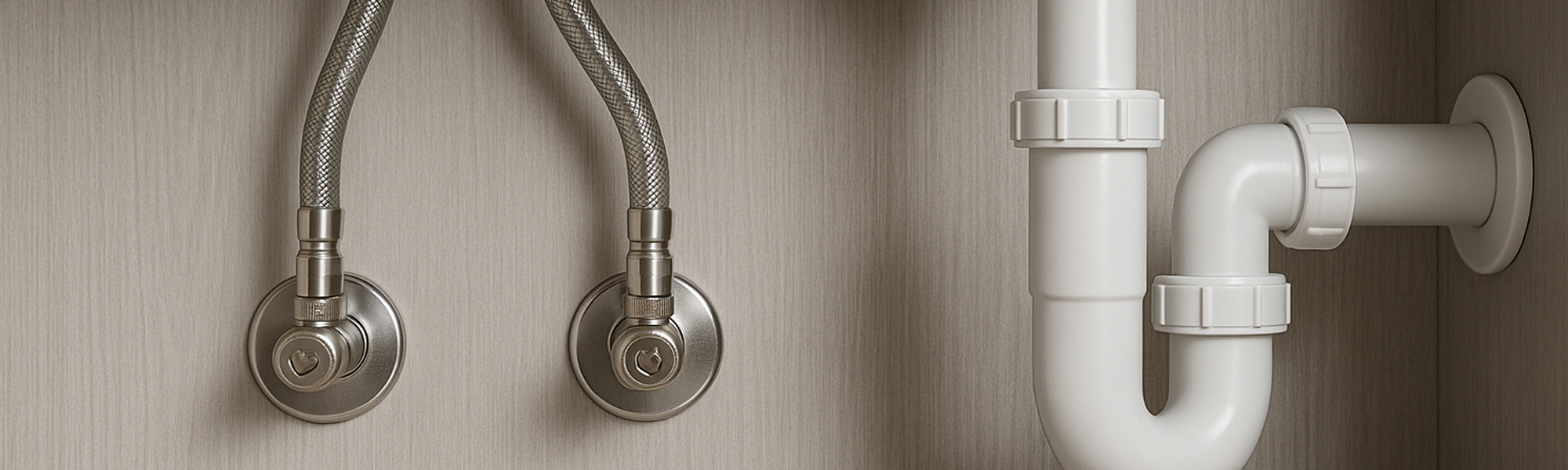
One of the most common sources of major water damage in Australian homes sits quietly under sinks and inside vanity units: the flexible braided hoses that feed water to taps. These connectors are simple, convenient and used everywhere, but they also top insurance claim statistics because when they fail, they fail suddenly.
Each line consists of a rubber inner tube wrapped in stainless-steel braiding. Over time, heat, humidity and natural movement gradually weaken both layers. The warning signs are subtle: a slight bulge, frayed strands in the braid, a rust ring around the ferrule or a hose sitting at an awkward angle where it has been pushed during cleaning. Any one of these indicates fatigue.
When a connector bursts, the release is immediate and under full mains pressure. Water doesn't trickle; it surges. In minutes it can run beneath cabinetry, across flooring, behind skirting and into wall cavities, often affecting multiple rooms before the shutoff valve can be reached. A quick inspection every few months, paired with timely replacement every five to ten years, can prevent a problem that frequently costs tens of thousands to repair.
Washing Machine Hoses and the Laundry Flooding Trap
The laundry is one of the most common origins of serious water damage, yet it is often the room people check the least. Washing machines rely on high-pressure inlet hoses that quietly fatigue over time, especially those made with ageing rubber or budget-grade braiding. The taps they connect to also seize open if they aren't turned periodically, and once a washer becomes brittle or a thread loosens, a full-pressure release can be immediate. In laundries attached to living zones, water rarely stays contained. It runs quickly beneath skirting, into hallways, under floating floors and even through gaps into nearby bedrooms. A small weakness in a single hose has the capacity to flood half a home before anyone realises what's happening.
Dishwasher Leaks That Hide Until the Damage Is Done
Dishwashers present a unique risk because most of their vulnerabilities sit out of sight. The inlet hose, drain hose, internal sump and door seals all age at different rates, and a minor failure in any of them can send water under cabinetry long before there is a visible puddle. In many homes, dishwashers sit between two fixed cabinets, giving the water nowhere to escape but sideways and backwards. It pools silently, saturating the timber panels and running beneath the kickboards until the entire base of the kitchen absorbs it. By the time swelling or discolouration finally appears, the damage has usually spread far beyond the appliance cavity.
Fridge Water Lines: The Silent Destroyers of Flooring
Plumbed fridges have become standard in modern homes, yet the thin water line feeding them is often the most fragile plumbing component in the entire kitchen. It snakes behind the fridge in a cramped cavity where it can kink, rub against the wall or fatigue from constant movement as the fridge is pulled in and out for cleaning. A slow leak from one of these lines rarely pools visibly on the surface. Instead, it wicks beneath engineered timber, vinyl planks or tile adhesive until large sections of flooring lift or discolour. Many homeowners only discover the problem when the fridge is finally moved, long after the water has reached the adjoining rooms.
Shower Waterproofing and the Slow Damage Behind the Tiles
Bathrooms are built to tolerate water, but only in the areas designed to contain it. When waterproof membranes fail, or when grout cracks and tiles become loose, water begins to travel into the wall cavity and across the subfloor. The movement is gradual at first, then accelerates as timber framing absorbs moisture. The base plates of walls begin to swell, skirting takes on faint waves, and the floor outside the shower eventually feels softer underfoot. These failures often go unnoticed until the mould smell appears or tiles begin shifting. By then, the damage beneath the surface is often extensive, far exceeding the cost of a simple reseal.
Toilet Cistern Seals and the Hidden Internal Leak
A toilet with a silent internal leak rarely attracts attention. The water seems to vanish harmlessly into the bowl, but the mechanisms inside the cistern tell a different story. Worn inlet valves drip continuously. Perished seals allow water to creep through screw points and into the wall behind. In some cases, water escapes slowly from the base of the cistern connection, pooling unnoticed until the surrounding flooring begins to swell. These slow leaks can persist for months before anyone detects them, and they remain one of the most common concealed water issues inside Australian homes.
Stormwater and Yard Drainage That Fails When You Need It Most
Stormwater rarely becomes a problem on a mild day. It becomes a problem during the kind of heavy rain that reaches the end of its patience. When grated pits clog, when downpipes discharge into compacted soil, when old clay pipes collapse or become choked with roots, the water has nowhere to go except back toward the house. It collects against the slab, seeps under door thresholds, fills subfloor cavities and pushes dampness into internal walls. A home that drains beautifully in light weather can betray its weaknesses during a single intense downpour, and the repairs often involve excavation rather than simple clearing.
Termite Protection and the Moisture Conditions That Invite Them
Australia's climate gives termites exactly what they need to establish themselves where moisture lingers. Homes inadvertently invite them when garden beds build up over weep holes, when mulch sits against the slab edge, or when leaking taps and downpipes create persistent damp zones around the perimeter. Timber structures beneath the home become even more attractive when the subfloor loses airflow. Annual inspections do far more than check for activity. They identify the moisture conditions, structural gaps and quiet vulnerabilities that encourage colonies to form long before they become visible.
Air-Conditioning Drains and the Damage They Hide
Split-system air conditioners produce condensate every time they run, and that water needs a clear path to escape. Over time, the drain line develops algae or becomes kinked, and the water begins backing up behind the indoor unit. It doesn't always pour visibly down the wall. Often it seeps slowly into the plasterboard or insulation, creating a damp cavity that spreads mould and weakens framing. Outdoor units also drift out of level as soil settles beneath them, causing vibration, stress on piping and premature wear. The system may still cool air perfectly while quietly causing structural harm.
Garage Doors and the Heavy Machinery Above Your Head
Modern garage doors rely on powerful springs, tensioned cables and motors that endure enormous strain. When a spring fatigues or a cable frays, the door can suddenly drop with surprising force. Sensors that drift out of alignment can leave the door stuck open during storms when the house most needs protection. A failing motor may strain against its own weight, warping the panels. These issues evolve slowly, often unnoticed until the door behaves unpredictably. Regular checks of the mechanics prevent costly failures and reduce the risk of injury.
Smoke Alarms, Switchboards and the Silent Parts of Safety
Smoke alarms age quietly. Their sensors dull, their chambers collect dust, and their test buttons give false reassurance. Hardwired models need replacement every 10 years - a cycle most homeowners underestimate. Switchboards tell their own story. Older fuse boards and early safety switches may still function but offer less protection than today's standards require. The modern household, with its solar backfeed, battery storage and large appliance loads, depends heavily on up-to-date electrical safety devices. Regular updates ensure the home's defences keep pace with the technology inside it.
The seals that protect the building envelope
Every external door and window relies on flexible seals to keep water, air and humidity at bay. As these seals perish, shrink or split, moisture begins to track into places the building was never designed to handle. Timber reveals swell, plasterboard softens, mould builds in the corners of frames and draughts travel through gaps that used to be airtight. These failures arrive quietly but escalate quickly once the wet season begins.
Roof-Space and Subfloor Pests That Create Hidden Hazards
Rats and possums don't need much encouragement to move into roof spaces. Once inside, they dislodge insulation, chew electrical wiring, damage ducting and contaminate the space with nesting material. Under the home, the same pests can damage vapour barriers, chew plumbing insulation and weaken subfloor structures. Many homeowners only become aware of the damage when a circuit trips or a ceiling stain appears, long after the activity has begun.
Weatherboard and Exterior Paint Breakdown
Exterior paint is more than visual appeal; it is the home's first line of defence. When weatherboards, render or cladding lose their protective coating, they begin absorbing moisture. Timber swells, joints open, and water slowly enters the wall assembly. Once inside, it causes extensive deterioration long before any surface discolouration becomes obvious. Timely repainting preserves not just appearance but the structural shell itself.
Outdoor Hot Water Systems and the Wear They Endure
Because Australian hot water units are usually positioned outdoors, the damage from a rupture is less likely to destroy interiors, but that doesn't make failure harmless. Tanks endure full sun, temperature swings and, in coastal regions, salt-laden air. Minor corrosion at the tank base, ageing anodes, weeping valves and uneven slabs all become early warnings. Solar-boosted units add roof-mounted components that also need periodic checks, as seals and copper lines degrade under constant exposure.
Solar, Batteries and the New Frontiers of Home Maintenance
As more households adopt solar arrays and battery systems, maintenance becomes both a performance issue and a safety one. Panels gather dust, leaf matter and salt residue that reduce output. Birds nesting beneath arrays often scuff insulation on cabling. Older rooftop DC isolators are known to fail when cracked or moisture-affected. Battery units rely on ventilation and stable temperatures; clogged vents or excess heat accelerate cell degradation. Early servicing prevents the kinds of faults that can escalate quickly.
When Rain Finds the Weak Points
Water rarely enters a home with force unless neglect helps it. Gutters clogged with leaf litter overflow in heavy rain and send water back into soffits instead of away from the structure. Insulation becomes saturated, mould establishes itself quietly, and fascias or rafters begin to soften. Downpipes displaced after storms or choked with debris redirect water toward the home rather than away from it. A quick pre-season check can protect the entire roofline.
Roofs That Fail Slowly, Not Suddenly
Roofing problems often begin invisibly. Mortar beneath ridge capping cracks until wind-driven rain pushes under tiles. In metal-roofed homes, screws loosen and washers perish across repeated expansion and contraction cycles. A single missing fastener can admit water into the ceiling cavity unnoticed. By the time plaster stains appear, insulation is already damp and timber has begun absorbing moisture. Early detection saves both cost and disruption.
The Small External Issues That Become Structural
Outdoor taps that drip steadily may seem trivial, yet constant moisture can soften soil around external footings. Timber decks that haven't been resealed dry out, then absorb water unevenly, eventually warping or lifting from the joists. Split-system air conditioners can overflow into wall cavities when drain lines clog, triggering mould long before anyone realises why a room smells musty. Even these minor elements deserve periodic attention.
Electrical Safety in a Modern Household
Many older Australian switchboards still rely on early-generation safety switches or aging fuse systems that no longer match the demands of modern appliances, solar backfeed or battery storage. While these boards may still function, they offer reduced protection compared with contemporary installations. Routine inspection from a qualified electrician ensures the home can safely support today's electrical loads.
Beneath the House: The Forgotten Space
Homes built on stumps or piers rely on airflow beneath the structure to keep timber framing dry. When garden beds creep too close or soil builds up against the perimeter, that airflow diminishes. Moisture lingers beneath the boards, pests arrive and joists slowly soften. A house that once felt steady can begin to shift or sag. Maintaining clear ventilation beneath the home preserves structural integrity long-term.
Why Maintenance Matters Long Before Repairs Do
Preventative maintenance is about noticing the early signs before they escalate, the drip before the rot, the heat before the failure. A flex hose replaced early costs little compared with the damage a burst can cause. A routine solar check can prevent both inefficiency and fire. A quick gutter clean can protect fascia boards and roof framing. These small habits become safeguards that prevent dramatic, expensive consequences.
A House That Feels Safe, Predictable and Prepared
A well-maintained home feels different. It stays calm through storms, quiet through heat and steady through daily living. It asks less of your finances and gives more in long-term reliability. Preventative maintenance may not offer glossy before-and-after moments, but it forms the foundation of every safe, long-lived Australian home - and in many cases, it is the difference between a straightforward repair and losing the house entirely.
You might also like




Disclaimer: Every effort has been made to ensure the accuracy of the information provided, but we make no guarantees regarding its completeness or reliability. The data is presented for general informational purposes only and does not constitute financial, investment, or legal advice. We are not liable for any errors, omissions, or consequences arising from its use. Users should verify details with relevant sources and seek professional advice where appropriate for the most accurate and up-to-date guidance.