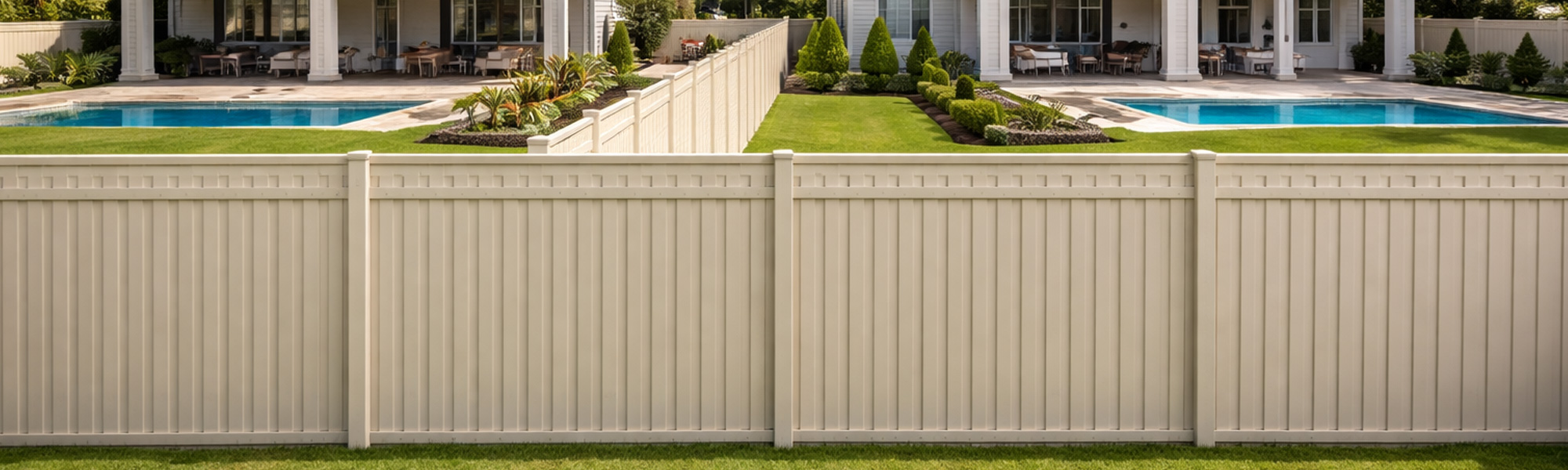
Fences are one of the most underestimated elements in residential construction. They are often treated as a finishing item, specified late and installed quickly, despite the fact that they sit on boundaries, manage privacy and security, interact with drainage and soil conditions, and absorb wind loads year after year. A fence that looks fine on day one can become a problem within a few seasons if material choice, post installation, or layout is wrong.
This guide breaks down fence types not by fashion, but by how they behave in real conditions. The goal is not to tell you what looks good, but to help you understand why some fences last decades while others fail early, and how design and installation choices quietly determine that outcome.
Working With Your Neighbour on a Shared Fence
A dividing fence is one of the few building elements that belongs to two properties at the same time. How the conversation is handled often matters more than the fence itself. Most disputes do not arise because the law is unclear, but because expectations are misaligned early and then harden once money or construction is involved.
The most productive starting point is to treat the fence as shared infrastructure rather than a personal upgrade. Opening the discussion with the practical problem the fence is meant to solve, such as stability, privacy, safety, or deterioration, keeps the focus on necessity rather than preference. This framing makes it easier to reach agreement on a sufficient fence before discussing upgrades or design choices.
Timing matters. Raising the issue early, before quotes are obtained or contractors booked, signals good faith and leaves room for input. Presenting a finished plan without consultation often triggers resistance even if the proposal is reasonable. Written follow-up after an initial conversation helps avoid misunderstandings and creates a clear record of what has been discussed.
Flexibility goes a long way. Where neighbours have different priorities, separating the concept of a legally sufficient fence from optional enhancements can unlock agreement. A base fence that meets obligations can be cost-shared, while additional height, materials, or finishes can be privately funded. This approach respects both the legal framework and individual preferences without forcing either party into a corner.
Finally, it helps to think beyond the current project. Neighbours change, but the fence will remain. A cooperative process reduces the risk of future disputes and makes maintenance, repairs, or later upgrades far easier to manage. A fence built through collaboration tends to function not just as a boundary, but as a stable, low-friction edge between two properties.
If you are replacing a fence on a shared boundary, it is worth reading Replacing a Boundary Fence in Queensland - Legal Obligations, Shared Costs, and Smarter Choices. That article steps through how the law actually applies, how costs are meant to be shared, and how to approach neighbours in a way that avoids disputes while still protecting your position.
Timber Fencing
Natural Appearance With Structural Trade-Offs
Timber paling fences remain common because they are familiar, adaptable, and relatively economical. Their appeal lies in their ability to provide immediate privacy, blend into suburban settings, and be repaired section by section. However, timber is a biological material, and every design decision must acknowledge how it reacts to moisture, insects, and ground contact.
The most common failure point in timber fencing is not the palings, but the posts. Posts that are undersized, poorly treated, or set too shallow will rot at ground level long before the fence surface shows obvious damage. Using hardwood posts or properly rated treated pine, set deep with correct drainage at the base, dramatically extends fence life. Cutting corners here guarantees premature leaning and eventual collapse.
Design also matters. Continuous paling fences with no gaps act as wind sails. In exposed areas, this leads to post movement and loosening over time. Introducing capping rails, consistent spacing, and adequate post intervals helps distribute loads. Timber fencing works best when treated as a structural system rather than a visual screen.
Colorbond and Steel Panel Fencing
Durability, Consistency, and Installation Precision
Steel panel fencing systems, often referred to as Colorbond, have gained popularity because they offer predictable performance and low ongoing maintenance. Their pre-finished surfaces resist rot, termites, and moisture, making them well suited to coastal and storm-prone environments when installed correctly.
The strength of steel fencing lies in its uniformity. Panels, rails, and posts are engineered to work together. Problems arise when installers mix systems, stretch spans beyond specifications, or fail to set posts plumb and deep enough. A steel fence that rattles in the wind or flexes excessively is almost always an installation issue, not a product flaw.
Design considerations include height, colour heat absorption, and noise behaviour. Dark colours absorb more heat and can expand noticeably, requiring correct allowances at joins. Steel fencing can reflect sound, which may matter in narrow side setbacks. These factors should be considered early rather than discovered after installation.
Picket Fencing
Aesthetic Appeal With Higher Maintenance Expectations
Picket fences are rarely chosen for privacy. Their role is visual definition, boundary clarity, and character. They work best on street frontages and in heritage or design-conscious settings where openness is valued over enclosure.
From an installation perspective, picket fences demand precision. Even minor misalignment is obvious once the fence is complete. Posts must be set accurately, rails kept level, and spacing consistent. Timber picket fences require regular repainting or resealing to prevent moisture ingress, particularly at the base of pickets where water splashes accumulate.
Alternative materials such as PVC or composite pickets reduce maintenance but can look artificial if profiles are poorly chosen. The success of a picket fence depends as much on proportion and detailing as material choice.
Slat and Screen Fencing
Privacy Control Through Spacing and Orientation
Slatted fences, whether timber, aluminium, or composite, allow designers to fine-tune privacy, airflow, and visual permeability. Horizontal slats can visually widen a space, while vertical slats emphasise height and formality.
The key variable in slatted fencing is spacing. Too tight and the fence becomes a solid wall with wind loading issues. Too open and privacy is compromised. In practical terms, slat fences require stronger framing than they appear to need, because their fixings experience repeated movement under wind pressure.
Material choice affects longevity. Timber slats require sealing on all faces before installation to reduce warping. Aluminium slats perform well long-term but demand precise installation to avoid rattling and thermal movement issues.
Masonry and Rendered Fences
Structural Longevity With Higher Complexity
Masonry fences, including blockwork and rendered walls, offer unmatched durability and acoustic performance. They are often used where noise reduction, security, or visual solidity is required. However, they are rarely simple boundary solutions.
These fences require proper footings, drainage considerations, and sometimes engineering input. Cracking is not a sign of poor workmanship alone but often of inadequate footing design or ground movement not accounted for early. Rendered finishes must accommodate movement joints or they will fail cosmetically even if the structure remains sound.
Masonry fences are best suited to front boundaries or feature sections rather than long side boundaries unless budgets and approvals align. Their permanence means mistakes are costly to correct.
Pool and Safety Fencing - Compliance-Driven Design
Pool fencing is a category where aesthetics are secondary to regulation. Height, gap spacing, gate swing direction, and latch positioning are governed by strict standards. Glass fencing is popular because it preserves sightlines, but it demands precise installation and regular hardware maintenance.
Aluminium pool fencing offers durability with less cleaning but requires careful attention to ground clearance to maintain compliance over time as soil levels shift. Any fence performing a safety function must be designed with long-term compliance in mind, not just initial approval.
Fence Height, Privacy, and Council Controls
Fence height directly influences privacy, light, airflow, and neighbour relationships. While many side and rear fences fall within exempt development limits, front fences often have stricter controls. Height changes across sloping sites introduce additional complexity, requiring stepped or raked designs.
A taller fence is not always a better fence. Excessive height can trap heat, block breezes, and increase wind loads. Thoughtful design balances enclosure with environmental performance.
Installation Quality
Most fence failures trace back to installation shortcuts rather than material defects. Posts set too shallow, concrete poured without drainage allowance, rails fixed without expansion tolerance, and poor alignment all shorten fence life.
Ground conditions matter. Sandy soils require deeper post embedment. Reactive clays demand flexibility and drainage. Ignoring soil behaviour leads to movement that no surface treatment can hide.
Professional installers earn their value through preparation rather than speed. A well-installed fence often looks unremarkable because nothing about it draws attention. That quiet competence is the goal.
Maintenance and Lifecycle Planning
Every fence has a maintenance profile. Timber requires sealing or painting. Steel requires inspection of fixings and coatings. Glass requires cleaning and hardware checks. Planning for maintenance from the outset avoids disappointment later.
Lifecycle thinking also matters. A cheaper fence that lasts ten years may cost more over time than a more durable option installed once. Matching fence lifespan to property plans is a rational, often overlooked decision.
Designing for Neighbours and Shared Boundaries
Fences on boundaries affect more than one property. Choices around height, materials, and finish sides influence not just compliance but goodwill. Designing a fence that works for both sides reduces disputes and future modifications.
A fence should feel intentional from both perspectives. Even when the law does not require aesthetic agreement, practical harmony often pays dividends.
This article provides general information only and is not intended as legal, engineering, or construction advice. Fencing and retaining wall requirements vary based on property conditions, wall height, soil type, drainage, local council controls, and individual circumstances. Before building, altering, or replacing any fence or retaining wall, property owners should review applicable Queensland legislation, Australian Standards, and local planning requirements, and obtain independent professional advice where appropriate.
You might also like





Disclaimer: Every effort has been made to ensure the accuracy of the information provided, but we make no guarantees regarding its completeness or reliability. The data is presented for general informational purposes only and does not constitute financial, investment, or legal advice. We are not liable for any errors, omissions, or consequences arising from its use. Users should verify details with relevant sources and seek professional advice where appropriate for the most accurate and up-to-date guidance.