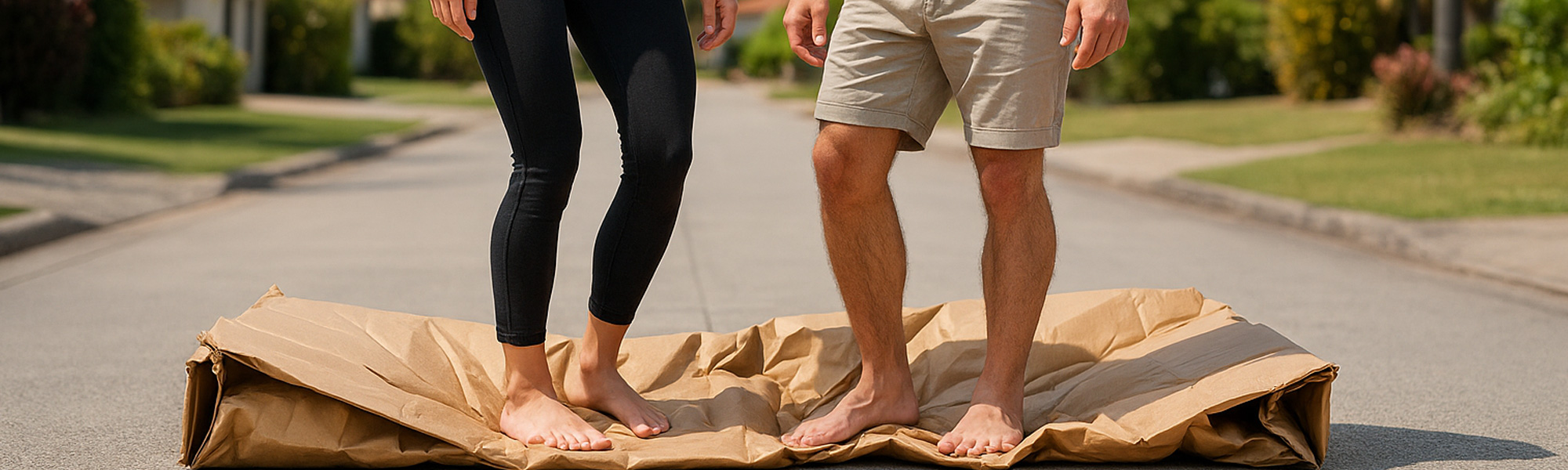
Cardboard boxes have somehow earned a free pass in modern homes. They arrive daily, lean politely against walls, sit quietly in hallways, and wait near bins as if they belong there. They do not. A box is not storage, not furniture, and not a temporary container deserving patience. It is a failed state. The moment a box enters a house, it has already completed its useful life.
Families tolerate boxes because they look harmless. Flat sides. Clean edges. Familiar branding. But this visual calm disguises the real problem. An intact box is mostly air. It occupies volume without offering function. It blocks movement, interrupts cleaning, and quietly claims floor space that has not agreed to host it. Once a household stops treating boxes as neutral objects and starts seeing them as space thieves, the logic changes immediately. Boxes are not to be stored, sorted, or admired. They are to be eliminated.
An Intact Box Is Wasted Volume

Every argument for crushing boxes comes back to one fact: air is the enemy. Cardboard is light, stiff, and full of trapped space. Leaving a box intact is a decision to store air, transport air, and manage air week after week. This is why bins fill too quickly and why recycling areas overflow even when households believe they are being careful.
Folding boxes flat does not solve this problem. Folding preserves structure. It keeps panels rigid and corners strong. A folded box still resists compression. It stacks awkwardly, springs back, and creates false platforms that waste vertical space in bins. Crushing does the opposite. Crushing destroys the geometry of the box. Panels buckle. Creases multiply. Trapped air escapes. What was once a rigid object becomes a flexible mass that can be pushed into gaps and layered efficiently.
When families crush boxes properly, bin space stops feeling scarce. The same bin suddenly holds far more material, not because the bin changed, but because the contents finally learned to behave.
Why Feet Are the Right Tool
Hands are precise but weak at scale. Tools add friction and delay. Feet apply exactly the kind of force cardboard fails under. Broad pressure. Controlled weight. Even distribution across surfaces. When a box is crushed with feet, it collapses honestly. Corners give way. Panels crease deeply. The box stops pretending it has structure.
There is also an important feedback loop at work. Crushing with feet provides immediate confirmation that the job is finished. You feel resistance disappear. You hear the release of trapped air. You see the box lose its shape completely. Folding never delivers this certainty. Folding feels tidy but unresolved. Crushing feels final.
In households where box crushing becomes normal, boxes stop lingering. They are dealt with immediately, at the point of arrival or disposal. There is no intermediate stage where boxes wait for attention. They arrive and they are destroyed. End of process.
Boxes Are Filthy, Even When They Look Clean
Cardboard arrives dirty. Not visibly dirty, not obviously contaminated, but structurally unclean. Boxes pass through warehouses, trucks, depots, sorting belts, loading docks, and concrete floors before they ever reach your front door. They are slid, stacked, dragged, and exposed to dust, exhaust residue, insect debris, and ambient moisture along the way. None of that disappears because the box looks neat.
Once inside, those surfaces shed particles continuously. Fibres flake. Fine dust lifts when boxes are moved. Corners brush walls, skirting boards, furniture, and clothing. Boxes are rarely wiped down. They are rarely isolated. They sit where people walk, where children play, where pets move through, quietly distributing grime into spaces that were otherwise clean.
Treating a box as something to store indoors is effectively allowing an unwashed object to linger at floor level. Crushing shortens that exposure window. A destroyed box does not wander, lean, or migrate. It is rendered inert and removed from the living environment quickly and decisively.
Why Boxes and Family Health Do Not Mix
Cardboard is absorbent by design. It holds moisture, odours, and residue far better than people realise. This makes intact boxes excellent carriers of allergens and irritants. Dust mites, mould spores, and fine particulate matter settle into the fibres and stay there. Every time a box is shifted, those particles are released back into the air at exactly the height people breathe.
Families who tolerate box piles indoors are not just managing clutter, they are increasing the baseline dirt load of the home. This shows up subtly. Faster dust accumulation. Grime returning soon after cleaning. A stale, slightly off smell that no one can quite identify. Crushing boxes aggressively reduces exposure. It limits how long those fibres remain inside and ensures they leave the house in a state that no longer sheds.
This is not about fear or perfection. It is about recognising that cardboard is an external material that does not belong indoors longer than absolutely necessary.
When Bins Fail, Boxes Are Usually the Cause
Households often blame bin size, collection frequency, or council rules when recycling overflows. In reality, most bin failures trace back to intact or poorly crushed boxes. A bin does not compress its contents. It simply holds whatever shape you give it. When boxes go in rigid, the bin fills with air long before it fills with material.
This is when lids stop closing. Collections get skipped. Side piles appear. Emergency crushing sessions happen on collection night. None of this is a bin problem. It is a box problem. Crushed boxes settle instead of bridging. They allow new material to slide past rather than perch on top. Over a full week, this difference compounds. The bin works only when its contents have already surrendered their volume.
Boxes Disrupt Movement and Cleaning Long Before You Notice
Intact boxes are not passive clutter. They actively interfere with how a house functions. They block walking paths, narrow hallways, and create obstacles that people subconsciously step around rather than remove. Cleaning routines adapt around them. Vacuuming skips corners. Mopping avoids sections of floor. Boxes quietly train a household to accept partial cleaning as normal.
This is how dirt builds up even in homes that feel tidy. Boxes create dead zones. Crushing removes those zones instantly. A destroyed box does not lean against walls or wait near doorways. It leaves the room entirely. Floors stay open. Cleaning stays continuous. The house flows again because nothing is asking to be accommodated.
Why Box Piles Grow Faster Than You Expect
Box accumulation is not linear. It accelerates. One intact box invites another because it establishes precedent. Once a box is allowed to sit, the next box feels less urgent. Soon, stacking begins. Stacks justify themselves by looking organised. At that point, a corner has been assigned to boxes, and the house has silently agreed to host them.
This is why waiting never works. The first intact box is the most dangerous one. Crushing breaks the chain before it forms. There is nothing to stack onto, nothing to align with, nothing to justify saving. The pile never starts, which is far easier than dismantling it later.
Crushing Prevents Secondary Handling
Every intact box guarantees future labour. It must be moved again, folded later, repositioned during cleaning, or dealt with when it blocks something important. This secondary handling is rarely noticed because it is spread across days, but it adds up quickly. Boxes steal time by demanding repeated attention.
Crushing at first contact eliminates this entirely. A destroyed box does not require a second decision. It cannot be saved for later or rearranged into a neater pile. It is finished. Families who adopt this approach remove an entire category of low-level household work without even realising it.
Boxes Belong Under the Soles of Your Feet
There is a physical hierarchy in a home, whether acknowledged or not. Objects that belong have places. Objects that do not belong are reduced and removed. Cardboard boxes fall firmly into the second category. Placing them under the soles of your feet is not symbolic aggression. It is practical correction.
Feet apply pressure where boxes are weakest. Panels collapse. Corners fail. The box stops asserting itself as an object and becomes material. This act resets the relationship immediately. The box no longer gets to stand, lean, or occupy volume. It is demoted to something that will leave the house promptly and quietly.
Watching a Box Get Destroyed Changes How the House Feels
There is something quietly satisfying about watching a box leave the house and not come back intact. When a family member takes a box outside and crushes it immediately, it signals closure. The object does not linger. It does not wait for permission. It is dealt with decisively, and the space it occupied is instantly reclaimed. You feel the house reset in a small but noticeable way, as if a loose end has been tied off.
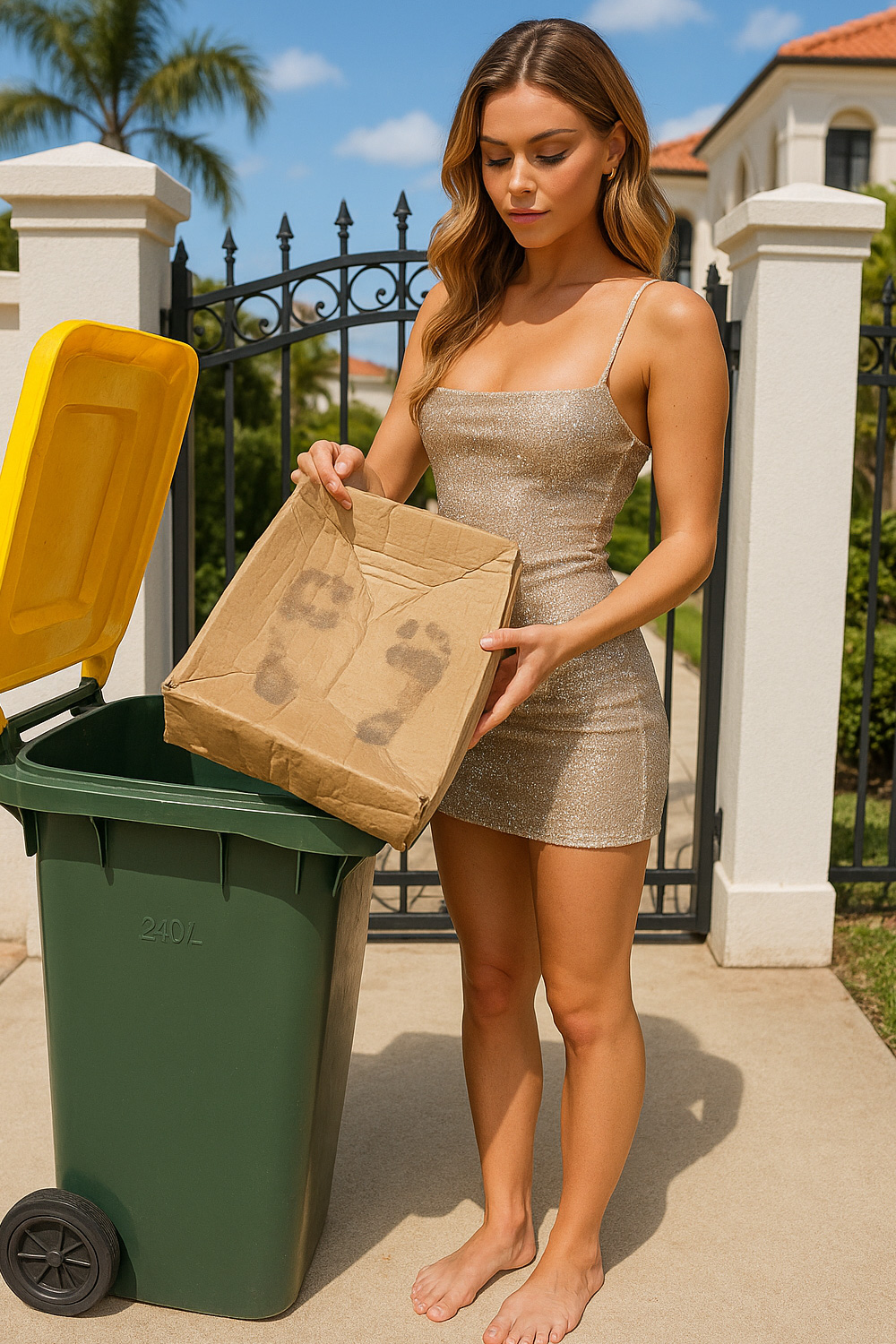
Up close, the appeal is entirely physical. Bare feet meet the cardboard and stay there, weight settling in slowly as the box answers back with creaks, slips, and sudden failures. The surface dents first, then gives way unevenly, panels sliding against each other as fibres grind and fold. Corners collapse without warning, printed faces crumpling and twisting as pressure shifts and returns, firmer each time. The box loses its shape in stages, strength draining out of it until it can no longer decide how to stand. In the end it collapses and flattens into an almost repulsive but neat pad of crushed cardboard, dense and low, worked over until nothing is left to resist. It is messy in process and precise in result, and that contrast is exactly what makes it feel so good to watch.
Doing it yourself amplifies that effect. When the box collapses under your feet, resistance gives way quickly and completely. The stiffness disappears. The structure fails. What was bulky and awkward becomes flat, compliant, and finished. There is no ambiguity about whether the job is done. You can see it. You can feel it. The box no longer has a future inside the house.
This moment matters because it reinforces the habit emotionally, not just logically. The act is brief, physical, and conclusive. It replaces low-level irritation with resolution. Over time, families start to associate intact boxes with discomfort and crushed boxes with relief. That association is what makes the behaviour stick without reminders or rules.
It also becomes a shared signal. When someone else in the household crushes a box immediately, it communicates alignment. No one needs to ask who will deal with it or when. The response is automatic, and everyone benefits from the result. The house feels lighter not because something was organised, but because something was eliminated.
That feeling is the reward. It is why families who adopt this approach rarely go back.
The Family Habit That Actually Sticks
Most household systems fail because they rely on goodwill and future motivation. Box crushing works because it removes choice. There is no debate about what happens next. Every box meets the same fate.
When everyone in the household understands that boxes are not allowed to survive intact, behaviour shifts quickly. Children learn that large objects must earn their space. Teenagers stop building box corners. Adults stop telling themselves they will deal with it later. The action becomes automatic rather than scheduled.
Because crushing takes seconds, resentment never builds. There is no designated person stuck doing the unpleasant job. The job no longer exists as a separate task.
Tolerance Is the Real Problem
Households do not struggle with boxes because they lack systems. They struggle because they tolerate intact boxes. Tolerance allows boxes to sit. Sitting allows stacking. Stacking justifies designated box areas. Once a corner becomes a box corner, the problem has already taken hold.
Hatred, in this context, is clarity. It is the refusal to let boxes exist in a half-state. Either they are doing a job, or they are being destroyed. There is no waiting phase. No visual negotiation. No promises of dealing with it later.
A Destroyed Box Is a Good Box
The measure of success is simple. If a box can still stand up, it has not been dealt with. A box that has lost its shape, stiffness, and dignity is a box that will not cause problems later. It will pack efficiently, settle properly, and disappear quietly.
The goal is not neat recycling. The goal is aggressive reduction. Boxes should leave the house broken, not hopeful. Once that rule is shared, everything else follows naturally.
You might also like




Disclaimer: Every effort has been made to ensure the accuracy of the information provided, but we make no guarantees regarding its completeness or reliability. The data is presented for general informational purposes only and does not constitute financial, investment, or legal advice. We are not liable for any errors, omissions, or consequences arising from its use. Users should verify details with relevant sources and seek professional advice where appropriate for the most accurate and up-to-date guidance.