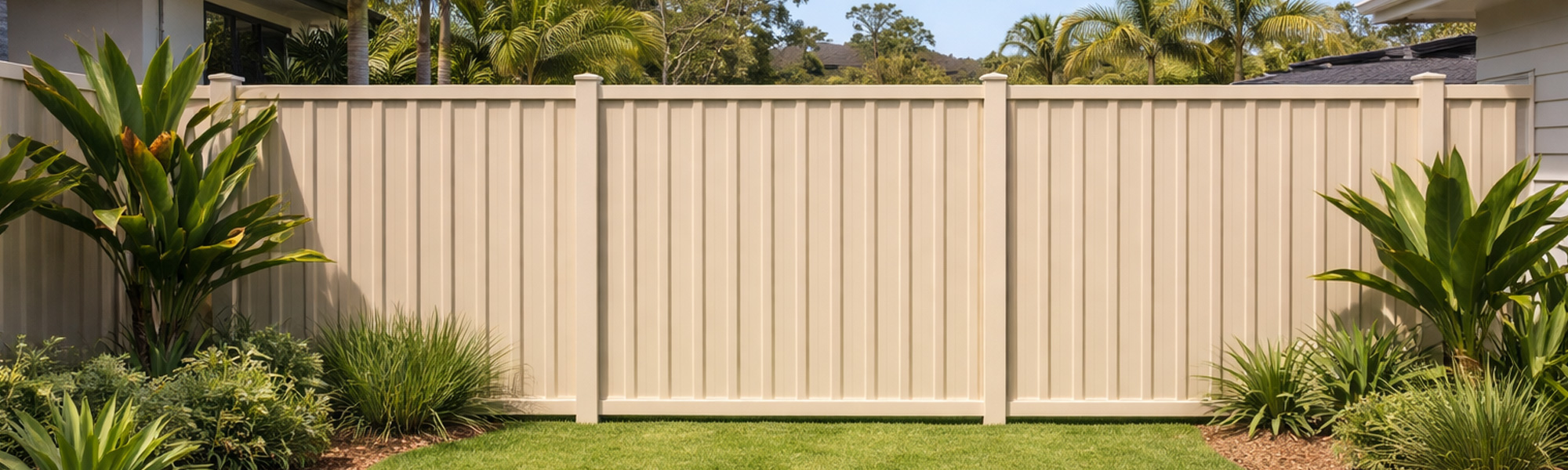
Fences sit at the intersection of law, property value, neighbour relationships, and everyday practicality. They are one of the few building elements that are shared by default, highly visible, and governed by specific legislation rather than just planning codes. In Queensland, fencing disputes are common not because the law is unclear, but because people misunderstand what it does and does not require.
Whether you are replacing a collapsing timber fence, building a new boundary fence on a subdivision, or upgrading to something more durable, the decisions you make early will determine not just who pays, but how long the fence lasts and how smoothly the process runs.
The Legal Framework in Queensland
Fencing in Queensland is governed primarily by the Neighbourhood Disputes (Dividing Fences and Trees) Act 2011. This Act applies to most residential properties and sets out who is responsible for building, repairing, or replacing a dividing fence between neighbours. Importantly, it is not a planning instrument and it does not dictate design preferences beyond the concept of a "sufficient dividing fence".
A sufficient dividing fence is defined as one that is reasonably adequate for the purpose of dividing the land, having regard to the nature of the properties, the existing fencing in the area, and how the land is used. This definition is deliberately flexible. It allows for context but also means there is no automatic right to upgrade simply because one owner wants something nicer.
The Act assumes cooperation first. Formal processes only apply if neighbours cannot agree. If you follow the Act correctly, it provides protection for both sides. If you ignore it and build first, you can lose your right to recover costs even if the fence was genuinely needed.
When a Fence Is Legally Required
A dividing fence is required when land is adjoining and one owner requests it, provided the fence meets the definition of sufficient. This applies whether there is currently no fence or an existing fence is no longer adequate due to age, damage, or safety concerns.
Common triggers include timber fences that have rotted at ground level, fences that have collapsed in storms, or older wire fences that no longer serve any practical purpose in suburban areas. Cosmetic dislike alone is not enough. A fence that is structurally sound but unattractive is usually still legally sufficient.
Where one property is undeveloped and the other is developed, the obligation still exists. Vacant land does not remove the responsibility to contribute to a dividing fence, although practical enforcement can sometimes be slower.
Who Pays and How Costs Are Split
In most standard residential situations, neighbours share the cost of a sufficient dividing fence equally. This does not mean the cheapest possible fence, but it also does not mean premium materials by default. The baseline is what is reasonable for the area and the use of the land.
If one owner wants a higher standard fence than what is considered sufficient, that owner must generally pay the additional cost. For example, if a standard timber fence would meet the legal requirement but one neighbour wants a masonry wall or decorative fencing, the extra cost sits with the upgrader.
There are exceptions. If the existing fence is damaged due to one owner's actions, such as excavation or vehicle impact, that owner may bear full responsibility. Similarly, if a fence needs to be stronger due to one property's specific use, such as containing animals, the owner creating that need may be required to contribute more.
The Notice Process and Why It Matters
Before work starts, the Act requires that a Notice to Contribute be given to the adjoining owner. This notice sets out the proposed fence type, location, estimated cost, and proposed contribution. It is not a courtesy. It is a legal prerequisite.
The adjoining owner has one month to respond. They can agree, disagree, or propose alternatives. If no response is received, the initiating owner can proceed with a sufficient fence and later recover half the cost, provided the fence genuinely meets the legal standard.
Skipping this step is the most common and most expensive mistake people make. Even a perfectly reasonable fence can become fully self-funded if the process is not followed. Verbal agreements are risky. Written notice protects everyone.
Common Fence Types and Where They Make Sense
Timber paling fences remain common in Queensland because they are cost-effective, easy to repair, and suit suburban conditions. Treated pine is widely used, although hardwood posts are still preferred in some areas for longevity. Timber fences offer privacy but require maintenance and eventual replacement.
Colorbond steel fencing has become increasingly popular due to its durability and clean appearance. It performs well in coastal and storm-prone areas and offers consistent privacy. While the upfront cost is higher than basic timber, the longer lifespan often balances this over time.
Masonry and rendered fences are usually considered upgrades rather than sufficient fences unless they are common in the immediate area. They provide excellent durability and acoustic benefits but are rarely required by law. Their use often triggers cost-sharing disputes unless both owners clearly agree.
Pool fencing, acoustic fencing, and security fencing are generally considered purpose-specific. If the fence exists primarily to meet one owner's regulatory or lifestyle requirement, that owner typically bears the majority or full cost.
For a comprehensive deep dive on different fence types, read Fence Types Explained - What to Build, How to Install It, and Why It Lasts.
Location, Boundaries, and Survey Issues
A dividing fence should be built on the boundary line unless otherwise agreed. This seems straightforward until boundary uncertainty enters the picture. Many older properties rely on assumed boundaries rather than surveyed ones, which can create issues when replacing fences.
If there is genuine doubt about the boundary location, a survey may be required. The cost of a survey is not automatically shared under the Act, but it can be negotiated. Building a fence in the wrong place can create long-term legal problems that far outweigh the cost of doing it properly.
Fences built entirely inside one property's boundary are not dividing fences under the Act. This can be a strategic choice if agreement cannot be reached, but it comes with cost and space implications.
Repair Versus Replacement Decisions
The law distinguishes between repair and replacement. Minor repairs are usually easier to agree on and cheaper to execute. Replacement becomes necessary when repairs are no longer practical or cost-effective.
If a fence is failing along its length, leaning significantly, or structurally compromised, replacement is usually justified. Patchwork repairs on an end-of-life fence often create ongoing disputes rather than solving the problem.
Documenting the condition of the existing fence with photos and quotes strengthens your position. It helps demonstrate that replacement is reasonable, not optional.
Disputes and Resolution Pathways
Most fencing disputes resolve through communication once expectations are aligned. When they do not, the Act provides a pathway through mediation and ultimately the Queensland Civil and Administrative Tribunal.
Tribunal decisions focus heavily on reasonableness. Excessive designs, inflated costs, and poor process are regularly rejected. Conversely, owners who follow the Act, give proper notice, and propose sensible solutions are generally supported.
Legal representation is not required in most cases. Clear documentation and evidence of good faith negotiation carry significant weight.
Practical Considerations Beyond the Law
Good fences are not just legal constructs. They affect drainage, access, light, airflow, and maintenance on both sides. A fence that looks fine on paper can cause ongoing issues if posts block drainage lines or panels restrict access for repairs.
Choosing materials suited to Queensland conditions matters. Termites, moisture, wind load, and sun exposure all influence fence performance. A slightly higher upfront investment can prevent premature failure and future disputes.
Thinking long-term and communicating openly tends to cost less than arguing later. Neighbours change, but fences last.
This article provides general information only and is not legal advice. Queensland fencing obligations can vary based on property type, local conditions, and individual circumstances. Before taking action, property owners should review the Neighbourhood Disputes (Dividing Fences and Trees) Act 2011 (Qld) and seek independent legal or professional advice where appropriate.
You might also like





Disclaimer: Every effort has been made to ensure the accuracy of the information provided, but we make no guarantees regarding its completeness or reliability. The data is presented for general informational purposes only and does not constitute financial, investment, or legal advice. We are not liable for any errors, omissions, or consequences arising from its use. Users should verify details with relevant sources and seek professional advice where appropriate for the most accurate and up-to-date guidance.