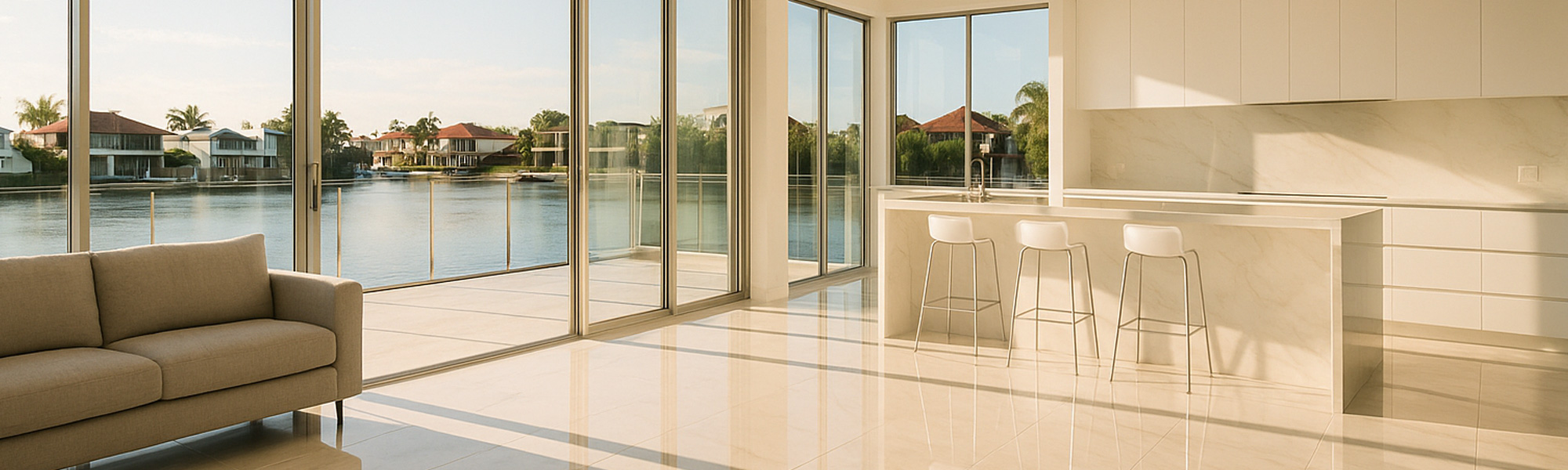
The Gold Coast is built on sunshine. From bright mornings spilling across pool decks to soft golden light glowing through tropical gardens, the movement of the sun shapes how we live every day. The best homes don't fight that - they're designed around it.
Working with the sun's natural rhythm makes life more comfortable, more efficient, and more beautiful. It's why local builders and designers plan every wall, window and walkway with sunlight in mind - turning a simple daily pattern into the quiet art of perfect living.
The Gold Coast Sun - Your Greatest Design Partner
The Coast sits in one of Australia's most forgiving climates - warm, bright and temperate for most of the year. The sun travels high overhead in summer and lower across the northern sky in winter, giving generous daylight and mild seasonal variation.
Smart design uses this movement to its advantage: capturing warmth when it's wanted, blocking glare when it's not, and drawing natural light deep into every corner of a home. When done well, it feels effortless - a home that simply lives well all year round.
Orientation: The Heart of Solar Design
Orientation is where everything begins. On the Gold Coast, northern light is pure gold - soft, steady and naturally balanced.
Living Zones
Place main living and dining areas to face north or north-east. It's where the sun feels most inviting, warming interiors in winter while staying gentle through summer. Extend these spaces outdoors to patios or decks that catch morning light and afternoon shade.
Bedrooms
East-facing bedrooms fill with fresh morning light - ideal for natural waking. South-facing rooms stay comfortably cool through summer and make perfect guest or study spaces.
Service Areas
Garages, laundries and bathrooms positioned to the west act as natural shields, taking the brunt of afternoon heat while keeping living spaces comfortable.
This balance of light and shade creates a home that feels calm, bright and efficient - not by chance, but by design.
Designing for Summer Shade
Summer on the Coast means long days, high sun and humid afternoons - perfect for outdoor life, but only if your home keeps up.
Eaves and Overhangs
Deep eaves on the north side block the high summer sun while allowing the low winter rays to enter. It's a simple, time-tested principle that keeps interiors naturally cool.
Screens and Louvres
Adjustable shading - timber battens, perforated metal, or vertical fins - filters the light without cutting the view.
Natural Planting
Tropical species like bamboo, heliconia and palm create moving shade and a fresh green backdrop. As the breeze stirs through, the air cools naturally around the home.
Together, these layers protect the house from glare and heat while maintaining the bright, open feeling that defines Gold Coast living.
Welcoming Winter Warmth
When the weather cools, the same sunlight becomes your best comfort system. North-facing glazing allows light to reach deep into living spaces. Floors with thermal mass - polished concrete or stone tiles - soak up the day's warmth and release it at night.
Clever detailing like low-e glass or double glazing prevents heat loss without losing clarity. Curtains, rugs and textured finishes help trap warmth while keeping the interiors light-filled and inviting.
Outdoor Living That Moves With the Sun
Gold Coast homes are designed to live both indoors and out. The trick is aligning each space with the sun's path so it always feels pleasant to be there.
Morning Patios
Eastern courtyards and terraces are perfect for coffee, reading or drying laundry. They're bright early, then comfortably shaded later.
Afternoon Retreats
Western edges need protection. Pergolas, outdoor blinds or tall palms filter the hot light and keep the air moving.
Pool Placement
A north or north-east facing pool gains natural warmth and reflects light beautifully into the surrounding garden. Choose light-toned, non-slip paving so it stays barefoot-friendly even on the hottest days.
Garden Planning
Place tropical sun-lovers like frangipani and hibiscus to the north, and lush shade dwellers - ferns, cordylines and elephant ears - to the south. This balance creates layered, vibrant greenery that changes with the light.
Windows, Breezes and Light Control
Windows are the link between the home and the sky. Their placement determines how air and light flow.
- Align openings to catch sea breezes from the east or south-east.
- Louvres let you fine-tune light and airflow - especially useful during summer storms when you still want fresh air.
Cross-ventilation is key: when breezes move through freely, the whole home stays cooler and healthier with little reliance on air-conditioning.
Interiors That Glow Naturally
Interior design also benefits from solar awareness. Reflective tones and soft materials like timber, rattan and stone interact beautifully with changing daylight. Position furniture and finishes where they catch natural light - a timber floor that glows at sunset, linen curtains that diffuse the morning, polished benchtops that shimmer under midday brightness.
Artificial lighting can then complement the sun rather than compete with it - warm LEDs at night, task lighting only where needed.
Energy Efficiency and Sustainability
Designing around the sun doesn't just enhance comfort - it saves energy.
- Cooler interiors mean less air-conditioning.
- Longer daylight hours reduce lighting costs.
- Solar panels on north-facing roofs generate maximum power.
It's simple, passive sustainability built into everyday living - proof that beauty and efficiency can work together.
Living With the Light
When a home aligns with the sun, everything flows. Morning light brightens the kitchen, afternoon shade cools the patio, and golden light fills the living room just as the day slows down. These are the quiet moments that make a house feel alive - not just designed, but in tune with where it stands.
Gold Coast homes are famous for this connection - open, airy, and responsive to light. It's not an accident; it's a way of building that's as natural as the sunlight itself.
Design around the sun, and your home will reward you every single day - with comfort, calm, and that unmistakable coastal glow.
You might also like


Disclaimer: Every effort has been made to ensure the accuracy of the information provided, but we make no guarantees regarding its completeness or reliability. The data is presented for general informational purposes only and does not constitute financial, investment, or legal advice. We are not liable for any errors, omissions, or consequences arising from its use. Users should verify details with relevant sources and seek professional advice where appropriate for the most accurate and up-to-date guidance.