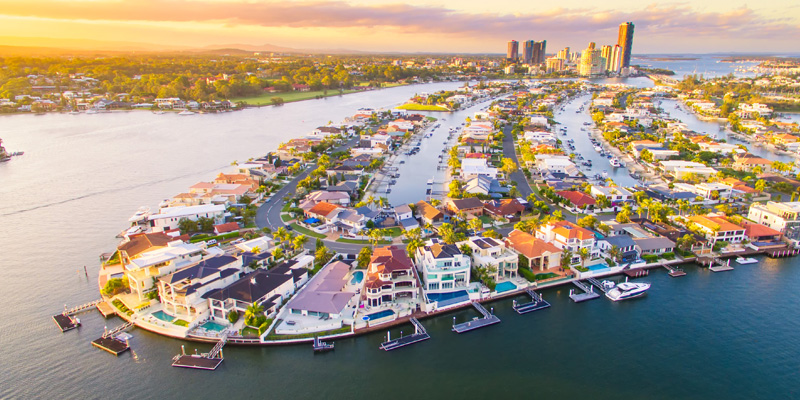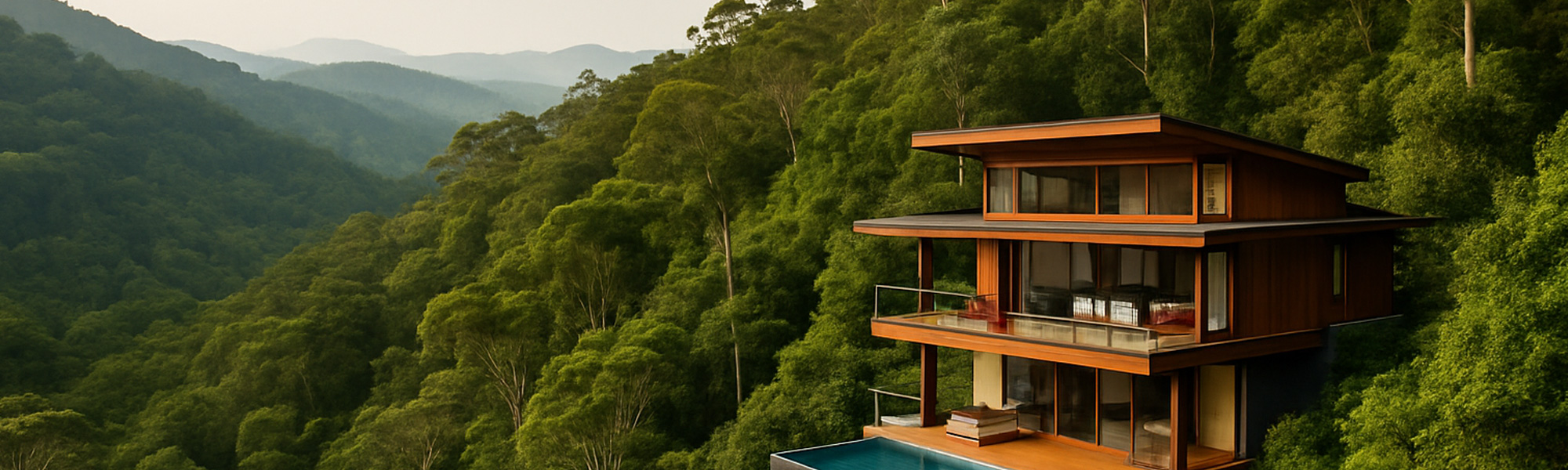
On the hottest summer afternoons, when the coastal humidity settles over the suburbs like a warm blanket, the Gold Coast Hinterland feels like a different world. The breeze moves differently up here. The air tastes cleaner. Light filters through tall gums and tropical understory plants in a way that softens everything. You can feel your shoulders drop as the valley opens up below you.
For a long time, the Hinterland was the quiet cousin of the Gold Coast market. Beautiful, yes. Valuable, absolutely. But always playing a supporting role to the glamour of the beach. Then something shifted. Buyers began talking not about distance, but about space. Not about nightlife, but about privacy. Not about convenience, but about liveability. That small shift in language became a rush, and the market in Tallai, Bonogin, Mudgeeraba and Worongary now carries a confidence all its own.
A Market Reborn by Lifestyle, Not Speculation
The modern wave of Hinterland demand isn't being driven by dreamers looking for a tree change. It is being driven by people who already understand the Gold Coast and want the best possible version of it. Families who love the coast but want room for the kids. Executives who run businesses from home and crave quiet. Retirees who want gardens instead of balconies. Couples who want breezes, birdsong and a home office with a view over rolling greenery.
This new buyer pool is grounded and purposeful. They are planning their long-term life in Queensland, and they know exactly what they want. Scarcity also plays a part. Hinterland properties are rarely duplicates of one another. Every block has its own shape, every outlook has its own character, and every home tells a different story. When a buyer steps onto a veranda that resonates with them, the attachment is immediate. Agents describe how quickly conversations shift from comparisons to emotion the moment buyers stop and take in a valley view.
The Appeal of Elevation in a Warming Climate
The Hinterland's natural advantage is its elevation. In a region known for warmth and humidity, the softening effect of height is becoming more valuable each year. Afternoon breezes roll through the ridges. Shade sits deeper under mature trees. Homes cool quicker at night. Buyers walking through a Tallai or Bonogin home on a summer afternoon often make the same comment. The air simply feels calmer.
Comfort has become a primary driver of purchasing decisions. Many buyers are actively seeking homes that remain pleasant without relying heavily on mechanical cooling. Elevated properties fit that brief. They offer the kind of built-in climate ease that people increasingly crave, especially families relocating from hotter inland cities who are often surprised by how naturally comfortable the Hinterland feels.
Privacy, Security and Space Without Sacrificing Community
One of the strongest emotional appeals of the Hinterland is the feeling of space. Long driveways meander through tropical plantings. Backyards resemble mini private reserves. Outdoor entertaining areas sit quietly without the hum of next-door appliances or neighbouring conversations drifting across fences. Families can spread out. Pets have room to explore. Kids can build cubbies under big trees and spend summers outside in shaded pockets of lawn.
Yet despite that space, community culture remains strong. Many Hinterland streets have long-established neighbourhood networks where residents share tools, help with gardens, or simply enjoy the easy rhythm of low-density living. Buyers often describe the region as the perfect balance: private enough to unwind in complete quiet, yet close enough to neighbours to feel supported.
A New Wave of Homes Built for Indoor-Outdoor Living
The architectural identity of the Hinterland is going through a quiet evolution. The older, rustic acreage homes are still there and still loved, but a new wave of prestige builds is reshaping the region. These homes borrow coastal sophistication and adapt it to elevated acreage living.
Modern Hinterland properties often open wide to the landscape with large panes of glass framing valleys and green hills. Decks stretch across the length of the home, taking in morning or afternoon breezes. Pools sit on the edges of sloping blocks with views that rival boutique retreats. Contemporary coastal palettes meet rainforest gardens planted with palms, bamboo and tropical understory species. The result is a hybrid style that feels distinctly Gold Coast: lush, modern, breezy and deeply connected to the surrounding land.
Work-From-Home Buyers Quietly Leading the Charge
If one buyer profile is shaping the Hinterland today, it is the remote professional. These are people who want the calmest possible environment for productivity, not the bustle of the coastal strip. Instead of squeezing a desk into a small bedroom, they want home offices with views, separate studios, converted lofts, or entire wings dedicated to work. Serenity has become a commodity in its own right, and the Hinterland offers it in abundance.
This demographic is one of the strongest forces behind the surge in mid-range and prestige acreage demand. It isn't about price. It is about daily experience. Buyers making long-term work-from-home commitments want an environment that supports concentration, wellbeing and creativity, and the Hinterland is uniquely positioned to provide it.
Schools, Stability and the Long-Horizon Family Buyer
Another powerful influence is the long-horizon family buyer. These parents want to settle for the next decade, not the next couple of years. They are prioritising backyard space, natural shade, gardens, privacy and homes that feel grounded. For many of them, the Hinterland represents a childhood ideal. Kids can explore outdoors, grow up alongside trees and native birds, and enjoy a sense of space that the denser beachside suburbs simply cannot offer.
These buyers are often emotionally invested long before they place an offer. They are thinking about where their children will play, how the afternoons feel, whether the lifestyle will grow with them. That emotional alignment transforms into strong bidding behaviour and a willingness to stretch for the right home.
A Market Where Sellers Quietly Hold the Advantage
One of the defining characteristics of the Hinterland is its slow turnover. Owners tend to stay for many years because the lifestyle is so deeply satisfying. When a premium acreage property comes to market, buyers take notice immediately. Competition is strong because supply is naturally limited.
Off-market activity is especially common. Well-qualified buyers often register their interest with agents months in advance, waiting for the right home. When it appears, it rarely lasts long. Many transactions now happen before the listing ever meets the public.
A Strong Future Built on Lifestyle Certainty
The Gold Coast Hinterland sits at the centre of several long-term lifestyle shifts: the desire for space, the appeal of natural breezes, the rise of remote work, the search for privacy, and a growing appreciation for shaded outdoor living. These aren't temporary trends. They are structural changes in how Queenslanders want to live.
This gives the Hinterland something very few markets can claim right now: stability based on liveability rather than speculation. As more buyers come to understand what elevated acreage living offers, the region's strength will continue to build. It is not competing with the beachside market anymore. It is creating its own chapter in the Gold Coast story, one defined by calm, greenery and the deeper sense of home that comes with it.
This article provides general market commentary only and is not intended as financial, legal or real estate advice. Readers should seek independent professional guidance before making property decisions. Market conditions can change and individual circumstances vary, so any examples or insights in this article should be interpreted as general information rather than specific recommendations.
You might also like




Disclaimer: Every effort has been made to ensure the accuracy of the information provided, but we make no guarantees regarding its completeness or reliability. The data is presented for general informational purposes only and does not constitute financial, investment, or legal advice. We are not liable for any errors, omissions, or consequences arising from its use. Users should verify details with relevant sources and seek professional advice where appropriate for the most accurate and up-to-date guidance.