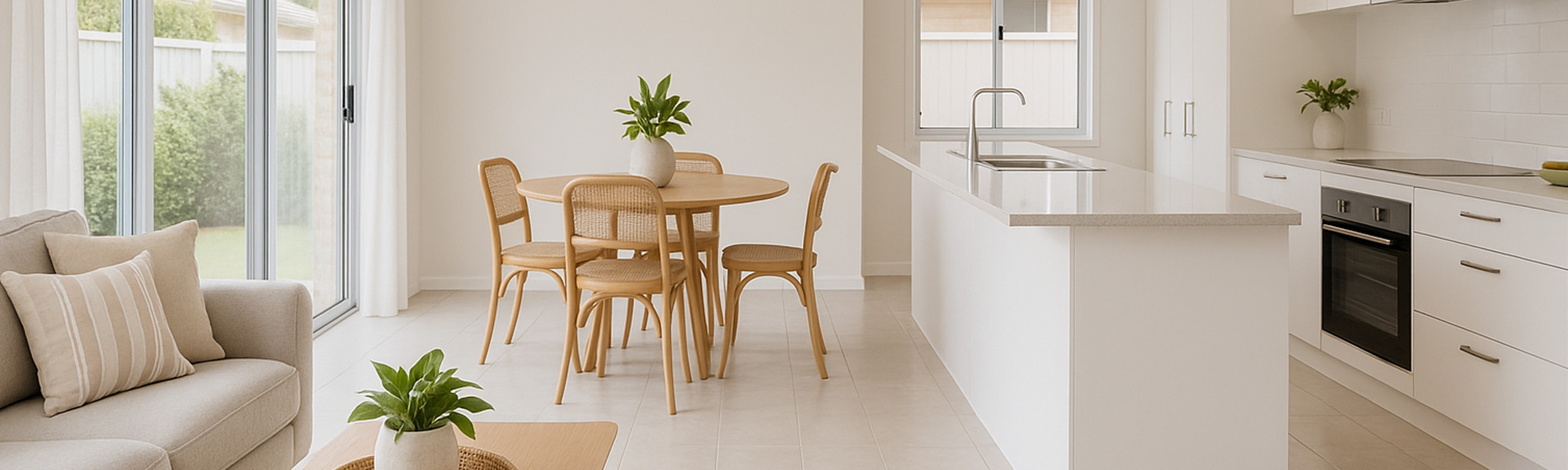
First impressions matter. A spotless home doesn't just look good - it tells buyers the property has been cared for and is move-in ready. From sparkling glass to polished benchtops, the details reassure people they're stepping into a home that feels fresh, loved, and valuable. Whether you're preparing for inspections, viewings, or final hand-over, a thorough clean makes all the difference.
Cleaning a property for presentation can be a big task, and for many sellers it's worth considering professional cleaners. Specialists know exactly what to look for - from fingerprints on glass doors to dust on high light fittings - and they bring the experience, tools, and techniques to make sure no detail is missed.
If you're tackling the clean yourself, always check manufacturer instructions before using any cleaning product or method, especially on premium finishes like stone benchtops, timber floors, engineered surfaces, or stainless steel appliances. When in doubt, test in an inconspicuous area first to avoid damage.
And while it may seem obvious, remember that cleaning chemicals should be handled with care. Wear gloves, keep rooms ventilated, and never mix products unless the label confirms it's safe to do so. A thoughtful approach not only protects your property but also your health.
This guide is designed to help you prepare your home for presentation by covering the most common areas buyers notice. Every property is different, and you may find there are extra tasks worth tackling depending on your home's style, finishes, or condition. Use these ideas as a framework, then add to them where needed.
Planning Your Pre-Sale Clean
A brilliant result starts with a plan. Trying to clean the entire property in one frantic burst usually leads to rushed work and missed details. Break the job into zones and stages so you can work methodically and avoid burnout.
- Walk through the home with a notepad and list every area that needs attention.
- Prioritise high-impact zones first: entry, kitchen, living areas, bathrooms.
- Decide which tasks you will do yourself and which may be better for professionals.
- Gather the right tools: microfibre cloths, non-scratch sponges, soft brushes, step ladder, vacuum attachments.
- Choose appropriate products for each surface (glass, stone, timber, tiles, grout, stainless steel).
- Schedule your deep clean at least several days before photography and first inspections.
- Allow time for final touch-ups on the morning of each viewing.
Tip: Take “before” photos of each room before you start. As you get tired, they help you see how far you have come and what still needs attention.
The Entry and First Impressions
The journey starts at the front gate and front door. Buyers pause here before stepping inside, so the area should look fresh and welcoming. Paths swept, doors polished, cobwebs gone - these details set the tone and suggest the rest of the home will be equally well cared for.
- Wash the front door and polish handles, knockers, and deadbolts.
- Sweep paths, steps, and porches to remove leaves, dust, and loose dirt.
- Clean outdoor lighting, replace blown bulbs, and wipe any insect residue.
- Remove cobwebs from corners, eaves, ceilings, and porch ceilings.
- Polish house numbers, intercom surrounds, and letterboxes if faded or tarnished.
- Check doormats - replace if worn, stained, or curling at the edges.
- Wipe marks from walls, door frames, and trims in the entry corridor.
- Clean glass side panels and security screens beside or around the front door.
- Neatly coil hoses and remove clutter such as shoes, toys, or tools from the entry zone.
- Ensure the entry smells fresh and inviting, not like wet shoes, pets, or chemicals.
Living Areas
Living rooms should feel calm, bright, and uncluttered. Buyers imagine family gatherings here, so surfaces should sparkle and the space should feel open and welcoming. The goal is a room that feels generous, not overloaded with furniture or personal items.
- Vacuum carpets and rugs, including edges, corners, and under accessible furniture.
- Mop hard floors until streak-free with a fresh but subtle fragrance.
- Dust shelves, skirting boards, window ledges, and TV units thoroughly.
- Polish mirrors, glass tables, and TV screens with lint-free cloths.
- Arrange cushions neatly and clear away clutter from coffee tables and side tables.
- Hide remote controls, cables, and chargers in a small basket or drawer.
- Wipe remotes, switches, and handles for a subtle, hygienic shine.
- Check lights and fittings for dust or insects and clean shades where safe.
- Limit personal photos and bold ornaments so buyers can imagine themselves living there.
- Dust air-conditioning units, split systems, and wall-mounted controllers.
Tip: If a living area feels cramped, consider removing one item of furniture to open the space visually.
Kitchens
The kitchen is often the heart of the home - and one of the most scrutinised. Every surface should look as if it belongs in a showroom, free of grease, fingerprints, stains, and clutter. Buyers look inside cupboards, check the oven, and notice how hygienic everything feels.
- Deep-clean the oven and stovetop until grease-free, including knobs and control panels.
- Remove stove trivets and soak if safe, then scrub and dry thoroughly.
- Wash and polish benchtops, splashbacks, and cupboard doors, including handles and edges.
- Clean sinks, drains, and plugs, then polish taps and mixers until reflective.
- Empty and sanitise bins well before any inspection to avoid strong odours.
- Wipe inside cupboards and drawers to remove crumbs, dust, and sticky residue.
- Declutter pantry shelves and group items neatly; dispose of out-of-date products.
- Pack away small appliances to maximise bench space, keeping only one or two neutral items.
- Check rangehood filters, degrease them as per manufacturer instructions, and clean the external casing.
- Wipe fronts of dishwashers, fridges, and microwaves; clean handles thoroughly.
- If the fridge stays, tidy shelves and wipe spills so it looks organised.
- Add a simple touch like a bowl of fresh fruit, a plant, or a vase with greenery.
Tip: Buff stainless steel appliances with a tiny amount of suitable oil or a dedicated stainless product, following the grain of the metal. Always test in a small area first.
Bathrooms
Bathrooms can make or break presentation. Buyers notice the shine of glass, the freshness of grout, and the sparkle of chrome. A bathroom should feel more like a day-spa than a utility room, with clutter hidden and surfaces dry, clean, and fresh.
- Scrub showers, tiles, and grout thoroughly, paying attention to corners and edges.
- Remove soap scum and product residue from shelves, niches, and holders.
- Polish mirrors until streak-free using microfibre cloths.
- Shine taps, showerheads, and chrome fittings, removing water spots and limescale where possible.
- Wipe vanities and cupboards inside and out, removing product build-up.
- Limit visible toiletries to a few neutral, well-presented items.
- Leave fresh, neatly folded towels in neutral colours for a hotel-style look.
- Clean toilets thoroughly inside and out, including bases, cisterns, buttons, and surrounding tiles.
- Wash shower screens and glass doors until they sparkle, including tracks and seals.
- Check and clean exhaust fan covers to remove dust.
- Empty bathroom bins and remove used razors, toothbrushes, and personal items from view.
Tip: For shower glass, mix vinegar with a dash of dish soap, spray, leave briefly, then rinse and buff with a microfiber cloth. Always avoid abrasive pads that can scratch coatings.
Bedrooms
Bedrooms should look restful, tidy, and uncluttered. Neutral colours and crisp bedding help buyers picture themselves settling in. The main bedroom in particular should feel like a calm retreat rather than a storage room.
- Make beds with fresh linen, plump pillows, and a neatly smoothed duvet or cover.
- Use simple, neutral layers instead of busy patterns where possible.
- Vacuum thoroughly, including under the bed and around furniture legs.
- Clear side tables and dressers of excess items; leave only a lamp and one or two decor pieces.
- Polish mirrors and glass wardrobe doors and remove fingerprints.
- Tidy wardrobes - buyers may peek inside to assess storage.
- Store toys neatly in children's rooms and reduce visible clutter.
- Remove excess furniture to make smaller bedrooms feel more generous.
- Check lampshades for dust and replace bulbs if needed so all lights work.
Tip: If storage cupboards are overflowing, consider packing seasonal clothing into boxes and storing them off-site so wardrobe space looks adequate rather than strained.
Windows and Glass
Light sells lifestyle on the Gold Coast, so spotless glass is critical. Clean windows transform rooms, making them brighter and more inviting. Buyers also notice how well window frames, tracks, and screens have been maintained.
- Wash windows inside and out for clear views and maximum natural light.
- Clean sliding door tracks of dirt, grit, pet hair, and leaves.
- Wipe and vacuum window and door frames, including seals.
- Polish balustrades and balcony glass panels, removing salt spray and fingerprints.
- Wipe mirrors throughout the house, including robe doors and hall mirrors.
- Check skylights and high windows for cobwebs and dust.
- Gently clean flyscreens and security screens as recommended by the manufacturer.
Floors, Carpets, and Soft Furnishings
Buyers constantly look down as they move through a property. Clean floors and fresh-looking carpets suggest a well-maintained home. Stains, pet hair, and worn rugs can pull focus away from your best features.
- Vacuum all carpets slowly and methodically, using crevice tools for edges and corners.
- Consider professional steam cleaning for older carpets or visible stains.
- Shake out or vacuum rugs and ensure they sit flat without ripples or curled edges.
- Mop tiles, vinyl, and timber floors with the right product for the surface.
- Avoid leaving floors slippery - extra product can leave a film that looks cloudy.
- Spot-clean stains on upholstery where safe, or consider professional upholstery cleaning.
- Rotate or re-position rugs to minimise the appearance of worn patches.
Outdoor Spaces
Buyers want to imagine weekends outside - entertaining, swimming, or relaxing. Outdoor areas should look ready for use, not like an afterthought. A tidy yard also reassures buyers about general maintenance.
- Mow lawns and trim edges along paths, driveways, and garden beds.
- Weed garden beds and remove dead foliage or overgrown plants.
- Pressure-wash driveways, patios, paths, and pool surrounds where appropriate.
- Clean and arrange outdoor furniture neatly, wiping tables and chair arms.
- Check fences, gates, and pool areas for cobwebs, dirt, and loose items.
- Remove bins from sight or position tidily in a discreet area.
- Skim pools, empty skimmer baskets, and balance water so it looks clear and inviting.
- Brush down pergolas, balustrades, and handrails to remove dust and leaves.
- Coil hoses neatly and remove tools, offcuts, and building materials from view.
Tip: In covered outdoor areas, style a simple setting such as a clean outdoor table with a plant or jug of water and glasses to help buyers picture easy entertaining.
Garages, Sheds, and Storage Areas
Storage is a major selling point. Garages and sheds that are overflowing or dusty can make buyers worry there is not enough space or that maintenance has been neglected.
- Declutter garaging and sheds, removing items you no longer need or storing them off-site.
- Sweep floors and remove cobwebs from corners and ceilings.
- Stack remaining boxes neatly and label them clearly.
- Wipe down built-in shelving, workbenches, and storage units.
- Organise tools and garden equipment on hooks or in containers.
- Ensure garage doors open smoothly and safely; wipe panels and surrounds.
- Check lighting so these spaces feel bright rather than gloomy.
Managing Odours, Pets, and Allergies
Smell is one of the first impressions buyers register. Strong food smells, dampness, smoke, or pet odours can be very off-putting. Aim for light, neutral freshness rather than heavy fragrance that feels like it is masking something.
- Open windows regularly to air out the property before and after cleaning.
- Wash pet bedding and litter trays frequently and relocate them away from main living areas during inspections.
- Vacuum carpets and upholstery carefully to remove pet hair.
- Avoid cooking strong-smelling foods before inspections.
- Address any signs of damp, leaks, or mould as early as possible.
- Use lightly scented products or natural options where possible rather than overpowering perfumes.
Tip: Ask an honest friend or your agent to walk in and tell you what they smell first. Owners often become used to background smells and may not notice them.
The Details Buyers Notice
Even small oversights can draw attention. Clean switches, polished handles, and dust-free vents show pride of ownership and reassure buyers the home has been cared for. Many of these tasks are quick but make a surprisingly strong impression.
- Polish light switches and power points, wiping fingerprints and smudges.
- Dust air-conditioning vents, return-air grills, and ceiling fans.
- Check cornices, beams, and ceilings for cobwebs and dust.
- Polish door handles, knobs, and internal locks.
- Clean skirting boards throughout, especially in high-traffic areas.
- Remove scuff marks from walls where possible using appropriate products.
- Neaten cords and chargers so they do not hang loosely across floors or benches.
- Wipe door frames, especially around commonly used doors.
Tip: Some marks lift with a gentle cleaner and a soft cloth, but always test your paint in a hidden area first. Avoid harsh scrubbing that can leave shiny patches or remove paint.
If You Live in the Property During the Campaign
Many sellers continue living in the home while it is on the market. The key is to do the heavy lifting early, then implement simple daily habits so you can reset quickly before each inspection.
- Keep a small “inspection kit” with microfibre cloths, glass spray, and a handheld vacuum.
- Agree on a family routine for making beds and clearing bathroom surfaces each morning.
- Limit how many items are left on benchtops so they are easy to wipe and reset.
- Have a basket ready to quickly collect stray toys, shoes, and mail before buyers arrive.
- Schedule regular mini-cleans to prevent dust and clutter building up again.
Working With Professional Cleaners
For many sellers, bringing in professionals is a worthwhile investment, especially for larger homes, time-poor households, or properties with complex finishes. A detailed brief ensures you get the result you are expecting.
- Ask your agent which cleaning companies are familiar with pre-sale presentation.
- Request a written scope of works that clearly lists what is included.
- Highlight any delicate surfaces or specialist finishes requiring extra care.
- Confirm whether window cleaning, oven cleaning, and high-access dusting are included.
- Clarify whether they provide their own products and equipment.
- Book your clean close to photography and inspections while leaving time for touch-ups.
Final Touches Before Inspections
The last half-hour before an inspection is often the most critical. A final sweep through ensures buyers see everything at its best. Focus on light, air, and order rather than starting any heavy cleaning tasks at the last moment.
- Open windows for fresh air circulation where weather permits.
- Turn on lamps and selected overhead lights to brighten darker corners.
- Set the dining table with simple, neutral settings if it suits your style.
- Place flowers or greenery in key living areas and on the kitchen bench.
- Ensure benchtops are clear of dishes, chopping boards, and drying racks.
- Hide personal items in bathrooms, leaving only neutral decor.
- Check that all toilets are closed and towels are hanging neatly.
- Play soft background music quietly if it suits the property.
- Do a slow walkthrough before leaving - see the home as if you were the buyer.
Moving Out Cleaning
Even after a contract is signed, leaving a home spotless is both professional and considerate. It sets the right tone for hand-over and ensures the property reflects well on you right to the end. In some cases, contracts will require a certain standard of cleanliness, so it pays to be thorough.
- Wipe cupboards and drawers inside and out in the kitchen, bathrooms, and bedrooms.
- Vacuum and mop floors one last time, working from the back of the home towards the exit.
- Clean any appliances that remain (dishwasher, oven, stovetop, rangehood, air-conditioning filters).
- Wash windows and sliding doors again if they have collected dust during moving.
- Check sheds, garages, roof storage, and outdoor storage for forgotten items.
- Remove picture hooks as agreed with your agent or buyer and fill small holes if required.
- Empty and clean outdoor bins and remove any remaining rubbish from the site.
The Final Walkthrough
When everything is finished, step outside and re-enter as if seeing the home for the first time. Move slowly through each space and notice the smell, the light, and the details. Buyers do. Cleanliness is not just a chore - it is the foundation of presentation.
A sparkling home tells buyers it has been cared for, reassures them about its condition, and allows the architecture, styling, and lifestyle to shine. Whether you do the work yourself or engage professionals, a thoughtful, thorough clean is one of the most powerful tools you have when preparing your property for sale.
You might also like





Disclaimer: Every effort has been made to ensure the accuracy of the information provided, but we make no guarantees regarding its completeness or reliability. The data is presented for general informational purposes only and does not constitute financial, investment, or legal advice. We are not liable for any errors, omissions, or consequences arising from its use. Users should verify details with relevant sources and seek professional advice where appropriate for the most accurate and up-to-date guidance.