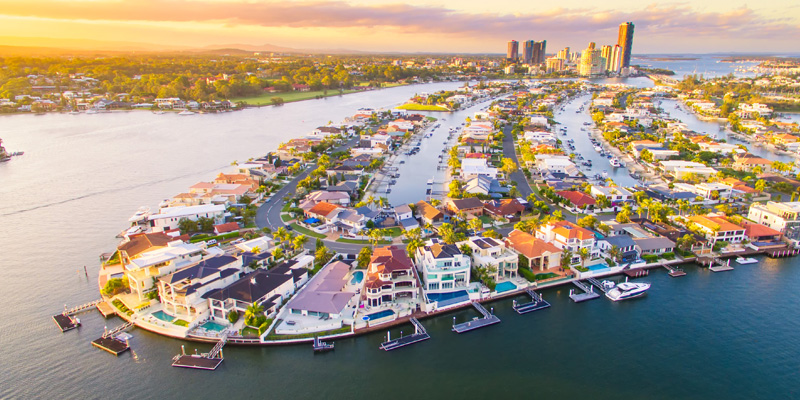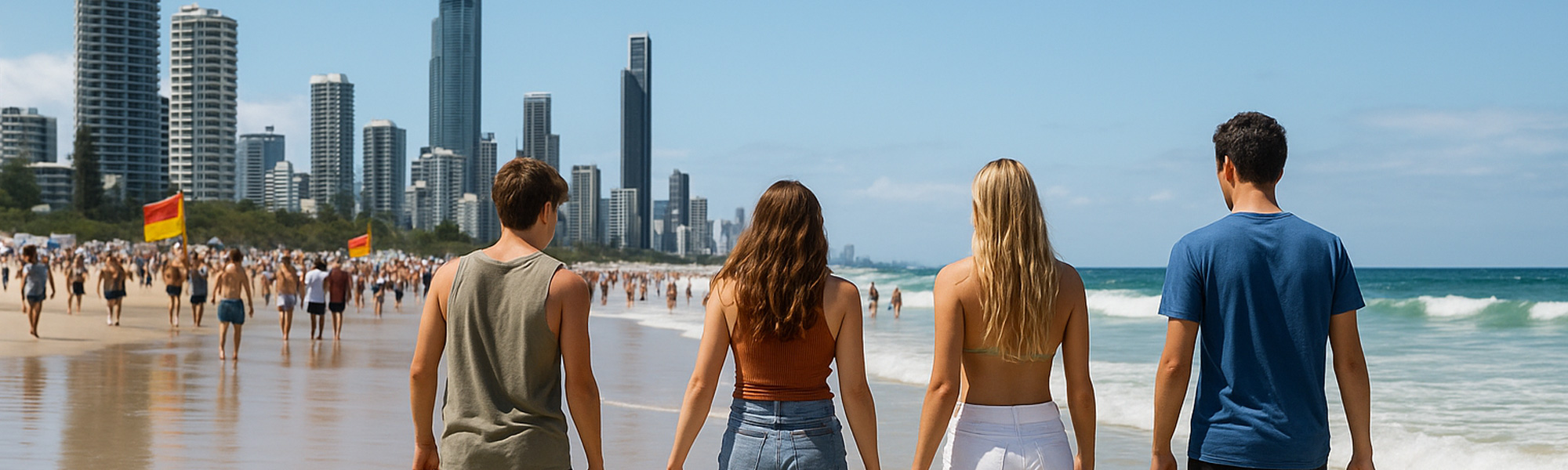
Every November, as the coastal air grows warm and the jacarandas deepen into their purple haze, the Gold Coast shifts into one of its most recognisable annual rhythms. Schoolies, the long-standing tradition where Year 12 graduates celebrate the end of their schooling with a week away, arrives like a tide. It rolls in with music, youthful energy, colourful beachwear and a festival-like atmosphere that spreads across Surfers Paradise and surrounding neighbourhoods. For many locals it's simply part of the city's DNA. For property owners, investors and residents, it's also a predictable seasonal moment that subtly reshapes the rhythm of streets, hotels, beach access and retail trade each year.
Schoolies is often portrayed as pure celebration, but for the people who call the Gold Coast home it represents something more interesting and far more nuanced. The event touches tourism, policing, hospitality, development, long-term rental demand, short-stay yields, neighbourhood mood, foot traffic, and even the way locals use their own beachfront during those weeks. It's a recurring feature of the local economy, woven tightly into the Gold Coast's identity as a resort city built on movement, hospitality and sun-drenched experiences.
A Coastal City Built for Big Moments
Unlike other holiday destinations that creak under the weight of sudden seasonal booms, the Gold Coast handles Schoolies with a kind of practiced confidence. Long before dawn on the opening Saturday you can sense preparations reaching their final stages. Hotels polish their foyers. Security companies brief teams. The beach safety network lines up rosters. Retailers stock up on sunscreen and lightweight towels. Local cafés and bakeries expect early-morning crowds, while restaurants strengthen their evening staff levels for the week ahead.
The Gold Coast was purpose-built for surges like this. Wide beaches, generous esplanades, vertical accommodation towers and a deep reservoir of hospitality talent combine into a city that can flex and stretch with seasonal crowds. Schoolies simply activates these systems. For residents, the effect is visible along the beach corridors where colourful wristbands, high-visibility vests, QR-coded hotel passes and groups of teenagers become a familiar part of the landscape.
The Economic Reality Behind the Headlines
Schoolies is often described through its media-friendly highlights, yet the economic dimension is where the event becomes genuinely interesting for property owners and investors. At a time of year when many tourist cities begin sliding into their quieter shoulder season, the Gold Coast experiences another surge. Hotels that would otherwise start winding down often see occupancy hold strong. Short-stay apartments benefit from a solid final burst of revenue before the early summer families arrive. Food outlets, casual dining venues and convenience stores all enjoy a noticeable lift.
For retail and hospitality employers it provides a boost to staffing hours and seasonal hiring, which supports the broader local workforce. Commercial landlords near the beachfront often report that consistent November foot traffic helps smooth what would otherwise be a variable period between the finish of spring events and the arrival of the holiday crowds.
Investors analysing yield patterns can clearly see Schoolies as a recurring annual spike. While families dominate the classic summer period, Schoolies acts as a bridge that keeps rental demand strong and prevents the November lull seen in many other holiday regions across the country.
How Residents Experience It
For locals, Schoolies can be both charming and mildly chaotic. Some residents lean into the occasion, enjoying the upbeat energy that radiates from the foreshore and watching as the early summer season awakens around them. Others choose quiet afternoons in their backyard pools or shaded decks, letting the beachfront bustle roll on without needing to be part of it.
Most understand that this period is temporary and firmly scheduled. The Gold Coast has spent decades refining its approach to Schoolies, and today the atmosphere is structured, supervised and carefully managed. Police presence is visible but calm. Volunteers roam the busy zones with water bottles and friendly check-ins. Hotels work with wristband systems and secure access points. The beach remains open, although certain areas are set aside for supervised gatherings.
Residents also note that, amid the mostly well behaved crowds, a small minority of school leavers can forget they are moving through real neighbourhoods, not just holiday zones. Most interactions are harmless, but occasional moments of unprovoked hostility toward locals do occur, creating brief points of friction between residents and visiting groups. It isn't common, yet it remains part of the lived experience for some coastal households each year.
For homeowners in Surfers Paradise and Broadbeach, the main effect is usually increased evening activity and a lively ambient hum near the beachfront. In outlying suburbs the change is subtle, sometimes barely noticeable beyond the occasional influx of rideshare cars heading toward the coast.
Understanding Crime and Safety During Schoolies
The Gold Coast's approach to Schoolies is built on decades of refinement, and the vast majority of attendees are well behaved. Policing is proactive without being heavy handed, volunteer support networks are strong, and hotel security systems are designed specifically for this week of the year. As a result, most incidents that occur are minor and quickly managed.
Even so, locals know that any large gathering of young people can occasionally produce moments of poor behaviour. While violent crime remains low compared to the myths that sometimes surround the event, residents can experience brief flashes of unprovoked hostility from a small minority of attendees. These moments tend to arise not from targeted aggression but from the impulsive bravado that occasionally surfaces within big excited groups. A careless comment shouted from a passing crowd, a group jostling through a footpath, or the sharp tone of a teenager who has misread a situation can all catch residents off guard.
For long-term locals the key is perspective. These incidents are the exception, not the rule. Most evenings pass with little more than raised voices, music drifting from balconies and the usual beachside hum of celebration. Police and support staff respond quickly when problems arise, and the visible presence of supervision helps keep the tone in check. Residents who live near the active zones generally adapt with small temporary lifestyle adjustments, such as using alternate beach access points or favouring quieter stretches for evening walks until the peak week passes.
In the broader property and investment context, Schoolies does not diminish the appeal of the Gold Coast. If anything, the city's ability to host major youth events safely and consistently reinforces its reputation as a place that handles tourism at scale. Still, prospective buyers considering central Surfers Paradise or parts of Broadbeach benefit from understanding the energy of this week, not because of danger but because of the social intensity that briefly defines the area.
Short-Stay Hosts and Strata Communities
Short-stay accommodation plays a major role during Schoolies, and understanding how buildings respond can be helpful for anyone managing or owning a property in the area. Many buildings have strong Schoolies policies that apply only during this short window each year. These range from bond requirements to an increased focus on building access protocols. Concierges are more visible, surveillance systems more closely monitored, and cleaning teams run extended schedules.
Well-run buildings often emerge from the week without any issues at all. Many have refined their Schoolies playbook over years of experience. They prepare early, communicate clearly with guests, and approach the event with a sense of professionalism rather than anxiety.
For owners considering entering the short-stay market, Schoolies is an opportunity to evaluate a building's management quality. A complex that handles Schoolies smoothly is usually a complex that handles everything smoothly. Investors looking at units in central beachside towers often check past Schoolies performance to gauge how effectively the body corporate, caretakers and security teams manage crowd dynamics.
How Businesses Prepare
Business operators on the Gold Coast are accustomed to seasonal shifts, but Schoolies carries its own predictable signature. Convenience stores order extra hydration drinks and light snacks. Ice cream shops brace for long sunny afternoons. Retailers that specialise in swimwear, hats and beach gear enjoy a final surge before the Christmas shopping period begins. Many restaurants adjust menus to suit high turnover and warm weather, favouring cold drinks, share plates and fresh coastal dishes that suit fast dining.
The economic uplift is particularly important for operators who rely on consistent tourist spending. Schoolies helps close the gap between spring and the true start of the summer holiday rush, preventing the soft landing that other tourism regions struggle with.
A Fixture in the Gold Coast Property Calendar
From a property-market perspective, Schoolies is more than a cultural moment. It represents part of the seasonality that defines the Gold Coast market cycle. Local agents know that inspections continue steadily through November, but open homes in the busiest beachside pockets often skew toward mornings when the streets are quieter. Developers launching new displays or marketing campaigns sometimes time their releases to avoid the Schoolies window, ensuring buyers experience the coastal precincts in their typical state.
Landlords with properties near the beach often schedule maintenance ahead of Schoolies, keeping December clear for families who expect pristine holiday-ready accommodation. Investors who analyse year-on-year performance see November as the month that gently transitions the market from spring into the high-yield summer phase.
The Spirit Behind It All
Beneath all the logistics, policies and preparation sits a simple reality. Schoolies is a rite of passage deeply rooted in Australian culture. For thousands of teenagers it marks the first real taste of independence. For the Gold Coast it marks the start of the summer season. For locals it's a yearly reminder of what the city is built for: sun, salt air, celebratory moments and the hospitality that has defined the region for generations.
The Gold Coast absorbs Schoolies with an ease that only comes from decades of refinement. By the time December arrives the energy has softened, the city returns to its usual rhythm, and the beaches transition seamlessly toward family summer holidays. Yet each year, Schoolies leaves behind a small but meaningful trace, reaffirming the Gold Coast's position as one of Australia's most adaptable and welcoming coastal cities.
Information in this article is provided for general guidance only and reflects conditions and schedules current at the time of writing. Schoolies activities, crowd levels, management measures and event dates may change without notice. Readers should verify any time-sensitive details with official state and local authorities. This article is not intended as legal, safety or investment advice.
You might also like





Disclaimer: Every effort has been made to ensure the accuracy of the information provided, but we make no guarantees regarding its completeness or reliability. The data is presented for general informational purposes only and does not constitute financial, investment, or legal advice. We are not liable for any errors, omissions, or consequences arising from its use. Users should verify details with relevant sources and seek professional advice where appropriate for the most accurate and up-to-date guidance.