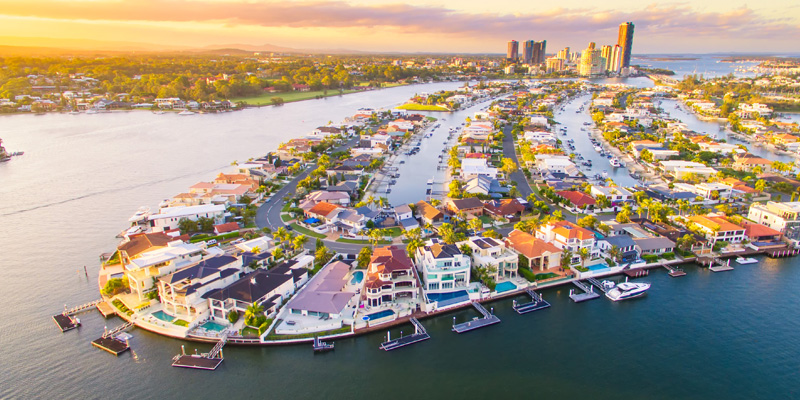
Where you keep your boat shapes how often you use it, how much it costs to maintain, and how well the vessel is protected from weather, theft and marine growth. In Queensland, that decision ranges from the simplicity of a trailer in the driveway to the prestige of tying your boat alongside your own pontoon. Between those extremes lie marinas, dry stacks, swing moorings and long-term leases. Each comes with its own approvals, responsibilities and environmental constraints.
The landscape is complicated, with rules shifting between councils and changing again depending on whether a boat is kept on private land, tidal State land or within a regulated waterway. Understanding the main storage choices, the approval paths behind each one and the environmental constraints that shape what is possible helps owners make clearer decisions, especially when buying a waterfront home or planning new marine access.
Keeping Your Boat At Home
For trailer boats, nothing beats the practicality of keeping the vessel at home. You avoid marina fees and mooring charges, and your boat remains under your watchful eye. In many Queensland suburbs, this is the default arrangement for families who launch on weekends or take the boat out occasionally during the year.
The constraints are mostly physical. You need driveway access that can handle turning angles, side access that fits both boat and trailer, and protection from the sun and storms. Councils often have their own local laws that govern whether trailers can sit on verges, how long a boat can remain on the street, and whether front-yard parking is acceptable. Insurers may impose their own conditions that require the boat to be locked, secured or kept off public land.
Home storage works best for smaller vessels and for owners who enjoy the ritual of towing. Once you move into larger offshore hulls or heavy cruisers, the practicalities of towing and storing at home quickly reach their limits.
Waterfront Homes With Jetties, Pontoons And Ramps
A waterfront home with a private jetty or pontoon is the pinnacle of boating convenience. Step out the back door, untie the lines and go. But this convenience sits entirely within one of Queensland's most regulated environments.
Any structure that enters tidal waters is classed as tidal works. This can include jetties, pontoons, gangways, boat lifts, revetment walls and private ramps. Because tidal land is almost always owned by the State, you are dealing with layers of oversight. Councils assess many tidal works applications, especially in urban canal estates. State departments administer owner's consent for using tidal land. Environmental and maritime agencies examine marine plants, navigation safety and shoreline impacts.
Approvals depend heavily on the specific location, the waterway width, navigation clearances, potential impacts on neighbours, the health of marine plants and whether your proposal fits within the designated allocation area in front of your property. Even if your neighbours all have pontoons, that does not guarantee you can install one. Each site is assessed on its own merits and under the rules that apply today, not the rules that applied decades ago.
For buyers, it is critical to check whether an existing jetty or pontoon was legally approved at the time of construction. An unapproved or non-compliant structure can become your responsibility the moment settlement occurs. Records searches and professional advice during the contract process are well worth the effort.
Understanding Grandfather Rights And Existing Structures
It is common for long-term residents to refer to older jetties or boat ramps as grandfathered. What this usually means is that the structure was built under older rules that no longer apply. Although many original approvals remain valid, the moment you substantially rebuild, alter or relocate the structure, the current rules take over.
Grandfathering rarely allows you to enlarge a jetty, extend a pontoon or modify a ramp without new assessment. Modern standards for coastal engineering, navigation, safety and environmental protection are far more stringent than they were two or three decades ago. In some sensitive areas, authorities may allow an old structure to remain but may not permit its replacement if it no longer meets contemporary criteria.
For buyers of older waterfront homes, due diligence is essential. Check the original approvals, check the conditions attached to them, and do not assume that an existing structure automatically entitles you to the same footprint in future.
Swing Moorings And Buoy Moorings Across Queensland
If you do not have waterfront land, a swing mooring can provide a more affordable anchor point than a marina berth. Queensland manages private buoy moorings through designated mooring areas in suitable waterways. These areas are chosen for navigational safety, depth, environmental protection and the ability to support long-term secure moorings.
A buoy mooring normally requires an authority from the relevant State maritime branch. Moorings are not simply dropped in place. They are installed to specific anchor systems, inspected periodically and used for vessels that meet set size and displacement limits. In many areas, waiting lists apply. Some authorities are linked to specific vessels or conditions. Others allow reasonable flexibility within the limits imposed by the area.
Around the Southern Moreton Bay Islands, swing moorings are popular in sheltered channels near the major islands and alongside the mainland. The region is heavily zoned under marine parks, conservation areas and fish habitat protections. As a result, many moorings are restricted to established designated areas where their environmental footprint and navigational impact have already been assessed.
Anchoring outside these zones may be limited by seagrass protection, shallow habitats, or no-anchoring areas designed to prevent scouring of sensitive marine plants. The safest approach is to check the maps, ask the local maritime office for guidance and confirm whether new private moorings are available in the area you want. It is unwise to assume that a quiet patch of water is available for private use.
Marinas, Dry Stacks And Commercial Storage
Marinas offer the most polished boat-storage experience. You can rent a berth, lease a berth or buy a berth depending on the facility. Marina berths may be freehold, strata-titled or offered as long-term licences that expire after a set period. Each arrangement carries different rights and responsibilities, so reading the contracts carefully is essential.
For those who value convenience, marinas provide power, security, fuel, wash-down bays, chandlery services and professional oversight. This can significantly reduce maintenance effort. Many marinas allow liveaboards under clear rules, while others prohibit residential use.
Dry stacks and hardstand yards are alternative commercial options. Boats are kept out of the water on racks or stands and are lifted in when the owner wants to go out. This reduces hull fouling, often eliminates the need for antifouling paint and keeps the boat cleaner and safer from storm surges. Dry storage is popular for performance hulls, rigid-hulled inflatables and larger trailer boats.
When comparing commercial storage options, look beyond the headline price. Consider access hours, parking availability, whether you can work on your own boat, what happens during severe weather and what insurance requirements the facility imposes.
Environmental Protections: Mangroves And Marine Plants
Queensland treats its marine plants with exceptional seriousness. Mangroves, seagrass and saltmarshes are legally protected, and disturbing them without approval is an offence. This directly shapes where you can keep a boat and what infrastructure can be constructed.
A pontoon proposal that requires trimming or removing mangroves will likely be rejected. A ramp that intrudes into a fish habitat area may require redesign. A private mooring placed over seagrass may not be allowed. Even maintaining informal access channels that were once casually cleared decades ago is no longer acceptable without formal assessment.
The rules have tightened significantly over time. Many long-term residents recall a period when mangrove trimming was tolerated or overlooked. That era is over. Today, environmental managers expect full avoidance of marine-plant disturbance unless strict criteria are met. These protections apply whether you are installing a pontoon, reconfiguring an older jetty or considering a private mooring in shallow waters.
Approvals: A Multi-Layered System
Boat storage intersects with multiple layers of government. Councils handle local laws, land use, canal management and many tidal-works approvals. State agencies handle buoy moorings, navigation safety, owner's consent for using tidal State land, coastal engineering standards and marine-plant protections. Federal laws may apply in certain regions, particularly where internationally recognised wetlands or threatened species habitats overlap with development.
Because these responsibilities overlap, a single project such as a new pontoon may require council development approval, State owner's consent, assessment against coastal and tidal-works codes, environmental permissions for marine plants and compliance with maritime guidelines. The smarter approach is to start with information gathering rather than design drawings. Understanding what your site can support saves time, money and frustration.
Buying Storage Instead Of Owning It
Not every boat owner needs a waterfront home. You can buy a marina berth, lease a berth long-term or acquire a dry-stack space. Some mooring authorities can transfer with a vessel subject to eligibility and conditions, although they are not property rights and cannot always be sold like tangible assets.
For marina berths, always confirm the tenure type, body-corporate rules, levies and restrictions before buying. For moorings, confirm exactly what rights are being transferred and what the conditions of the authority require. It is common for misunderstandings to occur when one boatie thinks they are selling a mooring outright when it is actually a regulated authority that the State controls.
Which Option Is Right For You
The right choice depends on lifestyle, budget, vessel type and how often you go out on the water.
Home storage is cost-effective but depends on driveway space and your willingness to tow. Waterfront pontoons offer unmatched convenience but require approvals, environmental compliance and a clear understanding of existing lawful rights. Swing moorings can be affordable but operate within structured designated areas. Marinas and dry stacks offer professional care, security and ease of use, though at ongoing cost.
Across all of these choices, a few truths remain constant in Queensland. Marine plants, especially mangroves, are strongly protected. Approvals for tidal works are complex but navigable with good preparation. Grandfathering is not a free pass. And any structure in tidal waters sits within a tightly balanced system designed to protect both navigation and the environment.
Done with care and good advice, choosing where to keep your boat enhances your lifestyle while respecting the waterways that make Queensland such a remarkable place to live and explore.
This article is a general guide only. Regulations, approvals and environmental requirements vary between councils and regions and can change over time. Always seek current advice from the relevant authorities, your council, qualified consultants and your insurer before purchasing, modifying or constructing any marine infrastructure or long-term boat storage arrangement.
You might also like






Disclaimer: Every effort has been made to ensure the accuracy of the information provided, but we make no guarantees regarding its completeness or reliability. The data is presented for general informational purposes only and does not constitute financial, investment, or legal advice. We are not liable for any errors, omissions, or consequences arising from its use. Users should verify details with relevant sources and seek professional advice where appropriate for the most accurate and up-to-date guidance.