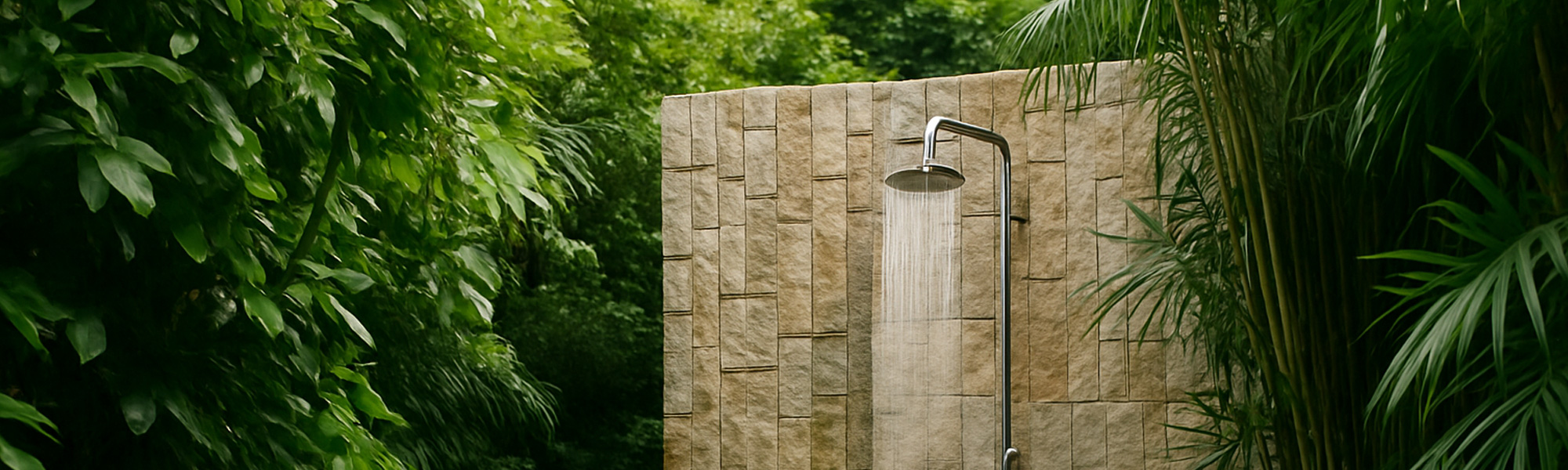
Outdoor showers have quietly shifted from niche luxuries into hardworking pieces of everyday home infrastructure. When designed with thought and accuracy, they become spaces that people use instinctively, not because they need to, but because the experience is so convenient and calming that the habit forms on its own. The difference between a shower you use daily and a shower you forget about comes down to a handful of design decisions made long before water ever hits the ground. Position, privacy, drainage, materials, climate resilience and the way the space connects to the flow of the home all determine whether the shower becomes part of real life or ends up as decoration.
Positioning the Shower So It Becomes a Natural Habit
The first design decision is always location. Outdoor showers fail most often not because of poor hardware, but because they sit in the wrong place. A shower positioned too close to a main entry point feels exposed and awkward, especially if it competes with everyday traffic like laundry baskets or recycling being carried through. A shower placed too far away becomes inconvenient and falls out of regular use. The ideal position sits within a subtle, natural path from the garden, pool or yard toward the house, but not in a place where someone becomes the focal point of the outdoor area. The walk to the shower should feel padded into the landscape rather than performed across open space. When a shower sits in a spot that people pass anyway, it becomes part of the household's daily circulation pattern and ends up being used far more than expected.
Understanding Drainage Beyond the Basic Grate
Drainage determines how pleasant the space feels underfoot and how long it stays clean. Water that lingers, puddles or pools will eventually cause mould, slippery surfaces and a sense that the area is slightly neglected even when it is used often. Effective drainage is rarely as simple as installing a grate. A gentle directional fall built into the ground plane channels water toward a trench or gravel bed, clearing the surface before it can stagnate. Some households prefer decking with narrow gaps so water disappears immediately, though this requires careful planning so debris does not collect below. Others rely on paved pads shaped so water sheets away from the wall. What matters most is that the shower never feels swampy, sticky or uneven. Good drainage is silent and invisible. You only notice it when it's not there.
Comfort Underfoot and the Feel of the Ground Plane
Outdoor showers are always barefoot spaces, which means the material beneath the feet carries more importance than in almost any other outdoor zone. Pavers, if chosen poorly, can become dangerously hot or unexpectedly slick. Stone has natural character and texture but must be selected for both slip resistance and heat management. Textured porcelain provides grip and stays cooler through the day, making it ideal for households that shower outside during warm afternoons. Timber introduces warmth and gentle give, and many people enjoy the familiar feel of decking beneath wet feet, though the timber must be highly resistant to rot and be installed so water flows cleanly around and beneath it. Composite decking removes the maintenance burden of natural timber and performs reliably under constant moisture. Every choice should be judged by its sensation when stepped on wet, dry, warm or shaded. A shower floor that feels good at all times is the foundation of the entire experience.
Creating Privacy Without Blocking Light or Air
Privacy should be achieved without creating a boxed-in atmosphere. The best outdoor showers provide enough shielding that a person never feels on display, yet they remain open enough to maintain breezes and natural light. Timber battens arranged vertically can break up sight lines while keeping the space bright. A screen set at a slight angle can prevent views from neighbouring windows without requiring a full enclosure. Planting can soften the structure with tall tropical greens, softly arching foliage or climbing vines on open screens. The goal is to create a feeling of belonging, as though the shower is a natural corner of the garden rather than a contrivance. Privacy is not a wall; it's the quiet confidence that comes from standing in a space designed with the human body in mind.
Water Supply That Encourages Year-Round Use
Outdoor showers that offer only cold water tend to become seasonal novelties. Many households imagine they will only need a quick rinse, yet once the habit forms it quickly becomes clear that warm water expands the shower's usefulness. After gardening, cleaning, early morning exercise or cooler evenings, warm water turns the shower from a rinse station into a relaxing ritual. The plumbing may be marginally more complex, but the upgrade in livability is significant. High-quality fixtures matter too. Salt air and constant exposure shorten the lifespan of cheaper fittings. Stainless steel, marine-grade components and solid brass mixers hold their appearance far longer and maintain smooth operation through years of sun and rain.
Lighting That Makes the Shower Feel Safe and Inviting
Outdoor showers must function beyond daylight. People arrive home late, finish yard work at dusk or step outside to rinse off after evening activities. Lighting needs to be gentle and directional rather than harsh. Step lights set low against walls can illuminate the ground plane without glare. LED strips concealed behind battens can wash the screen in soft light. A single diffused sconce placed high enough to avoid direct eye contact can provide a calm glow. Good lighting removes uncertainty. The user sees where the water falls, where the soap sits, where the towel hangs. Nothing feels rushed or improvised. The light becomes part of the comfort of the space.
Material Choices That Withstand Climate and Time
An outdoor shower is exposed to extremes far beyond what indoor fixtures endure. Sunlight, fluctuating temperatures and persistent humidity demand resilience. Choosing the right materials prevents premature corrosion and protects the appearance of the space. Stainless steel outdoor tapware resists pitting and discolouration. Screws, brackets and mounting plates should be rated for outdoor use. Stone must be sealed correctly. Timber needs oiling or choosing species that age gracefully. Even the smallest exposed component plays a role. A shower might look beautiful on the day it is finished, but the real test is how it looks three summers later. Long-lasting materials support the idea that the shower isn't a novelty; it's a part of the home's long-term functionality.
Storage and Small Utilities That Shape Daily Use
Storage inside an outdoor shower feels minor, yet it can make the difference between a space that works cleanly and a space that always looks half-finished. A recessed niche keeps bottles off the ground and prevents clutter. A single hook placed at a comfortable reach avoids the constant search for a place to hang a towel. A small overhang or sheltered corner can keep personal items dry during light rain. Some households integrate a low shelf or basket for hosing off gardening tools, rinsing sandy items or drying smaller objects. The shower becomes more than a rinse point; it becomes a mobile transition station between outdoor living and the interior of the home, absorbing tasks that would otherwise carry water or sand across clean flooring.
The Flow From Shower to Home and the Importance of Access
The most successful outdoor showers sit in clear connection to the house. They may be a short step from a laundry door or positioned along a side path that leads naturally indoors. The transitions matter. Hard edges, awkward steps or sudden changes in surface height interrupt the experience. A gentle flow of movement encourages the user to drift from the shower to the entry without having to plan every step. When the layout feels intuitive, people begin using the shower without thinking about it. They come in from gardening and turn the tap on automatically. Children rinse off without prompting. Guests understand exactly how to use the space without instruction.
Small Finishing Touches That Complete the Experience
A beautiful outdoor shower never relies on a single dramatic gesture. Its success comes from small touches added thoughtfully. A timber screen stained in warm tones that echo the home, foliage placed just far enough to move softly in the breeze without brushing the user, a stone choice that visually ties into the exterior palette. Even the sound of the water matters; some showers incorporate a taller fall height to create a calm, steady note as the water lands. Every detail contributes to the sense that the shower is not a bolt-on addition but a natural extension of life outside.
How a Well-Designed Outdoor Shower Changes Daily Living
Once installed properly, an outdoor shower becomes one of the most used spaces in the home. It clears sand and garden dirt before they reach indoor floors. It creates an easy place for quick washes after sports or exercise. It helps families maintain cleaner routines without feeling forced or structured. Most importantly, it becomes a soothing break in the day, a moment where water, breeze and light come together in a setting that feels effortless. Good design doesn't just make a shower usable. It makes it part of the fabric of the home.
You might also like




Disclaimer: Every effort has been made to ensure the accuracy of the information provided, but we make no guarantees regarding its completeness or reliability. The data is presented for general informational purposes only and does not constitute financial, investment, or legal advice. We are not liable for any errors, omissions, or consequences arising from its use. Users should verify details with relevant sources and seek professional advice where appropriate for the most accurate and up-to-date guidance.