There's a certain thrill in realising your new backyard might come with a few uninvited dinner guests - a kangaroo grazing quietly near the fence, or a koala dozing in the gum tree down the road. For many new arrivals to the Gold Coast, seeing these iconic animals in the wild feels like the moment Australia truly comes alive.
You don't need to venture deep into the bush to find them either. In and around the city, pockets of natural habitat still flourish - and with a little patience (and luck), you can meet some of the region's most famous locals, right where they belong.
Coombabah Lakelands: The Gold Coast's Open-Air Safari
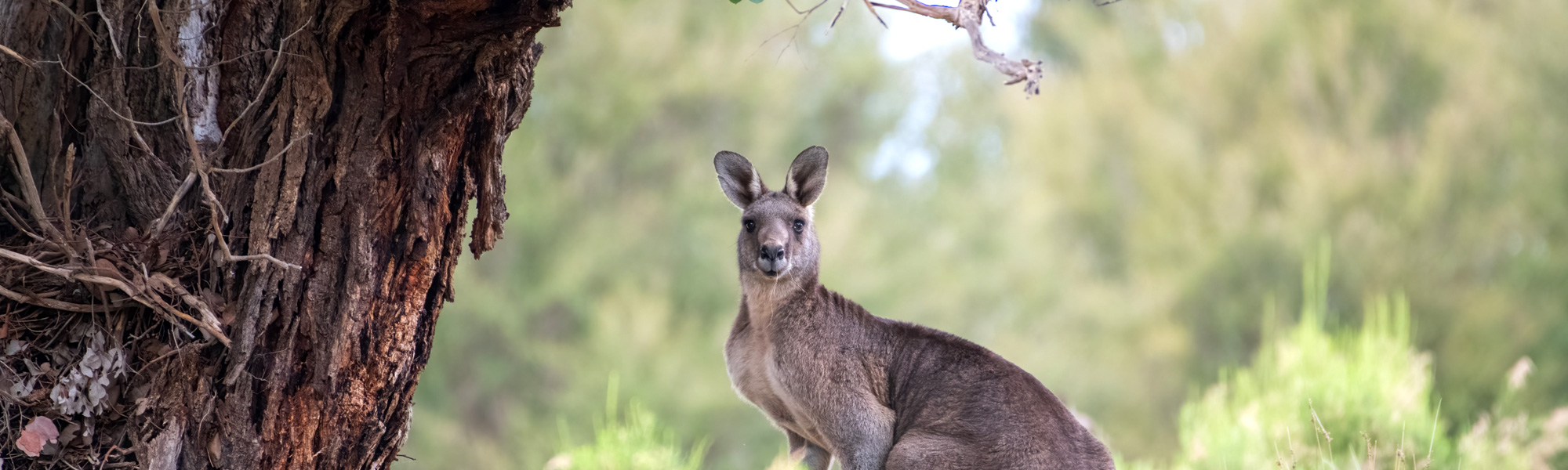
If there's one place to start, it's Coombabah Lakelands Conservation Area, near Runaway Bay. This 1,200-hectare reserve is a mosaic of wetlands, forest, and grassy clearings - and home to hundreds of kangaroos that move freely through the open areas.
At sunrise and sunset, they graze along the walking tracks like they own the place (and to be fair, they kind of do). You'll often see them lounging under paperbark trees or crossing the path in small groups, completely unfazed by quiet visitors.
Koalas live here too - not always easy to spot, but locals know to look high in the eucalypts along the Koala Trail or Melaleuca Boardwalk. A soft grey shape wedged between branches is often your first clue. Bring binoculars, take your time, and remember to look up.
Coombabah Lakelands is open daily, 6 am to 6 pm. Entry is free. Parking and walking-track maps are available at the main gate on Shelter Road.
A Glimpse of the Wild in Suburban Pockets
While Coombabah is the most reliable spot, wild encounters sometimes happen in surprising places. Koalas and kangaroos still roam the city's green corridors - particularly around Elanora, Currumbin Waters, Burleigh Heads, Helensvale, Coomera, and Pimpama.
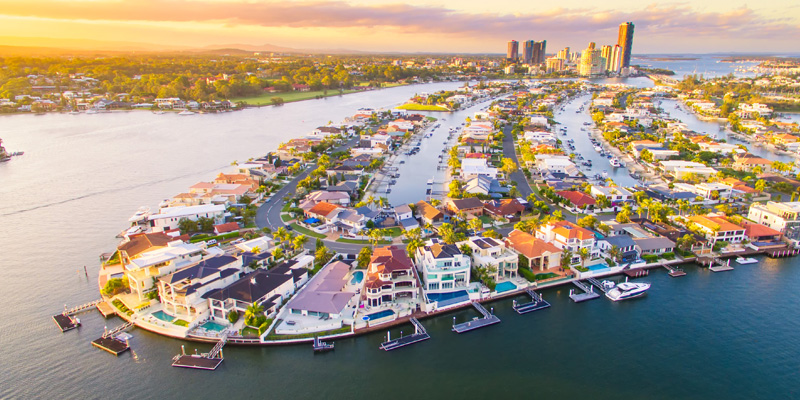
Even in built-up areas, they find a way. Around the northern suburbs, kangaroos are a familiar sight at Sanctuary Cove, where they graze near the lakes and golf greens - a reminder that wildlife still weaves through some of the Coast's most polished addresses. These areas are mostly private property with managed public access, so enjoy the view from designated roads or paths as you travel through and avoid venturing into restricted zones.
These sightings are sporadic, but that's part of their charm. Locals swap photos of a koala perched above a driveway or a mob of kangaroos crossing a golf fairway at dawn. The Gold Coast may be famous for its skyline, but its wildlife quietly endures in the spaces between.
Into the Hinterland: Tamborine and Beyond
Head inland, and the scenery changes from surfside suburbs to cool mountain forests. Tamborine National Park and surrounding bushland are rich in birdlife and wallabies, and if you join one of the small eco-tours that start from the city, guides often begin with kangaroo spotting in Coombabah before continuing into the hinterland for rainforest walks and lookout views.
Even if you don't see a koala, the experience of walking beneath ancient eucalypts, cicadas humming in the heat, feels quintessentially Australian.
How to Improve Your Chances
Go exploring early or late in the day, when kangaroos are most active and the light is softer. Dawn and dusk are the best times to see them grazing or moving through open spaces.
Keep your eyes high rather than straight ahead. Koalas spend most of their time asleep in trees, so scan the upper branches for a rounded grey shape nestled in the crook of a trunk.
Walk quietly and move slowly. Sudden noise or chatter tends to send animals deeper into the bush, where they'll stay hidden until things calm down.
Look for clues as you go - scratch marks on trunks, droppings, or scattered eucalyptus leaves can suggest a koala is nearby.
And above all, bring patience. Some visitors are lucky within minutes, while others may walk the same trail several times before spotting one. That unpredictability is part of what makes the experience so special.
Rare but Special - Swimming Kangaroo Sightings
It surprises many people to learn that kangaroos can swim - and they're actually quite good at it. When startled or needing to cross a river or lake, they use their strong hind legs to propel themselves through the water, tail acting as a rudder.
Occasionally, locals have reported seeing them in the Coomera River and other waterways across the northern Gold Coast, paddling calmly from one bank to the other. It's not common, but it does happen - especially when high tides or nearby activity nudge them to move between pockets of bushland.
You won't see much if it happens - most of their body stays submerged, with just the head, ears, and upper back breaking the surface as they move in a slow, powerful rhythm. It's a subtle sight, easily missed if you're not looking for it.
The only real way you'd ever witness it is from a private boat on the river, since most banks are either mangrove-lined or privately owned. Even then, it's an off-chance encounter - a fleeting moment you might remember for life.
If you happen to be cruising at dawn or dusk, keep an eye on the shoreline. Most people never witness it, but those who do say it's one of the most surreal and quietly beautiful sights on the Coast - a kangaroo gliding through mirrored water, framed by mangroves and morning mist.
Seeing Them Safely and Responsibly
They might look cute and gentle, but keep your distance: kangaroos are powerful wild animals that can defend themselves if startled or approached. And while koalas seem calm and sleepy, an anxious one can also lash out - so resist the temptation to get too close or take selfies underneath them. These are wild creatures, not zoo residents accustomed to crowds.
Watching wildlife is a privilege, not a performance. Keep a significant distance away, never feed or touch, and let animals choose how close they're comfortable being. Koalas are especially sensitive to stress, and moving vehicles are one of their biggest threats - so drive carefully near reserves at dawn and dusk.
If you do take photos, use your zoom rather than stepping closer. Flash photography at night can startle animals and disrupt their behaviour.
It's also worth noting that Queensland still allows limited koala-holding experiences at some wildlife parks, though attitudes are changing fast. Many sanctuaries now focus on observation rather than contact - a shift most conservationists welcome.
When "Wild" Isn't Guaranteed
Even in perfect habitat, there's never a promise you'll see a koala. They sleep up to twenty hours a day and blend seamlessly into the canopy. If you strike out, consider complementing your wild search with a visit to an ethical sanctuary such as David Fleay Wildlife Park (Burleigh Heads) or the Currumbin Wildlife Sanctuary, both of which run breeding and rehabilitation programs for local species.
Seeing one up close there helps you appreciate just how well-camouflaged they are in the wild.
Living Among Them
One of the quiet joys of life on the Gold Coast is realising you share it with so much more than people. Those slow-moving grey silhouettes and relaxed kangaroo mobs remind us that the city's edges still breathe. For newcomers, it's a gentle introduction to Australia's natural rhythm - sun, scent, space, and coexistence.
You might also like

Disclaimer: Every effort has been made to ensure the accuracy of the information provided, but we make no guarantees regarding its completeness or reliability. The data is presented for general informational purposes only and does not constitute financial, investment, or legal advice. We are not liable for any errors, omissions, or consequences arising from its use. Users should verify details with relevant sources and seek professional advice where appropriate for the most accurate and up-to-date guidance.