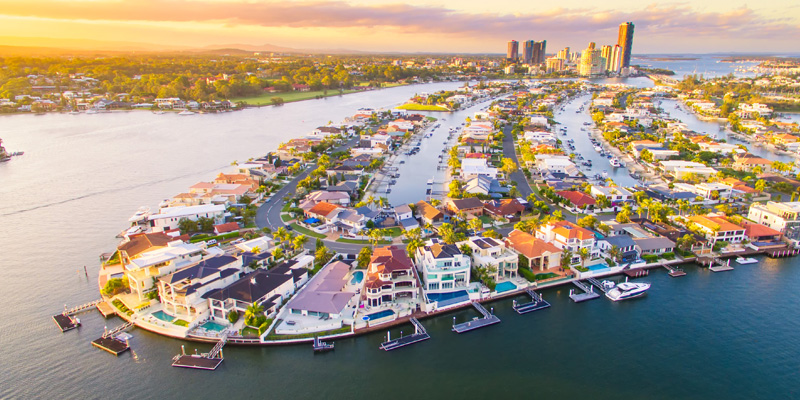
Multi-generational households - where grandparents, parents and children share the same roof - are no longer just a cultural tradition or a stop-gap measure during tough times. On the Gold Coast, this way of living is moving firmly into the mainstream. Driven by the dual forces of affordability and lifestyle, families are recognising that pooling resources not only makes financial sense, but also enhances the way they live day to day.
The following article is general in nature and not financial advice. Always seek professional guidance before making property or financial decisions.
One of the strongest drivers of this multi-generational living shift is the cost of housing. With the median house price continuing to rise, many families are finding that joining forces allows them to secure larger homes in suburbs that may otherwise have been out of reach. Instead of downsizing expectations, households are combining incomes to step into spacious homes, often on bigger blocks or in areas that offer dual-living potential.
Lifestyle also plays a powerful role in this movement. Families want homes that can adapt to their changing needs, and on the Gold Coast this often means properties that offer self-contained studios, dual kitchens or completely separate wings under one roof. In the hinterland, acreage blocks in Tallebudgera, Worongary and Mudgeeraba are particularly attractive because they allow multiple generations to spread out without losing the sense of living together. These properties often come with granny flats, converted sheds or space for new secondary dwellings, giving families the flexibility they need.
Closer to the city, suburbs like Carrara, Helensvale and Ashmore have long been known for their generous block sizes and established homes. Many of these properties are already configured in ways that make them suitable for dual living, or lend themselves to renovations that add a self-contained wing. Helensvale in particular is popular for families who want both space and convenience, thanks to its schools, shopping centres and transport links.
On the coastal side, the demand is more subtle but still noticeable. Areas like Palm Beach, Miami and Burleigh Waters are experiencing renewed attention from extended families who want to live near the beach while sharing the financial load. Duplexes, renovated older homes and properties with approved secondary dwellings offer families a way to enjoy the coastal lifestyle together without each household having to buy separately.
Newer master-planned estates are also catching on to the trend. In growth corridors such as Pimpama, Coomera and Ormeau Hills, developers are marketing designs that include dual-key options and adaptable layouts. These homes are promoted as future-proof investments, giving families the ability to evolve their living arrangements over time - whether that means housing teenagers who need more independence, accommodating elderly parents, or creating rental income streams through secondary dwellings.
The benefits of multi-generational living extend beyond financial considerations. Rising childcare and aged-care costs have made intergenerational support more attractive than ever. Grandparents are stepping in to help raise young children, while adult children in turn provide a safety net for ageing parents. For many families, this arrangement replaces formal care services with a deeper, more personal connection. The result is not just a practical arrangement but a richer family life, with children growing up closer to grandparents, parents finding relief in the daily juggle of school runs and activities, and older generations enjoying companionship without losing their independence.
From a market perspective, the trend has tangible effects. Homes that can accommodate multi-generational families are beginning to attract a premium, with demand rising for dual-key designs, properties with secondary dwellings, and houses that offer multiple living spaces. For buyers, the adaptability of a home has become a key consideration, not only for immediate needs but for long-term resale potential. Properties that can flex with household structures are expected to hold their value more strongly as the trend toward multi-generational living becomes more entrenched.
The ripple effects are also visible in the rental market. In some areas, families who might otherwise rent separately are now buying together, reducing demand for smaller rentals while increasing competition for larger rental homes that can house extended families. This dynamic is reshaping the balance of supply and demand, particularly in suburbs with a concentration of bigger homes such as Robina and Upper Coomera.
At its core, however, the rise of multi-generational living on the Gold Coast is not just about housing markets and economic pressure. It reflects a cultural and lifestyle shift toward family closeness, resource-sharing and long-term stability. As the region continues to grow and evolve, more families are choosing to live in ways that echo the traditional Australian notion of community, but adapted to modern realities.
You might also like



Disclaimer: Every effort has been made to ensure the accuracy of the information provided, but we make no guarantees regarding its completeness or reliability. The data is presented for general informational purposes only and does not constitute financial, investment, or legal advice. We are not liable for any errors, omissions, or consequences arising from its use. Users should verify details with relevant sources and seek professional advice where appropriate for the most accurate and up-to-date guidance.