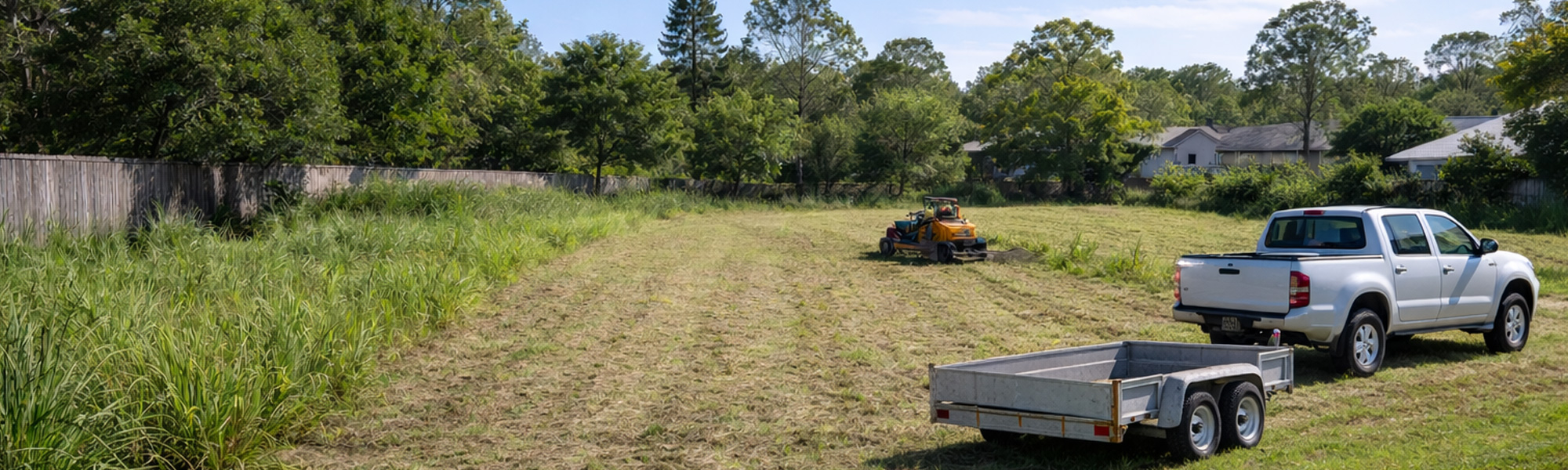
Vacant land creates a false sense of simplicity. With no house, no tenants, and no day to day use, it can feel like a block should look after itself. In reality, unmanaged grass is one of the fastest ways a vacant property attracts attention for the wrong reasons. Growth accelerates quickly, especially on disturbed soil, and once a block appears neglected it tends to stay noticed. The purpose of mowing vacant land is not presentation. It is control. Owners who understand this early make better decisions about contractors and avoid the cycle of complaints, notices, and rushed clean-ups.
Unlike a finished property, vacant land has no buffers. There are no fences to hide growth, no landscaping to soften edges, and no daily activity to signal that the site is actively cared for. Everything that happens on the block is visible from the street, which makes consistency far more important than neatness.
Why Vacant Land Requires a Different Skillset
Vacant blocks are not simply larger lawns. They are often uneven, compacted, partially filled, or scarred from previous works. Grass tends to be thicker and more aggressive, with long seed heads and woody stems rather than soft turf. There may be hidden debris, drainage lines, old pegs, or materials left behind from earlier activity. These conditions defeat light-duty equipment and expose inexperienced contractors very quickly.
A contractor who mainly services residential yards may be technically capable, but that does not mean they are suitable. Vacant land mowing is slower, harder on machinery, and less forgiving. The goal is to reduce height, suppress regrowth, and maintain a visibly managed appearance without damaging equipment or leaving half the block untouched. Contractors who understand this do not treat vacant land as an inconvenience. They approach it as a specific type of work with its own standards.
What "Maintained" Actually Means for Vacant Property
One of the most common misunderstandings among owners is assuming that vacant land must look tidy to be compliant. That is rarely the case. Councils focus on excessive growth, weed spread, and whether a site appears unmanaged or creates a nuisance. Grass does not need to be short or uniform. It needs to be controlled.
This distinction matters when assessing contractors. Anyone talking about edging, finish quality, or cosmetic detail is thinking in residential terms. A contractor experienced with vacant land will talk about keeping height down, timing cuts properly, and preventing the block from tipping into problem territory. That mindset is far more valuable than a polished finish that lasts only a week.
Equipment, Access, and Site Reality
The success of vacant land mowing is heavily influenced by equipment choice. Standard push mowers and small ride-ons struggle once growth passes a certain point. Heavier machines, slasher decks, and commercial brush cutters are often required, particularly for first cuts or blocks that have been left unattended. A competent contractor will explain their approach clearly rather than improvising once they arrive.
Access also plays a bigger role than many owners expect. Locked gates, temporary fencing, narrow frontage, or soft ground can all affect how a job is done. Vacant blocks often carry unknown hazards, and while experienced contractors expect this, they still rely on honest information to plan and price accurately. Clear communication at the outset avoids rushed work, disputes, and incomplete results.
Pricing, Frequency, and the Cost of Letting It Slide
Vacant land mowing is usually priced on condition rather than appearance. The first cut almost always costs more because it takes longer and places greater strain on machinery. Ongoing maintenance is where costs stabilise, provided the block is not allowed to get away again.
Infrequent mowing is a false economy. Letting growth run too long turns every visit into a recovery job, which increases cost and reduces control. Regular maintenance keeps growth manageable and prevents the block from oscillating between neglect and urgent intervention. A contractor who recommends a sensible schedule is not overselling. They are trying to keep the work predictable for both parties.
Reliability Matters More Than Visibility
Many vacant block owners are not nearby, which makes reliability critical. Missed visits, vague updates, or long gaps without contact quickly undo the benefit of hiring a contractor at all. Professionals who regularly maintain vacant land understand this and are usually comfortable confirming work, sticking to agreed schedules, and flagging changes early.
This reliability becomes even more important once a block has drawn attention. Once councils or neighbours are watching, consistency matters far more than a single good cut. Contractors who disappear or treat vacant work as optional create far more stress than they save.
Long-Term Maintenance Is the Real Goal
The best outcome for vacant land is not a one-off solution but an ongoing arrangement with someone who understands the site. Familiarity improves efficiency, reduces surprises, and keeps the block quietly under control. Contractors who visit regularly also tend to notice issues early, whether that is dumping, erosion, or changes in vegetation that need addressing before they escalate.
Vacant land ownership is simplest when it is boring. Grass stays down, complaints do not arise, and compliance is never questioned. Choosing the right mowing contractor early is one of the easiest ways to keep it that way.
You might also like






Disclaimer: Every effort has been made to ensure the accuracy of the information provided, but we make no guarantees regarding its completeness or reliability. The data is presented for general informational purposes only and does not constitute financial, investment, or legal advice. We are not liable for any errors, omissions, or consequences arising from its use. Users should verify details with relevant sources and seek professional advice where appropriate for the most accurate and up-to-date guidance.