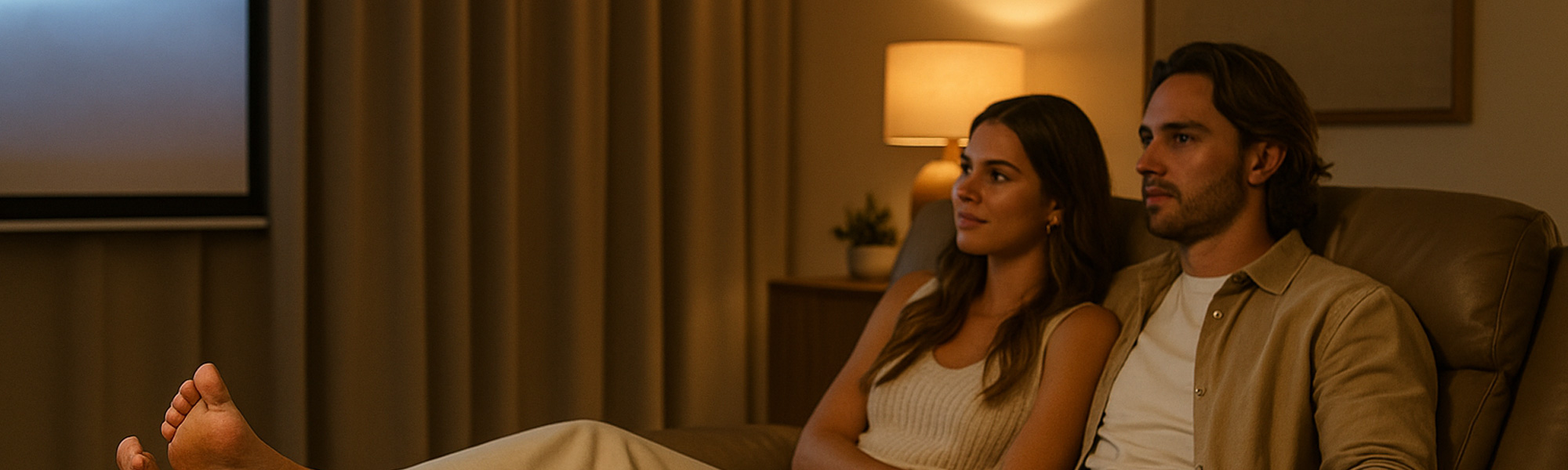
When the last light fades from the sky and the sea breeze drifts in through half-open doors, there's something deeply satisfying about retreating into your own private cinema. The sound softens, the screen glows, and the outside world falls away. A home cinema isn't just about watching films - it's about slowing down, curating the experience, and reclaiming the ritual of the night in a way that feels both intimate and indulgent.
From Theatre to Living Space
The term home cinema once meant a dark, sealed-off room lined with thick carpet and heavy drapes - more bunker than lounge. Those spaces still exist, but the Gold Coast has changed the concept entirely. Here, architecture opens to light, breezes and texture, and so do our entertainment spaces.
Modern home cinemas are brighter, more breathable and versatile. Instead of being hidden away, they often sit as a natural extension of the living area - a media lounge that transforms with a single gesture: blinds down, lights dimmed, projector humming softly overhead. Some are separate rooms, but others blend effortlessly with open-plan homes, using acoustic panels, retractable screens and concealed lighting to shift from day to night without a trace of clutter.
Why They're Back in Style
After the streaming boom, it might seem strange that home cinemas are making a comeback. But the more content we have on demand, the more we crave focus. A well-designed home cinema gives that focus back - a space where the phone is forgotten, the lights drop, and attention narrows to a single frame.
For families, it becomes a shared habit again. For couples, a way to pause the week. And for entertainers, it's another layer of hospitality - the joy of bringing people together not just for food or conversation, but for the shared hush that falls before a film begins.
Designed for the Coast
The Gold Coast has its own design language, and local home cinemas reflect it. The best ones avoid the heavy, over-the-top aesthetic of urban theatre rooms. Instead, they favour natural materials - light timbers, linen fabrics, textured walls - and neutral palettes that work with the home's broader scheme.
Comfort is key: deep modular lounges, breathable fabrics and ceiling fans or quiet air-conditioning rather than enclosed stillness. And acoustics are handled subtly, using fabric-wrapped panels, soft furnishings and layered rugs to diffuse sound without making the space feel sealed. The result is a cinema that feels coastal, not claustrophobic.
The Visual Experience
The screen remains the centrepiece, but it no longer has to dominate the room. Ultra-short-throw projectors can now cast a cinematic image from a unit that sits directly beneath the wall - no ceiling mount, no wiring maze. For more dedicated spaces, recessed ceilings or hidden bulkheads allow a drop-down projector that disappears entirely when not in use.
Screen size depends on viewing distance, but in most Gold Coast living rooms, a 100- to 120-inch image strikes the right balance - large enough for immersion, but not overwhelming for casual TV. OLED panels and laser projectors have made brightness and contrast effortless, so even a semi-lit room can deliver cinematic depth without blackout curtains.
The Sound of the Room
If the screen draws you in, the sound keeps you there. Surround sound remains the emotional core of any home cinema. The modern approach, however, blends power with discretion. Ceiling-mounted or in-wall speakers keep sight lines clean, while soundbars with wireless subwoofers handle smaller setups beautifully.
Systems supporting Dolby Atmos or DTS:X create immersive 3D soundscapes - raindrops above, footsteps behind, wind sweeping across the room. For the full experience, integrators now design “acoustic zones,” tuning speaker placement and materials to the home's architecture so every seat gets balanced sound.
Outdoor cinemas are also growing in popularity across the Coast. Covered decks and poolside screens extend entertainment to the night air, often powered by portable projectors and weather-resistant speakers. It's not quite the drive-in, but it carries the same nostalgic thrill.
Integration and Control
A well-designed cinema shouldn't require a dozen remotes. Smart-home systems simplify everything - one command lowers blinds, dims lights, and starts the film. Voice assistants and mobile apps give full control from the couch, while motion sensors can fade lights automatically when the credits roll.
For those building or renovating, including conduit paths for cables, data ports and speaker wiring during construction avoids the mess later. Even if the system starts simple - say, a 5.1 setup and a projector - the wiring backbone makes future upgrades easy.
Comfort and Acoustics
Gold Coast humidity changes the rules slightly. Fabric choices should balance softness with durability - think performance upholstery and breathable textures. Avoid thick, sealed leather in non-air-conditioned rooms; it traps heat and loses the relaxed feel that defines coastal interiors.
Lighting also matters. Layered control (overhead downlights, wall sconces, concealed LED strips) creates flexibility - bright enough for conversation, soft enough for cinema. Always use dimmers, ideally on smart circuits.
For soundproofing, double gyprock walls with acoustic insulation or flexible mounts reduce echo without isolating completely. The goal isn't total silence - it's controlled sound that sits comfortably in the home's rhythm.
Budget and Scale
The spectrum is wide. A simple setup - soundbar, subwoofer and projector - can cost under $3,000 and still deliver a powerful experience. A custom room with acoustic design, recessed lighting and high-end projection can exceed $50,000.
Most homeowners find a middle path: a modest dedicated space that reuses an existing room, or a hybrid media lounge that serves daily living by day and cinema by night. What matters isn't how much you spend, but how harmoniously it fits into your home's design and lifestyle.
The Emotional Value
Every home cinema, no matter the budget, shares one defining quality: it turns time into an event. Sitting down to watch something becomes deliberate again. The room darkens, conversations quieten, and focus settles. For families, it's ritual. For individuals, it's retreat.
That sense of intention - of switching off the day and immersing in something larger than life - is what keeps the concept timeless. The screen may change, the sound may evolve, but the feeling remains.
Looking Ahead
Moving forward home cinemas are becoming even more adaptive. AI-driven sound calibration, energy-efficient laser projection - traditionally the technology of commercial cinemas, and furniture with built-in charging and acoustic dampening are already emerging. The distinction between cinema room and living room will blur further - not because we're watching more, but because we're designing better.
For the Gold Coast, where light, space and atmosphere define architecture, that evolution feels natural. The modern home cinema isn't a dark escape from life outside; it's a carefully tuned extension of it - a space that listens, breathes and glows softly after sunset.
You might also like





Disclaimer: Every effort has been made to ensure the accuracy of the information provided, but we make no guarantees regarding its completeness or reliability. The data is presented for general informational purposes only and does not constitute financial, investment, or legal advice. We are not liable for any errors, omissions, or consequences arising from its use. Users should verify details with relevant sources and seek professional advice where appropriate for the most accurate and up-to-date guidance.