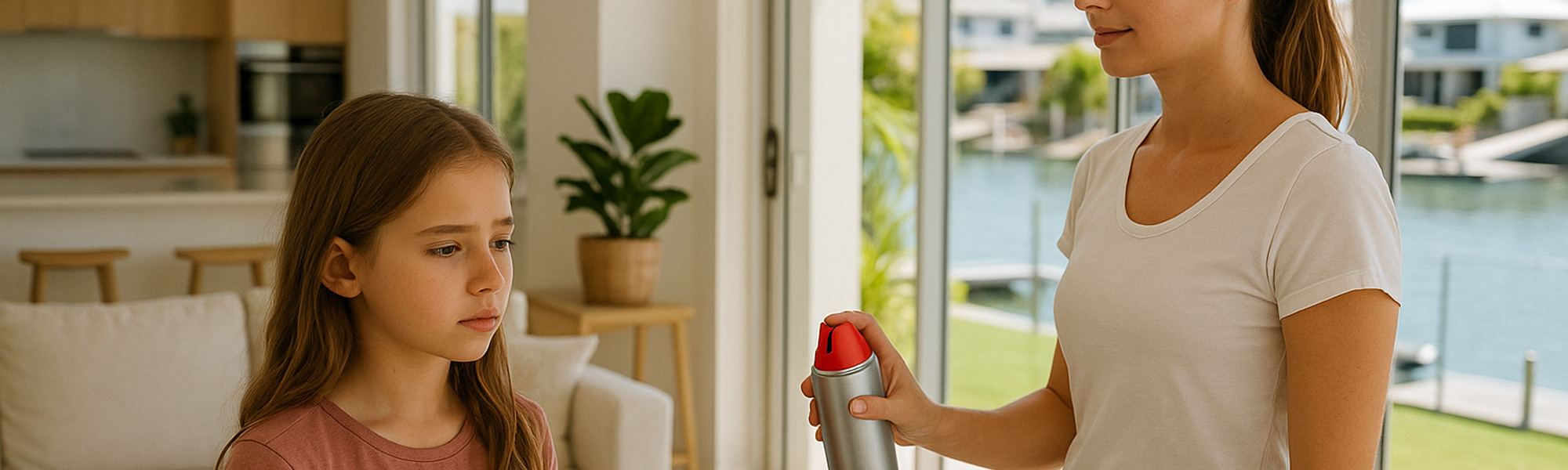
Most households handle pest control quietly and matter-of-factly. A parent sprays a cockroach in the laundry, steps on a beetle in the hallway, or carries a spider outside to be killed without ceremony. It's a simple task, part of the same domestic rhythm as bin night, cardboard crushing, kitchen cleaning and garden upkeep.
But for many kids and teenagers, watching pest control happen is something entirely different. Some dislike the idea of harming anything, even something that frightens them. Some fear the sudden movement of an insect. Some stand frozen, holding tension in their shoulders. Some hover in the doorway, anxious to see what happens without getting too close. And some simply leave the room because the moment feels heavier than it looks.
This reaction is not rare. It's not immaturity. And it has very little to do with courage. It's a mix of empathy, sensory response and temperament, and once parents understand that, the whole moment becomes softer and far easier to navigate.
This is the quiet emotional terrain of kids who don't like watching pest control, and how parents can help them feel safe while they merely observe from a distance.
Why Kids React So Strongly
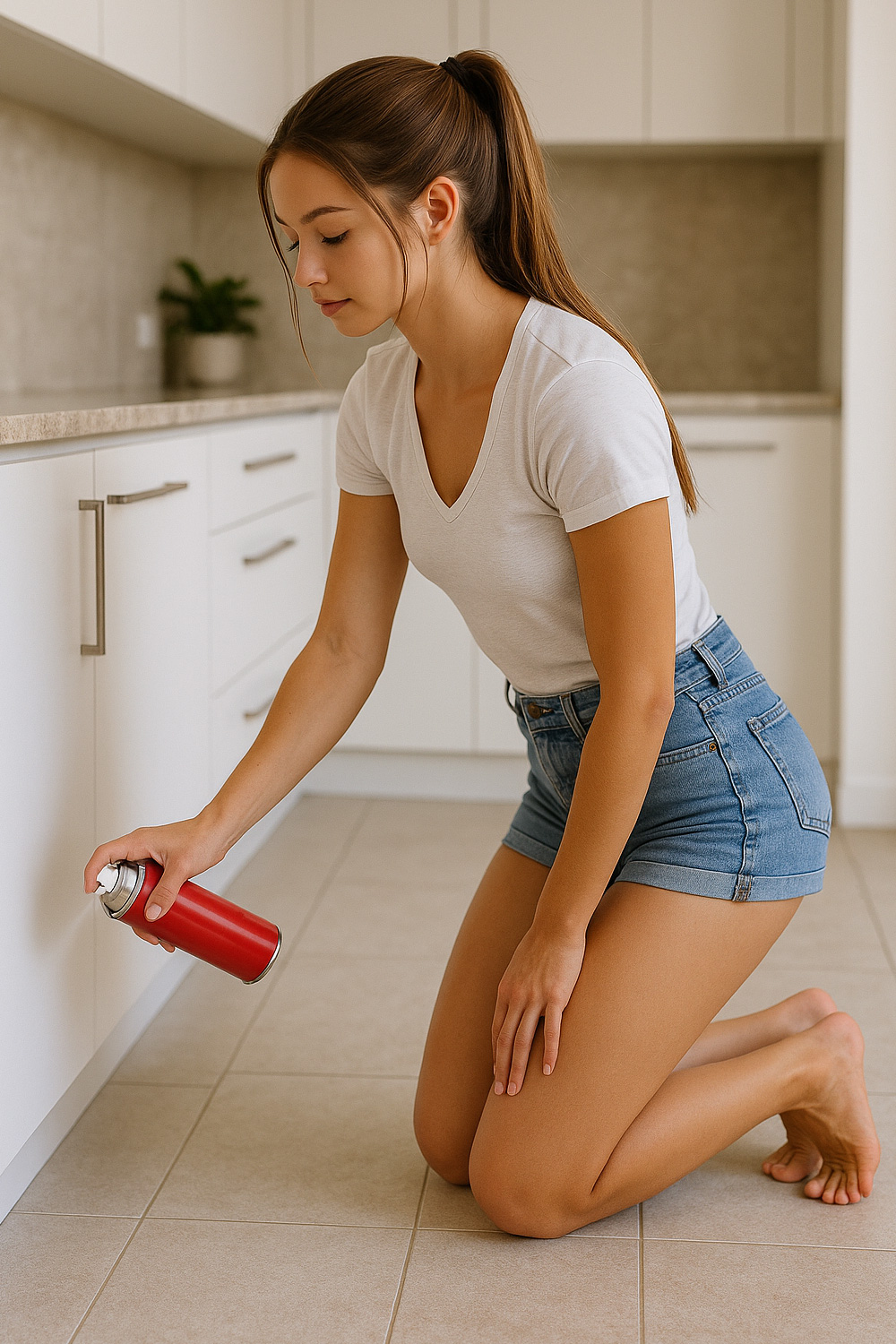
Children and teenagers don't process these moments the way adults do. For younger kids, empathy tends to arrive first. Even an insect that has frightened them before can suddenly feel like a small creature whose fate sits uncomfortably in their chest. Teenagers, especially girls, often feel the idea of the moment more than the moment itself. They dislike the emotional weight of watching something be harmed, even when they fully understand why it's necessary.
Around 75 percent of teenage girls dislike seeing insects killed, and that discomfort isn't fear in the traditional sense. It's a mix of empathy, anticipation and sensitivity to the seriousness of the moment. Many girls also dislike what the moment looks like: the movement, the stance, the decisive action.
Teen boys, by contrast, often react to the immediacy and the unpredictability. They don't enjoy standing too close to a fast-moving insect or watching the exact second something is sprayed or stepped on. They like the problem solved, but not the tension that builds beforehand. And most boys have a surprisingly strong proximity response: if a parent stands directly behind them, their confidence drops noticeably. Give them a metre or two of space and they settle immediately, even if they're just watching.
None of these responses are weakness. They're simply natural human reactions that have not yet been shaped by years of adult repetition.
Why This Matters in Real Household Life
Pest control isn't symbolic or dramatic for adults. It's practical. It's part of keeping a home functional, especially on the Gold Coast where insects are an ordinary part of the climate. Kids don't need to handle the task themselves, but it helps enormously when they see a parent perform it calmly. That modelling gives the child a sense of structure: this is not chaos, not danger, not a crisis. It's simply maintenance.
When kids observe pest control done with steadiness, their nervous system treats it as a household moment rather than an emotional event. They begin to understand the task's place in everyday domestic life, even if they still feel uneasy.
How to Keep the Moment Calm
For a child who dislikes watching pest control, the parent's energy is more influential than the insect itself. If the job is done quickly but calmly, with slow movements and a steady tone, the child naturally mirrors that calmness. If the moment feels rushed or tense, their reaction spikes instantly.
Most kids instinctively pick their distance. Some lean on a wall. Some linger in the next room. Some crouch beside a parent but look away at the crucial second. This physical distance is not avoidance - it's self-regulation. Their nervous system is choosing a vantage point that keeps their emotional load manageable. Allowing that distance is one of the simplest, most effective supports a parent can offer.
When They Worry About the Insects They Like
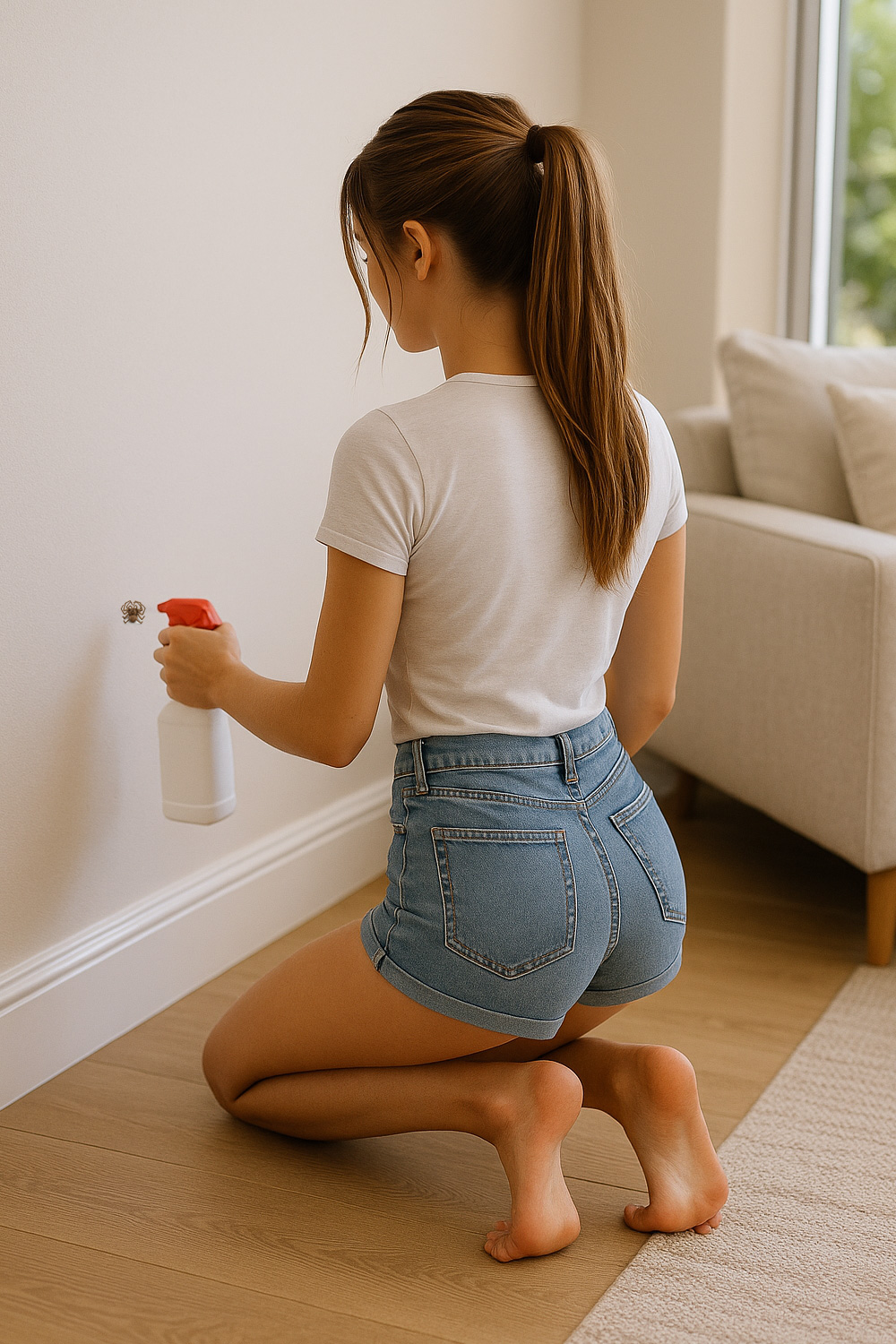
Some kids feel a surprising wave of sadness when they know pest control is about to happen. They’ve often been quietly watching the same little spider or beetle appear in familiar spots, and that tiny bit of familiarity can feel comforting to them. The worry they feel isn't really about the spray - it's about something they've noticed and grown used to suddenly not being there.
A gentle explanation helps bridge that feeling. You can acknowledge that it makes sense to care about something you've seen every day, while still being clear that insects living inside the home are pests, even when they seem harmless. Taking them outside doesn't work the way kids imagine – indoor insects tend to find their way straight back in, or stay hidden somewhere else in the house. They’re already part of an indoor problem, which is why proper treatment still needs to happen.
Letting the child know what will happen, and that they don’t need to see it, gives them reassurance and a sense of control. Their feelings are met with warmth, the home is cared for responsibly, and the moment stays gentle instead of overwhelming.
When the Pest Control Technician Arrives
This is when reactions often peak. A whole-house treatment looks comprehensive and final. Kids see the technician working systematically through rooms, spraying edges, corners, skirting boards and exterior paths. To them, it feels sweeping and irreversible – and in many ways, it is. The point of professional pest control is that insects that have been living comfortably in the house will no longer be able to do so.
For a child who has seen the same harmless insect every day for weeks, this reality can feel confronting. That insect was predictable, part of the environment, something they had quietly grown used to. Knowing that the treatment will almost certainly remove it feels heavy and personal.
Parents don't need to soften that truth or pretend otherwise. They can sit alongside it. A simple, steady explanation – that the treatment is meant to keep the home healthy, that sometimes it means saying goodbye to creatures we've become used to, and that feeling sad about that is completely normal – is far kinder than offering false hope. Over time, as these visits become routine and are always handled with the same calm honesty, kids learn that they can feel upset for a moment and still understand why the spray is being done.
The Patterns in How Kids Watch
Girls tend to watch pest control with heightened composure and focus, absorbing movement and tone more than action. They dislike franticness. They respond to slow, deliberate handling. Boys, on the other hand, watch for clarity. They want to know when something will happen and what the parent is about to do. The unpredictability is the part that unsettles them.
Across both groups, one pattern holds: kids don't mind the outcome - they mind the moment. The anticipation, the closeness, the seriousness, the unknown. Once the moment passes, their discomfort evaporates almost immediately.
Helping Kids Get Used to Watching
Children don't grow comfortable through confrontation or pressure. They grow comfortable through familiarity, calm modelling and respectful distance. When kids are allowed to observe from wherever they feel safe, they slowly build emotional resilience. They begin to understand the task not as a dramatic event but as a routine responsibility.
One day, without announcement, they simply stand a little closer. They watch more steadily. Their shoulders stay relaxed. The shift happens quietly, not because they were pushed, but because they were given room.
A Quiet Note for Parents
Parents sometimes worry that their child's discomfort means fragility or over-sensitivity. It doesn't. These reactions are rooted in empathy, anticipation and sensory processing, not weakness. Kids who dislike watching pest control are often exceptionally capable and mature in other areas. This reaction reflects a specific moment, not a character flaw.
What they're actually learning here is composure: how to stay grounded during a moment that feels emotionally heavy. And they learn it best when they're allowed to observe rather than forced to participate.
When the Moment Passes
When the insect is gone, the spray settles and the room returns to normal, kids relax instantly. The tension leaves their shoulders. The moment shrinks back to its real size - small, manageable, unremarkable.
Handled with steadiness and respect, pest control becomes just another short-lived moment in household life. And somewhere along the way, kids grow calmer simply because they were allowed to feel what they felt and move through it at their own pace.
You might also like



Disclaimer: Every effort has been made to ensure the accuracy of the information provided, but we make no guarantees regarding its completeness or reliability. The data is presented for general informational purposes only and does not constitute financial, investment, or legal advice. We are not liable for any errors, omissions, or consequences arising from its use. Users should verify details with relevant sources and seek professional advice where appropriate for the most accurate and up-to-date guidance.