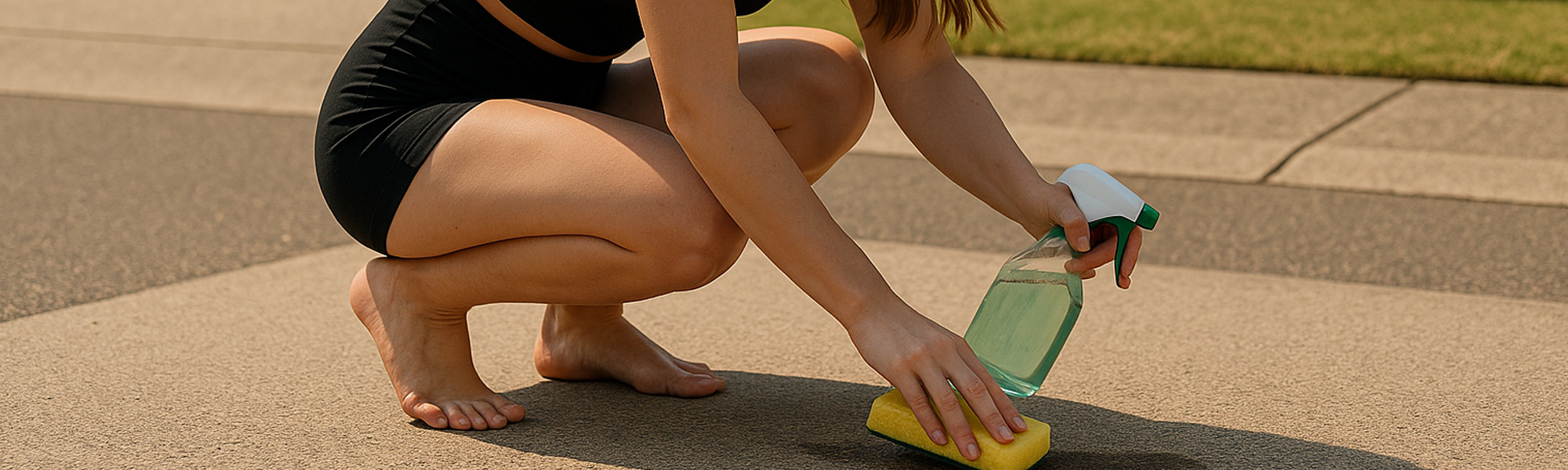
Homes gather marks the way people gather memories. A faint smudge on a wall where someone steadied themselves without thinking. A dark patch on carpet left by something oily. A pale ring on a wooden surface from a glass placed down too quickly. A leaf-shaped stain on paving after a damp afternoon. A slow-growing patch of mildew in a corner that never catches much light. These marks arrive quietly and settle in unless they're managed early.
- Test every cleaning method on a small, hidden section of the surface first to prevent permanent marks.
- Wear proper protection when handling cleaning agents, including gloves and eye protection, and keep the area ventilated.
- Never mix chemicals because some combinations can release harmful gases.
- If a stain worsens or the material reacts poorly, stop immediately and switch to a safer method.
Stain removal isn't about perfection. It's about understanding how surfaces behave, how different materials hold colour or residue, and how simple household methods can reverse most damage without force. Before anything else, one rule protects every surface in the home: always test any method in a hidden spot first. No guide, no product and no professional can guarantee identical behaviour across all materials, so a small patch test ensures the technique is safe before you commit.
How Stains Form and Why Some Become Stubborn
Every stain carries its own chemistry. Oils repel water and grip tightly to surfaces, settling into tiny textures. Tannins from drinks and leaves behave like natural dyes, bonding to porous materials the moment they make contact. Pigments from food, cosmetics or household products embed with remarkable speed and can travel deeper when warm. Moisture-driven stains encourage mildew, which spreads through colour and surface texture as it forms. Even ordinary dust behaves differently when mixed with skin oils, humidity or detergent residue.
Understanding this helps you avoid the instinct to scrub. Scrubbing drives stains deeper and damages the finish. The real key is choosing the method that unbinds the stain rather than one that merely rubs it around.
Why Early Action Makes the Biggest Difference
Most stains are easiest to remove before they dry, bind or oxidise. A light blot lifts far more than an aggressive wipe. Cool water dilutes better than warm when you don't know what you're dealing with. Solids should be lifted gently rather than smeared across the surface. Oils respond only when loosened with detergent, not with plain water. Heat should never be applied until the stain shows clear signs of weakening, because heat accelerates bonding and can turn a small mark into a permanent patch.
When the first response is calm, the rest of the job becomes simple.
Household Products That Truly Work
You don't need a shelf full of specialised cleaners. Dishwashing liquid breaks the surface tension of oils and dissolves greasy films. Bicarb provides safe abrasion that lifts residue without scratching. White vinegar dissolves mineral marks and tannin-based stains on surfaces that can tolerate acidity. Oxygen bleach brightens organic stains and lifts colour from grout or fabric without stripping dyes. Methylated spirits and eucalyptus oil dissolve sticky residues and greasy fingerprints. Hydrogen peroxide lightens deeper stains in porous materials.
These products work because they target the chemistry of stains rather than overpowering them. Used patiently, they resolve most issues in a home.
Sunscreen and Silicone-Based Residue
Sunscreen and silicone-heavy products create some of the most persistent household stains. Designed to cling to skin, they behave the same way on tiles, painted walls and carpets. On hard surfaces they form faint smudges that attract dust and become more visible over time. On walls they leave subtle hand-shaped marks. On carpets they create slightly darker patches as oils settle into the backing.
A mild detergent solution breaks the oil-silicone mix on hard surfaces, allowing it to lift cleanly. Walls demand a soft cloth and minimal pressure to avoid altering the paint sheen. Carpets release sunscreen slowly through repeated blotting with a diluted oxygen-based cleaner. Older sunscreen stains often require patience because silicone settles deeper with time, but they still respond when repeatedly softened rather than scrubbed.
Fake-Tan, Moisturiser and Pigmented Body Products
Tanning products and moisturisers contain pigments held in light oils. These pigments behave like dyes and transfer easily to tiles, walls and carpet. A faint brown film on tiles or a muted patch on carpet is often the result of this transfer.
Tile and wall stains lift with a gentle detergent mix. Carpet requires a slower approach so the pigment doesn't spread while lifting. Blotting with an oxygen-based solution allows the fibres to release the pigment gradually. Grout often needs hydrogen peroxide to reach colour that sits deeper in the pores, but the application must be controlled to avoid creating lighter patches.
Tannin-Based Stains from Coffee, Tea and Wine
Tannins bind quickly and darken porous surfaces in minutes. A coffee spill on grout, timber or carpet can leave a noticeable mark even after you wipe the surface. The best first step is dilution with cool water and thorough blotting. Warm water can deepen the stain by opening pores and helping tannins travel inward.
On stone or sealed surfaces, neutral cleaners prevent etching or dulling. Grout responds reliably to oxygen bleach because it lifts tannins evenly rather than bleaching patches unevenly. Carpets need to remain damp long enough for the cleaner to work before blotting pulls the tannins back out. Syrupy soft drinks add sugar that dries sticky, so the residue must also be loosened before the tannin can lift properly.
Pigment-Rich Food Stains
Tomato, curries, berries, turmeric and colourful sauces create stains that behave like dye baths. Heat from plates or cooking accelerates colour attachment. These pigments travel deep into textured surfaces, grout and porous benchtops.
A detergent solution lifts the top layer, but deeper colour needs oxygen bleach to break the bond. Turmeric in particular binds to porous surfaces almost instantly, so repeated treatments are more effective than one strong application. On benchtops, patience prevents the softening or removal of surface coatings, which can happen if scrubbing becomes too aggressive.
Grease, Beauty Oils and Everyday Oily Marks
Oils from cooking, skincare and hair products behave differently from one another, but all resist water. Kitchen oils oxidise and darken over time. Beauty oils spread into a thin film that attracts dust and dulls the surface. These marks require detergent to break the oil film before any water-based cleaning can work.
A warm detergent solution lifts most oily stains from hard surfaces. Stone benchtops require diluted mixtures to preserve the sealant. Certain benchtops develop "shadow stains" beneath the surface when oil has penetrated a worn sealant; these often lighten with repeated treatments but may require resealing.
Soil, Dust and Clay Transferred from Outdoors
Outdoor particles behave differently depending on their composition. Fine dust lifts easily but turns into smearing when it meets moisture. Clay binds quickly and leaves reddish-brown markings that dry into more visible patches.
Hard floors handle these stains with simple detergent cleaning. Timber floors require minimal moisture to avoid swelling, so a lightly damp cloth is safest. Carpets need dry particles removed first with a vacuum. Moist cleaning afterwards with an oxygen-based solution lifts deeper colour without spreading residue into a wider halo.
Even after thorough cleaning, carpets can develop faint “ghost residues” where soil has settled far into the base. These usually clear after a second round of blotting.
Mildew and Mould
Surface mildew begins as a few dots in corners, grout lines or shaded areas. Embedded mould spreads deeper, causing uneven surface texture and musty odour. Surface mildew lifts well with oxygen bleach or hydrogen peroxide, but embedded mould requires repeated treatment and may reveal underlying moisture problems.
Painted walls should be treated carefully with diluted solutions because strong products can remove paint or leave shiny patches. Silicone trims, bathroom corners and grout often release mould unevenly, so a second pass is normal.
When mould reappears quickly, it is a sign of moisture trapped behind the surface, not a failure of cleaning. In these cases, deeper investigation is needed.
Oil Stains on Driveways and Pavers
Oil is one of the most stubborn outdoor stains. Fresh spills lift through emulsification when hot water and detergent break the oil into droplets. Older stains sink deeper into the pores of concrete and resist simple cleaning.
A bicarb poultice works by drawing oil toward the surface as it dries. Some stains need two or three cycles. Sealed concrete behaves differently because oil sits above the seal rather than sinking in, making it easier to remove with detergent. Pressure cleaning helps but must be used cautiously, because aggressive cleaning can force oil deeper or etch the surface.
Residue, Smudges and Scuffs on Walls
Walls collect fingerprints, skin oils, furniture scuffs and accidental marks from daily movement. Paint sheen matters greatly. Matte paint absorbs oils and burns easily, leaving shiny patches when over-rubbed. Satin and semi-gloss resist oils but can show streaking. Gloss is durable but reveals scratch marks.
A diluted detergent solution removes most residue. For stubborn greasy marks, a tiny amount of methylated spirits lifts the film, but too much can disturb the paint. Metal scuffs from furniture need a mild abrasive technique, such as a soft sponge with bicarb, used gently to avoid cutting into the finish.
Leaf Stains and Tannin Marks on Paving
Wet leaves release tannins that stain pavers and tiles in perfect outlines. These stains develop rapidly and settle deeper when the surface remains damp. A diluted oxygen bleach solution lifts the tannins well, especially when paired with light brushing. Some tannins sink below the surface of porous pavers, requiring multiple treatments.
If stains persist, it often indicates organic matter has lodged in micro-textures. A deeper clean generally solves it.
Adhesive Residue and Sticky Marks
Tape marks, sticker glue and adhesive residues cling strongly because they are designed to bond. These stains trap dust and become more visible with time. Methylated spirits breaks most adhesives without harming hard surfaces. On plastics or painted surfaces, eucalyptus oil is gentler. Warming the adhesive slightly with a hairdryer softens it enough for safe removal, but heat should be applied cautiously and never on sensitive paint.
Water Marks on Wood
Rings from glasses, damp plant pots or condensation leave pale marks on timber because moisture gets trapped beneath the finish. Fresh rings often lift when dried thoroughly. Older rings usually require gentle heat applied indirectly to release moisture from the finish. Polished wood sometimes benefits from a small amount of furniture polish to even the sheen afterwards.
Metal Marks on Tiles and Porcelain
Metal furniture legs, cookware or dropped objects leave grey streaks on tiles or basins. These marks sit on the surface rather than within it. A soft cloth and bicarb paste remove most metal scuffs. Porcelain responds well to gentle abrasion but must be treated carefully to avoid dulling the glaze. Circular rubbing is more effective than linear wiping because it evens out the abrasion.
When Professional Help Is Needed
Some stains demand expert tools. Deep oil in concrete, embedded mildew, pigment trapped in porous stone or large carpet spills can worsen with home methods. Professionals use specialised products and equipment to remove stains without damaging the surface, and they can diagnose moisture or material issues that might otherwise go unnoticed.
Habits That Prevent Stains
Prevention is a chain of small, almost effortless routines. Wipe spills quickly. Sweep leaves before they settle. Dry damp corners thoroughly. Keep wooden surfaces protected from standing water. Avoid harsh cleaners on stone. Use gentle maintenance rather than infrequent heavy cleaning. Homes that adopt consistent, light-touch care accumulate fewer stubborn marks, and the marks that do appear are far easier to reverse.
A home will never remain flawless, nor should it. Stains reflect movement, activity and life. But with calm understanding and gentle methods, most marks can be lifted easily, allowing surfaces, materials and rooms to remain cared for and lasting in ways that feel natural rather than forced.
You might also like




Disclaimer: Every effort has been made to ensure the accuracy of the information provided, but we make no guarantees regarding its completeness or reliability. The data is presented for general informational purposes only and does not constitute financial, investment, or legal advice. We are not liable for any errors, omissions, or consequences arising from its use. Users should verify details with relevant sources and seek professional advice where appropriate for the most accurate and up-to-date guidance.