Emergency?
In Australia, dial 000 immediately for Police, Fire or Ambulance.
For hearing or speech impaired users, use TTY 106 from a teletypewriter (TTY). Do not text from a mobile phone.
Household emergencies rarely announce themselves with drama. Most begin as a small sound, a faint drip, a sudden crack, or a strange smell in a room that felt perfectly normal a moment earlier. The challenge for homeowners is not the disaster itself but the window of time between noticing the problem and knowing what to do next. Those first actions determine whether the incident remains a minor repair or escalates into a multi-room insurance claim.
This guide walks through some of the most common home emergencies, offering clear advice on what you can safely do yourself and what a qualified trade will do once they arrive. The aim is to keep the household calm, contain the damage, and help you understand what to expect so that early decisions feel certain rather than guesswork.
Broken Windows and Shattered Glass
A broken window often happens in an instant. A dropped object, a gust of wind, or impact from outside can leave glass across the floor and an open gap in the frame. The most important steps are the first ones. Move everyone back from the area, especially children and pets, and avoid touching or sweeping shards with a broom. Hard-floor vacuum heads are safest because they lift fragments rather than scatter them.
Once the room is cleared, place a firm piece of cardboard or plywood over the opening and tape all edges to limit airflow and keep insects or rain out. A glazier will begin by removing any remaining loose glass, securing the frame, and installing a temporary board if a replacement pane is not immediately available. For standard clear glazing, same-day replacement is common. For specialised safety glass, the waiting period can extend over several days depending on availability. Insurance coverage usually depends on how the break occurred, so photographs and a brief written account are helpful.
Burst Flexible Hoses Under Sinks
Across Australia, water damage from burst flexi-hoses ranks among the most frequent and costly insurance claims. These braided hoses look harmless, but when the outer weave begins to rust or bulge the internal rubber lining can rupture without warning. If you find water spraying or pooling under your sink, the best response is immediate: turn off the nearby isolation valve on the feed that runs up to the sink. If the valve is frozen or inaccessible, turn off the mains at the meter.
After the water is off, focus on drying the area. Remove items from the cupboard, open the doors fully, and use towels and fans to slow moisture spread into adjacent cabinetry panels. Flexi-hoses cannot be patched or repaired and must be replaced outright. A plumber will remove the damaged hose, install a new one, and assess whether water has reached wall cavities or flooring. Insurance assessors focus heavily on this category of failure because even a short burst can damage cabinetry, skirting, plasterboard, and flooring in several rooms.
Electrical Burning Smells or Sudden Popping Sounds
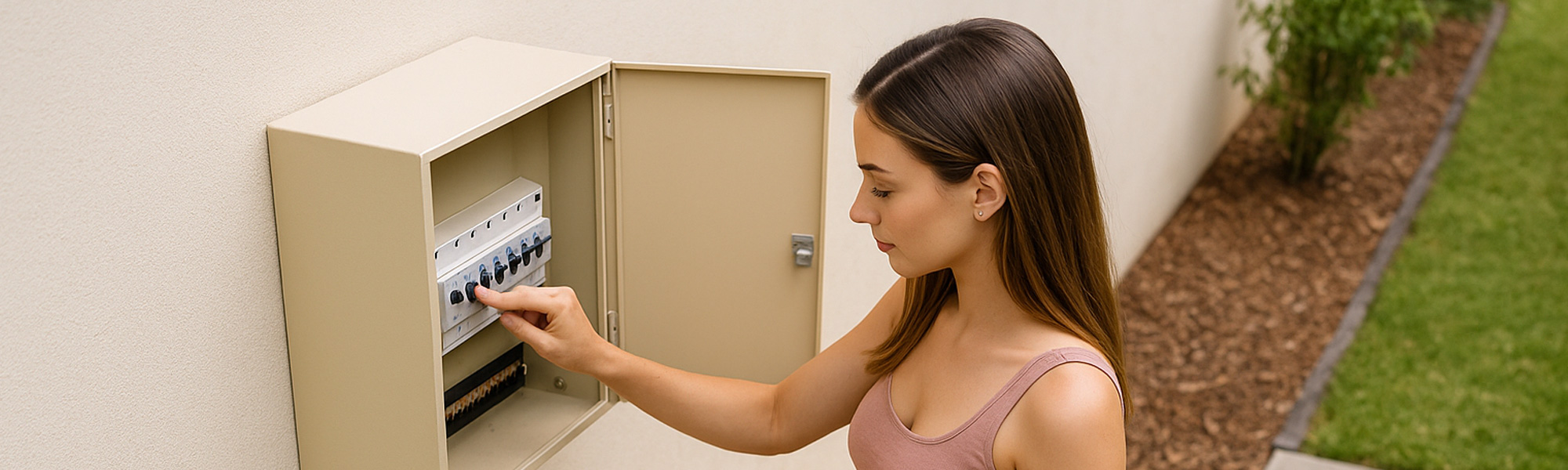
Electrical faults tend to present quietly at first. A faint burning smell near an outlet, a buzzing behind a switch, or a single loud pop followed by lights switching off are all warning signs. The correct action is to go straight to the switchboard and turn off the affected circuit. Do not touch the outlet or the appliance until the circuit is fully isolated.
Once the circuit is off, check for visible scorch marks and unplug any appliance that may have failed. An electrician will test the circuit, inspect the outlet and wiring, and determine whether the issue is inside the wall or caused by an appliance fault. Most problems are minor if caught early, but lingering electricity on a damaged circuit is unsafe. Homeowners often underestimate how quickly a small electrical smell can escalate. Turning off the circuit immediately is the safest and most sensible first step.
However, even after switching a circuit off, never assume it is safe until it has been properly tested. Faulty wiring, damaged breakers or incorrect labelling can leave parts of a circuit energised when they shouldn't be. This is why electricians always verify with a tester before touching anything.
Leaking Hot Water Systems
In Australia, hot water systems are normally installed outdoors or in open exterior enclosures, which prevents the catastrophic indoor flooding seen overseas. Even so, a leaking tank can release hundreds of litres if left unattended. The first step is to turn off the isolation valve feeding the system. This stops the water supply and slows the leak. The pressure and temperature relief valve naturally drips during heating cycles, but a continuous stream or water running down the side of the tank indicates a genuine failure.
A plumber will assess whether the PTR valve has failed or whether the tank has ruptured internally. A ruptured tank cannot be repaired and requires full replacement. Same-day emergency replacements are common on the Gold Coast, especially during summer peaks. Insurance coverage is usually limited to damage caused around the system, so photographing the leak helps with claims if surrounding surfaces are affected.
Storm-Driven Water Ingress
Subtropical weather can push water through tiny gaps around doors and windows, especially during sudden downpours or prolonged heavy wind. If you notice water tracking onto flooring, the goal is to create a temporary barrier. Towels, blankets, and quick rearrangement of furniture can protect surfaces until the storm eases. If safe to do so, covering the exterior with plastic sheeting or a tarp can help until a make-safe team arrives.
A licensed carpenter or make-safe contractor will inspect the seals, flashings, and any weathered timber. Many Gold Coast homes experience this at least once during the wet season, and prompt containment prevents mould and damage to plasterboard. Insurers commonly approve storm-related claims but may assess the condition of seals to determine whether regular maintenance contributed to the failure.
Air Conditioner Leaks or Drips from Ceiling Registers
A sudden drip from a ceiling register or a puddle forming under an indoor unit can feel worrying, but most cases come down to a blocked condensate drain. Turning off the system immediately prevents additional water forming inside the ducting or fan coil. The blockage often involves algae buildup or a misaligned drain line.
Technicians clear the line using nitrogen or wet vacuum, straighten the pipework, and test the unit for secondary leaks. If the leak has reached the plasterboard, drying fans may be required to avoid swelling or staining. These incidents are common in coastal climates with high humidity, and early action usually limits the damage to the immediate area.
Exterior Doors That Suddenly Will Not Close or Lock
When a front or back door suddenly refuses to latch or the lock jams mid-turn, avoid forcing the mechanism. Misalignment is often the cause, especially in homes with seasonal expansion of timber frames. For security, wedge the door closed temporarily using a doorstop or timber block.
A locksmith will realign the strike plate, adjust hinges, or replace the cylinder depending on the failure. Most repairs are quick and inexpensive unless the door frame has warped significantly from age or humidity. Forcing the latch can worsen the damage and create a much larger repair.
Roof Tiles or Flashings Dislodged by Storm
If, after a major storm, you notice a tile out of place or fragments on the ground, do not climb onto the roof to investigate. Loose tiles can shift easily and create serious fall risks. Instead, step back and assess the area from a safe distance, looking for visible gaps or lifted flashings. Even if ceilings inside are still dry, arrange a professional inspection as soon as possible, because water intrusion often appears hours or even days after the initial damage.
Roofers provide make-safe coverings, reposition tiles, and replace those that have cracked. Storm-related displacement is common on the Gold Coast, and insurers typically approve these events unless there is clear evidence of neglect. Early intervention prevents water entering the roof space and causing secondary damage.
If the damage looks significant, or if further rain is forecast and you can see an exposed area that could allow water into the home, contact the State Emergency Service (SES). They can provide temporary protection such as tarping and help stabilise dangerous areas until a roofer can attend. The SES should be called for urgent weather-related damage, not routine maintenance, and it’s important to follow their instructions and stay well clear of the affected section of the roof while you wait for assistance.
Understanding the Pattern Behind These Emergencies
Although these incidents vary, the underlying principles remain the same. Create safety, stop the source, contain the area, and then call the right trade. Most damage escalates not because of the fault itself but because homeowners hesitate during those first moments. A burst hose is manageable if isolated quickly. A broken window is straightforward once the opening is secured. A roof tile out of place is minor until rain enters the roof cavity.
Property ownership is partly about recognising these early signals and responding calmly. Homes give warnings long before they fail completely. Clear water where it should not be, glass where it should not be, air where it should not be, or smells that feel out of place all tell you something needs attention.
Being prepared with the right steps prevents small emergencies from becoming major incidents and helps you remain in control when the unexpected happens.
The information in this article is general guidance only. It does not replace professional advice, licensed trade work, or emergency services. Safety should always come first. If you are unsure, or if the situation involves electricity, gas, structural damage, or personal risk, contact a qualified professional immediately. Always follow local regulations, building standards, and manufacturer instructions for your home and appliances.
You might also like





Disclaimer: Every effort has been made to ensure the accuracy of the information provided, but we make no guarantees regarding its completeness or reliability. The data is presented for general informational purposes only and does not constitute financial, investment, or legal advice. We are not liable for any errors, omissions, or consequences arising from its use. Users should verify details with relevant sources and seek professional advice where appropriate for the most accurate and up-to-date guidance.