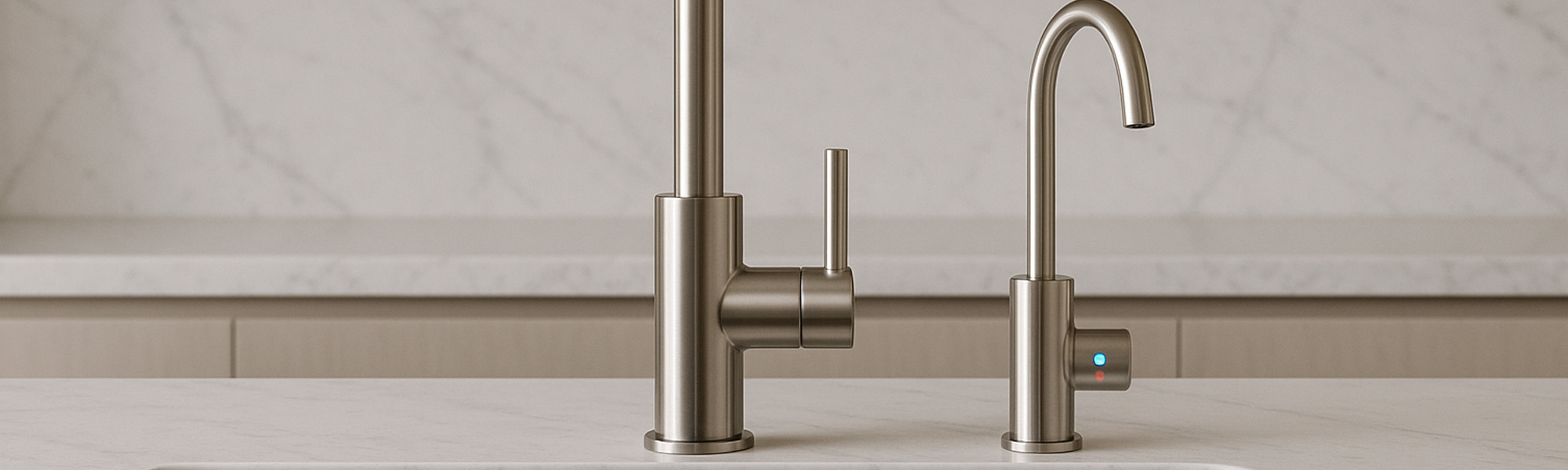
An in-sink filtration system rarely announces itself, yet the difference it makes to everyday life is unmistakable. Once installed, the kitchen immediately feels more controlled, more predictable and far easier to work in. The water becomes something you trust automatically. Glasses, bottles and saucepans are filled without wondering what the mains supply is doing that day. The vague chlorine edge that comes and goes in many areas disappears. The heavy jug that always seems to be empty is gone. Even ice cubes taste cleaner and melt without the faint bitterness that unfiltered water can leave behind.
The real shift is how the space behaves. Modern kitchens double as work zones, social spaces and family hubs, and their effectiveness depends heavily on keeping benchtops clear. A jug or benchtop filter interrupts that clarity, and over time it becomes a visual irritant people simply tolerate. Moving the entire filtration process beneath the sink restores the open, streamlined surface that contemporary homes rely on. The small dedicated tap becomes a neat, intentional detail rather than an extra appliance, and the kitchen settles into a calmer, more cohesive rhythm. It's a modest change in hardware that produces a surprisingly polished everyday experience.
The Engineering Hidden Beneath the Bench
Although the dedicated tap appears simple, the real work happens inside the cartridge below the sink. As water enters the housing under normal mains pressure, it moves through one or more treatment stages designed to remove particulates, improve taste and neutralise odours. Basic systems combine a sediment barrier with activated carbon. More advanced cartridges use multiple forms of carbon, catalytic media for targeting chloramines and specialised resins that bind dissolved materials.
The key is not just the materials but the dwell time. In-sink filtration slows the water inside the cartridge so it can make proper contact with the media. That controlled pace creates the noticeable improvement in taste and smell. While jug filters rush the process to maintain speed, in-sink systems prioritise thorough treatment, producing water that behaves consistently no matter what is happening upstream in the plumbing network.
Everything is designed for straightforward ownership. Cartridges twist on and off, fittings are modern quick-connect styles, and housings are compact enough to sit comfortably in most under-sink cabinets. Filter changes become routine, often grouped with other household maintenance because the process is predictable and clean.
Filter Media & Coconut Allergies
Activated carbon is central to how most cartridges function, and many high-performance versions are manufactured from coconut husk. The material is heated intensely during production, creating the microscopic porosity that makes carbon so effective. For the majority of households, this presents no concern at all.
However, families managing coconut allergies should choose their cartridges with care. Despite the expectation that the manufacturing process renders the material inert, there have been credible reports from allergy-affected households of symptoms occurring when water passes through coconut-derived carbon. These cases are uncommon, but they are well-documented enough that they must not be overlooked.
If anyone in the home has a known coconut allergy, the filtration media should be treated as a relevant safety factor. The solution is straightforward: confirm the carbon source before buying and select a cartridge made from coal-based or wood-based carbon instead. These alternatives are widely available, fully compatible with standard housings and perform to the same taste and odour standards as their coconut-based counterparts. Addressing this detail ensures that the upgrade remains both safe and beneficial for every member of the household.
How Taste and Cooking Improve Instantly
One of the major surprises for new users is how quickly filtered water becomes the household baseline. People who previously relied on bottled water often abandon it entirely once they experience the clarity produced by a dedicated tap. Tea is usually the clearest indicator. Without chlorine compounds or organic residues interfering, delicate blends taste more defined. Coffee benefits in a similar way, delivering a cleaner, more predictable flavour.
Filtered water also improves cooking. When you hydrate dried foods, cook rice or pasta, make soups or boil vegetables, the water no longer carries its own background flavour. Stocks taste cleaner, sauces develop more precisely and rinsed produce seems fresher. Even ice cubes behave differently. Ice made from unfiltered water can introduce a faint off-note as it melts, while ice made from filtered water stays neutral and clean whether used in sparkling water or cocktails.
These improvements accumulate quickly. You begin to treat water as an ingredient in its own right rather than a passive utility, and the filtration system becomes something you rely on not just for drinking, but for everything the kitchen produces.
Flow Rates and Why They Matter
Early-generation under-sink systems were known for slow, hesitant flow that made filling a pot feel endless. Modern cartridges have corrected that entirely. Redesigned internal channels maintain stronger pressure while still allowing proper contact with the media. The result is a steady, confident stream that feels like a proper working tap rather than a compromise.
The difference is obvious in real use. Preparing dinner moves faster. Multiple people can use the kitchen without queuing at the filtered tap. Filling bottles does not disrupt the cooking sequence. Manufacturers now publish flow data in litres per minute, and reviewing those numbers before buying ensures the tap performs in a way that matches the household's pace.
Installation and Day-to-Day Ownership
In reality, installation is much simpler than most people expect. A plumber mounts the housing inside the cupboard, connects a short line to the mains, and drills a small opening for the dedicated tap if the bench does not already have one. The system occupies only a narrow portion of the cabinet, leaving almost all storage space intact.
Once installed, the tap blends naturally with the kitchen's design. Finishes can be matched to the main mixer: matte black for contemporary schemes, brushed nickel for coastal and modern interiors, chrome for classic spaces. The unit feels built-in rather than added on.
Ongoing ownership is uneventful. Cartridges are replaced at predictable intervals, and the system immediately returns to full performance. Many homeowners align cartridge changes with quarterly or biannual household tasks, and the system settles into the background as an everyday fixture rather than a device that demands attention.
When More Complex Filtration Is Worth Considering
Single-stage carbon systems meet the needs of most households, but some situations call for more specialised treatment. Homes relying on rainwater tanks often include a sediment pre-filter to prevent silt from overwhelming the carbon stage. Older properties with legacy plumbing may benefit from cartridges designed to reduce dissolved metals. Households with particular sensitivities or precise taste expectations sometimes prefer multi-stage filtration, which slows the water further and refines the flavour even more sharply. These variations show how adaptable the category has become while still retaining the same compact footprint.
Why the Upgrade Feels Naturally Suited to Modern Australian Homes
Australian kitchens are used constantly. They host cooking, conversation, work, preparation for school and endless small transitions throughout the day. Because water is part of nearly all of these activities, improving its quality has an outsized impact. Once filtered water is available instantly from its own tap, the old jug-and-refill routine feels unnecessarily clumsy and visually outdated.
The system supports the wider goals of contemporary living: cleaner lines, less clutter and fixtures that improve function without adding noise or complication. It enhances hydration habits, sharpens flavours, and maintains the aesthetic integrity of the space by keeping the benchtop clear. It is a technical upgrade that works as a design upgrade at the same time.
The Long-Term Gain
Over time, the system stops feeling like an add-on and becomes part of the kitchen's identity. Every glass of water tastes consistent. Guests comment on the clarity without realising why. Children reach for the filtered tap instinctively. Cooking becomes more predictable. Even small everyday tasks such as rinsing produce take on a cleaner feel. The filtration system elevates the kitchen through countless small improvements that add up to a meaningful shift in how the room is used and enjoyed.
With the right cartridge selection - especially for households managing coconut allergies - the upgrade becomes something you trust completely. It is unobtrusive, reliable and deeply practical, offering value not through spectacle but through steady, everyday usefulness.
You might also like





Disclaimer: Every effort has been made to ensure the accuracy of the information provided, but we make no guarantees regarding its completeness or reliability. The data is presented for general informational purposes only and does not constitute financial, investment, or legal advice. We are not liable for any errors, omissions, or consequences arising from its use. Users should verify details with relevant sources and seek professional advice where appropriate for the most accurate and up-to-date guidance.