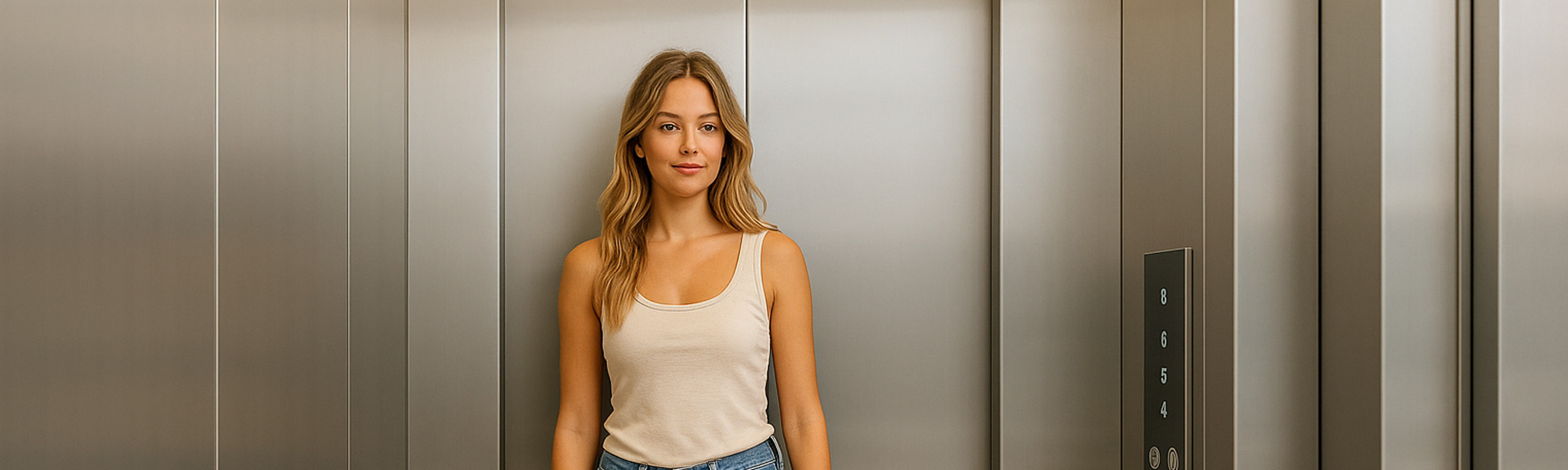
Stepping into a lift is so ordinary that most of us scarcely think about the machinery quietly hauling us through a building. The soft lurch as it starts, the muted glide between floors, the dull scuff of the doors as they open all hint at the precision beneath the surface. Yet every so often a headline or a social media video sparks a familiar question. How safe are modern lifts, really, and what does the technology behind them mean for households, apartment dwellers and anyone considering a higher-density lifestyle?
A System Built on Redundancy

Modern lifts are designed around the principle of layered redundancy. No single component is allowed to carry the burden of safety on its own. The entire system is engineered so that if one part falters, other mechanisms immediately take over. This layered approach is why lift engineers often describe the machinery not as a device but as a safety ecosystem. Counterweights, governor systems, braking assemblies and structural frames all work in parallel to support one another.
In traditional traction lifts, multiple steel cables support the car with significant excess capacity. These cables do not operate with one-to-one load matching but with wide safety margins that make outright cable failure vanishingly rare. Even so, modern lifts pair mechanical protection with continuous digital monitoring, allowing sensors to detect anomalies long before a passenger ever notices a hiccup.
The Myth of the Falling Car
Pop culture has been unkind to lift engineering. Movies love the idea of a clean cable snap followed by a dramatic plunge, yet the reality bears little resemblance to this narrative. Lift cars are fitted with overspeed governors that engage instantly if the car moves faster than it should. These governors clamp onto guide rails, locking the car in place and preventing free fall.
In practice, uncontrolled descent is so uncommon that it sits almost outside the statistical imagination. Lift safety is governed by highly conservative engineering standards that require not just prevention but impossibility. In a modern Australian residential or commercial building, the risk of a catastrophic fall is effectively nil.
Doors, Sensors and the Quiet Intelligence of Motion
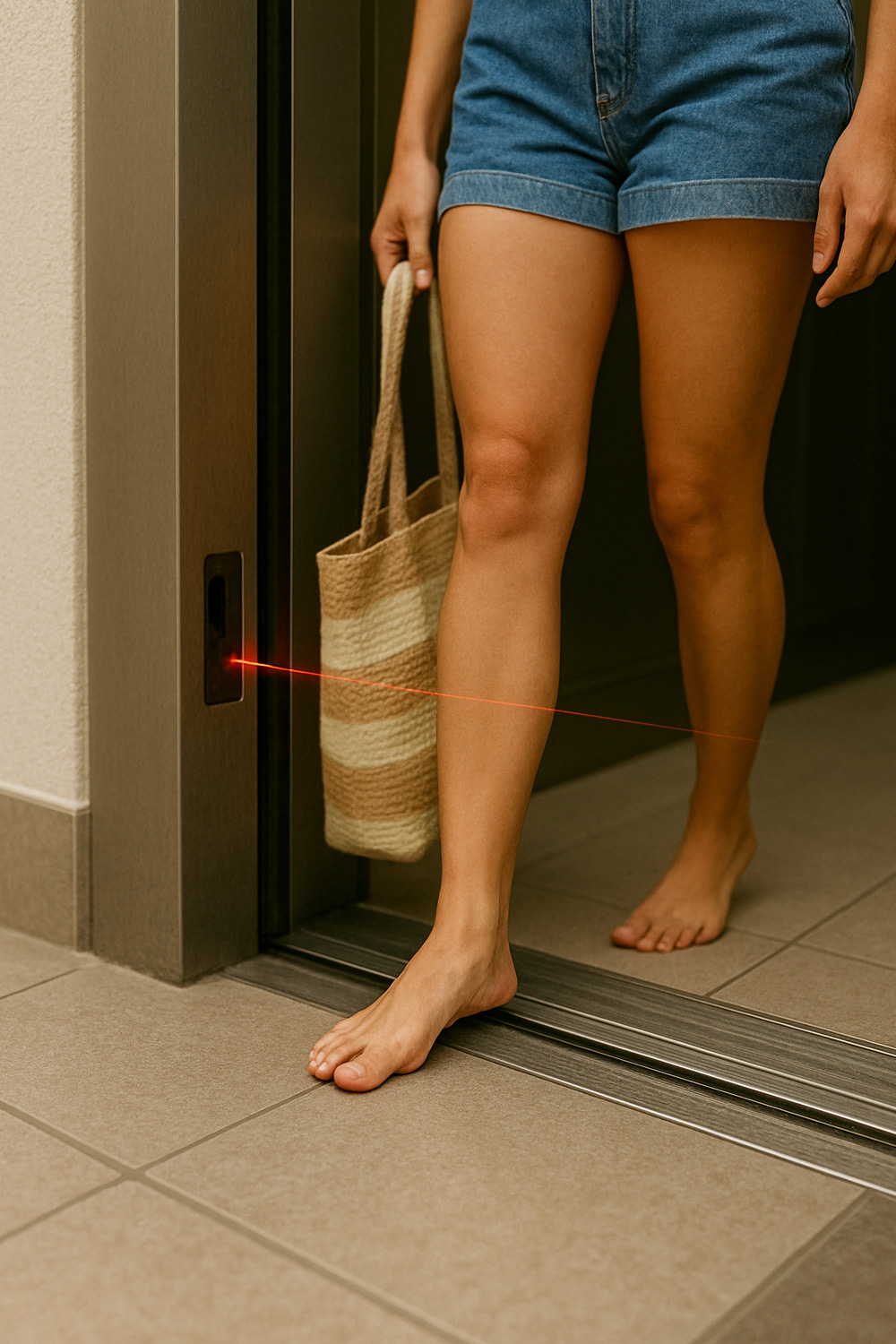
The moment a lift door hesitates, passengers grow alert. Yet door systems are among the most meticulously refined parts of modern lift design. Early photo-electric beams have evolved into multi-beam, multi-height detection systems that scan for movement across a broad plane. This means the door can reverse gently, detect subtle shifts and adapt its closing speed to the behaviour of people entering and exiting.
The car itself is under similar supervision. Acceleration, deceleration and levelling are now governed by software that fine-tunes motion to avoid jolts and misalignment at floor level. The experience may feel smooth for comfort, but the precision driving it is rooted in safety. Less vibration reduces mechanical stress, fewer jolts protect internal components and exact levelling reduces trip hazards at entry points.
Power Failures and Emergency Operation
One of the most misunderstood scenarios is the simple power outage. Many assume they could be trapped indefinitely or that the lift may halt mid-shaft in a precarious position. Modern systems anticipate these conditions. Emergency lighting is designed to last long enough for rescue, emergency intercoms connect directly to monitoring centres and most contemporary lifts include automatic rescue devices that move the car to the nearest floor using stored or auxiliary power.
Even in older buildings without automatic rescue, lift technicians are trained to perform controlled manual release procedures that are far safer and more structured than most people assume. The process is methodical rather than dramatic, designed not to jolt the car or compromise passenger stability.
Maintenance Culture and Real-World Risk
Where lift safety becomes meaningful for residents is not usually in the technology but in the ongoing maintenance culture. Lifts are among the most heavily regulated pieces of domestic and commercial infrastructure in Australia. Bodies corporate, building managers and service companies operate within scheduled inspection regimes that include mechanical checks, lubrication cycles, door-system calibration and emergency procedure verification.
Failures, when they occur, almost always relate to wear or gradual misalignment rather than catastrophic breakage. A door may need recalibrating, a sensor may require replacing or a rail guide may need adjustment. These issues create inconvenience long before they pose danger. A lift that behaves oddly is usually a lift signalling for attention, not edging toward disaster.
The Rise of Smart Monitoring
Digital oversight has transformed the lift industry. Modern systems can relay performance data to service technicians in real time. This allows predictive maintenance rather than reactive repair. Instead of waiting for a fault, the system flags subtle changes in vibration, heat, door resistance or motor behaviour. Technicians can schedule service before passengers ever experience a slowdown, and building managers gain visibility into patterns that help them plan upgrades.
This move toward intelligent monitoring has made lifts safer not just mechanically but operationally. Problems that once required diagnosis on site can now be forecasted remotely.
Lifts in Homes and Low-Rise Buildings
Residential lifts are becoming increasingly common in multi-storey homes, townhouses and ageing-in-place renovations. Their safety standards mirror those of commercial lifts but with additional considerations for low-use environments. Home lifts may use hydraulic or machine-room-less designs, each with its own safety structure.
Hydraulic lifts, for example, cannot fall freely because their descent speed is controlled by fluid flow. Machine-room-less lifts rely on traction systems but include the same multi-redundant protection layers as their commercial counterparts. When installed and maintained correctly, home lifts are statistically among the safest mechanical devices in a modern residence.
When Anxiety Outpaces Reality
Lift anxiety is common, especially among people who worry about enclosed spaces or mechanical control. Yet objectively, the risk landscape favours the lift. Stairs account for vastly more injuries than lifts do, and many buildings promote lift use precisely because it reduces fall risk.
The paradox is that lifts feel unsafe because their mechanics are hidden from view. When a machine does its job too quietly, people begin to imagine what might go wrong. In reality, the silence is the sound of a system doing precisely what it was designed to do.
So How Safe Are Modern Lifts?
Extremely. They are built on redundancy, governed by strict standards, supervised by digital monitoring, protected by mechanical failsafes and maintained through regulated programmes. A modern lift is not a gamble or a leap of faith. It is one of the safest technological interactions you will have in a building.
You might also like





Disclaimer: Every effort has been made to ensure the accuracy of the information provided, but we make no guarantees regarding its completeness or reliability. The data is presented for general informational purposes only and does not constitute financial, investment, or legal advice. We are not liable for any errors, omissions, or consequences arising from its use. Users should verify details with relevant sources and seek professional advice where appropriate for the most accurate and up-to-date guidance.