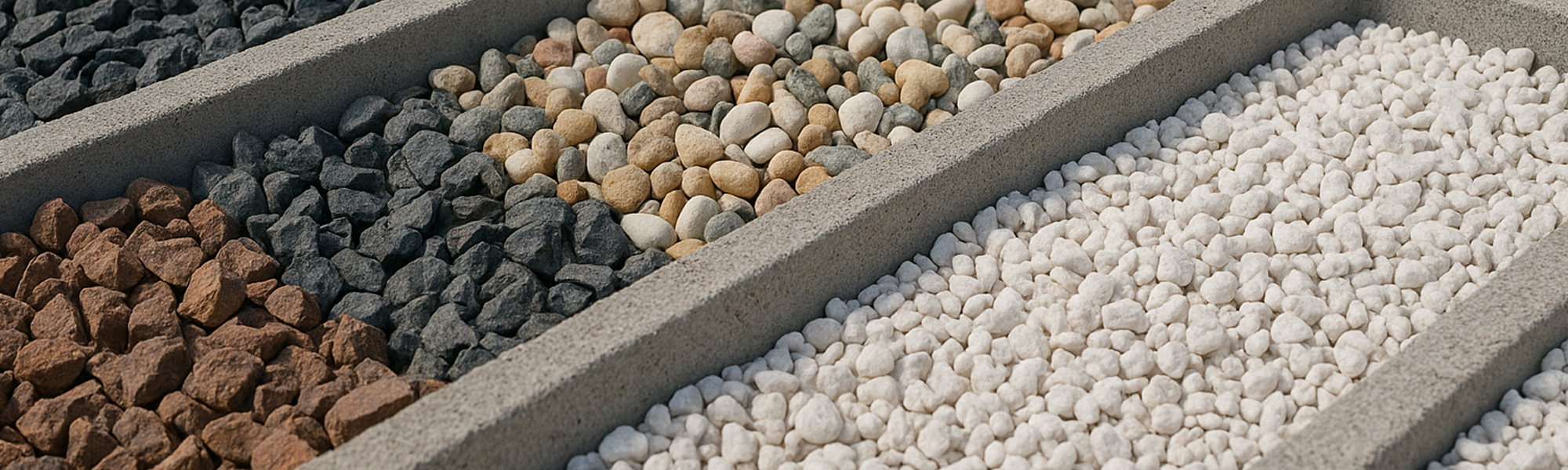
Gravel is not a decorative afterthought. It is a ground surface that behaves according to clear physical rules, and when those rules are ignored the result is movement, mess, noise, and constant correction. When they are respected, gravel becomes one of the most durable, adaptable, and forgiving materials available in landscaping. The difference between those outcomes has very little to do with taste and almost everything to do with choosing the right stone, at the right size, installed in the right way, for the right job.
This is not a style guide. It is a practical reference written from the position that gravel either works or it does not.
What Gravel Is and What It Is Not
In landscaping terms, gravel is loose stone that relies on mass, interlock, and containment rather than binding agents. It does not behave like concrete, pavers, or soil. It will move if allowed to move. It will settle if given space to settle. It will migrate to edges, low points, and gaps if those exist.
The biggest mistake people make is assuming gravel will behave itself. It will not. Gravel must be told what to do through size selection, depth, base preparation, and edge restraint. If those controls are missing, the gravel will find its own equilibrium, and that equilibrium is rarely what was intended.
Crushed Stone vs Rounded Stone
This is the single most important decision in any gravel project.
Crushed stone has angular faces created by mechanical crushing. Those faces lock together under load. Once compacted, crushed gravel becomes progressively more stable with use. This is what you use for paths, driveways, side yards, bin areas, and any surface that must stay where it is put.
Rounded stone has smooth faces formed by water action. It does not lock. It rolls. It shifts laterally under load and downhill under water movement. Rounded gravel is for decorative beds, drainage zones, and areas that are rarely walked on. Using it anywhere else is a guarantee of long-term frustration.
If a gravel surface is expected to feel firm, predictable, and quiet over time, rounded stone is the wrong material.
Gravel Size and Why Most Problems Start Here
Gravel size controls everything people complain about later.
Very fine material, including crusher dust and decomposed granite, can be compacted into a firm surface that behaves almost like pavement. This is excellent for paths and utility areas, but it creates dust in dry weather and can seal over in heavy rain if grading is poor.
Mid-sized gravel, typically around 10 to 20 mm, is the most versatile choice for residential landscapes. When angular, it drains well, settles into place, and remains manageable under use. This size range works for paths, courtyards, and most functional outdoor areas.
Large decorative stone looks impressive on day one and performs badly everywhere it is walked on. It requires deep installation, strong edges, and tolerance for constant movement. If it is being considered for a path or access route, it is the wrong choice.
Fines, Grading, and Why "Clean" Gravel Fails
Gravel that contains only one particle size never truly settles. It remains loose because there is nothing to fill the voids between stones. This is why many decorative gravels feel unstable no matter how much is added.
Well-performing gravel contains a controlled range of sizes. The smaller particles fill the gaps between larger ones, increasing friction and reducing movement. This does not eliminate drainage, but it does moderate it in a way that keeps the surface stable.
The obsession with perfectly washed, dust-free gravel is misplaced for most functional applications. Clean gravel drains well, but it moves endlessly.
Drainage Is a System, Not a Claim
Gravel does not automatically fix drainage. It only allows water to pass through its own layer. If the material beneath it does not drain, water will pool invisibly. If water is allowed to move laterally beneath the gravel, it will undermine edges and bases.
Good gravel drainage is designed. It considers slope, soil type, rainfall intensity, and where water is meant to go after it passes through the surface. Simply replacing soil with gravel without thinking about the layers below is how water problems are hidden rather than solved.
Slopes and the Limits of Loose Stone
Loose gravel and slopes are natural enemies.
Rounded gravel will migrate downhill continuously. Angular gravel resists movement better, but even it will creep if unrestrained. Gravel should be limited to gentle grades unless stabilisation systems or terracing are used.
If gravel is thinning at the top of a slope and collecting at the bottom, the design has failed. Adding more gravel will not fix it.
Base Preparation Is Where Projects Succeed or Fail
Gravel without a base is temporary.
A compacted base spreads load, prevents gravel from punching into soil, and keeps surfaces level. Without it, ruts and low spots form slowly but inevitably. Once that happens, the only real fix is removal and rebuilding.
Decorative areas can tolerate minimal base work. Paths and access areas cannot. Driveways require properly engineered bases designed for vehicle loads. Skipping base preparation is not a shortcut, it is a delayed failure.
Depth Is About Performance, Not Coverage
Gravel depth must be sufficient for the stones to interlock without exposing the base beneath. Shallow installations look acceptable initially and fail quickly. Overly deep installations feel loose and unstable.
Decorative beds require less depth because they are not loaded. Paths require enough depth to accommodate settlement. Driveways require significantly more depth to prevent rutting.
Depth should always be determined by stone size and use, never by how much material happens to be available.
Ordering Gravel and Why It Always Looks Like Too Little
Gravel is delivered loose and settles dramatically once placed. What looks generous in a pile often looks thin once installed and compacted. Many people under-order because they calculate loose volume instead of finished depth.
Edges, transitions, and low spots consume more material than expected. Matching gravel later can be difficult. Ordering extra is almost always cheaper than trying to correct shortages after installation.
Geotextile Fabric and When It Actually Helps
Geotextile fabric exists to stop soil and gravel from mixing. It does not stop weeds.
Used correctly, it preserves drainage and surface integrity. Used poorly, it becomes visible, traps debris, and creates uneven settlement. Fabric is essential over unstable soils and largely unnecessary over firm, undisturbed ground with light use.
Using fabric everywhere is not good practice. Using it nowhere is worse.
Installation Errors That Cause Most Complaints
Most gravel problems are installation problems.
Gravel installed too high spills endlessly into adjacent areas. Gravel installed too low collects dirt and organic debris. Bases compacted dry or saturated never reach proper density. Decorative gravel compacted aggressively looks damaged and still moves.
Gravel should be installed deliberately, not dumped and raked.
Settling, Early Movement, and Reality
All gravel settles. That is not a defect.
Crushed gravel settles quickly under compaction. Decorative gravel settles slowly through use. Finished levels should anticipate this. Expecting a gravel surface to look unchanged after the first season is unrealistic.
Designs that allow for early adjustment remain calm. Designs that demand perfection require constant intervention.
Stabilisation Systems and When They Are Worth It
Stabilisation systems exist because there are situations where loose gravel simply cannot be persuaded to behave, no matter how carefully it is chosen or installed. The most common trigger is repeated turning load. A straight path might perform acceptably for years, but the moment a car turns its wheels, a bin is dragged at an angle, or furniture is repositioned regularly, loose gravel begins to shear sideways. This shows up first as shallow ruts that never quite rake out properly, then as bare patches where the base starts to telegraph through.
Cellular stabilisation systems stop this lateral shear. Instead of relying on friction alone, they physically prevent stones from escaping sideways under load. In practical terms, this means a gravel driveway that still looks even after a year of reversing and steering, or a courtyard where chairs can be moved without leaving tracks. Without stabilisation, people often respond by adding more gravel, which makes the surface looser and accelerates the problem. Stabilisation is not about aesthetics. It is about deciding whether a surface will be controlled or constantly corrected.
Accessibility, Use Patterns, and Daily Friction
Gravel surfaces are often judged during the quiet moments, when nothing is happening. The real test comes during ordinary daily use. Someone wheels a bin out twice a week and always follows the same arc. A pram is pushed across the same route every morning. Outdoor chairs are dragged slightly each time they are used. Over time, these patterns carve the surface.
Surfaces that look acceptable under occasional foot traffic can become hostile under repeated use. Wheels hunt for grip and create grooves. Narrow legs sink and twist. Loose stones pile up where movement stops. The people using the space adapt by avoiding it, taking shortcuts, or walking around it, which creates new wear patterns. This is why functional gravel surfaces must be designed for how they will actually be used, not how they look when freshly laid.
Gravel Enjoyed Barefoot
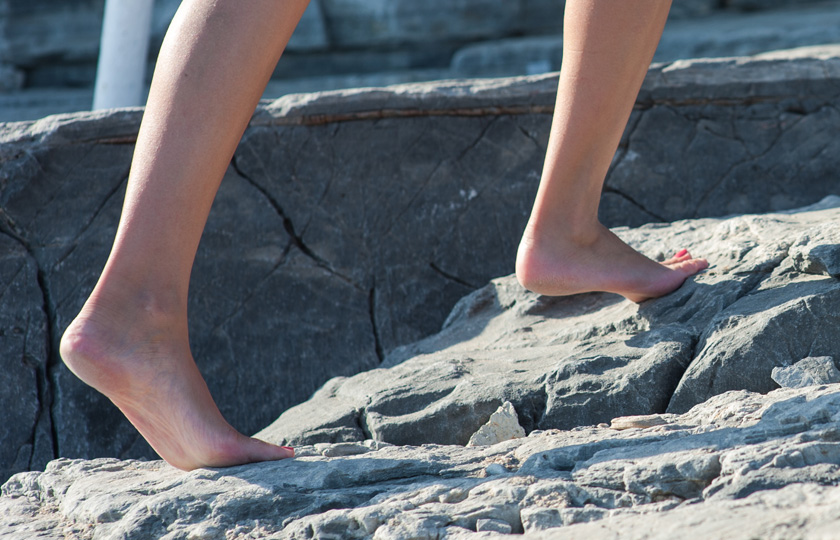
Gravel feels very different barefoot than it does through shoes, and that difference matters more than most people expect. Shoes hide instability, sharp edges, temperature, and micro-movement. Bare feet do not. A gravel surface that is tolerable in footwear can be irritating or outright unpleasant when walked on barefoot, while a well-chosen surface can feel surprisingly comfortable and confidence-building once the soles adapt.
The key distinction is not softness, but predictability. Bare feet tolerate firmness far better than sudden movement. Angular gravel that is correctly sized and well-settled tends to feel more stable underfoot than rounded pebbles that roll unexpectedly. Even though rounded stone looks smoother, the constant micro-shifts force the feet to tense and adjust, which becomes tiring quickly. Stability matters more than polish.
Size plays a decisive role. Very fine gravels, when compacted properly, can feel almost pavement-like and are often the most comfortable barefoot option for paths and courtyards. Mid-sized angular gravel can also work well once it has settled, particularly if the base is firm and the surface depth is controlled. Large stones, even when smooth, create pressure points that the foot must bridge, which limits barefoot use to very short distances.
Temperature is another factor that only becomes obvious barefoot. Dark gravels absorb heat and can become uncomfortable in full sun, especially in exposed areas. Light gravels stay cooler but reflect more glare. In practice, mixed natural tones tend to moderate both effects and feel more forgiving across changing conditions.
Barefoot use also reveals edge and transition quality immediately. Where gravel thins near boundaries, the foot feels the base or fabric underneath. Where stones spill onto adjacent hard surfaces, they become a slipping hazard. A gravel surface intended to be used barefoot needs consistent depth right to the edges and clean, controlled transitions that do not allow stray stones to escape.
There is also an adaptation effect. Soles become more tolerant over time, and surfaces that initially feel unfamiliar often become comfortable once the gravel settles and the feet learn its texture. This only works when the surface is fundamentally stable. No amount of adaptation makes loose, rolling stone feel reliable.
Gravel that is enjoyable barefoot is gravel that has been chosen and installed with restraint. Moderate size, angular shape, controlled depth, and a firm base produce a surface that feels honest underfoot. It does not pretend to be sand or lawn. It feels grounded, predictable, and deliberate, which is ultimately what makes it pleasant to walk on without shoes.
Dust, Tracking, and Indoor Consequences
Dust is not a surface problem, it is a lifestyle problem. Fine gravel dust does not stay where it is created. It lifts on dry days, settles on furniture, and is carried inside on feet and paws. Once indoors, it collects in corners and on hard floors, and no amount of outdoor raking changes that.
Tracking is different but just as persistent. Decorative pebbles lodge in shoe treads and get dropped at thresholds. They migrate into garages, onto decks, and into lawns. The closer gravel is placed to entries and living spaces, the more noticeable this becomes. People often blame maintenance habits when the real issue is that the gravel size and grading were never appropriate for that location.
Colour, Staining, and How Gravel Ages in Reality
Gravel never stays the colour it was on delivery day. Light stone shows this most clearly. After the first wet season, leaf tannins stain the surface unevenly. After a year, fine organic matter darkens low spots and shaded areas. In damp zones, biological films develop that subtly change both colour and surface feel.
This is not failure. It is ageing. The problem arises when the chosen stone does not age gracefully. Very pale gravels often shift from bright to blotchy. Mixed natural tones hide change better. Dark gravels hide staining but absorb heat and retain moisture. Understanding how colour changes over time is more important than choosing a colour that looks good in a sample tray.
Edge Control Is Structural, Not Optional
Most gravel mess does not originate in the middle of a surface. It starts at the edges. Gravel slowly pushes outward with every step, every wheel, every rainfall event. Where the edge is weak, shallow, or flexible, the stone escapes. Once that happens, the surface begins to unravel.
People often respond by sweeping gravel back into place, which temporarily hides the problem while allowing more stone to escape underneath. Proper edges resist this slow pressure. They maintain depth at the boundary and give the surface something to push against. When edges fail, no amount of raking will restore order for long.
Transitions Between Materials
The junction between gravel and another surface is where theory meets frustration. Gravel that meets paving at the wrong height spills endlessly. Gravel that meets lawn without restraint disappears into the grass. Gravel that meets timber decks without a clear stop point ends up trapped in joints and corners.
Good transitions feel boring because they work. Heights are controlled. Movement is anticipated. Water is directed. Poor transitions create constant low-level maintenance tasks that never quite resolve. People often misattribute this to gravel itself, when it is really a failure of detailing at the boundary.
Cost and Why Cheap Gravel Is Expensive
The cheapest gravel projects are almost always the most expensive over time. Shallow installations look fine briefly, then develop low spots and exposed fabric. Poor edge control leads to constant redistribution. Inadequate bases deform under load and require rebuilding.
Well-built gravel costs more upfront because preparation, depth, and restraint cost money. What it buys is time. A surface that does not need attention every month quickly becomes cheaper than one that constantly demands it. Gravel does not forgive shortcuts, it delays their consequences.
Maintenance, Repair, and Knowing When to Stop Topping Up
Every gravel surface needs occasional correction. Low spots form where people walk most. Stones migrate toward edges. Organic matter accumulates. Light maintenance restores balance when the underlying structure is sound.
Problems arise when topping up is used to compensate for structural failure. Adding gravel to a surface with a collapsing base or failing edges only increases movement. At some point, replacement is more sensible than repeated correction. Knowing when to stop patching and rebuild is part of managing gravel realistically.
The Real Rule of Gravel
Gravel does not respond to intention. It responds to force, water, and containment. When those forces are understood and controlled, gravel becomes calm, predictable, and durable. When they are ignored, gravel becomes noisy, messy, and endlessly demanding.
Every gravel success story is the result of deliberate choices. Every gravel failure follows the same small set of mistakes. The material itself is neutral. The outcome is not.
You might also like



Disclaimer: Every effort has been made to ensure the accuracy of the information provided, but we make no guarantees regarding its completeness or reliability. The data is presented for general informational purposes only and does not constitute financial, investment, or legal advice. We are not liable for any errors, omissions, or consequences arising from its use. Users should verify details with relevant sources and seek professional advice where appropriate for the most accurate and up-to-date guidance.