Creating a pet friendly home has always been about more than dropping a bed in a corner or letting the dog curl up on the sofa. The new generation of household design takes the idea much further, weaving animal comfort, safety and everyday interaction into the physical shape of the home itself. Pets are family, and the house should feel as welcoming to them as it does to the humans who live there. When you start thinking this way, the possibilities expand into an entire world of quiet, clever design choices that make life easier, cleaner, calmer and far more enjoyable.
A truly pet centric home is not themed or novelty driven. It is subtle. It almost disappears into the background, silently organising spaces so that animals move through their day with ease. It is a mix of practicality, gentle ergonomics, sound reduction, air flow, touch points and a sense of place. It considers paws, claws, fur, whiskers, bath time, quiet zones and the way animals feel when they settle down in an environment that makes sense to them. The creativity available to homeowners today is enormous, and the best ideas are those that manage to sit quietly in a room until the moment you realise they are working beautifully.
Built In Pet Paths That Blend Into Your Floor Plan
One of the most overlooked opportunities in a home is the natural path a pet takes as it moves from room to room. Dogs and cats have predictable patterns, and you can turn these predictable lines into gentle pathways that keep your home orderly without feeling staged. A wide timber threshold that doubles as a transition point, a corridor corner softened with a curved skirting board so your cat can follow its favourite edge, a spot near the living room windows where you intentionally leave a low timber strip for a dog to pause and look outside. These pathways act as structural permission for pets to do what they already do, and in giving that permission, the house instantly feels more settled.
Concealed Nooks That Act as Secure Retreats
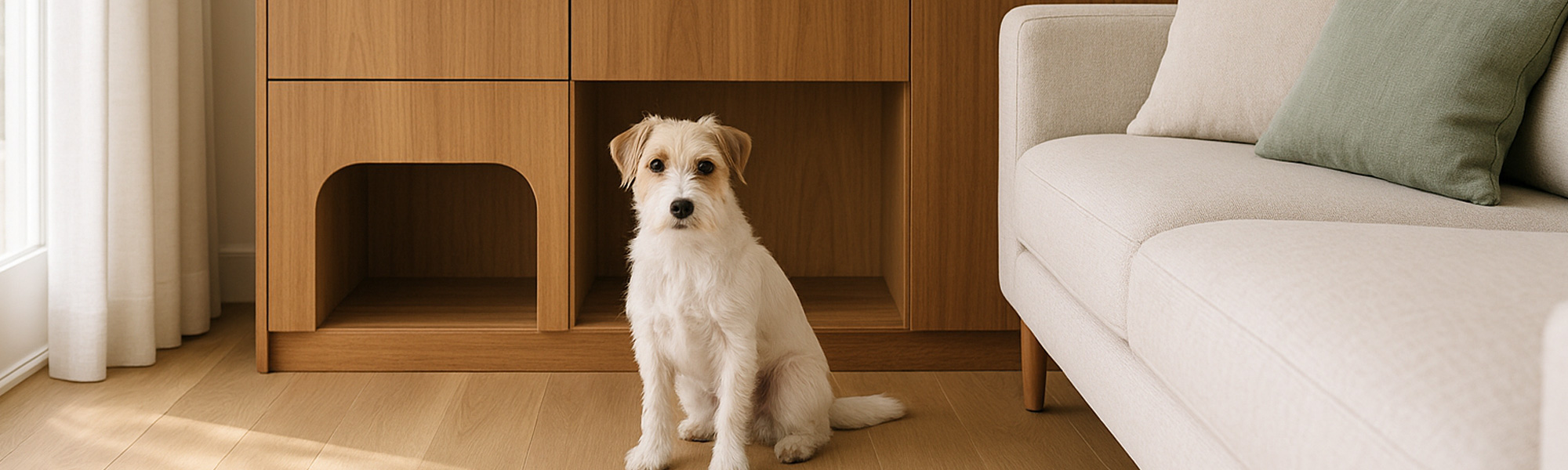
Humans underestimate how much pets appreciate zones that feel enclosed but not isolated. A retreat built into joinery offers exactly this. A void inside a living room cabinet, a shaped cutaway beneath a floating bench seat or a purpose sized alcove under the first riser of a staircase all create quiet, low visibility spaces that help anxious or reactive pets relax. The trick is to build these spaces with enough visual openness that the pet still sees the room and feels part of it. It is not a hiding place. It is more like a soft-edged personal den.
Multi Purpose Benches Designed With Pets in Mind
Laundry benches, mudroom stations and garage entries can be shaped to pull double duty without any aesthetic compromise. A deeper front overhang on a laundry bench allows a dog to sit underneath without bumping its back. A recessed panel below the cabinetry provides a snug place for a cat to roll and stretch. A slightly textured finish on a mudroom bench top gives you a cleaner grip when giving a quick wipe down after a walk. These little adjustments add up to a space that feels naturally designed for pet care instead of improvised around it.
Invisible Gate Systems for Zoned Living
One of the smartest innovations in pet friendly design is the near invisible barrier. A slimline vertical gate recessed into a pocket wall, a low glass panel that slides quietly aside, or a half height barrier disguised as part of the joinery lets you zone off rooms when needed without making the home feel restricted. When not in use, these systems disappear so completely that guests often do not notice them. For multi pet households, this is a simple way to control feeding times, keep the cleaner room free of curious paws or manage energy levels between pets with different temperaments.
Pet Activity Architecture in Unused Spaces
There are pockets in every home that sit empty and overlooked: alcoves near wardrobes, the recessed side of a hallway linen cupboard, the top landing of a split level staircase. With a little imagination these become vertical climbing routes, balance ledges, lookout perches or low level movement zones. A run of sturdy wall shelves with supportive angles, a long cushioned sill under a highlight window or a built in tunnel that opens at two ends give pets new forms of enrichment without cluttering the home. These ideas work particularly well for cats and small dogs that enjoy exploring narrow spaces, but larger dogs can also enjoy a cushioned corner or long supportive ledge for leaning.
Odour and Airflow Strategies Hidden Inside the Architecture
Good airflow transforms a pet friendly home. Quiet extraction fans paired with indirect venting reduce lingering smells near litter zones or laundry drop points. A dedicated return air vent positioned low in the wall of a utility room can help draw light fur out of the air without creating a constant draught. These ideas work best when they are designed alongside standard ventilation so there is no visual impact. Clean air is as much a comfort feature for pets as it is for humans.
Materials That Feel Good Under Paws Without Compromising Design
Pets notice surface textures far more than people realise. Stone that is too slick can make them hesitant. Laminate that is too shiny can disrupt their confidence when moving at speed. A lightly brushed finish on engineered timber, a soft matte tile with grip or a natural fibre runner positioned in a transitional area creates a smoother flow through the home. The surfaces do not need to scream “pet area”. They simply need to feel settled, safe and predictable under paws. This reduces slips, keeps pets calm and naturally guides them towards zones where they can rest and settle.
Clean Out Panels Behind Key Pet Areas
One of the simplest but most neglected features in a pet oriented home is the clean out panel. This small, discreet door gives you access to the void behind a built in litter zone, the rear of a pet feeding station or a narrow cavity behind a bench where fur tends to collect. Opening this slot for a quick vacuum prevents the slow buildup of dust and fur that can irritate pets, particularly older animals. It is invisible to the eye, but it keeps the home running smoothly.
Garden Edges Designed for Play, Comfort and Exploration
Pet friendly gardens rarely come down to the choice between lawn or paving. The real magic is in the edges. A soft planting border where a dog can skim along the side of the garden while patrolling, a semi raised deck with a shaded patch beneath, or a stepped rock feature that offers warm surfaces for lounging in the sun. Pets respond instinctively to height changes, warmth, shade and scent, so building subtle variety into a yard gives them a reason to explore without risking escape. A small splash area created by angling tiles slightly to catch rainwater can become a playful corner without any mechanical parts.
Integrated Bathing Spots That Do Not Feel Like Utilities
A pet bath usually ends up as a plastic tub or awkward laundry setup, but modern design makes this unnecessary. A tiled recess in the laundry with a hand shower, a low stone trough with a wide ledge for paws, or a gentle step in bench that supports the animal while you rinse them off all shift the experience from chore to practical routine. When these areas match the rest of the home's materials, they blend in gracefully. Soft lighting overhead and a position near a window for natural ventilation complete the idea.
Smooth Transitions for Senior Pets and Pets With Mobility Needs
An ultra pet friendly home respects ageing animals. Small details such as low profile thresholds, wide walking paths between furniture and supportive surfaces near resting spots can keep older pets comfortable for years. The house becomes not only a place they live but a place that adapts kindly as they slow down. For pets recovering from injury, raised feeding bowls, supportive mats and quieter footpaths through rooms help them stay part of family life without strain.
Lifestyle Features That Let Pets Share the Home Naturally
The strongest pet friendly designs are those that allow animals to inhabit the home without creating friction. A secondary water station tucked beside the outdoor steps, a gentle ramp to reach a favourite sofa spot, a soft corner shaped by the angle of a bookshelf, or a hidden scoop drawer for quick litter cleanups all function without requiring thought. This is the true hallmark of good pet design: it disappears until it is needed.
Bringing the Whole Concept Together
An ultra pet friendly home does not demand large construction budgets or theatrical design moves. It asks for observation, empathy and an understanding of how animals interpret space. Once you start noticing what your pets prefer, you see the house differently. You see where they pause, where they hesitate, where they settle and where they struggle. From there, creativity follows naturally. The most effective ideas are not loud. They are gentle, thoughtful and built into the architecture in ways that feel inevitable.
A home like this supports human life while honouring the daily patterns of the animals who share it. It gives pets a sense of safety, comfort and freedom woven into every corner. When you create that environment, the home feels more balanced, more alive and far more harmonious. Pets flourish. People relax. And the house becomes a place shaped with genuine care for every creature who calls it home.
You might also like


Disclaimer: Every effort has been made to ensure the accuracy of the information provided, but we make no guarantees regarding its completeness or reliability. The data is presented for general informational purposes only and does not constitute financial, investment, or legal advice. We are not liable for any errors, omissions, or consequences arising from its use. Users should verify details with relevant sources and seek professional advice where appropriate for the most accurate and up-to-date guidance.