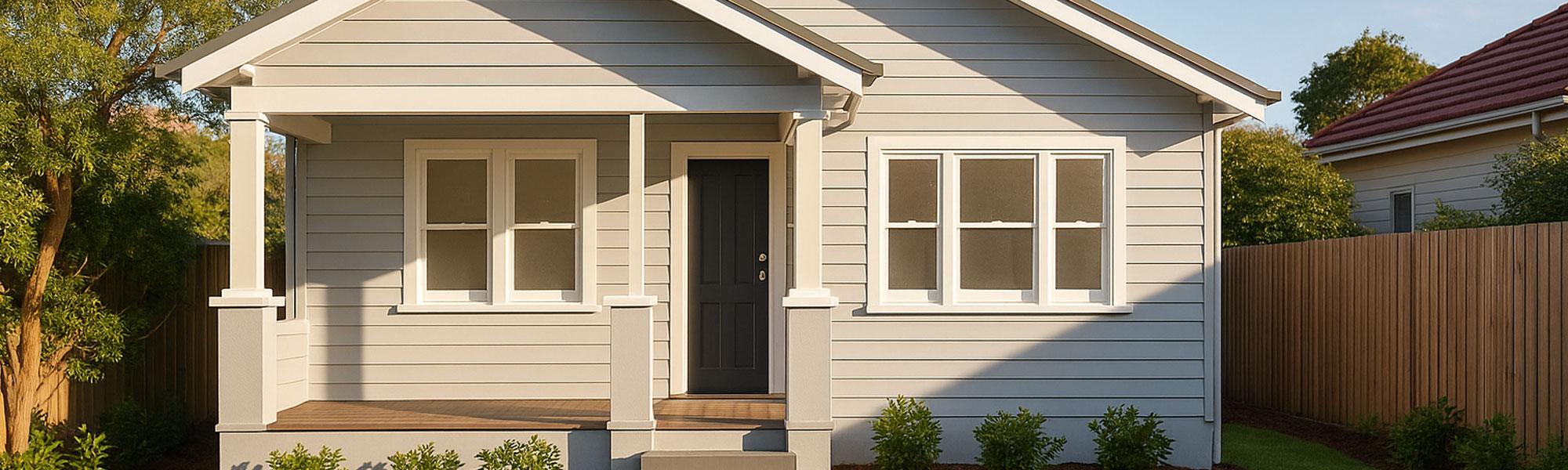
Selling a house almost always comes with advice. Fresh paint, new flooring, a kitchen update, a bathroom refresh. Real estate agents are often quick to suggest works that will "add value" or "make the home more marketable." Sometimes they are right. Other times, the suggested works cost far more than they return, add stress, or delay a sale without materially changing the outcome.
Deciding whether to do major works before selling is not about following generic renovation rules. It is about understanding your market, your buyer, your finances, and the likely return on each dollar spent. The goal is not to create your dream home. The goal is to maximise your net sale result, after costs, time and risk are accounted for.
Understanding the Agent's Perspective
Real estate agents are paid on commission. Their incentives are not identical to yours, even when they are acting in good faith. An agent benefits from a property that photographs well, attracts strong early interest, and is easy to sell within a predictable time frame. Renovations often help with those outcomes.
However, an agent does not personally fund the renovation, carry the construction risk, or absorb cost overruns. A ten thousand dollar improvement that helps a property sell slightly faster may be attractive to an agent even if it only adds five thousand dollars to the final price. From the seller's perspective, that is a net loss.
This does not mean agents are wrong to suggest works. It means their advice should be filtered through your own financial lens, not accepted automatically.
The Core Question: Will This Increase the Sale Price More Than It Costs?
Every proposed improvement should be tested against a simple principle. Will this work increase the achievable sale price by more than its full cost?
The full cost is not just the invoice from the builder. It includes materials, labour, design fees if applicable, council approvals where required, holding costs while the work is done, interest if funds are borrowed, and the opportunity cost of time. It also includes the risk that the work does not land as expected with buyers.
If the likely price uplift is uncertain, marginal, or dependent on finding a very specific buyer, caution is warranted.
Understanding Your Likely Buyer
Different buyers value different things. Renovation decisions should be based on who is most likely to buy your property, not on what you personally like.
First home buyers often prioritise affordability and may accept cosmetic flaws in exchange for a lower entry price. Investors care about yield, rentability, and low upfront costs. Families focus on layout, condition, and liveability. Prestige buyers expect a high level of finish and may be unforgiving of obvious defects.
If your home sits in a price bracket where buyers expect to renovate anyway, spending heavily to modernise it may simply duplicate work they plan to undo. Conversely, in a competitive mid-range family market, obvious maintenance issues or dated finishes can materially suppress buyer interest.
In some established or high-demand locations, a significant portion of prospective buyers may be purchasing with the intention of rebuilding rather than renovating. In these cases, the existing house is effectively a temporary structure, valued only for its compliance and holding function. Spending substantial money upgrading kitchens, bathrooms or finishes in a home likely to be demolished shortly after settlement rarely delivers a meaningful return. It does not improve the utility for the buyer, does not change their end plan, and is unlikely to materially influence the sale price when land value is the primary driver for most genuine buyers.
Cosmetic Works Versus Structural Works
Cosmetic works generally carry lower risk and clearer returns. Painting, minor repairs, garden tidy-ups, professional cleaning, lighting upgrades and simple presentation improvements can change how a home feels without fundamentally altering it. These works often help buyers emotionally connect with a property and imagine living there.
Structural or major works such as kitchen replacements, bathroom renovations, extensions, re-roofing, or reconfiguring layouts carry much higher costs and risks. They can add value in some contexts, but they also introduce delays, budget blowouts and design decisions that buyers may not share.
As a rule, cosmetic improvements are easier to justify before selling. Major works require a much higher degree of confidence in the return.
The Hidden Risk of Overcapitalising
Overcapitalising occurs when money is spent improving a property beyond what the market will pay for it. This risk is particularly high when sellers aim for premium finishes in a suburb or street that does not support premium pricing.
A high-end kitchen in a modest home may look impressive, but buyers still anchor their expectations to location, land size and surrounding sales. The renovation may help the property sell, but not at a price that recovers the cost.
Looking closely at comparable sales is critical. If renovated homes are only achieving marginally higher prices than unrenovated ones, the renovation premium may not justify the spend.
Timing and Market Conditions Matter
Market conditions can change the renovation equation significantly. In a strong seller's market with limited stock, buyers are often more forgiving. Properties sell quickly, sometimes with multiple offers, even if they are dated or imperfect. In these conditions, major works before selling are often unnecessary.
In a softer market, buyers become more selective. Homes that present poorly or require immediate work may be discounted heavily. In such cases, targeted improvements that remove obvious objections can be worthwhile.
Timing also affects costs. Renovations done under pressure, close to a planned sale date, are more likely to run over budget and underdeliver.
Cash Flow, Borrowing and Financial Stress
Even if a renovation might add value on paper, the seller's financial position matters. Not every seller can comfortably fund major works upfront.
Borrowing to renovate before selling introduces interest costs and risk. If the property takes longer to sell than expected, holding costs can escalate. For some sellers, preserving cash and accepting a slightly lower sale price may be the safer option.
There is also the emotional cost. Renovations are stressful, particularly when undertaken under time pressure and without the long-term enjoyment that owner-occupiers usually get from them. Stress, fatigue and decision overload are real factors that should not be dismissed.
Buyer Psychology and First Impressions
Buyers often make decisions emotionally first and rationally second. A property that feels clean, bright and well-maintained creates confidence. Buyers assume that a well-presented home has been cared for, even if the improvements are superficial.
Conversely, visible defects can cause buyers to overestimate the cost of repairs. A peeling wall or dated bathroom may lead them to mentally inflate the renovation bill far beyond reality and discount their offer accordingly.
This is where selective works can be powerful. Fixing obvious issues that trigger doubt can sometimes deliver a better return than expensive upgrades that buyers may not fully value.
When Doing Nothing Can Be the Right Choice
In some situations, the best decision is to do no major work at all. If the property is structurally sound, clean, and priced appropriately for its condition, buyers may be perfectly comfortable factoring future renovations into their plans.
Selling "as is" can also appeal to buyers who want control over design choices. They may prefer a lower purchase price and the freedom to renovate to their own taste rather than paying a premium for someone else's decisions.
This approach works best when the price reflects reality and marketing is honest about the property's condition.
Using Pre-Sale Building Reports Strategically
Obtaining a pre-sale building and pest inspection can help guide renovation decisions. Identifying genuine defects versus cosmetic issues allows sellers to focus spending where it matters most.
Addressing serious issues that would likely derail a sale or trigger price renegotiations can be worthwhile. Minor defects that do not affect safety or functionality may be better disclosed and priced into the sale.
Transparency can sometimes be more valuable than perfection.
Separating Emotional Attachment From Financial Reality
Many sellers struggle to detach emotionally from their home. They remember the money they spent, the effort they put in, and the improvements they value personally. Buyers do not share that history.
The market does not reward effort or sentiment. It rewards outcomes. Renovation decisions should be based on current market perception, not past investment or pride.
If a renovation is being considered primarily because the seller feels uncomfortable presenting the home in its current state, it is worth questioning whether that discomfort aligns with buyer expectations.
A Practical Decision Framework
Before committing to any major pre-sale works, it helps to step back and ask a few grounding questions. What is the most likely buyer for this property in its current condition. What are the main objections that buyer would have. Which of those objections can be removed cost-effectively. What is the worst-case scenario if the work does not add the expected value. And critically, can you afford both the cost and the risk.
Renovating before selling is not inherently good or bad. It is a strategic decision that should be made with clear eyes and realistic assumptions.
The purpose of pre-sale works is not to maximise the property's theoretical value. It is to maximise the seller's net outcome after costs, time, stress and risk are considered.
In many cases, modest, targeted improvements deliver the best return. In others, accepting the home as it is and pricing accordingly leads to a smoother, faster sale. Major renovations before selling can make sense, but only when the numbers stack up and the seller is financially and emotionally equipped to take them on. An analytical approach often outperforms a rushed renovation driven by fear or generic advice.
This article provides general information only and does not constitute financial, legal or building advice. Renovation decisions, costs and potential returns vary widely depending on property type, location, market conditions and individual circumstances. Before undertaking any works or committing funds, sellers should seek independent advice from qualified professionals and consider obtaining their own valuations, building reports and financial guidance to ensure decisions are appropriate for their situation.
You might also like





Disclaimer: Every effort has been made to ensure the accuracy of the information provided, but we make no guarantees regarding its completeness or reliability. The data is presented for general informational purposes only and does not constitute financial, investment, or legal advice. We are not liable for any errors, omissions, or consequences arising from its use. Users should verify details with relevant sources and seek professional advice where appropriate for the most accurate and up-to-date guidance.