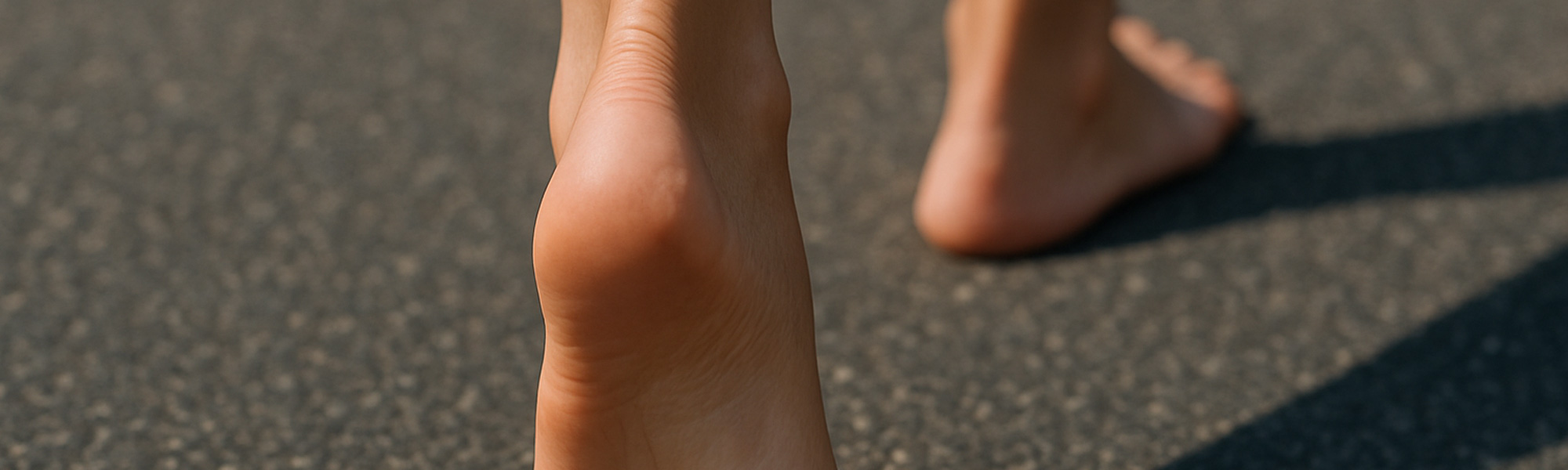
The Gold Coast is a place where barefoot living feels almost built into the landscape. Residents step outside without thinking, crossing patios between indoors and out, moving along soft grass, standing on warm paving while rinsing a driveway or wandering across a sunlit terrace before the day reaches its peak. The sensations of the ground become part of daily life. The soft warmth of timber, the coolness of early-morning concrete, the familiar give of healthy turf and the fine warmth of sand all reinforce a lifestyle that thrives on simplicity and contact with the environment.

This comfort with barefoot movement isn't accidental. It grows naturally from the region's subtropical climate and the way outdoor spaces and indoor living often blur into one another. Many homes are designed with open transitions that invite you to step outside freely. Over time, people develop an intuitive understanding of how different surfaces behave, even if they've never formally thought about it.
Yet alongside the ease of it, there's an interesting phenomenon waiting in plain sight: some surfaces remain comfortable almost all day, while others surge in heat quickly and unexpectedly. A shaded concrete pad feels pleasant long after lunch, while the exposed section only a metre away heats suddenly. Pavers beside a retaining wall grow warm earlier than the ones facing open sky. Grass remains soft and forgiving while the poolside stone flares with sharp intensity. The contrast raises a surprisingly rich question about the modern environment: why do some surfaces feel dramatically hotter than others in the same sun, at the same time?
What Human Feet Were Designed to Walk On
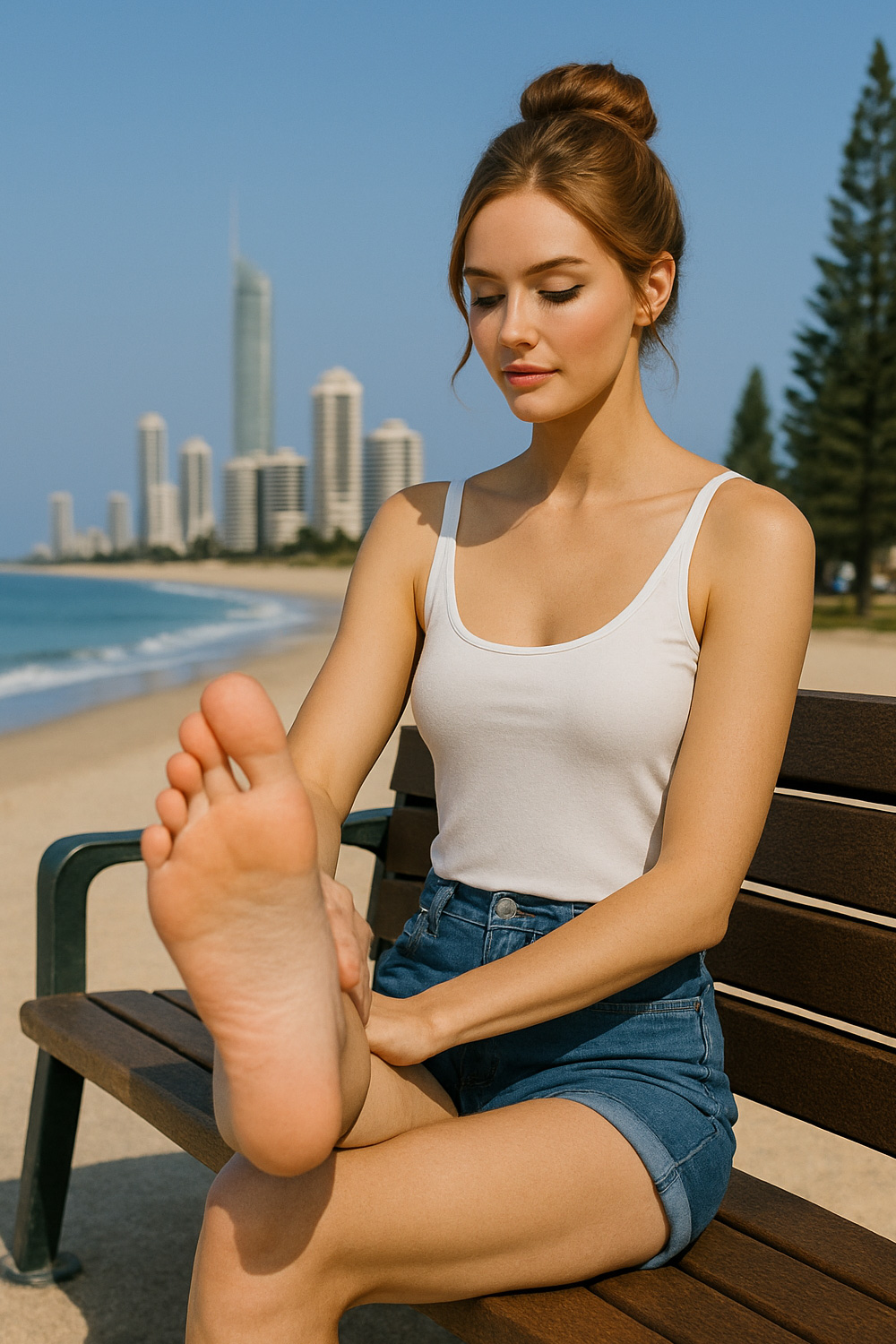
To understand this contrast, it helps to look backwards. For most of human history, people lived in environments made entirely of natural materials. They walked on earth, clay, grass, sand, leaves, roots, timber and stone. These surfaces interact with heat in gentle ways. They warm, but they rarely spike. Soil releases its heat slowly and never leaps far above the surrounding air. Grass cools itself continuously through moisture and evaporation. Stone warms unevenly, creating countless temperature variations under each step. Sand heats quickly on top but cools rapidly just below its surface, giving relief with a small shift of the foot.
With human feet, natural variations allowed constant adjustment, and nothing in those early environments behaved like the uniform, heat-intensive man-made surfaces that dominate modern suburbs. Ancient barefoot life succeeded because the ground itself prevented extremes. A person could walk all day across many environments without facing a sustained, intense patch of heat.
Why Modern Surfaces Heat So Intensely
Modern urban materials are fundamentally different. Concrete, bitumen, dark pavers, rubberised playground flooring and synthetic turf have properties that amplify heat in ways nature never produced. Many are dense, uniform and highly absorbent. Instead of releasing heat steadily, they take it in quickly, store it deeply and radiate it back with force.
A pale concrete slab may climb ten to fifteen degrees above the surrounding air on a typical Gold Coast summer day. A darker driveway or exposed paver can rise fifteen to twenty-five degrees above it. Rubber flooring and synthetic turf climb even higher, sometimes reaching temperatures that surprise people who are otherwise accustomed to warm ground. While the air may sit in the high twenties or low thirties, some modern surfaces can push well into the mid-forties or low fifties purely from sunlight. In more extreme cases, particularly with darker or plastic-based materials, readings well above this are entirely possible.
What makes these shifts fascinating is that they occur independently of how hot the day feels. Surfaces respond less to air temperature and more to sun intensity. When UV rises quickly in the morning, surfaces accelerate towards their peak long before the air reaches its warmest point. A driveway that feels mild at nine o'clock can feel startlingly hotter by eleven, even if the surrounding air has barely changed. The physics is simple: the sun's energy loads into the material faster than the ambient temperature can catch up.
How Warm Surfaces Actually Get on a Typical Gold Coast Day

The numbers behind surface warmth are surprisingly revealing once you start looking closely at them. Pale concrete that feels mild at 9 am can sit 10–15°C hotter than the surrounding air once the sun strengthens. Darker concrete and exposed pavers rise even further, often climbing 15–25°C above the day's temperature as they absorb light more aggressively. Asphalt behaves much the same, building heat quickly through the middle hours until it sits 20–30°C above whatever the air is doing. Modern outdoor materials at the softer end of the scale, such as rubber flooring or synthetic turf, push this further again because their density and colour draw in heat so rapidly. They can carry an additional 30°C or more, lifting them well above what most people expect when the surface itself looks benign.
What makes these shifts interesting is how independent they are from your sense of the weather. A day that feels warm but not extreme can still push certain surfaces into the low 40s and high 40s, purely because the sun's angle and UV intensity do more work than the air temperature ever reveals. On a 28°C day with strong sun, pale concrete might settle around 38–42°C, while darker paving stones in full exposure can drift toward 45–50°C. On a 32°C day, those same modern surfaces may ease past 50°C without effort, while grass, soil, shaded concrete and other natural textures remain only a few degrees above the air and stay comfortable.
These contrasts explain why barefoot residents instinctively move toward grass or shaded concrete during the brighter hours. The warmth beneath their feet isn't random. It's the quiet result of how different materials store and release heat through the day, creating the familiar pattern where natural ground stays welcoming while the smooth, human-made surfaces around it surge and settle according to the sun.
Why Some People Tolerate Warm Surfaces Better Than Others
One of the quiet curiosities of barefoot living is how differently people experience the same warm surface. A patio that feels gentle to one person may feel unexpectedly hot to another, even when they have both crossed it moments apart. Much of this variation comes down to the way weight, foot size and pressure shape the flow of heat into the sole. The warmth you feel underfoot is not just the temperature of the surface itself but the way your foot makes contact with it.

Lighter bodies place less pressure through each step, leaving small, natural gaps where heat transfers more slowly. Heavier bodies press the sole more firmly into the ground, closing those gaps and allowing warmth to move through the skin more quickly. Foot size adds another layer to the story. A moderate foot area spreads weight more evenly and reduces the sensation of concentrated heat, while a very large or very small foot changes that distribution in different ways. This balance explains why some people, without ever thinking about it, feel more comfortable on warm pavers or sunlit concrete.
These differences become most noticeable during the teenage years, when body weight, height and activity levels shift rapidly. Teen girls often sit at a uniquely comfortable point on this curve. Their lighter weight and moderate foot size combine to create gentle pressure and slower heat transfer, allowing them to move across warm surfaces with surprising ease. Teen boys, who gain weight earlier and more dramatically, usually feel the warmth sooner because their soles compress more firmly into the material beneath them. Adults carry the advantages of conditioning but also the additional force of greater mass, which means they sense surface temperature differently again.
What emerges from these subtleties is a simple truth: barefoot comfort is shaped as much by the body as by the surface. Each person interacts with warmth in their own way, depending on how their weight settles, how their soles meet the ground and how much pressure they naturally apply as they move. It is one of the small, fascinating details that adds depth to the Gold Coast's barefoot culture. The surface stays the same, but the experience shifts quietly from person to person, revealing how individual our connection with the ground beneath us really is.
Why Natural Surfaces Don't Behave This Way
Natural materials handle the sun differently. Grass continually cools itself through moisture and shade from its own blades. Soil carries water deep within it, moderating its temperature. Sand loses heat rapidly to the air and allows feet to shift into cooler layers beneath. Trees scatter light and create shifting pockets of shade. Even on a hot Gold Coast day, most natural ground barely rises above the surrounding air. The environment self-balances, and barefoot movement remains comfortable.
This is why modern heating behaviour feels unfamiliar to many people. Our soles weren't shaped to understand the sharp, consistent intensity of contemporary surfaces. They were shaped to read the softer, varied ground of natural environments.
The Role of Conditioning and Daily Adaptation

People who live barefoot develop a remarkable ability to sense subtle differences under their feet. Conditioning strengthens the outer layers of the sole, allowing it to tolerate warm surfaces comfortably. It doesn't change biology, but it heightens awareness. Residents who go barefoot often can tell, without looking, which parts of the patio received early sun, which sections of a path have warmed faster and which parts of a driveway will feel comfortable even as the sun intensifies.
These instincts develop quietly. A conditioned sole doesn't just feel heat differently; it interprets the story of the surface. The exact warmth, the dryness, the softness, the time a surface has been exposed and the presence of shade all register instantly. This is why barefoot Gold Coast residents quickly adapt to modern materials without thinking. They form a mental map of how their property behaves through the seasons, just as surfers learn local breaks or gardeners sense changing air.
A conditioned sole also changes in texture. For people who live barefoot year-round, the skin grows firm and slightly leathery, not in a rough or neglected way, but in a smooth, resilient way that feels almost polished. The surface becomes tight and strong while still flexible, built from constant light contact with concrete, timber, pavers and warm paths. If you ever feel the soles of someone who is always barefoot, you notice that distinctive firmness immediately. They are dry, steady and durable, shaped by daily contact with sunlit ground and warm materials. It's a kind of quiet strength that builds over time and makes warm surfaces far easier to handle.
Understanding Surface Temperature in Real Terms
The interesting part is how predictable surface temperatures can be once you connect a few factors. Air temperature and UV intensity work together to determine how quickly a surface warms. When UV climbs above ten while the air sits around twenty-eight degrees or higher, many surfaces begin reaching the kinds of temperatures you feel underfoot as sharp or uncomfortable. Pale concrete often rises ten to fifteen degrees above the air. Darker pavers and exposed paths may climb twenty degrees above it. Lightweight metals, darker plastics and rubberised flooring climb faster still. These materials store heat deeply, so even a brief period of full sun can push them towards levels that feel noticeably hotter to the touch.
None of this signals danger as much as curiosity. It simply reveals how modern outdoor spaces differ from the environments humans once lived in. When you know what drives these changes, the behaviour of your own patio, steps, driveway or walkway makes more sense. You begin to anticipate which areas will warm first, which will stay comfortable longest and which will steadily cool as the afternoon shade moves across them.
Why This Matters for a Barefoot Lifestyle
Barefoot living remains one of the Coast's quiet pleasures. Most surfaces across a home or garden never reach extremes. Natural ground stays gentle almost all year. Shaded concrete remains friendly. Timber decks cool quickly. Beach sand cools as fast as it heats, especially near the waterline. The places that stand out are the distinctly modern ones - the level, sun-drenched slabs, the dark paving stones, the synthetic lawn beside a wall, the rubber flooring in a playground.
Paying attention to these patterns doesn't change the lifestyle. It enriches it. When you walk barefoot regularly, you start to notice how different surfaces hold or release heat, how moisture influences temperature, how cloud cover softens the ground within minutes and how a single patch of shade transforms the feel of a path. You sense the day not just by the warmth of the air but by the character of the ground beneath you.
A Subtle Piece of Gold Coast Knowledge
Ultimately, the Gold Coast's barefoot culture thrives because the environment supports it naturally. The gentle warmth of early morning concrete, the cool comfort of lawns, the forgiving nature of sand and the shaded relief offered by garden beds keep barefoot living effortless. The hotter, sharper moments aren't warnings. They're simply reminders that a modern suburb behaves differently from a natural landscape. They offer an insight into how sun, materials and daily patterns interact.
For many residents, understanding this adds a quiet layer of appreciation. You become more attuned to the surfaces that feel welcoming, the ones that warm quickly and the way the sun traces through your yard over the course of a day. It's an observation that connects you more closely to your surroundings and deepens the simple enjoyment of moving through your home and garden barefoot. In a region shaped by sunlight, water and outdoor living, that awareness becomes part of the pleasure - a small, grounded understanding of how the modern world meets the ancient habit of walking with bare feet on the earth.
This article explores the way different outdoor surfaces warm in the sun and how people experience those changes through normal barefoot movement. The information is general in nature and intended for interest only. It does not provide safety guidance, personal advice or recommendations. Individual comfort levels can vary, and readers should use their own judgement in their everyday activities.
You might also like




Disclaimer: Every effort has been made to ensure the accuracy of the information provided, but we make no guarantees regarding its completeness or reliability. The data is presented for general informational purposes only and does not constitute financial, investment, or legal advice. We are not liable for any errors, omissions, or consequences arising from its use. Users should verify details with relevant sources and seek professional advice where appropriate for the most accurate and up-to-date guidance.