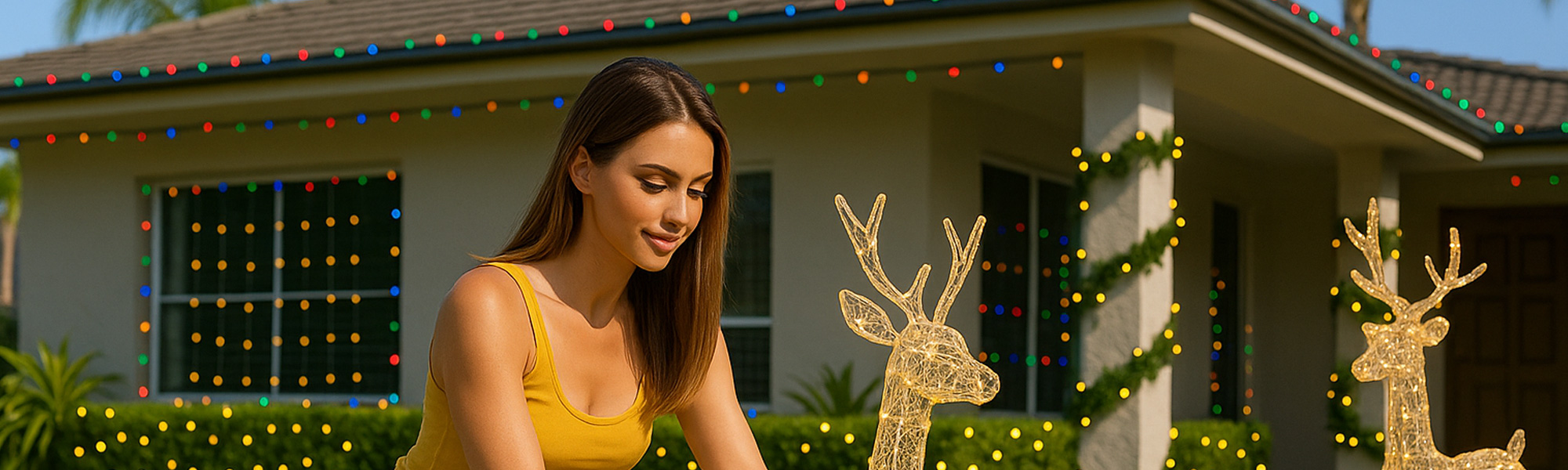
Every year, as the weather warms and the holiday season approaches, homes across the country begin to shift their attention outside. The moment the first string of Christmas lights appears on a fence, balcony or roofline, the whole neighbourhood takes on a certain sense of anticipation. For many households the ritual feels both creative and reassuring. It draws people outdoors, encourages families to plan together and adds a soft glow to the landscape after sunset. Yet there is far more to outdoor Christmas lighting than clipping a few strands along the gutter. A truly successful display is shaped by planning, safety, practicality and the realities of everyday life. It is not only about visual impact but also about how that impact fits into the flow of the home.
The planning phase begins long before the lights are switched on for the first time. Most people start by simply picturing their home at dusk. The soft edges of the roofline, the garden's height and density, the location of power points and the way the yard is used during the season all play a role. A display in a compact yard behaves differently from one in an open, breezy space. Paths, front lawns, garden beds and driveways all have different access needs. The best way to settle on a design is to walk the property just before sunset. There is enough natural light to see the shape of every surface, yet dim enough to imagine how the lights will glow. During that walk it becomes clear which areas are naturally suited to lighting and which might cause problems later.
Some homes have a striking feature that automatically becomes the anchor of a display. A tall palm can become a glowing spine of vertical light. A balustrade can become a consistent line of colour. A hedge can carry gentle net lights without overwhelming the garden. Instead of forcing lights onto every surface, a smarter approach is to identify the elements of the property that already hold structure and balance, then enhance only those. A restrained display often looks more artistic and more luxurious than an overcrowded one. It also leaves space for daily movement and maintenance.
Balancing Creativity With Real-World Practicality
Outdoor Christmas lights are not like indoor decorations. They live in the weather, endure breezes, compete with irrigation and need to survive for weeks. They also need to coexist with everyday activities like mowing, edging, bin night, deliveries, pets running around and children playing on the lawn. Many households overlook these simple realities until it is too late. Once the decorations are up, people discover the mower cannot reach the grass beneath the inflatable, or the dog keeps getting wrapped in the extension lead. These problems are avoidable with a little forethought.
Before placing anything on the grass it helps to imagine the yard as a working space. Mowing usually follows a predictable path. If that path is blocked by stakes or ornaments, the entire mowing routine is forced into awkward detours. The simplest fix is to leave corridors clear. A narrow, unbroken strip of grass is enough for both a mower and an edger to pass through without disruption. That corridor can be against a fence, through the middle of the lawn or around the perimeter. The location does not matter as long as it exists.
Garden beds can carry more decoration than lawns because they do not need mowing. This makes them ideal for low-lying features like small trees wrapped in fairylights or ground stakes arranged in patterns. Placing inflatables in beds also helps protect them from mower blades. It can even reduce wear because the soil is softer and less abrasive. The trick is to keep cables raised above moist soil wherever possible. Using small brick pavers or low plastic cable lifts keeps connections dry and free from dirt.
Driveways pose another challenge. If a home receives regular deliveries during December, placing large decorations too close to the driveway can create obstacles for vehicles. Cars entering at night rely on predictable clearances. A decoration that seems well positioned during the day can become hazardous after sunset. The solution is to stand at the street and imagine a car's turning circle. If any decoration intrudes on that mental path, it should be moved a little further back.
Understanding Power, Weatherproofing and Electrical Loads
Electricity is the quiet backbone of every Christmas display. The entire design relies on safe, stable power, and yet electrical issues remain the most common cause of problems. Outdoor lights must be rated for exterior use. Their packaging will state this clearly. Anything designed for indoor use should never be placed outside because indoor lights rarely have the insulation or connector quality needed to resist moisture. Even a tiny crack can become a risk after a surprise shower or after dew settles overnight.
Weatherproof outlets are crucial. A standard outlet inside the house or garage is safe, but any outlet exposed to the weather must have a protective cover. These covers shield the connection from rain, irrigation overspray and wind-driven moisture. They also prevent insects from entering the outlets. If a cover has turned brittle over the years, replacing it before the lights go up is a wise step.
Extension leads require equal caution. Leads rated for indoor use are not suitable for the yard. Outdoor leads have thicker jackets and tougher plugs. They can withstand more friction and sunlight. Routing leads along the edges of garden beds, behind shrubs or along walls keeps them out of walking paths. Where they must cross open ground, securing them with soft garden stakes reduces tripping hazards and prevents the mower from accidentally slicing them. It is also important to check how many lights are plugged into each outlet. Manufacturers list the maximum number of strands that can be safely connected end-to-end. Staying within those limits prevents overheating.
Working Safely at Height
One of the most overlooked aspects of Christmas decorating is ladder safety. The excitement of building a display often leads people to rush, yet a ladder on soft soil or uneven ground can shift unexpectedly. The ladder must always be placed on firm, level ground. If the soil is loose or damp, placing a flat timber board under the ladder feet creates stability. When climbing, hands should stay free. Carrying coils of lights while ascending increases the chance of imbalance. The safer approach is to climb first and have someone pass the lights up once properly positioned.
Working along a gutter line requires slow, measured movements. Gutters are not designed to bear weight, so leaning on them should be avoided. Using purpose-made clips that slide under the gutter lip prevents damage and makes the lighting removal easier in January. If the gutter is high, re-positioning the ladder regularly rather than leaning sideways keeps the centre of gravity stable. Decorating should never happen during wind gusts, even mild ones, because they can affect balance.
Managing Weather, Moisture and Heat
Weather is unpredictable during the holiday season. Sudden showers, long humid nights, unexpected heat spikes and evening breezes all affect outdoor lighting. A display that looks perfect on a still evening might not survive a gusty night without preparation. Securing each strand at multiple points prevents sagging and reduces strain on the connectors. Plants that sway naturally in the wind should never carry tightly wrapped lights. Giving the strands a little slack protects them from being stretched.
Moisture is the bigger issue. Dew forms heavily during December, coating everything in a thin layer of water. If lights are placed too close to the ground, dew can seep into connections. Raising connectors off the soil by a few centimetres eliminates most moisture issues. For larger displays that run near sprinklers, it is worth adjusting irrigation timers for the duration of the season so the sprinklers do not spray directly onto electronics. If the sprinklers cannot be adjusted, decorations should be positioned outside the spray radius.
Heat affects decorations differently. Some net lights warm as they operate, which is normal, but inflatables can soften in strong sunlight. Anchoring them securely ensures they keep their shape even as their material flexes. Any decoration with a built-in motor, such as inflatables or rotating projectors, needs shade during the hottest part of the afternoon. This protects the internal components and extends their lifespan.
Designing a Display That Enhances the Home, Not Just the Season
A beautiful display begins with the home's architecture. Good lighting highlights what is already appealing. Rooflines look elegant with even spacing and consistent colours. Warm white lights soften the hard edges of the home and create a nostalgic feel, while cooler colours can add sparkle. Trees with distinctive branch patterns become focal points when given gentle illumination. Houses with modern lines benefit from understated, symmetrical lighting. Traditional homes with verandahs look best when the edges of the verandah are traced neatly.
Pathways benefit from subtle lighting rather than intense lines. Too much brightness along a path can overpower the house and create glare. Instead, soft lights near the ground anchor the design and create a welcoming guide toward the door. If the garden includes feature plants like agaves, cycads or large ferns, a single spotlight with a warm tone can transform them into living sculptures.
Some families enjoy themed displays. A coastal home might lean into soft blues and sandy tones. A tropical home might use green and gold lights on tall palms. A home with young children might include festive characters, while a couple who prefers an elegant aesthetic might limit themselves to warm whites and a single standout feature. The theme does not need to be strict, but it helps unify the design.
Making Room for Daily Life, Deliveries and Guests
Outdoor Christmas lighting lives alongside a busy season. Deliveries increase, visitors arrive unexpectedly and children play outdoors more often. A display must function within that activity. If decorations block the typical walking route from the driveway to the front door, people will end up cutting through garden beds or stepping over cables to reach the entrance. Creating intentional walkways through the display makes the home feel both festive and accessible.
On bin night, wheelie bins need space to be moved from the side of the house to the curb. A narrow gap between decorations, perhaps the width of a bin plus a few fingers, prevents scrapes and avoids accidental tipping. If decorations are placed near the bin path, securing them with heavier bases or pegs helps keep them upright when the bin passes.
Pets also behave differently during the season. Dogs may become curious about brightly lit objects or tangled in cords if the display is set too low. Raising lights higher or using garden edges as cable channels keeps everything out of reach.
Creating Safe Sightlines for Neighbours and the Street
Lights are meant to be shared visually with the neighbourhood, but they should not create glare or discomfort. Floodlights aimed too high can illuminate the neighbour's windows or reflected glare onto the street. Angling them downward softens the effect. Flashing or strobing lights should be used sparingly because they can be distracting for nearby homes and passing drivers. A timer helps regulate brightness and ensures the lights switch off at consistently reasonable hours.
Sophisticated homeowners often adjust their displays carefully during the first week. Walking across the street at night and observing the home from a distance reveals how the display reads in context. A small adjustment to a strand or a shift of an ornament by a few centimetres can improve balance and symmetry. This small nightly refinement often turns a good display into a beautiful one.
Caring for Plants, Lawns and Surfaces While the Display Is Up
Plants under lights can become stressed if heat builds or if lights restrict growth. Loose draping avoids compressing soft tips. Trees with thin bark or new growth should be treated gently. For vines and climbing plants, avoid using clips that pierce or pinch stems.
Lawns can also suffer if decorations remain in one place for the entire month. Heavy inflatables placed on grass for weeks may create flattened patches by January. Rotating them slightly every few days distributes the weight. Using lightweight bases under them helps preserve grass health.
Surfaces such as painted timber or rendered walls need careful handling. Adhesive hooks can peel paint if removed abruptly, so soaking them with warm water in the new year helps them release cleanly. Gutter clips should not be overtightened. A gentle approach ensures the home emerges from the festive season unmarked.
Storing Decorations Properly Once the Season Ends
A successful Christmas lighting experience does not end when the lights switch off for the last time. Storing the decorations correctly ensures the next season begins smoothly. Coiling lights gently around a reel or inside their original packaging keeps the wiring intact. If the strands are wound tightly, they can kink and weaken the copper inside. Storing each type of light in a separate container prevents tangling.
Recording how the display was arranged can be enormously helpful. A simple phone photo of each area, taken before the lights come down, becomes a reference point for next year. It saves hours of rethinking and allows the display to evolve naturally.
Before packing lights away, checking for any moisture or dirt prevents mould and deterioration. Letting them air dry indoors for a day ensures no hidden moisture remains. Motors in inflatables should be unplugged and stored in dry places, ideally inside their original boxes.
A Display That Lives Comfortably With the Home
The most memorable outdoor Christmas displays are not the largest or the brightest. They are the ones that work gracefully within the rhythm of everyday life. They glow each evening without blocking access to anything important. They enhance the home without overwhelming it. They treat safety, maintenance and beauty as equal priorities. When a display is shaped with this mindset, it becomes something more than decoration. It becomes a seasonal expression of care for both the property and the people who share it.
Outdoor Christmas lighting offers a chance to create something momentarily magical. With a thoughtful approach, the display becomes effortless to manage, safe to maintain and easy to enjoy. The glow each night feels natural, the yard remains functional, and the home steps confidently into the season, illuminated in a way that suits the way your household truly lives.
You might also like




Disclaimer: Every effort has been made to ensure the accuracy of the information provided, but we make no guarantees regarding its completeness or reliability. The data is presented for general informational purposes only and does not constitute financial, investment, or legal advice. We are not liable for any errors, omissions, or consequences arising from its use. Users should verify details with relevant sources and seek professional advice where appropriate for the most accurate and up-to-date guidance.