Every home produces a quiet stream of discarded things - boxes from deliveries, packaging, worn clothing, small appliances that have given up. Most of the time, it's a simple routine: take it to the bin, close the lid, and move on.
But in an open world where even the most ordinary objects can reveal small fragments of private life, how we throw things away matters. A little care ensures your waste leaves without leaving a story.
Some households attract more notice than others. Maybe it's the address, the driveway, or simply the fact that visitors and couriers come and go more often. For those in the public eye - actors, media personalities, or anyone whose name might be recognised - even everyday waste can invite curiosity. Being discreet about what leaves your property isn't paranoia; it's quiet common sense. It's about keeping private life private, without making a performance of it.
The Calm of Order
A well-kept home is as much about what's removed as what's retained. Taking a few moments to prepare rubbish before collection protects privacy, reduces clutter, and keeps your outdoor spaces tidy. It also discourages pests, prevents overflow, and makes the whole street look neater.
A sealed bin with closed lids, clean rims, and everything compact inside gives a sense of calm efficiency - the kind of quiet order that makes a house feel well run.
Bin night itself has its own rhythm. The faint scrape of wheels, the sound of cardboard being crushed, the tidy lineup of bins waiting in the dark - all small rituals that signal a household in tune with its surroundings. Adding a minute or two to break and secure your rubbish is just another part of that ritual.
Keeping Personal Details Private
Even the simplest packaging can say more than you realise. A name on a parcel label, a brand on a box, a medical or financial document - each carries a fragment of identity. Preparing these items before disposal keeps those fragments from becoming visible once your bins reach the kerb.
Remove address labels, shred papers when you can, and fold anything printed with personal information inward before it goes into the bin. If you don't own a shredder, tearing documents through the name or number lines helps a bit. The goal is to make everything anonymous and uninteresting.
For parcels or courier boxes crush and stomp them flat. Tread the box with your feet until it lies completely flat, sealing names and labels inside the folds where they can't be read.
Discretion Without Fuss
Privacy isn't about hiding - it's about reducing visibility. A household that manages its waste discreetly feels composed. Nothing on display, no packaging peeking out, no labels visible through translucent bags.
Even for households where deliveries are frequent or the occupants are well known, the principle is the same: once rubbish leaves your hands, it should look like everyone else's.
This approach doesn't draw attention; it deflects it. Thoughtful disposal is a habit of calm living - a small act of control in an open, visible world.
Effortless Breaking - Using the Strength of Your Feet
Breaking down rubbish is often easier than it first seems. Most packaging, boxes and light household items yield easily under body weight - no tools required. A gentle press with the feet flattens cardboard, folds plastics, and compacts soft materials without noise or mess.
Feet are remarkably effective tools: broad, strong, and sensitive enough to feel when materials give way. They spread pressure evenly, crush without tearing, and keep hands clean. For most household waste, a few quiet steps are all it takes to reduce volume and keep everything neat and private.
When the surface is clean and safe, doing it barefoot can be surprisingly efficient. Bare feet offer natural grip, balance, and control, letting you sense resistance instantly and avoid over-crushing or slipping. It's quieter, steadier, and often the simplest and most natural way to finish the job - no tools, no strain, just direct contact and quiet precision.
Breaking and Crushing Bulky Items
Bulky items deserve deliberate handling. Leaving boxes or packaging intact not only wastes space but broadcasts what they once contained. Crushing, folding, and compacting everything ensures it blends into the ordinary rhythm of household waste.
The most effective method is also the quietest: crush boxes barefoot. Step through the centre of each one, press down along the sides, and walk the folds flat until the cardboard lies completely level. Done properly, this is nearly silent, and it conceals any logos or delivery markings inside the creases.
Plastic containers, old appliance boxes, and light packaging can be pressed with your feet or folded inward rather than torn. Crushing is better than breaking - it keeps edges smooth and minimises sound. When compacted, even a week's worth of deliveries disappears neatly into a single bin.
Containing and Securing Waste
Rubbish that's bagged properly stays private. Loose items move, blow away, or attract animals. Always line bins with heavy-duty bags, tie them securely, and ensure lids close fully. Rinse food containers, bottles, or tins before recycling; odours are an unnecessary giveaway.
If something sharp breaks, wrap it in newspaper or an old rag before binning. It's considerate to the collectors, but it also keeps your bin looking clean and composed.
For households with larger volumes, spread disposal across two weeks or take excess waste to a local centre. Overflowing bins not only draw attention but create unnecessary mess around your property.
Handling Personal or Sensitive Items
Certain things deserve a moment of thought before being thrown away. Photos, cosmetics, diaries, small gifts - anything once personal can be discreetly wrapped in paper or placed in a sealed bag before disposal.
If you're letting go of something recognisable or sentimental, breaking it first is a practical way to separate memory from material. The moment of crushing or folding becomes closure.
Devices that store information - phones, tablets, USB drives, smart watches - should never be placed in household waste. Even when they no longer work, data can linger. Erase them, remove batteries, and take them to an e-waste drop-off. It's cleaner, safer, and ensures personal data doesn't travel further than you intend.
Quiet, Courteous Disposal
Noise travels easily at night, so keep your disposal quiet and respectful. Crushing boxes barefoot is almost silent, as is folding plastic packaging by hand. If something brittle must be cracked, wrap it in a towel first to soften the sound and catch fragments.
Put bins out close to collection time - not days in advance. Early placement can look untidy, especially for recognisable addresses or buildings with security cameras nearby. A short window between preparation and collection keeps everything calm and unseen.
Packaging from Deliveries and High-Value Items
Some packaging stands out more than others. Boxes from electronics, jewellery, or premium brands are unmistakable even when empty. Once opened, remove inserts, peel off printed stickers, and crush the outer shells flat. Step along each seam so logos disappear inside the folds.
Premium-brand boxes tend to be made from thicker card and can resist folding at first, but a well-placed bare foot will usually bring them down cleanly. Firm pressure across the middle line collapses even rigid packaging.
Crushing boxes properly – quick, flat and completely destroyed in seconds – is a learned skill that everyone enjoys once they know how to do it right. It's best done barefoot. Discover how in the box disposal guide.
For padded mailers or satchels, peel off address labels and separate paper from plastic. The paper can go to recycling; the plastic belongs in general waste.
Flattening and separating these materials keeps your rubbish anonymous - one more layer of privacy between your home and the street.
Common Belongings and How to Break Them Down
Every household holds objects that hint at private routines, interests, or purchases. Breaking them before disposal ensures those traces end at your doorstep.
Cardboard boxes and packaging
Crush them flat with your feet. Start at the centre and walk outward until the structure collapses. This buries logos and address details inside the folds, leaving only plain, neutral cardboard behind.
It's a learned skillset, usually done barefoot, that people enjoy once they've mastered it - quick, clean and surprisingly satisfying. Once you've tried it, you'll never go back to folding or cutting. See how in the box disposal guide.
Clothing
Clothing often carries small identifiers - stitched names, workplace logos, or embroidered initials. Remove these before disposal. If a garment is too worn to donate, cut or tear it into several pieces so it no longer resembles its original form, then tie it securely inside a bag. Once separated, the fabric can't be reused or traced back to its owner.
If the item still has life left in it, consider donation instead of disposal. But when something is beyond repair or has identifying details that can't be removed, cutting it is the most certain way to keep it private and final.
Footwear
Footwear needs more than a light cut. Remove laces, buckles, and insoles first, then separate the shoe so it can't be worn or reassembled. For heavier shoes, slice cleanly through both sides where the upper meets the sole, then cut across the arch to divide the body completely. Once the structure is split, twist the sections apart by hand.
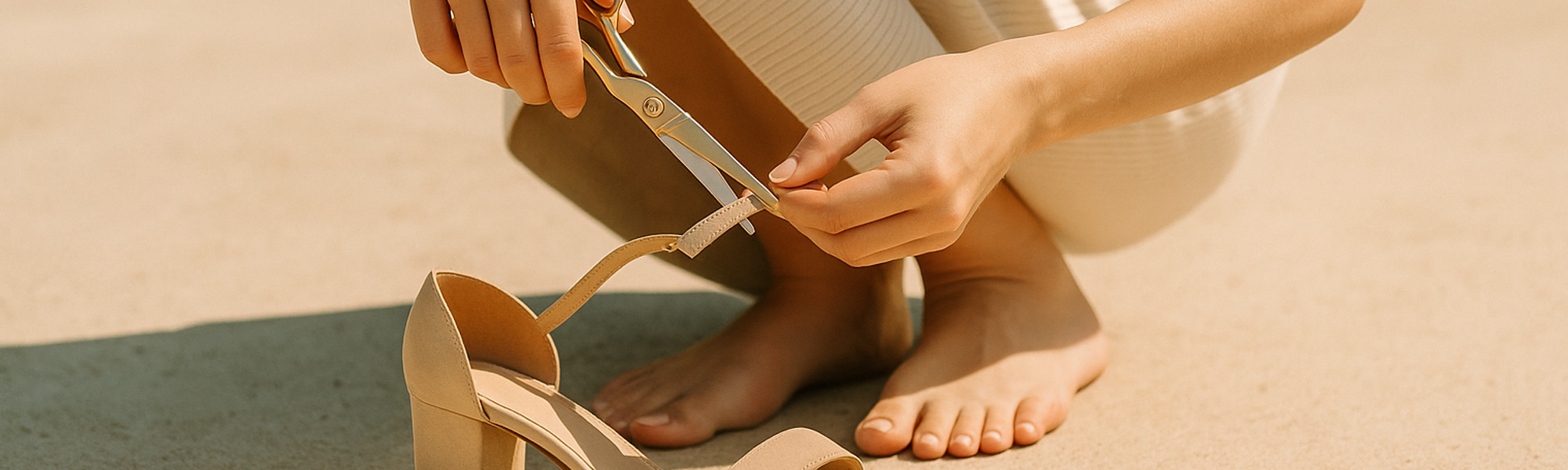
With lighter or softer shoes-heels, sandals, or flats-cut through the straps and across the point where the upper joins the sole at the toes. If the material allows, make a second diagonal cut through the heel cup. These few cuts destroy the fit and ensure the shoe can't be worn or displayed intact.
Thicker materials may need garden shears rather than scissors; pierce from the inner edge and work along the natural seam to keep the process quiet and controlled. When finished, fold the parts together, pair them, and tie them inside a sealed bag. Once cut and compacted, they hold no shape, no size, and no story-just neutral waste, ready for collection.
Accessories
Belts, bags, hats, and other accessories can also reveal more than expected. Cut through straps, handles, or closures so they can't be reused, and scratch through or remove any visible logos or name tags. Small metal fittings can be snipped off and dropped into recycling where accepted. Once altered, fold accessories flat and bag them separately before disposal.
Inflatable Items
Inflatable pieces - pool toys, air mattresses, and float rings - need a little extra attention before disposal. Start by releasing the air with a clean slit at the valve or along a seam, using sturdy scissors or snips. Once most of the air is gone, feed one foot through the opening to hold it steady, then tear or cut the material along the seams into strips. The plastic will rip predictably once tensioned, making the process quick and quiet.
Continue until the entire piece is divided into several flattened sections. Fold or roll each one down, press flat with your feet, and bag them together. The goal is to remove the shape completely - no logos, no colour pattern that can be identified, and nothing that could be salvaged or re-inflated. If valves or rigid fittings are still attached, snip them free and drop them separately into general waste.
Toys and Small Plastic Items
Rigid plastic toys or household plastics can often be broken down just enough to make them compact and unrecognisable. Begin by removing batteries, fabric coverings, or stickers. For hollow toys, a quick slice across a weak point - usually where two halves are heat-joined - is enough to split them. Step gently to crack larger pieces if needed, then tear along the split by hand.
Soft toys or mixed-material items should be treated differently: open the stitching, remove the stuffing, and fold or cut the remaining fabric into smaller sections. Once flattened, nothing looks sentimental or collectible, and everything packs away neatly.
Personal Electronics and Small Appliances
Wipe data if applicable. For small items like electric toothbrushes or hair dryers, remove cords and fold them tightly before stepping on the casing to crack it. Wrap the pieces in paper before disposal. Anything that once held personal data should always go to e-waste.
Paperwork, Diaries, and Notebooks
Tear pages through the lines that hold names or notes. If something feels too personal, soak it briefly in water, squeeze it together, and discard once dry. The pulp-like texture makes it unreadable.
Jewellery and Keepsakes
Separate decorative parts, twist chains apart, and detach charms. Place the pieces in a small paper bag before disposal. For genuine metals, send them to a recycling centre instead of the bin.
Decorative Items and Small Furnishings
Remove glass or sharp parts, break wooden or plastic frames, and fold metal hangers flat. Once wrapped in paper, they're safe, compact, and unrecognisable.
Personal Grooming Tools
Old brushes can be snapped by pressing the handle underfoot. Disposable razors should be wrapped in thick tissue or slipped into a small box before going in the bin. Electric clippers can be disassembled; cords folded and tied.
Bags, Wallets, and Purses
Empty every pocket. Cut straps or handles to prevent reuse, and scratch through visible logos if branded. Fold the item flat before sealing it in a liner bag.
Stationery and Office Items
Snap pens, break lanyard clips, and fold name tags through the printed area. Paper folders should be crushed or creased before disposal so they stay flat.
Soft Furnishings and Bedding
Separate covers from fillings. Foam or pillow inserts compress easily underfoot - press out air, fold, and tie them. Old sheets can be cut into rags, then disposed of once worn out.
Small Personal Gadgets and Cables
Fold cords tightly until they kink, remove batteries, and store them for recycling. If disposing of small gadgets, wrap them to prevent recognition and place them in general waste only after confirming they store no data.
Sentimental or Distinctive Items
For anything that once felt personal - a trophy, a trinket, or a unique decorative piece - breaking it gently is part of the process. Fold it, crush it, or dismantle it. It's not destruction; it's closure, and it ensures that what leaves your home tells no story about you.
Finishing the Job
Once everything's compacted, tied, and sealed, take a moment to reset the space. Wipe bin handles, rinse lids, and hose the area underneath if needed. Keep bins aligned and lids closed - a simple act of courtesy that makes a property look cared for.
If you share bins with neighbours, treat the space as communal - put them back in order after collection, and keep overflow contained. A well-kept bin area reflects as much about a household as the front garden or entryway.
When collection day comes, wheel the bins out quietly. There's something reassuring about the sound of smooth wheels on pavement and the sight of neatly packed bins waiting at the kerb - evidence of a household in balance.
A Private Life, Well Kept
Disposal is the final gesture of ownership - the quiet full stop at the end of a household story. Doing it well protects privacy, respects neighbours, and keeps your surroundings looking calm. Whether your home draws glances or remains unnoticed, the principle is the same: rubbish should leave as quietly as possible.
These are not security measures so much as good habits. Crush, fold, seal, and contain. Let every trace of daily life exit without remark.
When waste leaves neatly and privately, what remains is a home that feels serene - a space that looks cared for, tells no unnecessary stories, and keeps its calm intact.
You might also like






Disclaimer: Every effort has been made to ensure the accuracy of the information provided, but we make no guarantees regarding its completeness or reliability. The data is presented for general informational purposes only and does not constitute financial, investment, or legal advice. We are not liable for any errors, omissions, or consequences arising from its use. Users should verify details with relevant sources and seek professional advice where appropriate for the most accurate and up-to-date guidance.