Bin night is one of those weekly routines every household shares, yet the way each person handles their bins has a surprisingly large impact on how tidy, organised and pleasant a neighbourhood feels. Good bin etiquette isn’t complicated, but it does rely on a few simple habits that make life easier for everyone who shares the same street. From timing to placement to dealing with that last cardboard box at the end of the day, these quiet routines help keep verges clear, collection mornings smooth and neighbourhoods calm and orderly.
Putting Bins Out at the Right Time
Most councils recommend placing bins out the evening before collection, rather than much earlier. Setting them out too soon means they sit by the kerb for longer than necessary, often through heat, wind, pets, and passing traffic. Bins left out days ahead can drift, topple or spread litter if the weather changes suddenly.
Putting them out the evening before strikes the right balance. It ensures the bins are ready for the truck, but they’re not cluttering the street for days beforehand. It also keeps verges clear during the day when people are walking, cycling, exercising pets, or using driveways more frequently.
Placement: Keeping Footpaths Clear and Safe
Where you place your bins matters just as much as when you place them. A bin that blocks a footpath forces people to step onto the road, which can be unsafe in both daylight and darkness. Place each bin neatly on the kerb with the lid facing the road and the handles facing your house, leaving enough space between bins for the truck’s mechanical arm.
If your street has limited parking or narrower verges, take an extra moment to place your bin in a way that keeps footpaths fully passable. A small adjustment of half a metre can be the difference between a safe walkway and an obstacle course for prams, mobility aids or early-morning walkers.
Keeping Bins Out of Driveways and High-Traffic Spots
Shared driveways, narrow pedestrian areas and points where cars reverse should always remain clear. It only takes a little thought to position your bins so they aren’t sitting exactly where someone needs to enter or exit. This courtesy makes late-evening arrivals, early-morning departures and general street movement smoother and less frustrating.
Bringing Bins In Promptly After Collection
Once the truck has collected your rubbish and recycling, bring the bins back in as soon as practical. Bins left out for extended periods make a street look messy, and they can be knocked over or moved by wind and passing vehicles. Returning them sooner rather than later restores the clear, open feel of the verge and signals that your home is well maintained.
Prompt bin return also keeps the footpath tidy for neighbours and avoids having bins drift into driveways throughout the day.
Managing Overflow and Last-Minute Cardboard
Recycling weeks often bring a bit of last-minute pressure. Deliveries, packaging, old storage boxes and surprise clear-outs can quickly fill the yellow bin. Whenever possible, flatten all cardboard properly to maximise space. A well-crushed box takes up a fraction of the volume of an unflattened one, and it prevents the lid from being propped open.
If your bin is full, crush what you can and keep the remaining cardboard aside until after collection and refill once it has been emptied. This keeps the street clean, avoids loose paper escaping during windy moments and ensures your bins are lifted properly by the truck.
Night-Time Courtesy: Flattening Boxes Quietly
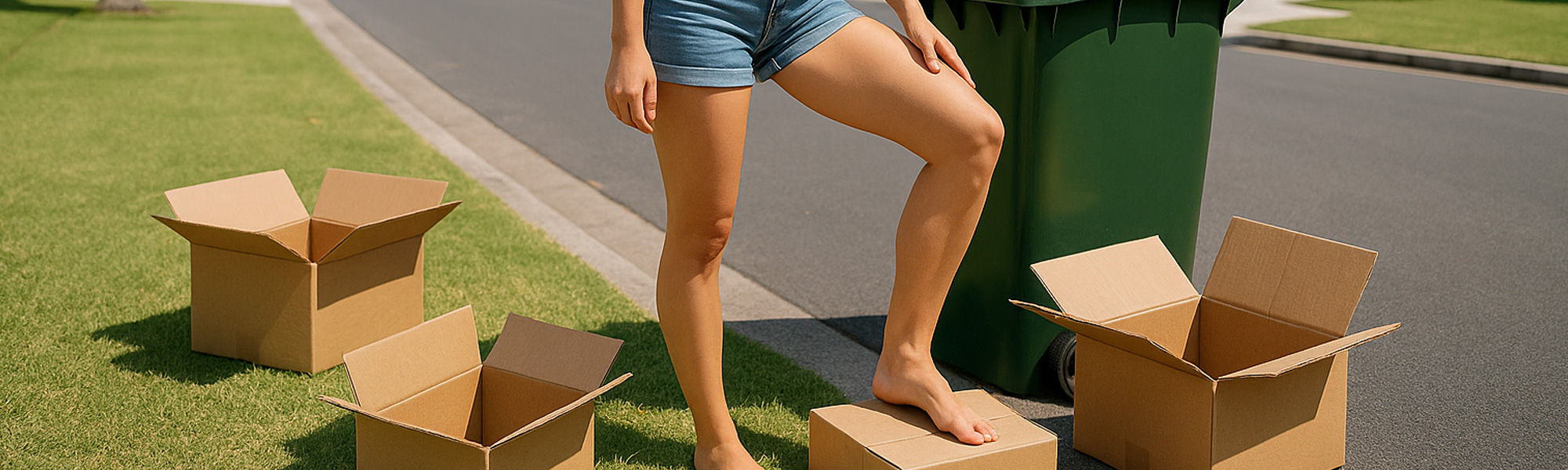
When crushing any last minute boxes at night, a quieter approach works best. Instead of stomping a box down with quick, sharp impacts, tread it gently instead. Late at night those sudden thuds carry far further, and the noise can easily disturb neighbours. Slow steady treads with your feet gives the cardboard enough force to fold and collapse, but without the loud crack that happens when all the pressure is delivered at once.
If the surface under you is echoey, placing the box on a patch of grass can help soften the sound while you flatten it. The idea is simple: the box still needs to be compressed properly, but the method should suit the quiet of the hour.
Keeping Lids Closed and Waste Contained
A closed lid is more than tidy; it prevents rubbish from blowing out during the night or during the truck’s lift. Light items such as paper, mailers, thin plastic and loose packaging can easily escape if they’re sitting near the top of an open bin. Tuck lighter materials underneath heavier ones where possible to keep everything secure.
Being Considerate With Parking on Collection Day
If your street has curb-side parking, consider the truck’s access when placing your car. Leaving a metre of space beside bins gives the mechanical arm enough room to lift without needing to manoeuvre awkwardly around vehicles. This small courtesy ensures every bin is collected and avoids near-misses between the truck and parked cars.
Why These Small Habits Matter
Good bin etiquette helps create a cleaner, safer and more pleasant street — not just for you, but for everyone in your neighbourhood. When bins are placed neatly, returned promptly, and handled with a little consideration, it prevents avoidable mess, keeps pathways unobstructed and keeps the weekly routine smooth and predictable.
These small actions build the overall feel of a street. A tidy verge, an uncluttered footpath and a quiet late-night recycling moment can make the difference between a street that feels chaotic and one that feels looked after.
You might also like






Disclaimer: Every effort has been made to ensure the accuracy of the information provided, but we make no guarantees regarding its completeness or reliability. The data is presented for general informational purposes only and does not constitute financial, investment, or legal advice. We are not liable for any errors, omissions, or consequences arising from its use. Users should verify details with relevant sources and seek professional advice where appropriate for the most accurate and up-to-date guidance.