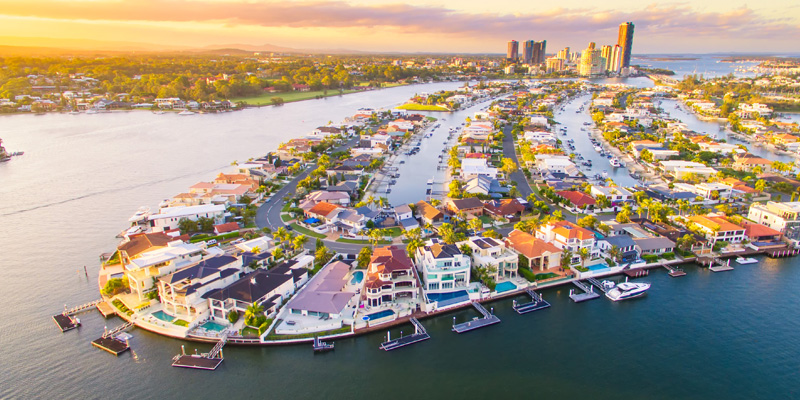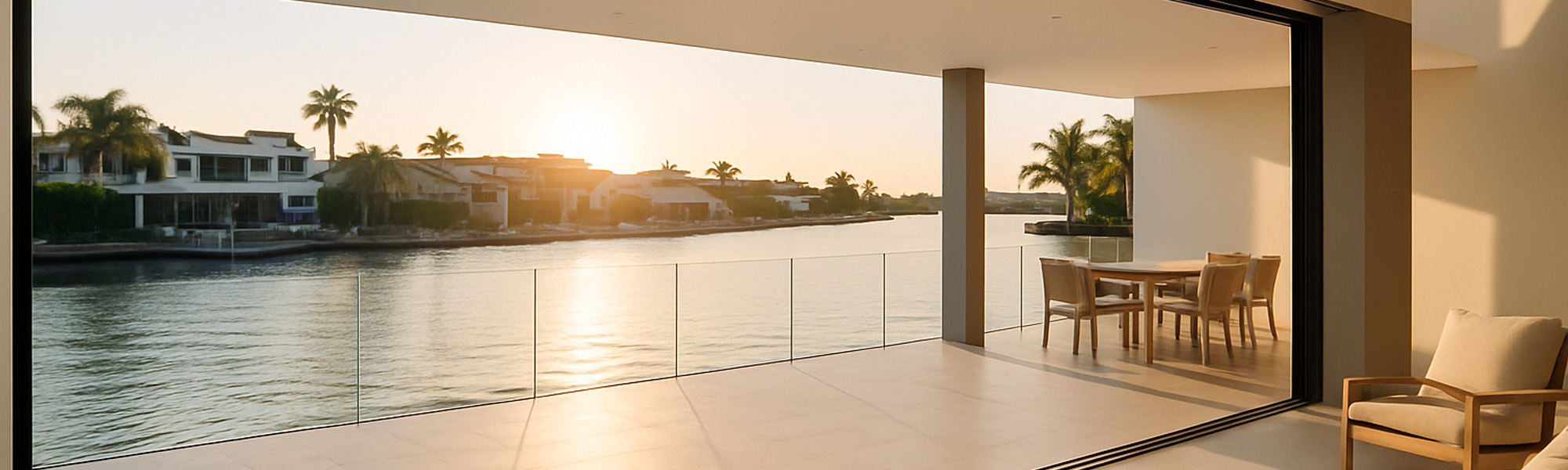
For decades, the Gold Coast's waterfront market behaved like a constellation of shifting stars. Big sales flared, prestige homes traded hands with a glamorous frequency, and canal suburbs felt like the natural playground for ambitious upgraders and interstate buyers who wanted sunlight, modern lines and the promise of life beside the water. Yet something more subtle is happening now, something that feels both quieter and more permanent. The waterfront lifestyle that once enticed people to move in is now encouraging them to stay. Across the city, from the deep canals of Mermaid Waters to the glittering stretches of Sovereign Islands, long-held blocks are transitioning into true forever homes.
Where Emotion Shapes the Market
Part of this shift is emotional. The Gold Coast's coastal rhythm gets under people's skin in a way that data never quite captures. The early light moving across a deck. A breeze coming off the canal. The kind of barefoot familiarity that develops when a home fits so well that it becomes part of a family's daily identity. Owners speak about it almost unconsciously. They talk about how the house opens to the water in late afternoon, how their children grew up leaping from the pontoon, how summer days feel softer when the tide is close by. When people live like that for long enough, the idea of selling becomes less tempting every year.
A More Mature Market
Another part of the shift is structural. The city has matured, and the waterfront market has matured with it. The older cycle of buy, renovate, hold for a few years and then trade up has slowed. Prestige owners who once turned properties over for sport are now staying put, pouring their budget into large-scale improvements instead of planning their next move. It is common to see original 80s houses quietly upgraded into sculptural expanses of concrete, stone and glass. High ceilings replace low beams. Outdoor kitchens replace enclosed patios. Pools are reshaped to face the view. And once such a transformation is complete, owners find themselves emotionally and financially tied to the place they have just perfected.
Middle-Market Waterways Settling In
The mid-tier waterfront suburbs are feeling it too. Mermaid Waters, Burleigh Waters and Palm Beach waterways were once reliable hunting grounds for families looking for their next step up. These were the suburbs that people said were easy to come into and easy to leave. Not anymore. Owners who bought ten or fifteen years ago at approachable prices now find themselves holding incredibly valuable land. Instead of cashing out and shifting suburbs, many choose to stay and reinvest. They prefer to extend, rebuild or modernise the home they already know rather than face a market that has surged beyond anything they imagined when they first moved in.
Prestige Blocks Becoming Legacy Homes
At the top end of town, the prestige waterfront has changed temperament entirely. A handful of headline sales still grab the nation's attention, yet beneath that spectacle lies a quieter truth. Buyers who secure prized blocks in places like Isle of Capri, Sorrento, Paradise Waters and Sovereign Islands often talk about legacy. They speak of creating spaces that endure. Multi-generational living is becoming an unspoken ambition. Architects on the Gold Coast say the new brief is not a fast lifestyle trophy but a coastal sanctuary meant to hold decades of family life. Owners want rooms that adapt over time, guest spaces for grown children, private retreats for aging parents and outdoor areas that stay functional through humidity, storms and long summers of uninterrupted use.
The Economics of Staying Put
Interest rates and construction costs have played their part. When building or buying becomes expensive, people think in longer arcs. If you are going to spend heavily, you want permanence. And so owners stay anchored, treating their block as the long-term foundation for every future chapter. Renovations become more thoughtful. Flooring choices are guided by humidity and the brightness of local light. Gardens shift toward tropical resilience. Pontoons are rebuilt with a view to decades of tidal movement. Even small daily rituals become part of the investment story. Walking barefoot across cool interior tiles. Stepping out onto a timber deck in summer. Knowing exactly how the breeze hits the house at three in the afternoon in January. These tiny experiences settle people into their homes more deeply than they realise.
Lifestyle That Anchors You In Place
The Gold Coast has quietly perfected its own brand of lifestyle magnetism. The waterfront suburbs around the central strip have evolved into some of the most lived-in pockets of the city. Streets feel calmer. Residents know each other. Families return from mornings in the water and leave sandy footprints at the back door without a second thought. The city's culture is casual, sunlit and deeply physical, and waterfront blocks act like a natural amplifier of that energy. Once someone has tasted it, any thought of relocating to a suburb without water frontage feels like a compromise.
Interstate Buyers Who End Up Staying for Life
Buyers from interstate are reinforcing the same pattern. Many originally planned short stints on the Coast and expected to rotate into different homes as their life changed. Instead they discover the depth of the lifestyle and stay. They do not want to climb a property ladder. They want roots. The waterfront delivers that sense of place better than almost any other setting in Queensland. For young families, it offers a stable environment in which children can grow. For downsizers, it offers a calm horizon and a slower rhythm. For prestige buyers, it offers a canvas on which to build the kind of home that becomes part of family memory.
Tight Supply Reinforces Long-Term Ownership
From a market perspective, the effect is remarkable. Fewer waterfront sellers means tighter supply. Tighter supply means more competitive buying, and more competitive buying feeds the idea that if you secure a block, you hold onto it. Even the statistics support the shift. On-market days for premium waterfront homes have become unpredictable, not because they fail to attract interest, but because so few owners list them unless life circumstances force the change. Agents talk about entire canals where nothing sells for years because the residents have quietly decided they are staying indefinitely.
The New Definition of Waterfront Living
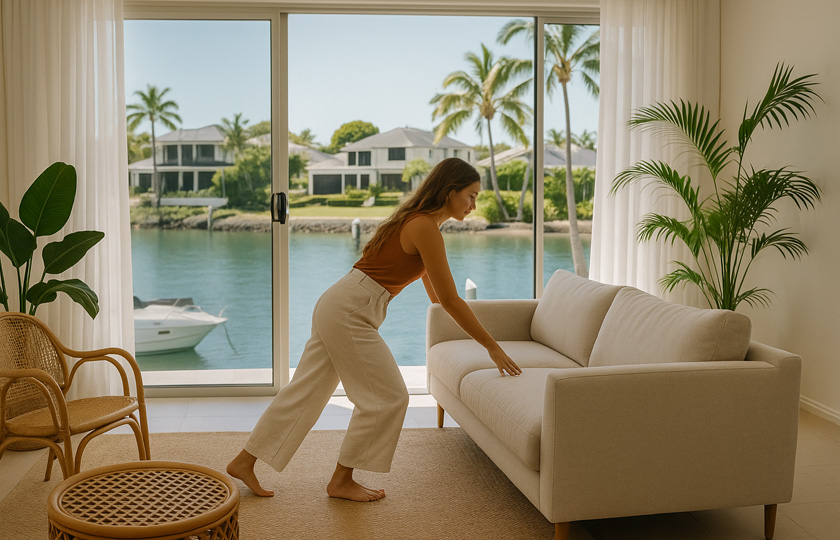
The change is cultural too. A generation ago, the Gold Coast was seen as transient. People came for a period and moved on. Today the Coast is a place people choose for life. The waterfront suburbs speak directly to that desire for continuity. They offer open sky, water movement, privacy and a type of easy outdoor living that is difficult to replicate elsewhere in the country. Once people settle into it, once they get used to stepping from the living room out to the water with no shoes, once they understand how the house becomes its own small universe of light, space and calm, letting go becomes almost unthinkable.
A Market Built on Permanence
In the end, that is what defines the new era of Gold Coast waterfront living. It is not just the architecture or the rising land values or the premium that water frontage commands. It is the way the lifestyle becomes woven into daily life. The quiet routines. The softness of the climate. The feeling of being anchored to a place that makes ordinary days feel easier. The waterfront is not simply a part of the market anymore. It is the emotional heart of the city. And for more and more owners, it is where they intend to stay for good.
You might also like




Disclaimer: Every effort has been made to ensure the accuracy of the information provided, but we make no guarantees regarding its completeness or reliability. The data is presented for general informational purposes only and does not constitute financial, investment, or legal advice. We are not liable for any errors, omissions, or consequences arising from its use. Users should verify details with relevant sources and seek professional advice where appropriate for the most accurate and up-to-date guidance.