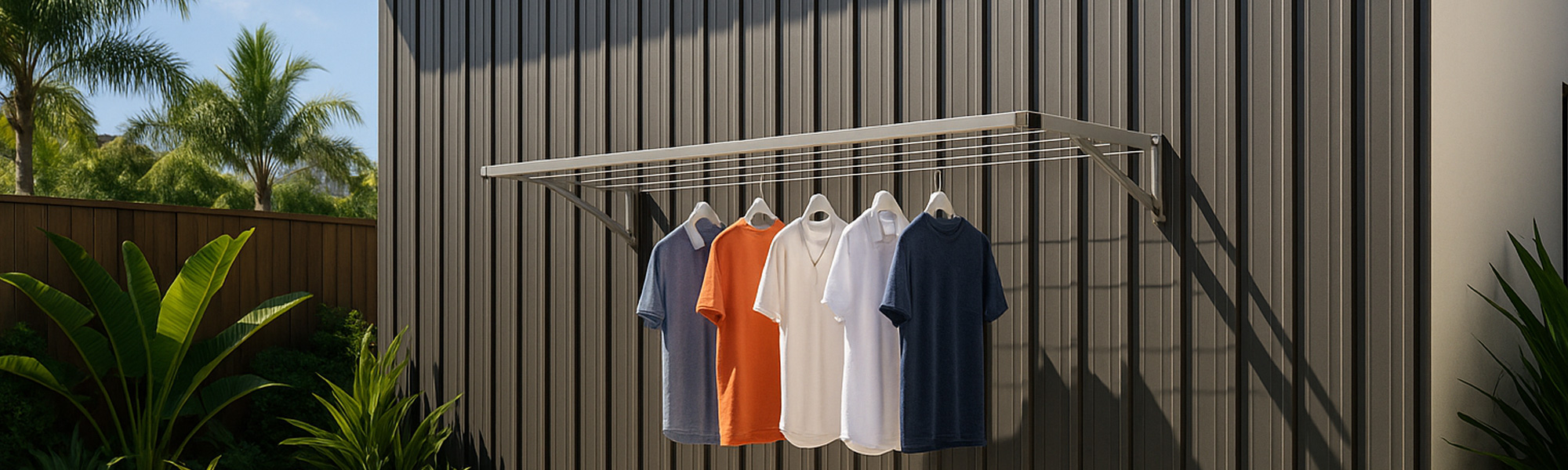
You've picked the kitchen splashback, the bathroom tiles, even the bin enclosure - but what about the washing line?
It's one of the most used fixtures in any home, yet rarely part of the design conversation. On the Gold Coast, with our salt air, humidity, and year-round sunshine, its position can make the difference between clothes that dry crisp and fresh - or damp clothes that take ages to dry!
The trick is balancing function, privacy, and aesthetics. Whether you're designing from scratch or retrofitting a tight backyard, there's always a smarter way to make this simple element feel like it belongs.
Sun, Shade, and Orientation
Chase morning sun, dodge the afternoon glare
North and east-facing walls or courtyards are ideal. The morning sun is strong enough to dry, without the punishing UV of late afternoon that can fade fabrics. Avoid full western exposure unless you have partial shade - a lightweight shade sail or pergola louvre can soften the heat while keeping air circulation high.
Avoid constant shade
Lines tucked behind tall fences or overshadowed by large palms never fully dry laundry, especially in winter. Damp air lingers, and mildew loves it. If you must use a shaded area, choose a line with wide spacing between cords to help airflow, and dry towels first when the day's warmest.
Wind is your friend - to a point
Gentle cross-breezes dry faster than direct sunlight alone. But exposed hilltop positions or canal-front gusts can whip sheets into next door's yard. A partial barrier (screen fence, low hedge) gives the best of both worlds.
Accessibility
Chose an area that's accessible from the laundry. And think of the surface you'll walk on too. Gravel might ordinarily feel good under your feet, but concrete makes it easy to traverse while carrying a heavy washing basket. And remember you might inevitably find yourself running outside to quickly get the washing down before a Gold Coast afternoon summer storm rolls in - you don't want anything that could become a tripping hazard.
Space, Style, and Type
Today's design options range from full retractables to sleek fold-downs that disappear when not in use.
- Wall-mounted fold-downs: Great for courtyards, narrow sides of houses, or apartment balconies. Mount them at adult shoulder height for comfortable reach, and allow at least a metre of clearance in front when folded down.
- Rotary lines: The old classic - perfect for big families or anyone who loves a good sheet day. They need about a 4 m radius of clear ground.
- Retractable lines: Ideal for courtyards that double as entertaining areas. When guests arrive, they simply vanish into a neat wall box.
- Under-deck or covered patio setups: These work well in our subtropical climate if there's strong side ventilation. Make sure heat from the roof doesn't trap humidity.
Tip: Stainless or UV-stabilised components handle the coast's salt air better than powder-coated steel alone.
Privacy and Placement
No one wants their clothes fluttering next to the outdoor dining table. Yet total concealment can make drying inefficient.
Try these practical compromises:
- Screen smartly. Use decorative panels, bamboo screens, or planter boxes to hide the line from entertaining areas.
- Keep it near the laundry door. Every extra step means heavier baskets, more drips, and less likelihood of line use.
- Avoid planting over it. That frangipani looks beautiful - until it drops sticky flowers on your sheets.
- Think of the neighbours. On compact Gold Coast blocks, be mindful of sightlines from upper balconies or across fences.
Designing for Wet Weather
In paradise, storms roll through fast. A small covered drying zone can be a game-changer: a roofed deck edge, carport nook, or outdoor utility space that allows you to hang a load undercover when the forecast changes. Use retractables here too, so it doesn't feel like a laundry annex.
If you're renovating, run a floor drain in that area. You'll thank yourself every wet summer.
Energy, Lifestyle, and Smart Choices
With rising power prices and sustainability top-of-mind, the humble line has regained its crown.
A few extra details elevate it from necessity to lifestyle feature:
- Dual system: Combine a line for main drying and an indoor drying rail (near the laundry ceiling or utility area) for finishing damp items.
- Lighting: Subtle LED wall lights mean you can hang or collect after dark.
- Paving or decking underfoot: Standing barefoot on clean, dry ground makes the chore pleasant.
- Colour coordination: Neutral frames blend into rendered walls, while dark tones disappear against timber fences.
For Tight or High-End Spaces
For canal or poolside homes, integrate a laundry court behind a screen wall. It can include a fold-down line, an outdoor sink, and concealed storage for pegs and detergents. Use matching materials to the main façade, so it feels intentional, not an afterthought.
Apartment dwellers can mount slim retractables above balcony balustrades or install indoor ceiling pulleys that drop down when needed - a nod to traditional European efficiency. Just remember to get permission from your Body Corporate first, before commencing any installation work at all.
Practical Details Worth Getting Right
Here's some practical tips for installing and using your line:
- Height: For most adults, 1.7-1.8 m line height works well.
- Spacing: Allow airflow between parallel lines - at least 10 cm apart.
- Peg choice: Marine-grade stainless or UV plastic outlast cheap clips that crack in months.
- Ground slope: Ensure runoff, not puddling beneath the line.
- Access path: Keep it clear of hoses, garden tools, or pool equipment.
The Verdict
The washing line might never make the glossy pages of a property brochure, but it's a genuine test of good design. It's where climate, comfort, and everyday rhythm meet. Get it right, and you'll never think about it again - except when you catch that unmistakable scent of sun-dried linen drifting through the house.
You might also like

Disclaimer: Every effort has been made to ensure the accuracy of the information provided, but we make no guarantees regarding its completeness or reliability. The data is presented for general informational purposes only and does not constitute financial, investment, or legal advice. We are not liable for any errors, omissions, or consequences arising from its use. Users should verify details with relevant sources and seek professional advice where appropriate for the most accurate and up-to-date guidance.