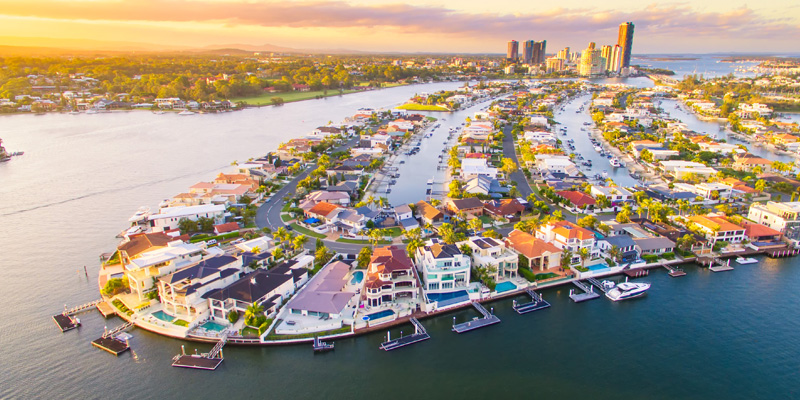
There are cities where people talk about the weather, cities where they talk about real estate, and then there is the Gold Coast, where people quietly wonder why everyone looks so stunningly beautiful. It's an impression that lands fast. You step onto a beachfront path and see runners who look ready for a fitness campaign. You stop for coffee and notice faces with that relaxed, sunlit sheen usually reserved for holiday brochures. Even in ordinary errands, the people around you appear exceptionally polished, healthy and confident.

It leaves visitors asking the question they pretend is casual but always mean sincerely: why does everyone here look so good?
Locals ask it too, usually with a quiet smile because they've heard it before. The city's reputation has become almost folklore, repeated often enough that it has taken on a life of its own.
But what if there really is something to it? What if the Gold Coast doesn't just feel more beautiful but actually produces the conditions that elevate the way people look? Beauty, after all, isn't random. Researchers have spent decades studying the cues humans pick up instinctively, and the Gold Coast aligns with those cues far more closely than most places.
What follows is the science and sociology behind why one Australian city stands out so dramatically in the national imagination.
What Scientists Actually Look For When Studying Beauty
Attractiveness isn't measured in magazine covers or social media likes. Studies consistently point to a key group of indicators that humans respond to across cultures: subtle signs of health, vitality, balance and ease in the way people move and hold themselves.
Researchers may disagree on cultural ideals, but they consistently find a small cluster of physical cues that humans respond to almost universally. Clear skin, balanced facial structure, symmetry, visible vitality and healthy, confident posture all tend to score higher in controlled attractiveness studies. These traits aren't about perfection or fashion. They're simple biological signals that the brain recognises instantly as indicators of health and energy.
When you examine the Gold Coast through this scientific filter, the city's reputation quickly stops sounding like flattery and starts sounding like environmental influence.
Scientists are careful to point out that these markers don't create beauty. They act more like shortcuts in the way humans process faces and bodies. They guide perception long before conscious judgement begins. When a community lives in conditions that naturally reinforce these cues, observers experience the entire population as more attractive, even though no individual is being altered or idealised.
Climate as an Invisible Beauty Engine
The Gold Coast's climate doesn't just shape its beaches. It shapes its people.
Sunlight encourages outdoor movement year-round. Swimming, walking, surfing, cycling and simply being outside produce bodies that move well, stand upright and carry a relaxed physical confidence. Posture is one of the most powerful subconscious signals humans respond to, and coastal activity improves it without anyone thinking about it.
Sunlight also lifts mood. Vitamin D plays a role in emotional regulation, and people who feel good naturally display micro-expressions of warmth and energy. Even a slight lift in mood across thousands of people creates a city that looks more vibrant.
Warm weather shapes clothing too. Light, fitted, minimal garments make people more aware of grooming. Skin is cared for more consistently. Hair is maintained. People look ready for the day because the climate invites constant visibility.
This is where the Gold Coast becomes especially compelling. The city's lifestyle strengthens these instinctive cues with unusual consistency. Bright sunlight, constant outdoor activity, water-based fitness and a culture that values grooming and movement all work together to amplify the very signals humans are wired to interpret as attractive. The Gold Coast doesn't manufacture beauty. It intensifies the subtle indicators that already shape the way we see one another.
A Culture Built on Visibility
The Gold Coast is a place where people are seen. Life unfolds on beaches, boardwalks, promenades, outdoor dining areas and open public spaces. There's nowhere to hide under heavy winter clothing or months indoors, so grooming becomes routine rather than effort.
Sociologists call this normative mirroring. When people around you take care of themselves, you naturally match them. Over time, the whole city steps up together. Standards rise not out of vanity, but out of shared lifestyle habits.
This is why a quick walk through a busy Gold Coast precinct can feel like moving through a curated photoshoot. You're seeing the outcome of decades of collective behaviour shaped by climate, visibility and culture.
How the Gold Coast's Barefoot Culture Enhances Perceived Attractiveness

Barefoot living is one of the Gold Coast's most distinctive quirks, and it quietly plays a role in how attractive people appear here. The effect is subtle but consistent. When someone is barefoot, their posture changes. Balance shifts downward, stabiliser muscles engage and the body moves with a more natural, fluid gait. It's the kind of relaxed physicality that humans instinctively associate with youthfulness and confidence. Even a small adjustment in how someone walks or stands can influence how others perceive them.
Bare feet also signal ease. In most cities, being barefoot in public feels out of place, almost like breaking a rule. On the Gold Coast, it simply says the person is comfortable, relaxed and fully at home in their environment. Confidence is one of the strongest non-verbal components of attractiveness, and nothing communicates effortless confidence quite like moving through the day without shoes in a place where it feels natural to do so.
There's also an aesthetic simplicity to it. Shoes add bulk and visual noise. Bare feet strip that away and draw attention to the natural lines and proportions of the body. This works particularly well in a coastal setting, where the surrounding cues already suggest health, sunshine and outdoor activity. The moment someone is barefoot, they appear more connected to that lifestyle, and that sense of alignment with place makes them look even better.
More than anything, barefoot culture reinforces the Gold Coast's identity as a city of freedom, warmth and easy movement. People look more attractive not because being barefoot is inherently beautiful, but because it fits the environment so perfectly. It completes the picture of the coastal lifestyle, and observers respond to that picture instinctively.
Demographics That Amplify the Effect
The Gold Coast doesn't just encourage a certain look - it attracts it. Industries like tourism, sport, hospitality, performing arts, beauty and fitness draw people who already invest in their appearance. Many move here for work aligned with presentation, or for a lifestyle where activity and self-care are normal.
This produces a youthful, energetic demographic centre. It doesn't mean older ages aren't present or valued. It simply means that the visible concentration of active, polished individuals is higher than in most Australian cities.
Once a city becomes known for this aesthetic, it becomes self-selecting. People who resonate with the image gravitate here, reinforcing the reputation from within.
Wellness, Stress and the Appearance of Vitality
One of the strongest scientific predictors of attractiveness isn't facial structure at all - it's wellbeing. Better sleep, lower stress and consistent physical activity make an immediate difference to skin clarity, posture, expression and movement.
Coastal living supports exactly these conditions. Many residents report sleeping better, feeling calmer and being more active after moving to the Gold Coast. When wellness becomes part of a city's default behaviour, attractiveness rises as a side effect.
The Gold Coast isn't creating beauty artificially. It's allowing natural signs of health to flourish.
Why Beauty Clusters in Certain Places
Humans rarely evaluate attractiveness individually. We evaluate it in context. When a group contains several visually appealing people, every member of that group is rated more attractively - a well-documented phenomenon called the cluster effect.
Beaches, gyms, nightlife districts and waterfront social spaces gather physically active, groomed and confident people in one place. Visitors walking through these hotspots often assume the entire city looks like that, when in reality they're seeing concentrated clusters of lifestyle-aligned individuals.
It's the same cognitive pattern that makes a university campus appear uniformly young. You are seeing a cluster, not a census.
A Self-Sustaining Aesthetic Identity
Beauty doesn't just exist - it attracts. Once a reputation forms, it draws people who see themselves as part of that identity. This creates a reinforcing cycle. The population becomes more aligned with the stereotype, which amplifies the stereotype, which then attracts even more people who match it.
The Gold Coast is deep into this cycle. Fitness culture is established. Grooming standards are high. Outdoor living is the norm. The city projects an aspirational lifestyle and the people who live here often choose, consciously or not, to embody it.
So Does the Gold Coast Actually Have More Attractive People?
Scientifically, there is no metric that can quantify beauty the way you quantify rainfall or census data. But scientifically, you can identify environmental and social conditions that elevate perceived attractiveness - and the Gold Coast has an unusually high concentration of them.
Sunlight, movement, visibility, wellness, grooming culture, demographic clustering and self-reinforcing identity all combine to create a city that looks and feels unusually polished, vibrant and photogenic.
It isn't illusion. It's environment.
A Final Note on Confidence
Confidence is one of the strongest signals humans respond to, and confidence thrives where lifestyle supports wellbeing. On the Gold Coast, people move through their day with an ease shaped by weather, water, sunlight and social culture. They look like they feel good, and that's what observers notice most.
The Gold Coast doesn't simply have beauty. It elevates it. And that, perhaps more than anything else, explains the city's enduring allure.
You might also like






Disclaimer: Every effort has been made to ensure the accuracy of the information provided, but we make no guarantees regarding its completeness or reliability. The data is presented for general informational purposes only and does not constitute financial, investment, or legal advice. We are not liable for any errors, omissions, or consequences arising from its use. Users should verify details with relevant sources and seek professional advice where appropriate for the most accurate and up-to-date guidance.