A beautiful lawn forms through dozens of small actions carried out with quiet consistency. The height of the mower. The sharpness of the blades. The health of the soil. The way the edges are cut. The timing of watering. The choice of mower. The willingness to pay attention to what the lawn is trying to say before it deteriorates.
On the Gold Coast, lawns have every opportunity to thrive. Warm weather encourages growth for most of the year. Rain arrives in big, generous bursts. Sunlight is steady and strong. But these same conditions can just as easily work against you. Too much heat, too much rain or the wrong kind of cut can set a lawn back weeks. The separation between ordinary and stunning is not about effort; it is about technique.
A good lawn does more than fill a yard. It becomes part of the architecture of the house. It frames garden beds, sharpens the façade, softens the brightness of concrete and ties together everything else in the landscaping. When a Gold Coast lawn is healthy, even and edged with precision, the whole property feels elevated the moment someone steps out of the car. It is one of the simplest ways to make a home feel cared for.
The Bedrock Decision: Getting Mowing Height Right
Mowing height is the single most important, most misunderstood part of lawn care. Most homeowners cut too low. They assume a shorter cut buys them extra days before the next mow. In reality, cutting low exposes the crown of the grass, heats the soil, stresses the plant and invites weeds into the gaps.
Buffalo lawns respond best to a higher cut. Their broad leaf structure creates a soft, velvety surface only when they keep enough leaf to protect their own moisture. When cut too low, buffalo quickly shows pale thatch, brown scalping marks and uneven density.
Couch lawns have a finer texture and can tolerate slightly lower heights, but the manicured look homeowners want only comes when the leaf is long enough to maintain colour. Very low couch cuts demand professional-level frequency. Without that commitment the lawn becomes patchy and dull.
Zoysia, with its slow upward growth, looks its best when maintained between the tightness of couch and the plushness of buffalo. It thickens horizontally rather than vertically, so allowing a little extra leaf dramatically improves its colour and softness.
A raised mower height is the quickest visible improvement any homeowner can make. The lawn immediately appears deeper, more even and richer in colour. Bare patches fill in, roots grow deeper and the surface knits together in a way that looks far more deliberate.
How Mowing Height Quietly Controls Weeds
Weeds need sunlight to germinate. When the lawn is too short, light reaches the soil and weed seeds take the opportunity. Many homeowners assume they need chemicals to stay ahead of weeds, but a taller, stronger lawn prevents most of them by design. Shade from the leaf canopy blocks germination and the dense root network outcompetes anything that tries to establish. Persistent species still require intervention, but the bulk of weed problems disappear simply by raising the cut.
Soil Health: The Layer That Decides Everything Above It
A lawn cannot thrive on tired soil, no matter how perfectly it is mowed or watered. Gold Coast soil varies dramatically. Newer canal-side estates often sit on sandy fill that drains too quickly, leaving lawns hungry within days of fertilising. Older inland suburbs can develop thick, heavy soil that compacts and prevents water from penetrating deeply.
When soil is poor, lawns show uneven colour, shallow rooting, fast drying and slow recovery from heat. Homeowners often think they have a watering problem when they actually have a soil problem.
A light top-dress with a sand-organic blend once or twice a year slowly transforms the soil profile. Sand opens heavier sections, allowing air and water to move freely. Organic matter improves moisture retention in sandy areas and feeds microbial life that strengthens root systems. Over time the lawn becomes more resilient, more consistent and more capable of handling seasonal stress without fading.
Thatch: Why Too Much of a Good Thing Becomes a Problem
Warm-season lawns build thatch naturally through the year. A little thatch creates softness and resilience, but when the layer becomes too thick it prevents water and fertiliser from reaching the soil. Grass begins to brown at the tips, new runners struggle to penetrate through the old layer, and watering becomes ineffective.
Gold Coast humidity accelerates this process. Moisture lingers in the thatch during summer nights, creating a breeding ground for disease. During dry spells, the same layer repels water and stops it reaching the roots.
A gentle dethatch at the right time of year, usually in early spring when the lawn is ready to grow, clears the pathway for water and nutrients again. The lawn often recovers within weeks, regaining colour and density that homeowners forgot it could produce.
Choosing the Right Mower: Why It Shapes the Look More Than You Think
Rotary mowers dominate Gold Coast households. They use a horizontal spinning blade that chops grass efficiently and tolerates bumps, dips and uneven soil. With a sharp blade, they produce a clean enough cut for most lawns, making them reliable and practical.
Reel mowers work differently. Their cylindrical blade assembly creates a scissor-like action that slices each leaf cleanly from the top. This produces a noticeably finer, sharper finish. On couch and zoysia, reel mowers bring out a manicured, carpet-like appearance that rotary mowers cannot replicate. But reel mowers need a level lawn and more frequent cutting, which makes them better for enthusiasts.
Battery mowers have evolved quickly. High-torque motors and improved battery chemistry now allow them to cut as cleanly as many petrol models, while being lighter, quieter and easier to store. Because they are more pleasant to use, homeowners often mow more frequently, which naturally improves lawn quality.
In the end, sharp blades matter more than mower type. A dull blade tears grass fibres rather than cutting them. Torn fibres brown at the tips, dulling the appearance of the entire yard. A blade sharpening is often the most cost-effective lawn improvement any homeowner can make.
Edging: The Detail That Takes a Lawn From Neat to Exceptional
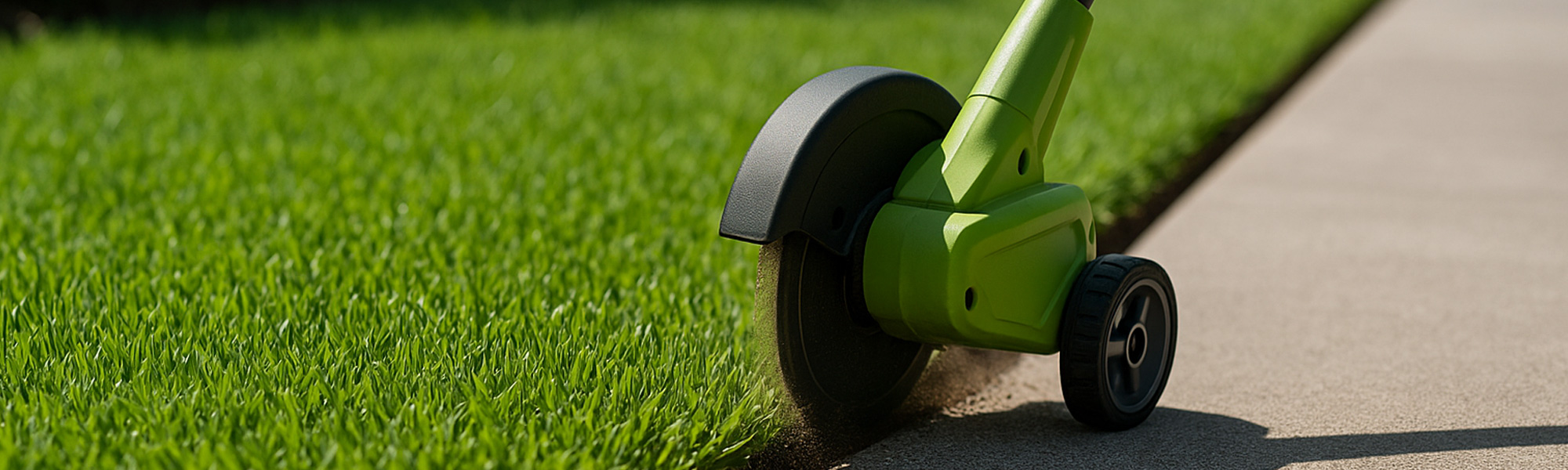
A lawn can be evenly cut and healthy yet still look unfinished if the edges are soft. Edging is the fine detail that separates a tidy yard from a standout one. A proper edger creates a crisp, vertical boundary between the lawn and the hard surfaces around it. Paths, driveways and pavers suddenly look intentional rather than incidental.
Whipper snippers are versatile, but they cannot produce the sculpted edge a dedicated edger delivers. On the Gold Coast, where many front yards include sandstone borders, wide driveways, curved garden beds or canal-side retaining edges, the clarity of a defined line changes the entire presence of the yard. Even a simple mow looks professional once the edges are clean.
Watering: Predictability, Not Quantity
Most homeowners water incorrectly not because they don't water enough, but because they water unpredictably. Lawns respond best when the soil receives deep but infrequent watering. This encourages roots to travel downward to seek moisture where the soil stays cooler and more stable. Shallow, frequent watering keeps roots weak and close to the surface, leaving the lawn vulnerable to heat stress.
Gold Coast humidity complicates things further. During summer, overnight moisture lingers on the leaf, making the lawn more vulnerable to fungal issues. Early morning watering solves this by allowing the grass to dry naturally through the day.
In winter, lawns need far less water than most people expect. Overwatering during cooler months often causes mossy patches, uneven colour and unnecessary softness.
Managing Drainage Through the Wet Season
Few Australian regions see the same dramatic rainfall swings as the Gold Coast. A lawn can go from dry and dormant to saturated within hours. When water lingers in the soil too long, roots lose access to oxygen and begin to weaken. The surface softens, colour fades and recovery slows.
Light aeration before the wet season helps water enter and escape the soil more evenly. In yards with persistent low points, raising the area slightly with coarse sand blended with organic matter improves drainage without altering the look of the yard. These small adjustments keep the lawn strong even during the heaviest summer storms.
Feeding the Lawn: Light, Regular and Measured
Fertiliser works best when applied in smaller amounts more frequently. Big, infrequent doses cause sudden flushes of growth that look impressive for a week and then fade, leaving uneven patches. Slow-release fertilisers maintain steady colour and density across the whole surface.
Gold Coast storms can wash nutrients out of the soil quickly, which is why a light fertilising every couple of months works so well. Buffalo lawns respond particularly strongly to this style of feeding, often showing deeper colour within days.
Shade, Patchiness and Traffic Patterns
Almost every lawn has problem spots. Shaded areas thin out because they receive less sun than the rest of the yard. High-traffic corners become compacted and lose their softness. Instead of forcing the entire lawn into the same routine, adjusting for these differences makes the whole yard appear uniform.
Raising the mowing height slightly in shaded zones gives the grass more leaf area to capture what light it can. Aerating compacted corners lets water and air reach the roots again. A thin top-dress over low or uneven areas levels the surface and helps runners reconnect.
Pets, Wear Marks and Gentle Recovery
Homes with dogs inevitably show patterns over time. Running tracks form along fences. Favourite resting spots thin out. Corners near gates become compacted. Recovery takes patience, and it works best through strengthening rather than replacing.
Cutting slightly higher in these areas protects the crown from repeated wear. Aeration loosens the soil, allowing roots to regain depth. A little extra watering during the recovery phase helps the grass push new runners outward until the worn section blends back into the broader lawn.
Gold Coast Microclimate Realities
Gold Coast lawns deal with conditions that other regions rarely face. Salt air from the coast dries leaf tips faster. Afternoon heat radiating from concrete driveways can scorch the grass immediately beside them. Humidity brings fungal pressure in summer, while dry westerlies quickly pull moisture from the top layer of soil.
Because of this, edges beside concrete and pavers should be left slightly higher, not lower. Lawns in canal communities benefit from deeper watering after salty winds. And shaded yards in hinterland streets often need less water but more aeration because the air sits still for longer.
Understanding these microclimates allows homeowners to tailor their routine rather than relying on generic advice.
The Finishing Touches That Complete the Look
After mowing and edging, the final detail lies in the presentation. Clearing debris from driveways, stepping stones and paths creates a crisp, uninterrupted frame around the lawn. A clean edge beside a clean concrete line makes the entire yard look professionally tended. It is a small ritual that adds more visual impact than almost any other step.
The Look of a Lawn That Truly Stands Out
When mowing height, blade sharpness, soil health, edging, watering, feeding, microclimate awareness and seasonal care all work together, a lawn changes from something maintained to something designed. It develops depth, colour and consistency. It complements the home rather than competing with it. On the Gold Coast, where street presentation and natural light highlight every detail, a well-kept lawn becomes one of the most transformative features a home can have.
It signals care, pride and quiet confidence. And unlike most forms of property improvement, the beauty of a stunning lawn grows richer with every season.
You might also like




Disclaimer: Every effort has been made to ensure the accuracy of the information provided, but we make no guarantees regarding its completeness or reliability. The data is presented for general informational purposes only and does not constitute financial, investment, or legal advice. We are not liable for any errors, omissions, or consequences arising from its use. Users should verify details with relevant sources and seek professional advice where appropriate for the most accurate and up-to-date guidance.