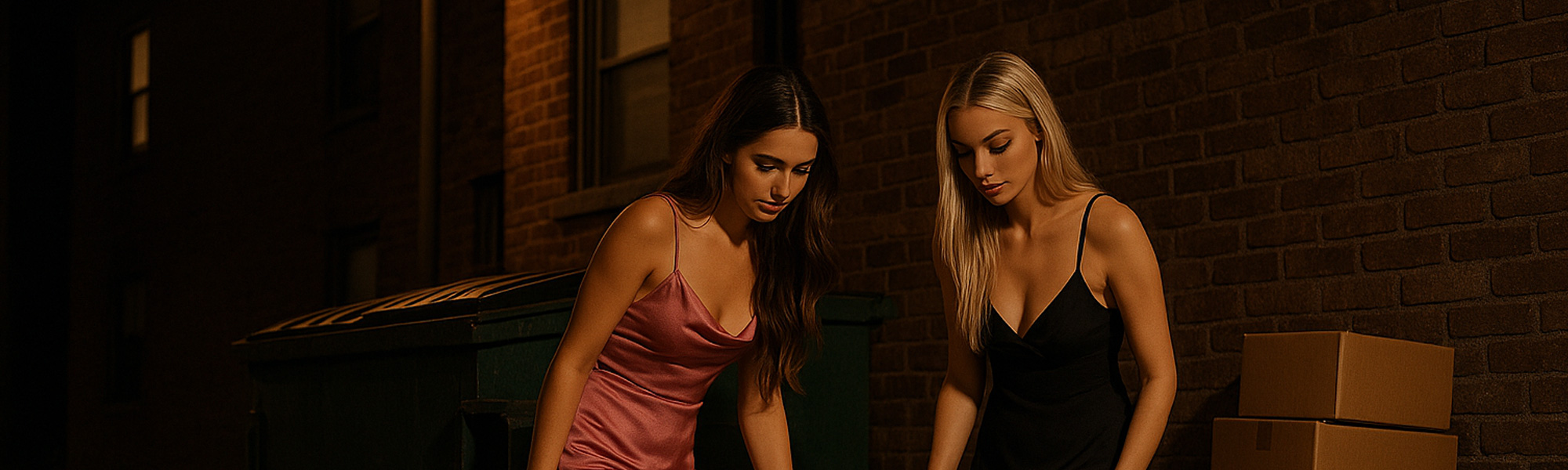

If you live in a unit block, apartment complex, duplex pair or tightly packed street, taking rubbish out at night is not a simple task. Noise travels differently after dark. Concrete courtyards amplify sound. Metal lids echo. Even ordinary movements that feel quiet indoors can suddenly sound sharp once you step outside. For people who work late, come home after midnight, or simply forget until the evening, rubbish disposal becomes a social negotiation as much as a practical one.
This is especially true on the Gold Coast and similar subtropical areas, where many buildings are older, recycling rooms are exposed, and bins sit close to bedrooms. Thin walls, open stairwells and hard surfaces mean that one careless scrape can wake half a block. Add shared recycling rules, large cardboard boxes, or awkward items that need breaking down, and the stress compounds quickly.
The goal at night is not perfection. It is harm reduction. You are trying to minimise sharp, sudden or repetitive noises that draw attention, while still dealing responsibly with waste. That requires thinking differently about how rubbish behaves when it is moved, crushed, opened or dropped.
Why Night-Time Noise Is Worse Than You Expect
Sound physics works against you after dark. Ambient noise drops. Traffic thins. Air cools and carries sound further. Hard surfaces dominate because gardens and soft landscaping disappear into shadow. In apartment complexes, stairwells act like chimneys for sound, carrying clatters and bangs vertically through the building.
Cardboard squashing, plastic crackling, metal lids hitting stops, glass bottles touching each other and bin wheels rolling across concrete all register far louder at night than during the day. Even a single unexpected noise can cause irritation because it breaks the quiet rather than blending into it.
Understanding this is important because it explains why doing things slowly is not always enough. Some materials simply make noise when stressed. The key is changing the way they are stressed.
Stay Barefoot
In many subtropical households, especially in shared living, shoes are already off by evening. Going outside quietly almost always means not wearing hard soles. Thongs slap. Slides scrape. Sneakers creak and crunch. Bare feet, by contrast, allow controlled movement, softer weight transfer and far less incidental noise.
If you are already barefoot inside, stay that way. If you are wearing shoes, consider removing them before you start. Carrying shoes in your hand makes less noise than walking in them, and gives you the option to put them back on once the job is done.
Bare feet also provide better feedback about surfaces. You can feel gravel before you step on it. You notice damp concrete that might squeak. You sense grass, soil or mulch that can be used as a quieter working surface.
Choosing Where You Work
Most noise comes not from the action itself, but from what that action is transmitted into. Crushing cardboard on concrete is loud even if done gently. Doing the same thing on grass absorbs energy and sound.
If your complex or house has any patch of lawn, verge, garden edge or soil, use it. Even a small strip makes a difference. Grass dampens impact, prevents slipping, and stops the hollow drumming effect that concrete produces when cardboard collapses.
If there is no grass available, look for textured surfaces rather than smooth ones. Pavers are quieter than polished slabs. Rubber mats, old towels, flattened cardboard placed underneath or even a thick doormat can reduce noise transmission dramatically.
Wetting Cardboard Changes Everything

Dry cardboard is noisy. It snaps, crackles and releases tension suddenly. Wet cardboard behaves completely differently. The fibres soften, bend rather than break, and collapse more slowly. This reduces both volume and sharpness of sound.
If you know you will need to break down boxes at night, lightly wet them first. A watering can, bottle, or garden hose on a gentle setting is enough. You are not soaking them to pulp. You are just removing the toughness.
Wetting makes boxes easier to tread down with body weight rather than stomping. Instead of stamping, you can shift weight gradually. The box compresses rather than explodes.
Do this away from drains and doorways to avoid mess. Wet cardboard should still go into recycling promptly to avoid smell.
Treading Instead of Stomping
Stamping creates spikes. Treading spreads force. When you tread, one foot carries weight while the other adjusts. This produces a steady compression rather than a bang. It also gives you control over when the box collapses.
Place the box flat, ensure all flaps are folded inward, and step onto the centre. Shift weight slowly. Let the top panel bow and crease. Adjust your stance and repeat. You will feel the structure give way in stages.
Doing this on grass with slightly damp cardboard is one of the quietest ways to reduce box volume. It also avoids the sharp tearing sounds that occur when boxes are folded aggressively by hand.
Crushing Boxes Before You Reach The Bins
One of the loudest points in the process is the bin area itself. Lids slam. Bottles clink. Boxes catch on edges. Other residents hear everything because the sound occurs in a shared acoustic space.
Do as much preparation as possible before you get there. Reduce boxes to their smallest stable form at home or on grass. Nest flattened cardboard together so it moves as a single unit. Carry rather than drag.
Arriving at the bin area with quiet, compact items allows you to open lids once, deposit everything smoothly, and close gently without repeated handling.
Handling Bin Lids And Doors With Intention
Bin lids are designed to be durable, not quiet. The hinge creaks. The plastic hits stops. The echo is worst at night.
Use one hand to lift slowly and the other to control the descent. Do not let lids fall under their own weight. If the bin has a heavy lid, pause halfway to adjust grip before opening fully.
The same applies to doors and gates. Hold them through the entire movement. Avoid letting them latch or rebound. Metal latches in stairwells are particularly loud.
If you know a door squeaks, plan your route to minimise how many times you need to open it.
Be Careful With Scraping And Dragging Noises
Scraping noises carry further than impact sounds. Dragging a box, chair, timber panel or broken furniture piece across concrete can be heard across an entire complex.
Lift instead of drag, even if it means multiple trips. If lifting is not possible, place fabric, cardboard or rubber underneath before moving. Short lifts combined with repositioning are quieter than a single long scrape.
If you need to dismantle furniture, do it away from walls and shared boundaries. Wood-on-wood taps are quieter than wood-on-concrete impacts.
Breaking Down Awkward Rubbish Quietly
Some items cannot simply be folded. Plastic storage tubs, shelving units, lightweight furniture and packaging frames often need destruction to fit into bins.
At night, avoid snapping motions. Twisting is quieter than bending. Gradual pressure is quieter than leverage. Using your body weight to deform plastic slowly produces far less noise than forcing it with arms.
For items that must be broken, pre-stress them earlier in the day if possible. Loosen joints, remove fasteners, partially collapse structures so the final step at night is minimal.
Avoid tools that ring or click. Even a small hammer tap echoes at night.
Managing Glass, Metal And Rattling Waste
Glass and metal are the biggest risk for accidental noise. Bottles touching each other, cans shifting in bags and lids hitting bin walls all create high-pitched sounds.
Wrap glass in paper or cardboard. Place it in the bin slowly, angled against the side rather than dropped. Use bags to contain rattling items so they move as a group.
If possible, wait until daytime for large amounts of glass or metal. Night-time is not the moment to empty a crate of bottles.
Clothing Choices Affect Sound
Loose accessories jingle. Keys clink. Belt buckles tap. Even zip pulls can knock against hard surfaces.
Wear soft clothing without metal components. Empty pockets of loose items. Carry keys in your hand rather than clipped to a belt loop. Small details add up in quiet environments.
Timing Matters More Than Urgency
The quietest rubbish disposal is the one you do not do at night. If something can wait, let it wait. Cardboard does not spoil overnight. Recycling can sit one more day. Large breakdown tasks are better handled in daylight.
If you arrive home late and feel compelled to deal with rubbish, ask whether it truly needs to be done now. Many people overestimate the urgency and underestimate the disturbance.
Daytime disposal also allows you to use tools, move freely and work efficiently without stress.
When Night Disposal Is Unavoidable
Shift workers, emergency workers, hospitality staff and carers often do not have the luxury of daytime routines. In these cases, preparation is everything.
Break down items earlier. Stage rubbish and crush boxes near the door. Choose quiet surfaces. Move slowly and deliberately. Accept that one careful trip is better than multiple rushed ones.
If you live in a complex, observe when others tend to use the bins. Avoid peak quiet windows such as early morning hours when people are sleeping lightly.
Respecting Neighbours Without Resenting Yourself
Quiet rubbish disposal is a courtesy, not an obligation to suffer. You are allowed to live in your home. The aim is to reduce unnecessary disturbance, not to feel anxious about every movement.
Most neighbours are understanding when noise is brief, controlled and infrequent. Problems arise from repeated sharp sounds, prolonged activity or careless handling.
By thinking about surfaces, materials, timing and movement, you can deal with waste responsibly while maintaining goodwill in shared spaces.
The Long-Term Solution Is Better Habits, Not More Stress
Ultimately, night-time rubbish issues are a symptom of overloaded routines. Smaller, more frequent disposal during the day. Breaking down packaging immediately. Keeping a spray bottle handy. Knowing which surfaces are quiet. These habits remove pressure from evenings altogether.
Once you learn how materials behave and how sound travels, the process becomes intuitive. You stop reacting and start planning. Quiet disposal becomes just another part of living well in close quarters, rather than a source of friction.
In shared living, that awareness is one of the most valuable skills you can develop.
You might also like





Disclaimer: Every effort has been made to ensure the accuracy of the information provided, but we make no guarantees regarding its completeness or reliability. The data is presented for general informational purposes only and does not constitute financial, investment, or legal advice. We are not liable for any errors, omissions, or consequences arising from its use. Users should verify details with relevant sources and seek professional advice where appropriate for the most accurate and up-to-date guidance.