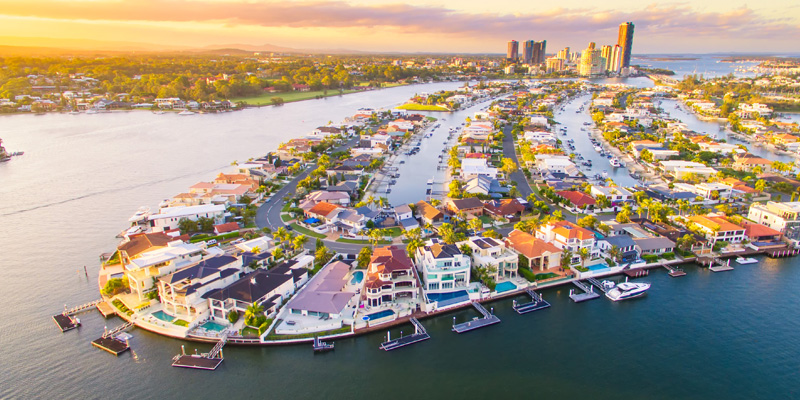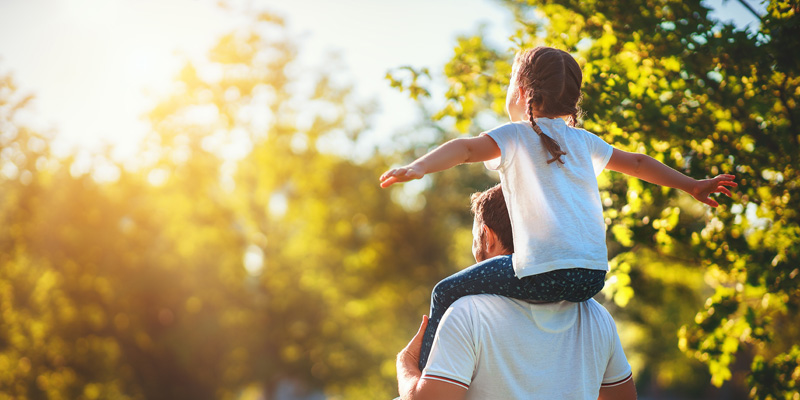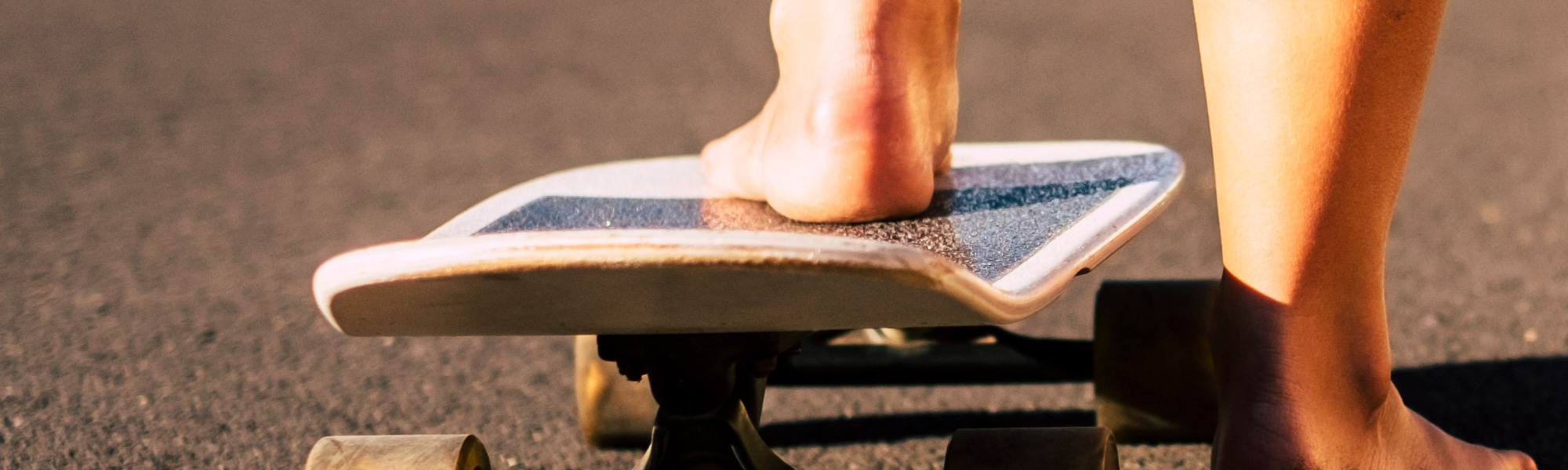
The Gold Coast has always sold a certain illusion of ease. Sunlight sliding across pale sand. Afternoon breezes lifting the edges of beach towels. Waterways glittering behind homes where doors are rarely closed. But beneath this familiar postcard lies a quieter, deeper cultural thread that has defined local life far more intimately than any skyline or surf break. It is not formal, and it has never needed to be explained. It exists at the level of instinct, childhood memory, climate and sensation.
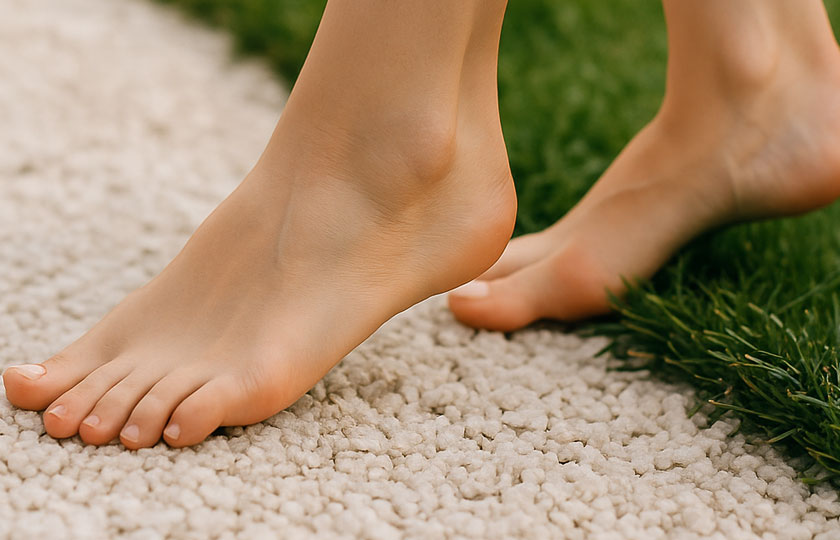
It is the region's deep-rooted barefoot culture.
For locals, going barefoot has never been unusual. It has been the default, the unspoken baseline of everyday movement and a behaviour so common that many only realised how distinctive it was when outsiders commented on it. The barefoot habit didn't arrive with tourism, surfing magazines or modern lifestyle influencers. It is older, humbler, more climate-bound and domestic than that. It grew from Queensland's relaxed living, the unique temperatures of the coast, the design of its homes, the surf culture that swept through in the 60s and 70s, and the full summers that shaped how entire generations grew up.
The result is a cultural identity that survives to this day, strong enough that even those who move here often adopt it unconsciously after a few months of living in the subtropical Gold Coast warmth.
A Climate That Encouraged Shoeless Living
There are few places in Australia where the climate invites barefoot living quite like the Gold Coast. Summers produce a soft, radiant heat that warms every outdoor surface to a comfortable glow. Winters are mild enough that many families barely adjust their habits at all. Grass remains lush for most of the year, sand never fully cools, and rainwater on concrete warms to body temperature quickly.
In this landscape, bare feet became simply easier. People stepped outside for chores, for chats with neighbours, for gardening, for checking the pool, for bringing in the washing or taking bins out, and never once paused to consider footwear. The environment allowed it, encouraged it and eventually defined behaviour around it.
Barefoot life did not feel like a choice. It felt like the natural state of living on the coast.
The Queensland Attitude: Casual, Warm and Unbothered
While the Gold Coast refined it, the shoeless habit grew from broader Queensland culture, which has always leaned toward informality. Across the state, from rural towns to coastal communities, children grew up running barefoot through parks and paddocks, and adults flicked off their shoes the moment they arrived home.
It wasn't a rebellion against rules or dress codes. It was simply the way people lived in a warm, open state where doors were often left ajar, gatherings spilled outdoors and long stretches of the year moved at the pace of the sun.
The Gold Coast, when it bloomed into a major lifestyle destination, fused this casual Queensland spirit with surf culture and subtropical ease, creating something unique: a place where bare feet became part of local identity.
Surf Culture and the Birth of the Barefoot Image
Surfing transformed the Gold Coast in the 1960s and 70s, and with it came the region's most iconic barefoot era. Young surfers lived in share houses near the beach, walked barefoot across dune tracks, dashed from flats to breaks with boards in hand, and wandered into shops still dusted with sand. This behaviour was noticed, mimicked and absorbed by the wider community.
Bare feet became a coastal badge, a shorthand for freedom, youth and ease. Even those who didn't surf adopted the style because it felt like part of belonging to the Gold Coast. The surf scene made barefoot living visible, aspirational and unmistakably local.
Homes Designed for a Barefoot Lifestyle
Domestic design reinforced the shoeless habit. Classic Gold Coast houses from the 60s to the 90s were built with sliding doors that opened directly onto lawns, concrete patios, pools and breezeways. Many homes blurred the line between indoors and outdoors so completely that moving through the property without shoes felt entirely natural.
Cool tiled floors, terrazzo entries, minimal stairs and large patios encouraged a walk-in, walk-out flow that suited the climate perfectly. The architecture itself made barefoot living the simplest and most comfortable option.
Families didn't talk about going barefoot. They just did.
The Schoolyard Years: When Shoes Were Optional
One of the most defining aspects of the barefoot Gold Coast was how early the habit began. In many primary schools across the Gold Coast and Queensland more broadly, bare feet were common well into the 1990s and even the early 2000s. Students often arrived wearing shoes but removed them almost immediately. It wasn't seen as rebellious or messy. It was simply comfortable.
Children played, learned, lined up, ran races and dashed between classrooms barefoot, often carrying their shoes instead of wearing them. Teachers tolerated it. Parents expected it. The climate made it practical, and the culture made it normal.
These generations formed the backbone of the barefoot Gold Coast identity because going shoeless at school cemented the habit as a natural part of life.
Teenagers, Black Soles and a Strange Kind of Cool
By the 1980s, 1990s and very early 2000s, the barefoot habit evolved into something more expressive among teenagers. Going barefoot wasn't merely comfortable. It was cool.
Teenagers walked barefoot to the shops, to the park, to friends' houses, to beach carparks and along suburban streets. Hot bitumen and older-style road surfaces left a thin layer of soot on the soles of their feet, creating the darkened look many teens considered a sign of toughness, authenticity and freedom.
Black soles became a quiet badge of belonging. They suggested you were outside all day, confident, relaxed and uninterested in fussing with footwear. Some teens would be embarrassed to be seen wearing shoes when everyone else was barefoot. Sneakers felt formal. Thongs felt unnecessary. But bare feet felt like identity.
This teenage barefoot coolness held strong until the early 2000s, shifting only as nationalised retail culture, stricter school policies and changing fashion norms gradually took hold. But for several decades, it defined the adolescent experience of the Gold Coast in a way few outsiders ever realised.
Shops, Streets and the Social Normality of Bare Feet
Until surprisingly recently, it was common to see barefoot locals in corner shops, takeaway stores, small supermarkets and neighbourhood centres. No one blinked. The assumption was that people coming off the beach, walking from home or ducking out for a quick errand would naturally be shoeless.
Barefoot entry wasn't a statement of disrespect. It was a sign of belonging to a coastal environment where formality felt out of place.
Even today, despite changing retail policies, certain areas of the Gold Coast maintain this easy acceptance. Beachside fish-and-chip shops, surf clubs, suburban bakeries and canal-edge playgrounds still see barefoot locals as a routine part of daily life.
The Domestic Heart of Barefoot Living
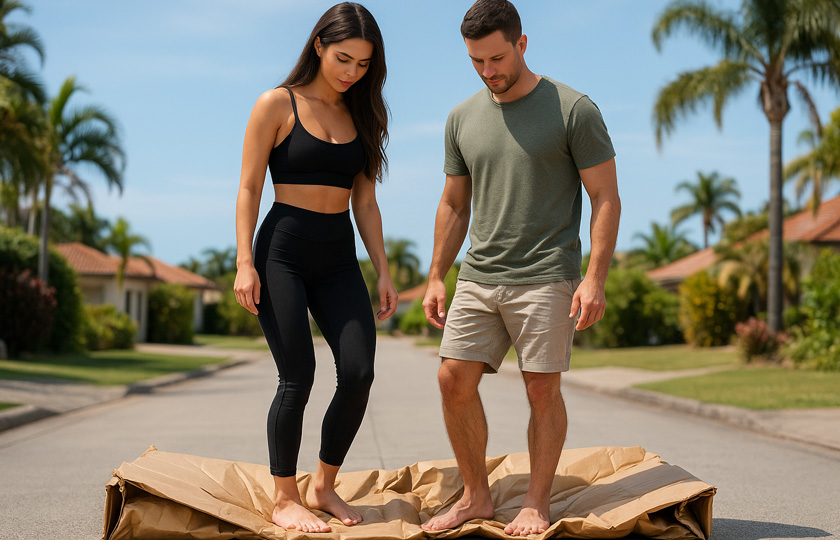
Beyond the public spaces, barefoot living was anchored in simple domestic tasks. Families moved through their days shoeless while watering gardens, washing cars, tidying patios, walking down the driveway, collecting the mail or crushing cardboard for recycling. Hoses were easier to drag barefoot. Pools were easier to check barefoot. Quick jobs outside were easier to do barefoot.
The behaviour was practical, tactile and shaped by habit. And because everyone did it, it became part of the region's unwritten code of living comfortably and confidently in a warm climate.
Tourists and the Barefoot Discovery
Visitors often commented on the barefoot Gold Coast long before locals even recognised it as a cultural feature. They noticed shoeless children wandering into convenience stores, families walking esplanades barefoot at twilight, teens barefoot at bus stops, and adults rinsing feet under beach showers before heading straight to cafés.
To outsiders, it looked carefree, bold, slightly wild in the best way. To locals, it looked ordinary.
Tourists slipped into the habit quickly because the landscape itself encouraged it. Shoes began to feel unnecessary, even burdensome, in a place where every surface seemed designed for bare feet.
The Barefoot Identity Today
The barefoot Gold Coast has not disappeared. It has simply adapted. People still go barefoot at home, in their yards, along the beach and while running everyday errands. Children still play barefoot by default. Many adults still treat shoes as optional unless they truly need them.
Even though urban growth and modern retail standards have softened the visibility of barefoot culture in some areas, the instinct remains profoundly alive. You see it in early-morning beach walkers, suburban families pulling bins out barefoot, locals dropping into the backyard barefoot after work and teens at the park with shoes tucked into bags rather than on their feet.
The Gold Coast remains one of the few urban regions in Australia where barefoot living still feels natural, expected and quietly celebrated.
A Culture Written in Steps, Not Words
Barefoot Gold Coast culture is not something locals analysed or named. It is something they lived. It grew from climate, childhood experience, surf culture, household routines, schoolyard freedoms and a sense of local ease that made shoes feel unnecessary.
There were times, especially among teenagers in the late 20th century, when being without shoes was not just normal but socially preferable. Being caught wearing shoes in situations where everyone else was barefoot could feel awkward or uncool, as though you hadn't yet relaxed into the expectations of local life. The modern world may have added layers of formality, but the instinctive barefoot identity never disappeared.
The culture still lingers beneath the surface of everyday life: in the warmth radiating from Gold Coast footpaths, in the softness of lawns under morning dew, in the way people move casually across verandahs and down driveways, and in the quiet pride of a region that knows barefoot living is one of its most authentic markers.
On the Gold Coast, the story of barefoot living is not nostalgia. It is continuity. It is the living imprint of a place where bodies and landscape move in harmony, where shoes are optional and where the simplest act of stepping outside connects generations across time.
You might also like




Disclaimer: Every effort has been made to ensure the accuracy of the information provided, but we make no guarantees regarding its completeness or reliability. The data is presented for general informational purposes only and does not constitute financial, investment, or legal advice. We are not liable for any errors, omissions, or consequences arising from its use. Users should verify details with relevant sources and seek professional advice where appropriate for the most accurate and up-to-date guidance.