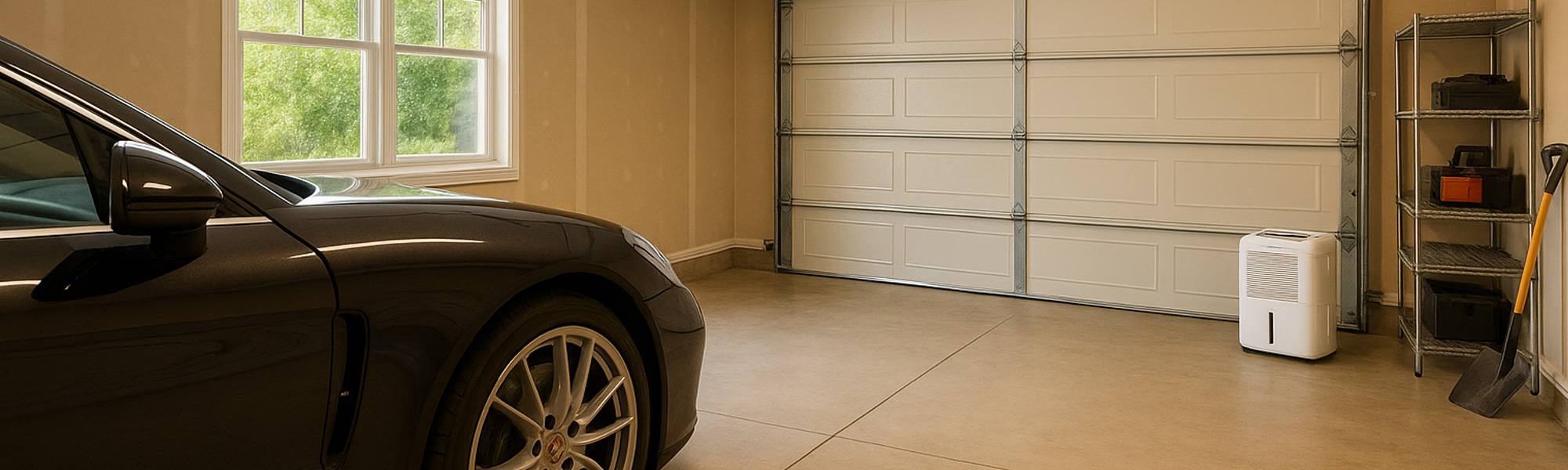
Garages on the Gold Coast and across much of Australia sit at the intersection between outdoors and indoors. Some can be uninsulated, poorly ventilated, and exposed to heat, humidity, salt air and sudden temperature swings. Yet they are expected to protect cars, tools, fridges, freezers, storage boxes, electrical equipment and sometimes people. Climate control in a garage is not about turning it into a living room. It is about managing heat, moisture and airflow so the space remains safe, functional and predictable year round.
Understanding how heat and moisture behave in a garage is the first step. Unlike the main house, garages often have thin walls, metal doors and concrete slabs that store heat during the day and release it slowly at night. Humid air enters through gaps, roller doors and vents, condenses on cooler surfaces, and creates ideal conditions for corrosion, mould and electrical degradation. Addressing these issues requires a combination of passive design, mechanical systems and good safety awareness.
Why Garages Overheat and Trap Moisture
Most garages are designed for cost and convenience rather than comfort. Large metal doors act like radiators in summer, absorbing direct sun and transferring heat inside. Concrete slabs hold warmth long after sunset. Roof cavities are often uninsulated, turning the space into a heat box during the day. In coastal areas, moist air drifts inside and lingers, especially when there is little cross-ventilation.
This combination leads to extreme internal conditions. Temperatures can exceed outdoor levels by a wide margin, and relative humidity can remain high even on dry days. Over time, this damages stored items, shortens the life of appliances, and creates safety risks, particularly when fuels, batteries or chemicals are present.
Passive Cooling and Heat Reduction Strategies
The most effective climate control begins without electricity. Insulating the garage ceiling is often the single biggest improvement. Even modest insulation dramatically reduces heat gain from the roof, lowering peak temperatures and slowing heat transfer. Where possible, insulating shared walls between the garage and house also improves comfort inside both spaces.
Garage doors deserve special attention. Insulated sectional doors or insulated roller doors reduce heat ingress far more effectively than thin metal skins. Light-coloured doors reflect more solar radiation, while internal reflective panels further reduce radiant heat transfer.
Sealing gaps around doors and walls limits hot air and moisture intrusion. This does not mean making the garage airtight, but rather controlling where air enters and exits. Combined with deliberate ventilation paths, sealing improves predictability rather than trapping problems inside.
External shading helps more than many people expect. Pergolas, awnings, trees and even nearby fences reduce direct sun exposure on garage walls and doors. Lower surface temperatures translate directly to lower internal temperatures.
Ventilation and Airflow Management
Ventilation is essential for moisture control and safety. Passive vents placed high and low on opposing walls encourage natural airflow as warm air rises and escapes, drawing cooler air in. Roof vents and whirlybirds can help remove accumulated heat, although their effectiveness depends on correct placement and roof design.
Mechanical ventilation provides more consistent results. Wall-mounted exhaust fans or inline ducted fans can be set on timers or humidity sensors, actively removing warm, moist air during critical periods. This is particularly valuable in garages that house fridges, freezers or charging equipment, all of which add heat.
Cross-ventilation should be deliberate rather than accidental. Leaving a roller door partially open might feel effective, but it often introduces humid air without providing a clear exit path. Controlled ventilation reduces moisture load rather than increasing it.
Active Cooling in a Queensland Garage - What Works and What Is Safe
In Queensland conditions, active cooling in a garage needs to be approached carefully. Heat is only half the problem. Humidity, fumes, electrical load and fire risk all matter just as much. Any cooling system used in a garage must operate independently of the house, must not compromise ventilation, and must comply with basic electrical and mechanical safety principles.
Air conditioning can be appropriate in some garages, but only when the space is treated as its own controlled environment. A garage should never be cooled by extending ducting from the main house system. This creates safety risks, allows fumes to migrate into living areas, and can breach building and mechanical standards. If air conditioning is installed, it should be a dedicated system serving the garage alone, with no shared return air paths.
Split-system air conditioners are the most common choice where cooling is genuinely required, such as in workshops, secure storage spaces, or garages housing expensive vehicles or equipment. These systems must be correctly sized for the garage volume and heat load, not oversized to chase rapid cooling. Oversizing leads to short cycling, poor moisture removal and unnecessary electrical stress. Insulation and door sealing are essential, otherwise the system simply fights constant heat gain and performs poorly.
Ventilation remains mandatory even when air conditioning is present. A garage is not a sealed room, and it should not be treated as one. Air conditioning must never eliminate the ability for fumes, heat and moisture to escape. Where vehicles, fuels, batteries or solvents are present, passive or mechanical ventilation must continue to operate alongside cooling.
Portable refrigerant air conditioners can work in limited situations, but they require discipline. Exhaust air must be ducted fully outside, not dumped into the roof cavity or adjacent spaces. Electrical circuits must be capable of handling the load, and extension leads should be avoided. These units are best seen as temporary or supplementary rather than permanent infrastructure.
Fans still have a role, even in cooled garages. They help distribute air evenly, reduce stagnant pockets and support moisture control. Fans should be positioned to assist airflow rather than simply blowing across stored items. They do not replace cooling, but they improve how cooling systems perform.
Heaters of any kind do not belong in garages in Queensland. Fuel-burning heaters introduce carbon monoxide risk, and electric heaters create ignition hazards around vapours and stored materials. Temperature control in garages should always focus on heat reduction and moisture management, not warming.
The safest approach to active cooling is restraint. Use air conditioning only where there is a clear need, install it as a standalone system, maintain ventilation at all times, and design the garage so cooling supports safety rather than undermining it. In Queensland, a garage that is slightly warm but dry and well ventilated is far safer and more durable than one that is aggressively cooled without proper controls.
Managing Humidity and Condensation
Humidity is often more damaging than heat. Metal tools rust, cardboard softens, electrical contacts degrade and mould forms on stored items. Dehumidifiers can be very effective in garages, particularly when paired with basic sealing and insulation. Modern units with drainage hoses allow continuous operation without manual emptying.
Placement matters. Dehumidifiers work best when air can circulate freely around them and when doors are closed enough to limit constant moisture inflow. They should not be placed near corrosive chemicals or fuel vapours, and electrical safety must be considered.
Condensation often appears on the underside of metal roofs and on concrete slabs. Insulation and airflow reduce this by keeping surface temperatures closer to air temperature, preventing moisture from dropping out of the air.
Electrical Safety and Fire Risk
Climate control systems introduce electrical loads into a space that often already hosts high-risk items. Garages commonly store fuels, paints, solvents and batteries, all of which require careful handling. Electrical equipment should be appropriately rated, protected by residual current devices, and installed by qualified professionals where permanent wiring is involved.
Portable heaters are particularly dangerous in garages and should be avoided. They create ignition risks, consume oxygen and can produce carbon monoxide if fuel-based. Even electric heaters can ignite vapours or overheat nearby materials.
Ventilation is a safety requirement, not just a comfort feature. Any garage that houses internal combustion engines, fuel storage or charging batteries must be able to expel fumes reliably. Climate control should never compromise this requirement.
Vehicle Considerations and Heat Stress
Modern vehicles contain electronics, batteries and fluids that are sensitive to heat. Excessive garage temperatures accelerate battery degradation, shorten tyre life and stress electronic components. Electric vehicles are particularly sensitive, as battery thermal management systems may operate more frequently in hot environments, increasing energy use and wear.
Cooling a garage even slightly reduces peak temperatures and protects vehicle components. Shading, insulation and ventilation often deliver sufficient benefit without resorting to full air conditioning.
Storage Protection and Practical Outcomes
Climate control directly affects what can be safely stored in a garage. Paper products, clothing, electronics and food items all benefit from stable conditions. Plastic containers become brittle in heat, while cardboard absorbs moisture and collapses. Controlled environments extend the useful life of stored goods and reduce waste.
Tools remain cleaner and more reliable when corrosion is minimised. Power tools and chargers last longer, and maintenance intervals stretch further apart. Even simple measures such as reducing dust movement through controlled airflow improve outcomes.
Balancing Cost, Complexity and Results
The best garage climate control solution is rarely the most complex. Insulation, shading, sealing and ventilation provide the majority of benefits at relatively low cost. Active systems such as dehumidifiers and exhaust fans add precision and control without excessive energy use.
Full air conditioning should be reserved for garages that function as workshops, gyms or high-value storage spaces and should only be installed once the fundamentals are addressed. Otherwise, it compensates for poor design rather than improving it.
A Safer, More Predictable Space
A well-managed garage climate improves safety, protects assets and makes the space genuinely usable throughout the year. It reduces hidden risks such as mould growth, electrical degradation and fume accumulation. Most importantly, it turns the garage from a neglected buffer zone into a controlled environment that supports the way the home is actually used.
Climate control in a garage is not about comfort for its own sake. It is about understanding how heat and moisture move, intervening where it matters most, and maintaining safety at every step. When done properly, the results are practical, durable and immediately noticeable.
This article provides general information only and does not constitute legal, building, electrical or mechanical services advice. In Queensland, air conditioning and ventilation work in garages may be subject to the National Construction Code, the Building Regulation, electrical safety laws, fire separation requirements and local council controls, and must be carried out by appropriately licensed professionals where required. Garage conditions, classifications and approvals vary by property. Before installing or modifying any cooling, ventilation or electrical system, you should seek advice from a licensed contractor and, where relevant, confirm requirements with your local council or a qualified building professional.
You might also like





Disclaimer: Every effort has been made to ensure the accuracy of the information provided, but we make no guarantees regarding its completeness or reliability. The data is presented for general informational purposes only and does not constitute financial, investment, or legal advice. We are not liable for any errors, omissions, or consequences arising from its use. Users should verify details with relevant sources and seek professional advice where appropriate for the most accurate and up-to-date guidance.