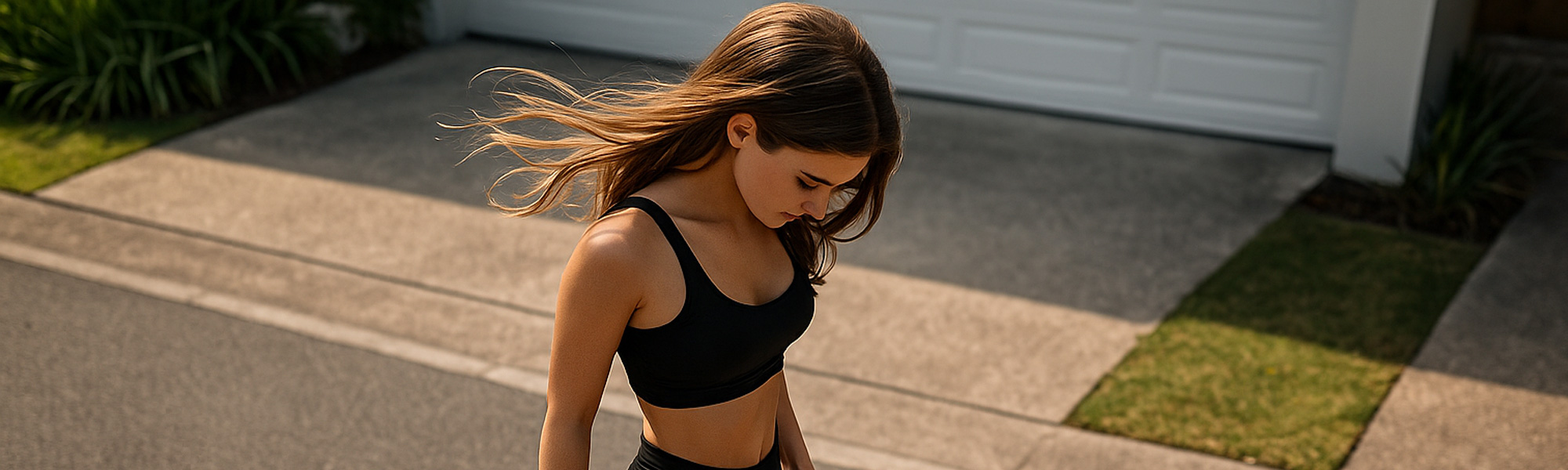
Whether you're moving out, moving in, cleaning for a showing or simply keeping your home tidy, nothing makes a space look messier than stray cardboard boxes. Households want them crushed and cleared as soon as possible. And in most homes, when the moment finally comes to deal with the recycling, it's usually the female members of the household who take care of it.
Women tend to take the lead in recycling, and when they do, they often do it better. Even something as simple as crushing a cardboard box shows the difference clearly. It's a small, everyday task, yet it consistently ends up flatter, neater and more completely collapsed when handled under a woman's feet. That difference isn't accidental or trivial - it comes from instinct, comfort, movement and the subtle habits that keep a home running smoothly, and once you look closely, it reveals far more than most people expect.
And it's not just the big boxes. Whether it's a cereal carton that needs breaking down, a plastic container that needs rinsing or a bundle of packaging that needs to be taken to the bin, the same pattern appears across almost every type of household recycling. Women tend to spot these jobs first, deal with them sooner and finish them more completely, turning small recurring tasks into something that keeps the home looking tidy and running well.
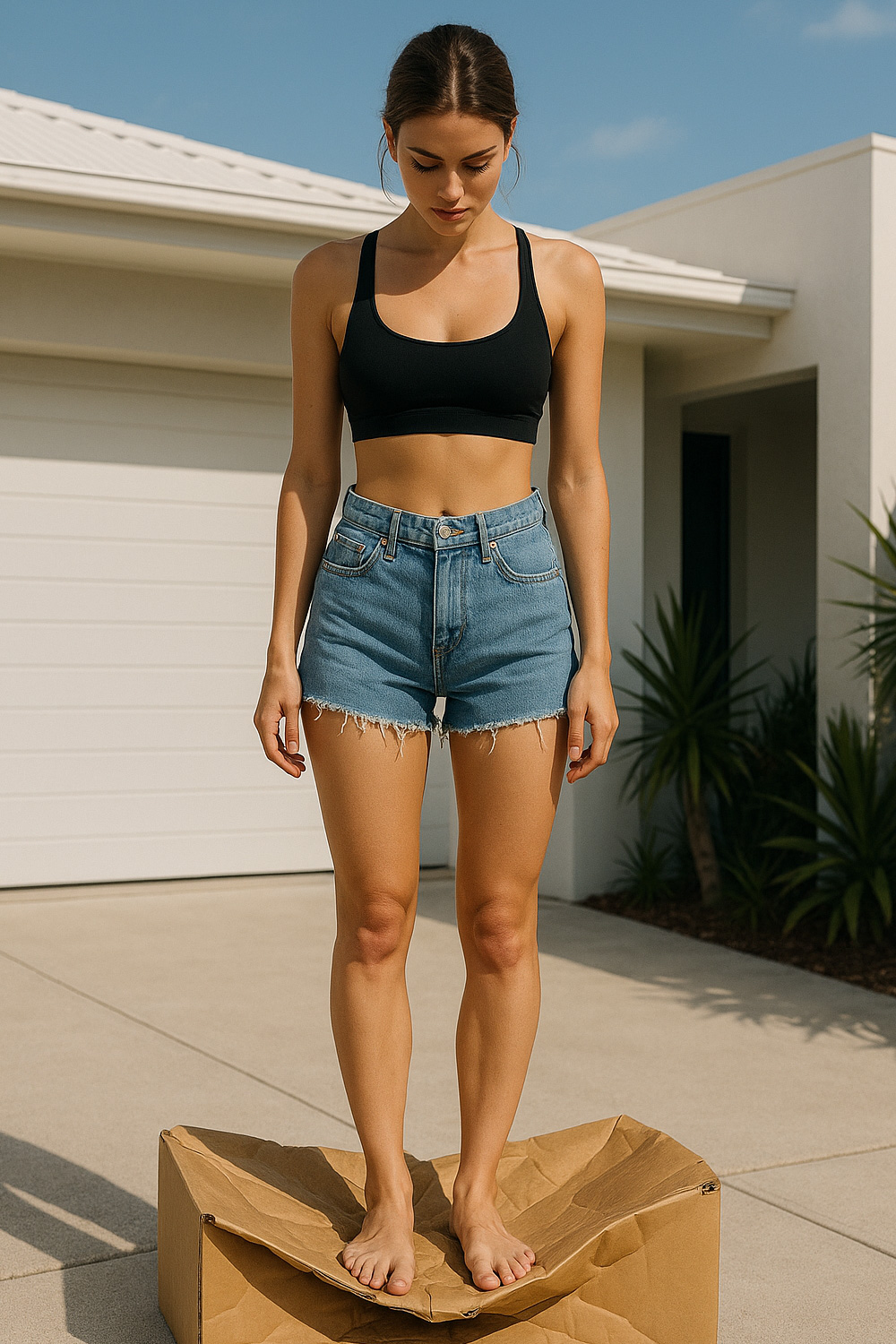
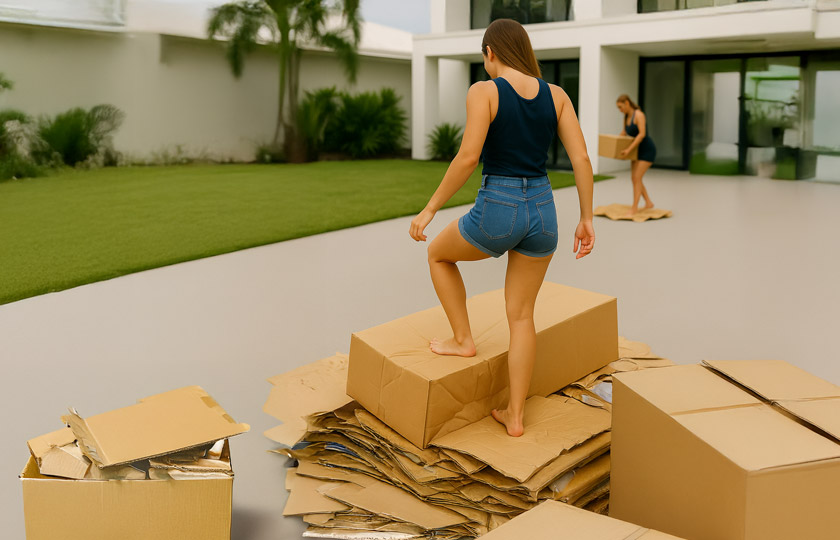
Across countless Gold Coast homes, the pattern appears so quietly that most people barely register it. A cardboard box is emptied and left near the door. People walk around it. Someone nudges it aside with a foot. It waits. Later, almost without conscious thought, a woman picks it, steps out onto the sun-warmed driveway, turns it upside down and flattens it with a series of calm, instinctive barefoot presses. The cardboard sinks, folds and softens beneath her. Within seconds it is a squashed pad ready for the recycling bin. No fuss. No force. No hesitation.
Behavioural research repeatedly shows that women take the lead in household organisation, micro-maintenance and the small resets that keep a space functioning smoothly. Their faster cue-response translates directly into better recycling follow-through. Boxes get crushed earlier and more neatly. Preparation happens before clutter builds. The work integrates seamlessly into everyday movement. Understanding why women dominate both recycling and box-flattening reveals something deeper. Recycling is not just a task. It is a moment where the body, the senses and the home align in a way women are naturally attuned to. The reasons are not purely environmental or cultural. They come from how recycling feels, how the body responds to it and how women instinctively interact with the physical act itself.
The Calm Satisfaction of Doing Something Tangible
Women often notice small tasks the moment they appear. A box left in a walkway feels unfinished, and recycling is one of those jobs that resolves itself quickly. Pick up the box, take it outside, tread it down and within moments it is no longer a bulky object in the way but a flat pad ready for the bin.
That quick, visible completion is one reason women handle recycling more consistently. The result is immediate, the clutter disappears and finishing the task feels satisfying. For many women, there's also a small sense of contribution in knowing the action supports the wider recycling system, which makes the habit even easier to maintain.
Most Women Naturally Prefer to Crush Boxes Barefoot
Because women tend to prefer crushing boxes barefoot, the results are usually cleaner and more compact. Bare soles guide the panels down evenly instead of creasing them in a few hard points, creating a flat, uniform pad rather than a bulky shape that springs back. The difference shows up immediately in the bin: properly flattened boxes take up far less room, often freeing up a third more space and keeping lids closed and collections easier to manage.
Barefoot Living Makes Recycling Feel Surprisingly Good

Female preferences around handling footwear also indirectly shape the outcome. Women are more likely to remove their shoes if a task benefits from being barefoot, and cardboard flattening is one of those moments. They may occasionally stomp down a box while wearing shoes, especially if they are already heading outside or carrying something else, but when the task presents itself directly and they have the option, they far more often choose bare feet. Shoes feel imprecise and disconnected. They slide on smooth cardboard, mask the subtle shifts inside the flutes and make the collapse harder to guide. Bare soles offer better grip and clearer feedback. Many women slip their shoes off instinctively because it gives them greater balance, more accuracy and a more immediate sense of how the cardboard is responding. The difference is felt straight away, and once someone has experienced how neatly a box collapses under a bare foot, that becomes the preferred method almost every time.
Once a woman steps onto the box, she presses with control rather than force, and the collapse tends to be cleaner and more even than anything achieved with a heavy stomp. Men are just as likely to be barefoot at home, but many default to stamping, which often leaves the box twisted, uneven or partly sprung back up.
Conditioned Soles with Better Grip
Gold Coast living produces a particular kind of barefoot conditioning. People who go barefoot regularly develop soles that toughen slightly, not into hardness but into a flexible, leathery resilience. This texture improves grip on cardboard, especially when the surface is smooth or slightly glossy. A conditioned sole bends and shifts with the contours of the material and anchors confidently as the cardboard compresses.
The leathery sole is flexible enough to sense micro-changes yet firm enough to apply pressure without discomfort. Women who spend much of the day barefoot develop soles that behave like a natural tool. They grip uneven panels more effectively. They stabilise during partial collapse. They glide smoothly as the cardboard settles and folds inward. Instead of slipping, the foot sinks in with intention.
A Body Built to Feel the Collapse
When a woman steps onto a cardboard box, her body performs a small choreography that is perfectly suited to the material beneath her. Her toes spread and gain grip. Her arch lowers subtly to distribute weight across the surface. Her heel settles into a stable anchor. The foot adopts a stance that would remain steady even if the box were suddenly removed. This calm posture is what allows her to apply even, guiding pressure.
Inside the cardboard, the collapse begins quietly. The flutes bow inward, strain and fail in a controlled sequence. A woman's foot does not slam the material. It encourages the collapse, coaxes the structure downward and turns a tall box into a compact pad within seconds. Men rarely feel this progression. Heavy stamping disrupts the sequence. Sensitivity is lost, and the collapse becomes chaotic.
Petite Builds and Why Size Does Not Matter
People often assume that heavier bodies flatten boxes more effectively, but cardboard responds to how pressure is applied rather than how much weight is available. A smaller foot concentrates force over a tighter area, which can produce a quicker, cleaner collapse of the internal flutes.
A petite woman can often crush a cardboard box more effectively than a larger man because cardboard responds to concentrated pressure rather than sheer body weight. A smaller foot delivers weight through a tighter contact area, which can create around 0.7 to 0.8 kg per cm2, while a heavier man may only produce 0.5 to 0.6 kg per cm2 across his broader footprint. The effect is amplified by natural pressure peaks under the heel and ball of the foot, which can momentarily reach several kilograms per square centimetre as the woman treads over the box to bring it down. In everyday practice, the smaller, more focused foot simply gives the material a clearer, more decisive push, often producing a flatter and more compact result.
Petite women often achieve neater results for this reason. Their pressure is more focused, and they tend to shift their balance lightly rather than driving weight downward in one heavy movement. This lets the cardboard fold inward evenly instead of twisting or springing back. The collapse becomes controlled rather than forced, and the final pad is usually thinner, flatter and more compact.
Female Foot Structure That Encourages Precision
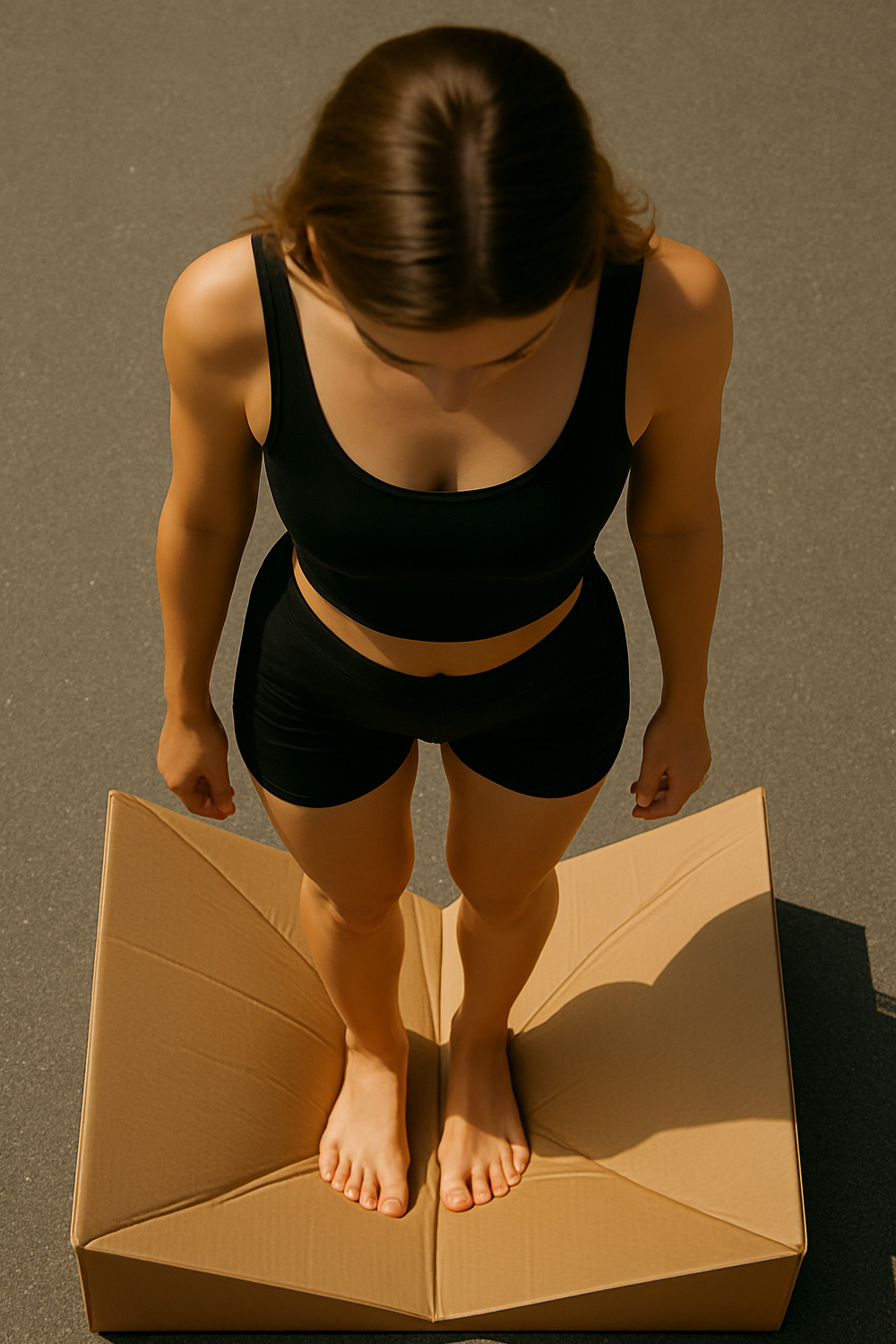
Anatomy gives many women a natural advantage when flattening a box. The forefoot is often proportionally broader, creating better contact with the cardboard, and the arch tends to adapt smoothly to uneven or shifting surfaces. Stabilising muscles near the toes and midfoot react quickly to balance changes, allowing a woman to stay steady even as the box compresses beneath her.
Just as important is the nature of the sole itself. Women often have soles that strike a useful balance between firmness and flexibility, pressing down with real force while still reading the surface beneath them. The pliability of the midsole helps the foot settle across panels that are uneven or partly collapsed, while the gentle curve of the arch adjusts easily to dips and pressure folds.
These qualities produce pressure that is calm and controlled, exactly what fluted cardboard needs to collapse cleanly. Men, by contrast, tend to apply sharper, less consistent bursts of force, leading to awkward bends and thicker, uneven results.
Sole responsiveness adds another layer. Women's soles often have finer skin texture and grain, with greater mobility, subtly shifting shape under load to grip and stabilise the collapsing panels. Men's thicker, less sensitive soles excel at impact but rarely provide the feedback needed to guide the material downward. Where a man might feel only a vague give, a woman feels the precise softening and sequence of the collapse, allowing the box to sink neatly into itself and form a flatter, more compact pad.
The Sensory Loop That Reinforces the Habit
Flattening a box barefoot delivers a small but reliable sense of satisfaction - the quick collapse, the neat result and the feeling of clearing something away instantly. That mix of ease and reward creates a loop the body naturally wants to repeat, which is one reason women handle recycling so consistently. The task feels good to finish, both physically and mentally, and that reinforces the habit every time. Because of this, women build smoother, more reliable recycling routines than men, not through obligation but because the task naturally fits the way they move through the home.
The Emotional Rhythm of Keeping a Home Flowing
Women also notice the small disruptors that interrupt household flow. A box that stands upright. A bin that refuses to shut. A pile that unsettles the room. Flattening a box is not just a mechanical step. It is a reset button for the emotional rhythm of the home. It creates space both visually and mentally. It clears something tiny but meaningful.
This emotional intelligence blends seamlessly with environmental care. A neatly flattened box saves space in the bin, reduces strain on waste systems and helps the recycling facility downstream. The action is tiny but the echo is long. Women feel that connection instinctively.
Recycling Culture Passed Down Through Generations
Because women handle recycling with such consistency and finesse, their method becomes the household norm without any formal instruction. Children copy the smooth, confident way they flatten boxes. Partners adopt the method because it clearly works. The technique becomes a household language. The box goes upside down. The press is barefoot and steady. The collapse is clean and even. The result is predictable and satisfying.
This silent transmission shapes the home's recycling culture far more than any rules or reminders. Technique spreads because the person who performs it best performs it most often.
The Quiet Mastery Behind a Simple Act
Flattening a cardboard box may look ordinary, but it reveals a layered story. A warm driveway and a simple box become a moment of grounded competence and calm. A bare foot finds its stance, the flutes soften and collapse, and the home resets. Women make the system work because they make the moment feel natural, effective and quietly beautiful — turning a tiny domestic task into something that supports both the household and the wider environment.
You might also like


Disclaimer: Every effort has been made to ensure the accuracy of the information provided, but we make no guarantees regarding its completeness or reliability. The data is presented for general informational purposes only and does not constitute financial, investment, or legal advice. We are not liable for any errors, omissions, or consequences arising from its use. Users should verify details with relevant sources and seek professional advice where appropriate for the most accurate and up-to-date guidance.