There's a moment every parent knows deeply, even if they don't talk about it. You're tidying up after a long day, clearing a corner that's become cluttered, or packing your belongings into boxes ahead of a move, and something finally reaches the point where it absolutely must go. A cardboard carton. A cracked sand toy. A faded pool float that won't hold air anymore. A wobbly plastic cup that's seen one summer too many. You make the practical, adult decision to let it go - and suddenly your child is upset, confused or fiercely protective of it.
It feels like the emotional weight of the moment has come out of nowhere. But for children, these small household endings aren't small at all. They're moments of transition inside the only world they truly understand. And on the Gold Coast, where the climate ages objects quickly and where everyday life drifts in and out of the yard, the beach and the living room, these endings are woven into both the gentle rhythm of daily life and the bigger upheaval of moving house.
Understanding why children react this way - and knowing how to guide them through it calmly - turns these moments from conflict into connection.
Why Children Hold On
Children interpret objects through story, not practicality. A cardboard box is never only a cardboard box. It might have been a cubby last week, a rocket two days ago or the doorway to a game only they remember. A cracked bucket still holds the echo of the afternoon they dragged it up from the shoreline, full of sand and treasure. Even something plainly ordinary can feel like part of their world simply because it has been sitting in the same place long enough to become familiar.
And familiarity matters. Children rely on it. Their sense of safety is built on the predictability of their environment. When something disappears without warning, even something adults consider trivial, it can feel like a small but meaningful shift beneath their feet. During a house move, when everything is shifting at once - furniture, routines, the arrangement of rooms - this instinct becomes even stronger. That's why children cling to objects adults think of as disposable. They're not clinging to the item. They're clinging to stability.
Once a parent sees this, the child's reaction makes emotional sense rather than feeling unreasonable or dramatic.
When Your Foot Is Hovering Over the Box
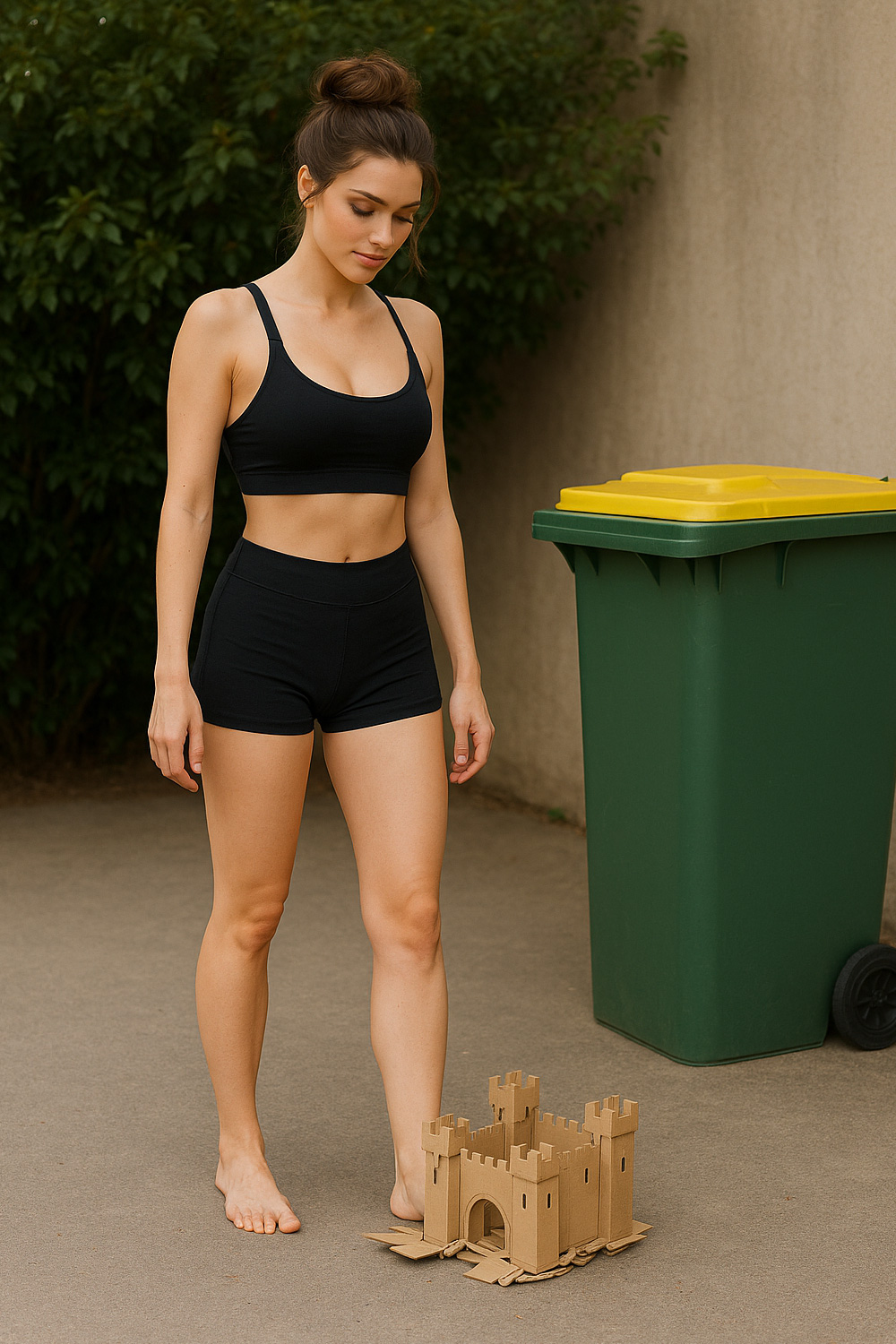
Families accumulate cardboard faster than they realise. Parcels turn up almost every day, groceries arrive in cartons, and pool gear, school projects, summer toys and bulk household supplies all bring yet another wave of packaging through the front door. Adults quickly recognise which boxes are headed for recycling. Children, however, see something entirely different - not rubbish, but possibilities.
The sight of a parent taking a box outside and suddenly treading it down can feel abrupt, even if the child never touched it. The sound, the movement, the speed - it can all feel strangely intense. And if the box was part of their imaginative landscape, crushing it without warning can feel almost like erasing a tiny world they built.
This is where slowing the moment down changes everything. A calm, steady preview such as, "I'm going to crush this box with my feet so it fits in the recycling," gives the child a mental picture of what's about to happen. Suddenly the action is no longer a shock. If the child wants to touch the box once more, or simply watch closely as it's crushed, that small moment of involvement can regulate their emotions instantly. If the box meant nothing to them, the explanation still protects them from a feeling of suddenness.
Whether it's a day-to-day carton or one of the countless boxes involved in a move, predictability turns a startling moment into a manageable one.
When a Toy's Time Is Up
Old toys have a way of resurfacing at the exact moments parents are trying to clear space - during everyday clean-ups and especially during the chaos of packing for a move. Some toys haven't been touched in months. Others have been played beyond their limits: cracked from sun, softened by water, squashed in storage tubs or sharp around the edges. Adults see impractical objects. Children see an older version of themselves.
To a child, the emotional life of a toy doesn't end when the toy breaks. It continues until someone helps them close the chapter. This is why quietly disappearing a meaningful toy often backfires. Children notice the absence and interpret it as unpredictable loss rather than a simple household decision.
Giving the toy a short, visible pause - a day on a shelf or the end of the bed - gives the child time to shift from attachment to acceptance. When the moment arrives, a warm, clear explanation is far more effective than hurrying. "This toy can't do its job anymore and it isn't safe to use," communicates both care and decisiveness. Children can accept endings when those endings feel fair.
When the Object Must Be Altered Before Disposal
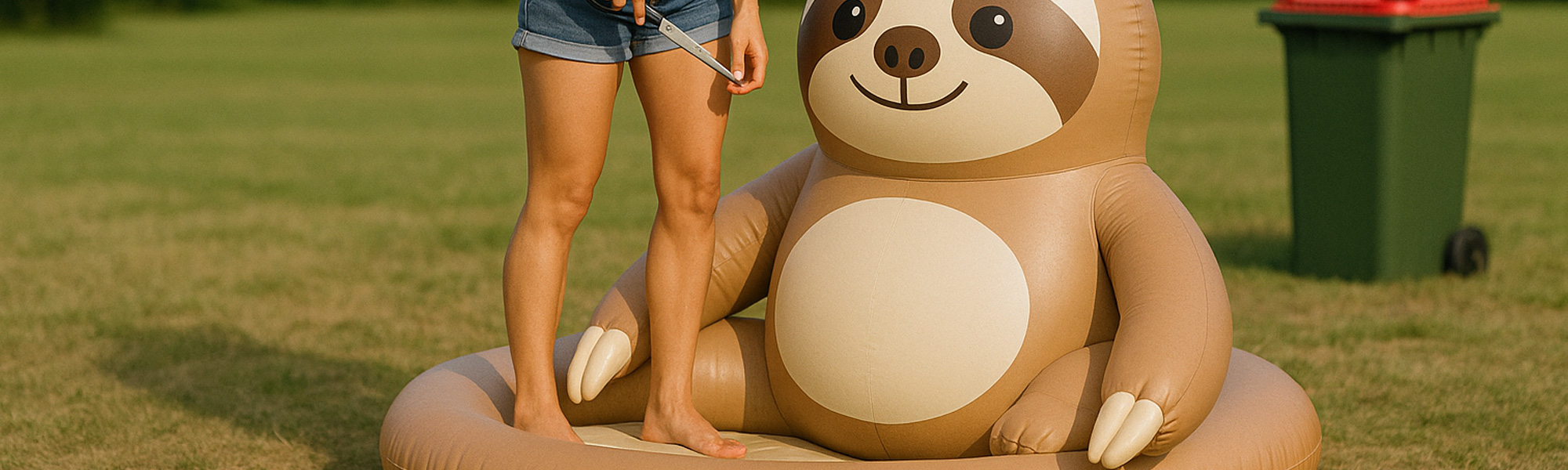
Some things don't just get thrown away - they need to be changed first. Every Gold Coast parent learns this the hard way. Inflatable pools that won't hold air need to be ripped up so they can't be reused unsafely. Rideons need to be broken so they aren't used and cause an injury. Beach gear often has to be broken down just to fit in the bin.
To a child, these actions can look extreme. But with a calm explanation, they lose all their scariness.
For sentimental items, gently framing the ending helps:
"This toy is too damaged to use now. I'm going to break it down so it can't hurt anyone, then it'll go in the bin."
For safety-critical items, clarity is reassuring:
"This is cracked and sharp. I need to wrap it so no one gets hurt, then it goes in the bin."
For practical items, matter-of-fact honesty works smoothly:
"This inflatable can't hold air anymore. I need to tear it up so it can't be used anymore."
Once the child knows what's coming and why, the action becomes understood rather than misinterpreted.
When They Ask for One Last Go
Children often ask for a final moment - a last look, a last gentle contact with the object that's about to leave their world. If the item is safe, allowing this small ritual softens the entire experience. The moment the child hands it back to you, the emotional shift is visible. They are no longer fighting the ending. They are acknowledging it.
If the item is unsafe, the last moment can't happen, but the feeling can still be honoured. Let them stand beside you. Let them watch. Offer the next activity. Children don't need permission to cling - they need support to step forward.
Knowing When Quiet Removal Is Kinder
Not every object deserves a conversation. Homes - especially during moves - accumulate a quiet drift of objects that mean nothing to the child. A broken lid. A container warped by humidity. A scrap of packaging. A plastic cup that's gone cloudy from the dishwasher.
Quietly removing these avoids overwhelming the child with needless moments of goodbye. And if they do notice, a simple, steady explanation is all that's needed. The emotional weight simply isn't there.
Holding Your Ground Without Escalating
A parent's emotional tone shapes how the moment lands. Children mirror intensity immediately. If the parent is hurried, tense or apologetic, the child feels the environment become unstable and their reaction escalates. If the parent holds steady - gentle, confident, calm - the child's distress softens, even if tears still appear.
Calm firmness is not coldness. It's reassurance. It's the message:
"This has to happen, and I'm right here with you while it does."
That sense of safety matters more to the child than the object itself.
Managing the Aftermath
A child's tears are almost never about the object's disappearance. They are the release of unfamiliar emotion - surprise, uncertainty, a small fear of change. Once the moment is explained and completed, most children settle quickly, often within minutes. They recalibrate the world around them and move on because the adult guiding them remained steady from start to finish.
These moments may feel small, but they're teaching children how to navigate change long before they understand the concept.
Building a Family Culture of Letting Go
Children learn how to face endings by watching how adults handle them. When they see parents calmly deciding what stays and what goes, narrating the steps, managing safety, and holding their tone steady, they internalise a quiet but powerful lesson: change is normal, survivable and part of how homes breathe.
On the Gold Coast, where salt, sun and humidity age belongings faster and where families often move as life evolves, these small rituals of letting go form part of the rhythm of growing up.
What Parents Can Hold On To
Whether you're clearing the bench on a busy Thursday afternoon or sorting through the last cupboard before moving day, these emotional little junctures aren't really about rubbish. They're lessons in predictability, trust and security. When parents slow down the moment, explain what's happening and guide the transition with warmth, children feel protected even while something familiar leaves their world.
The box gets crushed. The inflatable is torn. The cracked toy is broken down. The clutter clears. And the child, watching you the whole time, gradually learns that endings can be calm, gentle and safe - that nothing bad happens when something leaves, because you're right there guiding them toward what comes next.
These aren't just household chores. They're small stepping stones toward emotional resilience.
You might also like






Disclaimer: Every effort has been made to ensure the accuracy of the information provided, but we make no guarantees regarding its completeness or reliability. The data is presented for general informational purposes only and does not constitute financial, investment, or legal advice. We are not liable for any errors, omissions, or consequences arising from its use. Users should verify details with relevant sources and seek professional advice where appropriate for the most accurate and up-to-date guidance.