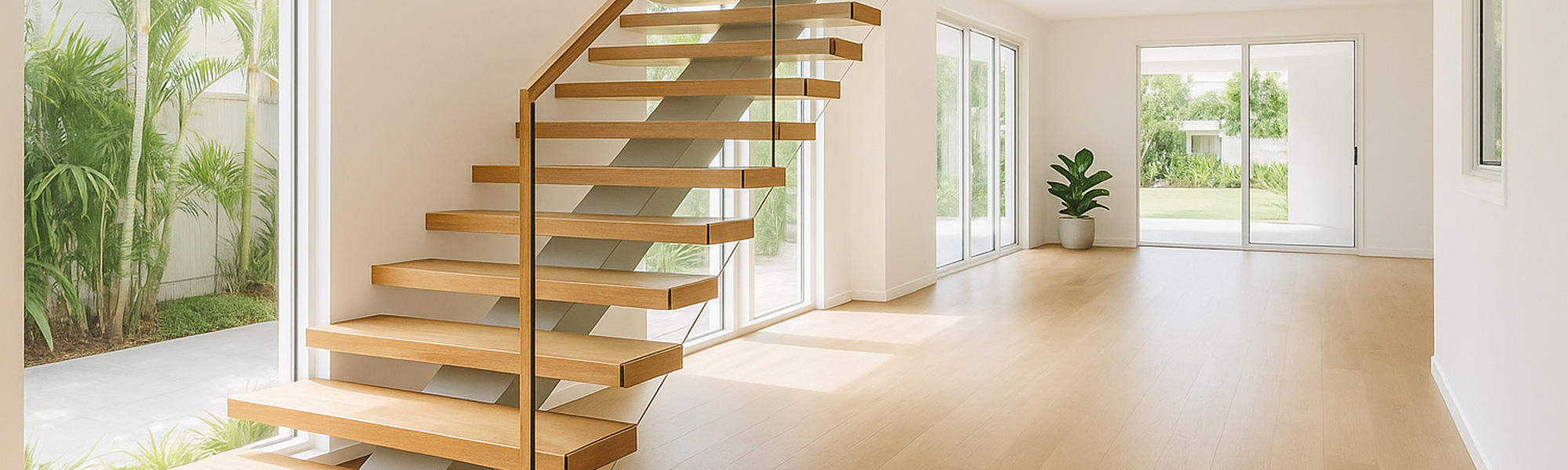
From timber treads to floating frames, the right staircase shapes both function and feeling inside a home. It's the quiet sculptural line that draws your eye upward, connecting rooms, levels, and moments of daily life. In a well-designed house, the stairs do more than link floors — they choreograph how light, air, and people move through the space.
A good staircase feels effortless, safe, and inviting. It encourages rhythm without interruption, turning a practical necessity into a subtle design experience. Whether it's a warm timber flight catching the afternoon sun or a minimalist concrete form leading down to the garden, a staircase tells the story of how a home breathes and flows — a blend of craftsmanship, comfort, and calm intention.
A Structure That Moves You
Every home has its rhythm, and stairs are what give that rhythm height. They're the vertical connection that links one space to another, guiding light, flow, and daily life. Whether it's a narrow flight leading to a loft bedroom, a sculptural timber curve catching afternoon sun, or a simple step down to the garden, stairs quietly influence how a house feels.
Good stair design goes far beyond compliance. It invites movement with ease, safety, and a sense of calm. Great ones don't just take you upstairs - they lift the experience of the home itself.
Finding the Right Balance
A staircase works best when it feels effortless. The width, rise, and pitch should encourage natural movement, but equally important is how the structure connects with the rest of the home. Light, material, and handrail design all shape the impression of ease. Even small variations in tread size or slope can change how comfortable a stair feels to climb.
Think of stairs as part of the home's conversation. They shouldn't shout for attention but flow naturally between spaces. When they do, they add rhythm, not resistance.
Timber Stairs - Warm, Natural, and Adaptable
Timber stairs have long been the Gold Coast favourite. They bring a relaxed warmth that works as easily in coastal homes as it does in modern apartments. Timber softens sound, feels forgiving underfoot, and matches everything from raw steel to glass balustrades.
Regular care makes the difference. Resealing every few years keeps surfaces resilient against humidity. Annual checks help tighten any creaks or movement caused by natural expansion. A soft sheen of light oil maintains colour and allows the grain to breathe.
For subtle luxury, LED strips can be tucked beneath the nosing or along the wall to give a low glow at night. It's a small touch that turns a staircase into a feature rather than just a route between floors.
Concrete and Stone - Solid and Sculptural
Concrete and stone stairs offer a grounded strength that feels effortlessly modern. Their clean lines and cool textures complement coastal light beautifully, staying durable even in humid conditions. These materials are ideal for outdoor transitions such as terraces, courtyards, or garden levels, where durability and stability matter most.
To keep the look refined, sealing is essential. A clear finish helps repel salt and moisture while deepening natural tone. Non-slip strips or etched surfaces maintain safety without compromising the clean finish. Balanced with a timber or steel handrail, they create a blend of solidity and warmth that suits contemporary coastal living.
Floating Stairs - Light and Architectural
Few design statements feel as modern as floating stairs. With treads that seem to hover, they create openness and sculptural drama, ideal for homes that prioritise space and light. The design relies on hidden steel supports or a central spine, giving a clean look that almost disappears.
Glass balustrades enhance that weightless quality, allowing light to spill freely between levels. They do, however, demand care - spotless glass keeps the illusion intact. The space beneath can be turned into discreet storage or left open to preserve the sense of airiness. Floating stairs work best when they're part of the home's architecture from the start, rather than an afterthought.
Spiral and Compact Stairs - Efficiency with Style
When floor area is limited, spiral and helical designs offer a clever solution. They save space while becoming sculptural features in their own right. A compact spiral can feel elegant in an apartment or act as a design moment connecting a deck to a rooftop terrace.
Safety and comfort rely on balance. The central column should feel solid, handrails should follow the curve naturally, and tread surfaces need grip. Lighting is vital here too - consistent overhead light helps define each step clearly. While spiral stairs aren't ideal for moving bulky items, they remain one of the most beautiful ways to combine form and efficiency.
Outdoor and Garden Stairs - Blending with the Landscape
Outdoor stairs live in a tougher world. They face rain, salt, and sunlight, so materials and drainage matter more than anything. Hardwood, composite decking, or textured concrete all perform well in coastal conditions. Each step should shed water quickly and resist warping or mildew.
Garden stairs are also an opportunity for design continuity. Timber treads can extend the look of a deck, while stone or concrete steps can anchor a terraced slope naturally. Integrated lighting adds safety and atmosphere. Keeping surfaces rinsed and hardware tight through the year extends their lifespan dramatically.
Balustrades That Complete the Picture
A staircase feels unfinished without a well-chosen balustrade. Timber rails offer warmth, stainless steel adds a refined edge, and glass brings a sense of openness. Cable systems work particularly well outdoors, giving breeze and view without clutter.
Each style needs maintenance. Metal fixings should be checked for corrosion, timber resealed, and glass cleaned regularly. The tactile feel of a handrail matters as much as its look - rounded shapes age gracefully and are more pleasant to hold than sharp, minimalist edges. A good balustrade is one that disappears in daily use because it simply feels right.
Lighting, Safety, and the Yearly Tune-Up
Lighting can make stairs safer and more beautiful. Soft, indirect light gives depth without glare, while motion-sensors make night movement effortless. For exterior stairs, low-voltage LEDs or solar fittings offer simple solutions without hard wiring.
Each year, give your staircase a small check-up. Tighten fixings, test every tread, and ensure anti-slip surfaces are still effective. These quiet maintenance moments keep the structure strong and the movement effortless.
Stairs as Storage or Display
Space under a staircase is valuable real estate. Turning it into built-in storage, a wine rack, or a small reading nook adds both function and charm. When integrated from the design stage, it feels intentional rather than improvised. Even a well-placed plant or art piece beneath an open stair can transform what might otherwise be a shadowy gap into a design feature.
The Human Side of Stairs
A staircase is more than a connection between floors - it's an experience you feel with every step. The sound of timber underfoot, the way light moves across the treads, the glimpse of a garden or the ocean through the balustrade - all of it shapes your emotional connection with the home.
In the Gold Coast climate, where breezes and openness define how we live, stairs often become sculptural expressions of that lifestyle. They can rise like timber waves through a breezy void or form clean concrete ribbons that lead down to water. They're one of the few architectural features that combine structure, movement, and art.
Taking Your Property to New Heights
A well-designed staircase doesn't just connect levels - it connects moods, materials, and experiences. Whether it's timber warmed by the afternoon light, polished concrete stepping down to a tropical garden, or a floating flight that seems to defy gravity, stairs quietly define how a home flows.
Good design here lasts for decades, because it touches both the practical and the poetic - the daily rhythm of movement, and the calm beauty of craftsmanship underfoot.
You might also like



Disclaimer: Every effort has been made to ensure the accuracy of the information provided, but we make no guarantees regarding its completeness or reliability. The data is presented for general informational purposes only and does not constitute financial, investment, or legal advice. We are not liable for any errors, omissions, or consequences arising from its use. Users should verify details with relevant sources and seek professional advice where appropriate for the most accurate and up-to-date guidance.