Window coverings do far more than soften a room. They set the tone for how a home feels, how private it is, how it breathes, and even how efficiently it handles the Gold Coast heat. A well-chosen window covering can make a room feel cool, breezy and expansive, while a poor choice can leave the same room heavy, dim or strangely exposed. The best selections strike a balance between function and aesthetics, responding to the light, climate and architecture of the home with subtlety rather than force.
A window covering should enhance the natural qualities of the room around it. Some spaces benefit from warmth and softness. Others need sharp lines and clear control. The right option will differ between a coastal living room, a dark hallway, a bright kitchen or a bedroom facing the street. Selecting the correct style means understanding both what the room needs and how the material behaves in the real world.
Curtains: Softness, insulation and atmosphere
Curtains have an ability to change the entire mood of a space with a single sweep of fabric. In living rooms and bedrooms, they add a sense of comfort that no other window treatment can match. Full-height curtains stretching from ceiling to floor elongate walls and create a feeling of quiet luxury, while sheer curtains diffuse daylight into a gentle glow that removes harshness from direct sun.
On the Gold Coast, sheers are particularly effective because they soften bright light without darkening a room. They allow airflow, filter strong UV and provide privacy during the day without closing the room off. Behind them, a blockout or thermal curtain adds insulation for night-time privacy and manages the heat that builds during summer afternoons. The combination of sheers for daytime and blockouts for night has become a signature of coastal interior design because it adapts so seamlessly to daily life.
Blinds: Control, precision and flexibility
Blinds bring a level of control that curtains can't always deliver. In kitchens, bathrooms and modern bedrooms, the ability to adjust light and privacy by small increments becomes extremely useful. Venetian blinds, with their rotating slats, allow the homeowner to tilt daylight onto ceilings or floors without letting strangers see inside. Timber or faux-timber venetians suit coastal homes where humidity is high, combining resilience with a clean, architectural look.
Roller blinds offer a minimalistic alternative. When raised, they disappear almost entirely, leaving the window clean and unframed. When lowered, they provide sharp, uniform coverage. Sunscreen rollers are particularly popular on the Coast because they allow outward visibility while reducing glare and heat. A dual-roll system, pairing a sunscreen blind with a full blockout blind, provides full adaptability to morning, midday and evening conditions.
Roman blinds add softness while still keeping clean lines. The way they fold as they lift creates a structured, elegant look, perfect for homes leaning toward coastal-classic or Hamptons-inspired interiors. They work beautifully in bedrooms, sitting rooms and areas where fabric can be celebrated rather than hidden.
Shutters: Durability, airflow and bold definition
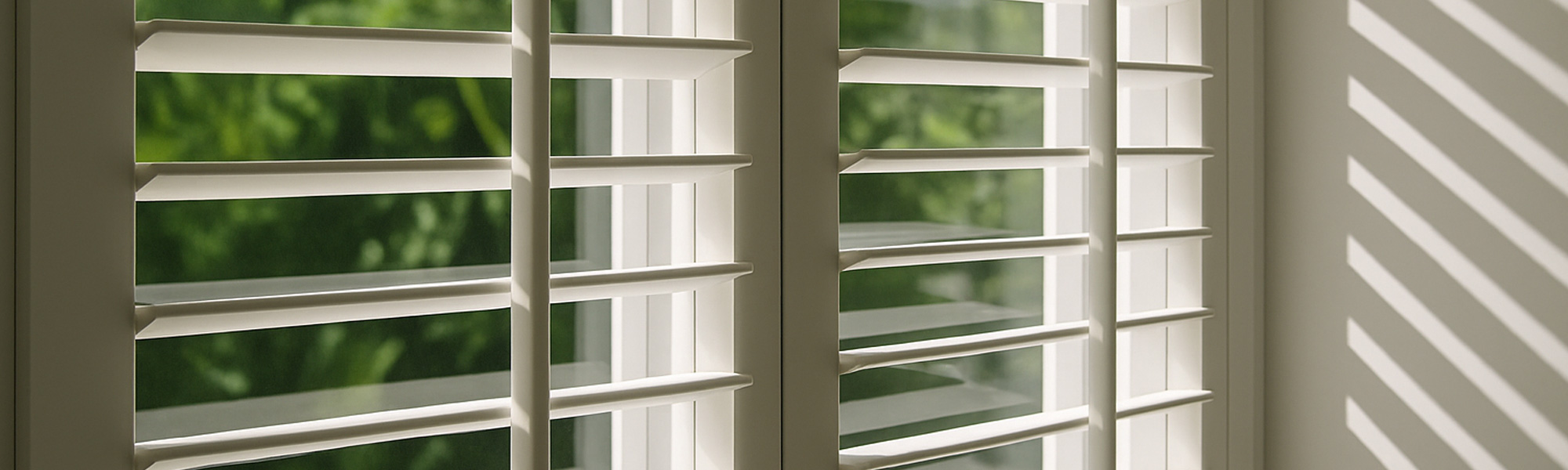
Plantation shutters have become a Gold Coast staple. Their strong lines frame windows with architectural confidence, immediately elevating the appearance of both modern and older homes. The ability to tilt louvres gives precise control over light and airflow, making them a natural match for hot, breezy climates.
Timber shutters suit dry interior zones, while composite or PVC shutters excel in bathrooms, ensuites and coastal areas where moisture is constant. They never look messy, they never flutter in the breeze, and they create privacy without blocking light entirely. When opened, they pull back cleanly from the window, giving a bright, unobstructed view.
Shutters also provide significant insulation. The louvres trap warm or cool air when closed, helping stabilise interior temperatures and reducing reliance on air-conditioning. This makes them both a design choice and a practical energy decision in homes that face strong western sun.
Vertical coverings: The comeback of practicality and style
Vertical blinds were once considered purely functional, but modern variations have transformed them into a stylish choice for large glass doors and expansive windows. Wider vanes, textured fabrics and soft neutral palettes allow them to complement contemporary homes without the dated look of early versions.
They excel where sliding doors or stacker doors need consistent coverage. Curtains near high-traffic openings can collect dust, pull awkwardly or obstruct movement. Vertical coverings instead glide aside, giving full access to outdoor spaces while maintaining day-to-day control over privacy and heat. For canal-side and pool-facing homes, where views matter as much as shade, the ability to angle the vanes precisely becomes incredibly valuable.
Sheers, screens and layered combinations
Some of the most beautiful window treatments come from layered designs. A sheer paired with a blockout blind. A sunscreen blind paired with lightweight curtains. A shutter framed by soft drapery. Layering works because each element plays a different role: one shapes the light, another solves privacy, another adds texture or thermal insulation.
This approach is particularly effective in rooms facing the street or western sun. A sheer can stay closed all day to protect privacy while still filling the room with calm, diffused daylight. In the evening, when silhouettes become visible from outside, the blockout layer closes effortlessly without losing the softness created by the sheer throughout the day.
Material choices: What lasts, what fades and what truly performs
Gold Coast homes face a unique combination of direct UV, humidity, coastal breezes and sudden storms. These conditions influence which materials perform well over time. Natural linens and cottons behave beautifully in living spaces but can fade faster in direct sunlight. Polyester blends are far more UV-stable and resist mould in humid corners of the home. In kitchens and bathrooms, materials that resist moisture, such as PVC venetians, composite shutters or coated rollers, outperform traditional fabrics by years.
Timber blinds and shutters look incredible in dry rooms but need careful placement away from long hours of direct steam or moisture. Metal venetians stay straight and crisp but can feel clinical in softer spaces. Choosing materials is about matching aesthetics to function rather than sacrificing one for the other.
Matching coverings to architecture and lifestyle
Window coverings should match the way the home is used. A family living area with constant movement benefits from coverings that open quickly and withstand wear. A formal lounge might call for long, sweeping curtains that frame the room in softness. Bedrooms need strong privacy and light control, especially in homes close to footpaths. High windows above staircases or voids often benefit from motorised coverings because they are rarely adjusted manually.
Orientation also matters. East-facing rooms welcome bright morning light that sheers temper beautifully. West-facing rooms demand stronger blockout coverage, especially in summer when the sun sits low and aggressive. Canal homes with reflective light off the water benefit from adjustable blades such as venetians or shutters, giving finesse as the glare shifts throughout the day.
The difference the right choice makes
The right window covering has a surprising impact on how a home feels. Spaces become calmer. Light becomes softer. Privacy feels effortless. Rooms appear larger because the covering complements rather than competes with the window. A bedroom becomes more restful with sharper control over dawn light. A living area becomes brighter without being exposed. A study becomes cooler because glare is managed without shutting out the day.
Great window coverings disappear into the background when they're open and define the space when they're closed. They offer the rare combination of practicality and beauty, working quietly yet constantly to shape the comfort of the home.
You might also like





Disclaimer: Every effort has been made to ensure the accuracy of the information provided, but we make no guarantees regarding its completeness or reliability. The data is presented for general informational purposes only and does not constitute financial, investment, or legal advice. We are not liable for any errors, omissions, or consequences arising from its use. Users should verify details with relevant sources and seek professional advice where appropriate for the most accurate and up-to-date guidance.