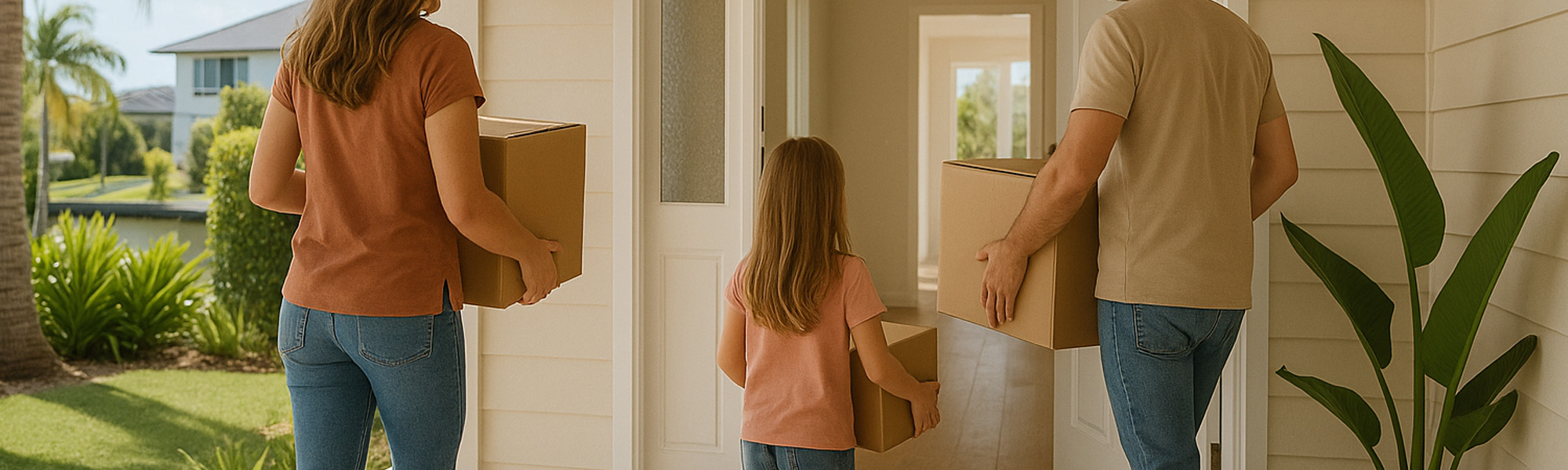
Long before anything is packed, children sense the beginnings of a move in ways adults rarely notice. They are exquisitely attuned to the emotional atmosphere of a home, the small tides that rise and fall in the background of family life. A parent might think they're being discreet, yet a child still picks up on the subtle clues: the quiet conversations in the kitchen, the way a parent pauses at a listing during an evening scroll, the stranger who comes through the door holding a clipboard, or the unusual weekend spent driving around looking at houses. Even the feel of a room changing during an agent's appraisal can signal to a child that something is shifting. They don't need to understand the details to sense that the adults are preparing for something significant.
This early sensing can be unsettling when nothing has been explained. A child might become clingier, or alternately more excitable, trying to regain a sense of control over a situation they can feel unfolding but can't yet interpret. When parents choose to share the news gently and steadily, the shift becomes less mysterious. Children don't require a lengthy briefing; they simply need an honest, age-appropriate description of what's happening, spoken in a tone that reassures them they won't be left behind in the process. It is the feeling of security, rather than the volume of information, that gives them a foothold.
A move becomes easier the moment a child understands that it is a family journey rather than an adult agenda. Once they know they are included, their inner world relaxes. The fear that something might be happening to them without warning dissolves. And when parents narrate the coming transition as a story, rather than a disruption, children find themselves walking toward a beginning rather than away from an ending. In many ways, the emotional work begins here, long before any cardboard appears.
Letting Go of Familiar Spaces
Every home a child lives in becomes a map of their early life, dotted with places that hold meaning far beyond what adults see. The corner of the garden where they dug channels after rain, the patch of sunlight where they used to read on the floor, the hallway that doubled as a race track, the kitchen bench where they sat swinging their legs during breakfast - all of these imprint themselves quietly into a child's sense of belonging. When a move begins, these places start to feel temporary, as though the world they know is gradually loosening its hold. Parents often see only a house preparing for the next chapter; children feel the emotional weight of saying goodbye to the backdrop of their everyday life.
This is why the packing stage can affect children more than adults expect. A bedroom that begins to empty, a shelf cleared of toys, or a wall where drawings once hung can feel strangely hollow. Children often interpret these changes as signs that their life is being dismantled. It's not the belongings themselves but what those belongings represented: consistency, familiarity, the sense that their world stays where they left it. Parents who acknowledge that the process feels strange help children understand their feelings rather than fight them. A short conversation in a bedroom that now echoes slightly can be enough to reassure a child that their memories aren't being erased.
Giving children their own small role in packing often soothes the emotional tension. Allowing them to prepare a special box - one decorated, named or filled with the items they want to keep closest - hands them back a sense of control during a time that otherwise shifts around them. It tells them they are trusted and included. And keeping a handful of familiar objects out until the final moment provides a soft thread of continuity even as the home changes shape around them. A favourite blanket on an almost-cleared bed or a well-loved toy resting on a half-empty shelf becomes an anchor, preventing the environment from feeling abruptly unfamiliar.
The final days in a house can feel surreal for a child. Spaces they knew with their eyes closed take on a strange quality once the pictures come down and the cupboards stand open. Everything echoes more. Even smells change. Some children respond with sadness, some with restlessness, and some with bursts of silliness as they try to reclaim familiar rooms that no longer feel quite the same. None of these reactions mean the move is going poorly. They mean the child is aware of the significance of the moment, and that awareness is a healthy sign of emotional development.
Stepping Into the New Home
Arriving at a new house can feel vast for a child, even if the move is local. Rooms without furniture seem enormous, as though the house has not yet decided who it belongs to. Children tend to rush through spaces quickly, opening doors, peering into cupboards, calling out to hear their voices bounce back. It is their way of mapping the unknown through movement. In these first hours, small details from parents matter greatly. Simply pointing out where their bed will go, where the family might eat dinner, or how the garden looks in the afternoon can give the child the beginnings of a mental map.
Setting up the child's bedroom early - not perfectly, just enough to make it feel like theirs - brings the first wave of comfort. A freshly made bed, a lamp switched on in the corner, and a few familiar belongings placed gently on the shelf instantly shrink the size of the unknown. That small, warm room becomes a harbour within the unfamiliar landscape of the new home. Once a child can see where they will sleep, dream, and wake, the rest of the house starts making sense.
The first night carries its own emotional weight. Every home has a unique soundscape: different creaks in the ceiling, different hums from appliances, different patterns of wind against windows. Children often find this unsettling, not because the house is frightening but because their bodies are so accustomed to the rhythms of their previous home. A little extra closeness that first night - perhaps reading a story with the door open, or staying nearby for a few extra minutes - helps ease the transition. Within a week or two, the strange noises become the new normal; the unfamiliar becomes familiar; the new house begins to soften.
In the early days, creating gentle customs can help the house take shape emotionally. Families often underestimate how powerful small traditions can be. Eating a first breakfast together on the floor before the dining table is set up, exploring the new street at dusk, or unpacking one special box as a family all become moments that anchor the child in the new environment. These small beginnings weave themselves into memory faster than parents expect. Before long, the child recognises the smell of the hallway after rain, the way morning light lands on the kitchen tiles, and the soft thud of the new gate closing - cues that tell them they belong here too.
Growing Into the Next Chapter
What children ultimately remember is not the logistics of the move but the emotional tone of it. They remember whether they felt hurried or held, ignored or included, confused or guided. A move becomes a profound lesson in how to navigate change. When parents remain steady, patient and warm, even during the chaos of packing and unpacking, children learn that change can unfold at a human pace rather than a frantic one. They learn that life can shift around them without leaving them unmoored. And they learn that home is defined not by walls or layouts but by the people who fill the space with love and predictability.
Children are far more resilient than adults often assume. Once they begin to form new routines - noticing where their favourite toys fit, learning the sound of the new house settling at night, finding a sunny place to sit on the floor - the new environment becomes theirs. The old house remains a cherished memory, but it no longer feels like the only place where life made sense. Instead, it becomes a chapter, one held with fondness rather than loss.
A move handled with gentleness teaches a child that goodbyes can be soft, that beginnings can be hopeful, and that home is something they carry with them as they grow. And long after the boxes are flattened and the last piece of tape thrown away, what stays with them is the way their parents made the transition feel - steady, comforting and full of the reassurance that wherever the family goes, they will always belong.
You might also like




Disclaimer: Every effort has been made to ensure the accuracy of the information provided, but we make no guarantees regarding its completeness or reliability. The data is presented for general informational purposes only and does not constitute financial, investment, or legal advice. We are not liable for any errors, omissions, or consequences arising from its use. Users should verify details with relevant sources and seek professional advice where appropriate for the most accurate and up-to-date guidance.