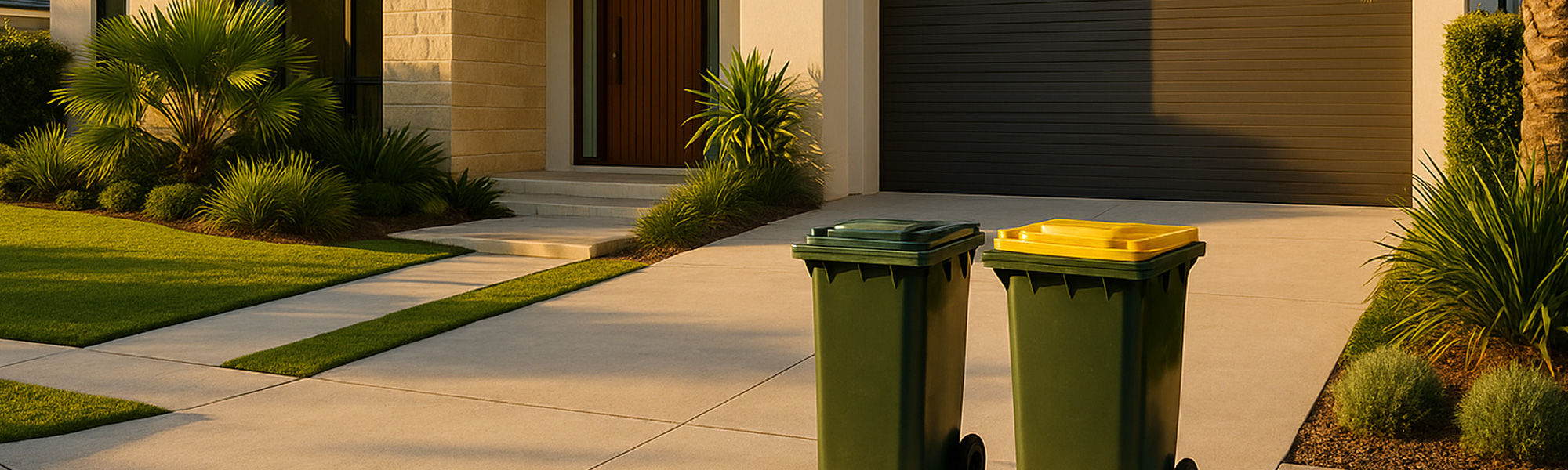
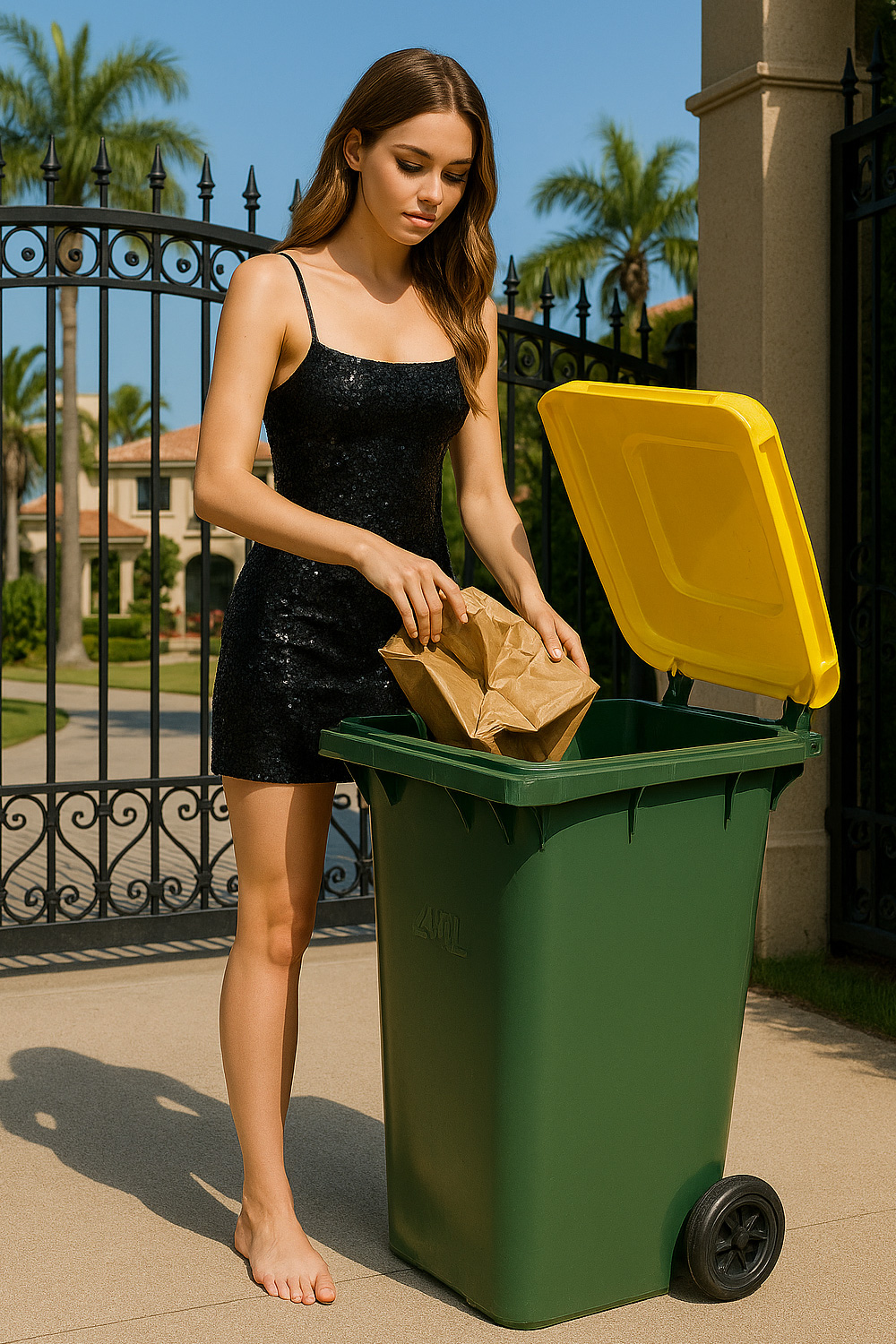
On the Gold Coast, fame often sits quietly. Actors, athletes, media figures, online personalities, business leaders, and public officials live in ordinary streets, use standard council bins, and follow the same collection schedules as everyone else. There are no guarded driveways, no staff-managed waste rooms, no secure disposal services separating private life from public space. For most residents this is part of the appeal. Life feels normal. Streets feel shared. Privacy feels assumed.
Yet rubbish sits in an unusual position. It is private material placed temporarily into public view. It is not protected by locks or alarms. It does not require intrusion to access. For a narrow group of residents who attract attention, that brief exposure can become a weak point in an otherwise low-profile life.
This is not a problem most households will ever face. The vast majority of people who admire public figures do not cross boundaries. Incidents are uncommon. But the mechanics of kerbside waste collection mean that, when curiosity does turn into action, the opportunity is there.
Understanding how and why rubbish can become a privacy issue is less about celebrity culture and more about how information moves through everyday domestic systems.
Fame Without Distance
In many global cities, high-profile residents are separated from the street by design. Apartment towers have service corridors. Houses sit behind gates. Waste is managed internally. On the Gold Coast, the pattern is different.

Well-known people often choose suburban homes because they offer space, light, beach access, and a sense of normalcy. The street looks like any other. Bins are wheeled out at night and collected early in the morning. There is no visual signal that one household carries higher privacy stakes than the next.
That lack of separation is culturally consistent with the city, but it also means that privacy relies heavily on social norms rather than physical barriers. Most of the time, that works. Everyone understands that bins are not an invitation. But norms are not security measures. They depend on shared behaviour, not control.
When someone does decide to cross that line, they do not need to approach the house. They do not need to knock on a door or step onto private land. They only need to interact with an object already placed on the kerb.
Rubbish as Information, Not Just Waste
When people imagine the risk of rubbish being accessed, they often think in terms of identity theft. That is part of the picture, but it is not the whole one. Rubbish is also a narrative source. It tells stories about who is present, how they live, and what is happening inside a household.
Mail and packaging are the obvious examples. Envelopes, labels, and delivery boxes can reveal names, affiliations, purchasing habits, and recent activity. Even when addresses are partially obscured, patterns remain visible.
Beyond paperwork, household waste carries subtler signals. Medication packaging can indicate health conditions or treatments. Children's items can confirm family composition. Food packaging can reveal dietary preferences, routines, or cultural practices. Clothing tags can signal brand choices and sizes. Event-related waste can confirm attendance at private functions or recent travel.
Individually, these details may seem trivial. Together, they can build a picture that feels uncomfortably complete.
For someone motivated by curiosity rather than malice, the appeal is not necessarily to steal anything. It is to confirm proximity, presence, or access. Rubbish becomes a way to feel closer without being seen.
What Difference Crushing Your Boxes With Your Feet Actually Makes
Crushing cardboard boxes before disposal is often treated as a space-saving habit or a courtesy to the community. In privacy terms, it does much more than that. It fundamentally changes how much information remains visible once waste leaves the house.

Uncrushed boxes act like signage. Logos, brand names, delivery labels, sizing information, and product descriptions remain legible from a distance. A whole box can be lifted, turned, or opened without effort. Its original purpose is obvious even at a glance. For someone scanning rather than searching, intact packaging does most of the interpretive work for them.
Once a box is crushed thoroughly, that clarity disappears. Surfaces fold over each other. Printed panels are distorted, torn, or obscured. Labels are creased, split, or buried inside the mass. What was once readable becomes ambiguous. The box no longer announces what it contained or where it came from. It becomes material rather than message.
Using your feet to crush boxes is particularly effective because it applies force unevenly. Hands tend to flatten along predictable lines. Feet introduce weight, angles, and compression that collapse internal structure. The result is deeper creasing and a loss of recognisable shape. A box crushed this way is harder to reconstruct mentally. Even if someone were motivated to examine it, there is less information to extract.
There is also a timing effect. Crushing boxes usually happens inside the property boundary rather than at the kerb. That means branding and labels are disrupted before the item ever enters public view. By the time the material reaches the bin, it is already anonymised. The exposure window shrinks not just in duration but in content.
Another overlooked aspect is visibility within the bin itself. Intact boxes tend to sit upright or at the top, creating clean planes that can be seen immediately when a lid is lifted. Crushed cardboard settles irregularly. It sinks. It mixes. Individual items are harder to isolate without deliberate effort. For casual curiosity, that friction is often enough to deter further action.
From a behavioural standpoint, this matters. Most boundary-crossing behaviour relies on ease. When information is obvious, temptation increases. When it requires work, interest drops sharply. Crushing boxes with your feet quietly raises that threshold without signalling defensiveness or change in lifestyle.
This practice also reduces secondary signals. Intact packaging often reveals purchasing scale, timing, and frequency. A cluster of uncrushed delivery boxes can indicate recent acquisitions or ongoing presence. Crushed cardboard collapses those cues into a single, undifferentiated mass. Patterns become harder to read.

There is also a simple aversion effect at work, and it comes specifically from using feet rather than hands. Once a box has been trodden down, it stops reading as clean, neutral packaging and starts reading as something that has been in direct contact with the body. For most people, that is an immediate turn-off. Even without visible dirt, the idea of bare feet applying pressure, sweat and weight introduces uncertainty that discourages touching. A crushed box also looks bodily processed rather than merely discarded. The creases are irregular, the surfaces softened and distorted, and the object no longer feels safe or pleasant to handle. That low-level disgust matters because it shuts down curiosity before it becomes action. People are far less inclined to lift, unfold or inspect something that looks like it has already been under someone's feet.
For households experiencing heightened attention, this simple habit acts as a low-key privacy buffer. It does not rely on secrecy or avoidance. It relies on reducing clarity at the point where private material briefly intersects with public space.
In ordinary circumstances, crushing boxes is just practical. In higher-stakes moments, it becomes quietly protective. The difference lies not in the action itself, but in how much story remains once the box is no longer whole.
Why Kerbside Exposure Matters
The Gold Coast's waste system is efficient, but it creates predictable exposure windows. Bins are typically placed out in the evening and collected early the next morning. That creates several hours where household material sits unattended in public space.
Those hours often coincide with low street activity. Late-night dog walkers, early-morning joggers, rideshare drivers, shift workers, and delivery vehicles move through otherwise quiet streets. Someone interacting briefly with a bin does not automatically stand out.
This is not about someone lingering with a torch and gloves. It can be as simple as lifting a lid, looking inside, or removing a small item. The absence of noise, confrontation, or trespass makes the act feel low-risk to the person doing it.
In unit complexes and shared bin areas, the dynamic shifts slightly. Bins are often clustered away from individual dwellings, sometimes poorly lit, sometimes accessible from multiple directions. Attribution becomes blurred. It is harder to tell who belongs there and who does not.
Fans, Followers, and Boundary Drift

The word fan covers a wide range of behaviour. Most admiration is passive and respectful. People watch work, follow careers, and feel connection without expecting access. Problems arise at the margins, where admiration drifts into entitlement.
For a small number of people, proximity feels like permission. Seeing a public figure in everyday settings can blur the line between public and private life. The person feels approachable, ordinary, almost familiar. That familiarity can lower internal barriers that would otherwise prevent intrusive behaviour.
Rubbish can become part of that drift. It feels indirect. There is no interaction. No rejection. No visible harm. The person can tell themselves they are not bothering anyone, even as they cross a boundary that most people instinctively respect.
This dynamic is not unique to celebrities. It appears wherever attention is uneven. Local politicians, business owners involved in disputes, people featured in high-profile court cases, and even households that have recently attracted media coverage can experience similar curiosity.
The Difference Between Risk and Likelihood
It is important to separate plausibility from probability. The likelihood of someone rummaging through household waste on the Gold Coast is very low. Most residents will never encounter it. Even for high-profile individuals, incidents are rare.
But risk is not measured only by frequency. It is measured by impact. When privacy is compromised, the consequences can extend beyond the moment itself. Information can be shared, misinterpreted, or used to support further intrusion.
For families with children, the stakes feel higher. For people managing health issues, the exposure can feel deeply personal. For those already dealing with unwanted attention, even a small breach can amplify stress and vigilance.
Understanding risk does not mean living in fear. It means recognising where ordinary systems intersect with unusual circumstances.
Legal and Social Grey Areas
From a legal perspective, rubbish placed on the kerb occupies an ambiguous space. It is still associated with a household, but it is no longer within the physical boundary of the property. Laws vary in how they treat interference, and enforcement is rare unless other offences occur.
Socially, norms do more work than rules. Most people would feel uncomfortable touching someone else's bin. That discomfort acts as a deterrent. But norms are not universal, and they weaken when people feel anonymous or justified.
This ambiguity makes rubbish a weak link in privacy protection. It is governed less by clear prohibition and more by shared understanding. When that understanding fails, there is little to stop the behaviour in the moment.
Why the Gold Coast Context Matters
The Gold Coast's layout amplifies both the strengths and weaknesses of suburban living. Streets are open. Frontages are visible. There is a strong culture of outdoor activity and casual movement through neighbourhoods.
That openness is part of what makes the city feel livable. It also means that private life intersects with public space more frequently than in denser or more controlled environments.
Waste practices reflect that culture. Bins are standardised. Collection is regular. There is little variation to signal that one household should be treated differently from another.
For high-profile residents who deliberately choose this environment, the goal is usually integration, not separation. They want to live alongside neighbours, not above them. That choice carries benefits, but it also means accepting systems designed for average risk.
Quiet Ways Information Escapes
One of the less obvious aspects of rubbish-related privacy is how information escapes unintentionally. Households often take care with documents but overlook other signals.
A stack of delivery boxes can indicate purchasing patterns or new acquisitions. Event waste can reveal social schedules. Travel-related packaging can confirm absence or return dates. Even discarded packaging from security devices can suggest what measures are or are not in place.
These details are rarely sensitive in isolation. They become sensitive when viewed through a lens of attention. Someone looking for confirmation rather than discovery can piece together a timeline with surprising ease.
This is why rubbish exposure is not just about shredding paper. It is about understanding how everyday objects carry context.
Shared Bins and Compounded Risk
In apartment buildings, duplexes, and townhouse complexes, waste handling becomes more complex. Shared bins aggregate information from multiple households. They also dilute accountability.
Someone accessing a shared bin is less visible. Residents may assume the person belongs there. Surveillance, where it exists, is often focused on entry points rather than waste areas.
For high-profile residents living in these settings, the risk profile changes. Individual material is harder to distinguish, which can be protective. At the same time, shared spaces create opportunities for unnoticed access.
Building management practices vary widely. Some complexes bring bins out only shortly before collection. Others leave them accessible at all times. Lighting, sightlines, and foot traffic all influence how exposed waste becomes.
Practical Awareness Without Paranoia
The goal of acknowledging this issue is not to turn household routines into security drills. It is to recognise that waste is part of a broader privacy landscape.
Small adjustments can significantly reduce exposure without altering daily life. Timing disposal closer to collection reduces window length. Separating sensitive material until the last moment limits visibility. Being mindful of packaging presentation can obscure context.
For families and shared households, simple coordination helps. Knowing when bins go out and what goes into them creates consistency. Awareness spreads naturally when it is framed as consideration rather than fear.
These practices benefit many people, not just those in the public eye. Anyone dealing with disputes, transitions, or temporary attention can find value in treating rubbish as more than an afterthought.
When Attention Shifts Suddenly
One of the most overlooked aspects of this issue is how quickly risk can change. A household may attract no attention for years, then experience a brief period of visibility due to a project release, legal matter, media mention, or social media event.
Waste practices often lag behind these shifts. People adjust behaviour in obvious areas first, such as social media or public appearances. Rubbish feels too mundane to matter, until it does.
Being aware that exposure is situational rather than fixed allows households to adapt without permanent change. Privacy measures can scale up and down with circumstances.
The Role of Neighbours and Community Norms
Neighbour awareness plays a quiet but important role. Streets where residents know each other tend to self-regulate more effectively. Unfamiliar behaviour stands out. Informal watchfulness discourages boundary crossing.
For high-profile residents, blending in can actually strengthen this effect. When neighbours see someone as part of the street rather than an object of attention, they are more likely to notice and question unusual behaviour around the property.
This is another reason the Gold Coast context matters. Community presence often does more work than formal security.
Why This Is a Livability Issue, Not Just a Celebrity One
Framing this topic purely around fame misses the broader relevance. Rubbish-related privacy sits within everyday living systems. It intersects with waste management, neighbourhood design, and social behaviour.
Many people experience moments where their privacy stakes temporarily increase. Divorce, disputes, health issues, inheritance matters, or even renovation projects can attract attention. The same principles apply.
Understanding how rubbish functions as an information vector helps households navigate these periods with less stress. It turns an invisible risk into a manageable one.
A Quiet Boundary Worth Noticing
Most of the time, bins are just bins. They are part of the background machinery of suburban life. They roll out, get emptied, and disappear again without thought.
For a small number of residents, and for many more at particular moments, that brief appearance carries weight. It is one of the few times private material is placed deliberately into public space.
Noticing that boundary does not require alarm. It requires awareness. When people understand where exposure exists, they tend to manage it instinctively.
On the Gold Coast, where ordinary life and public attention often overlap, that awareness fits naturally into how people already think about privacy. It is not about hiding. It is about choosing when and how personal details leave the household.
Rubbish may seem like an unlikely place to think about security. In practice, it is one of the quietest places where privacy either holds or slips away.
You might also like






Disclaimer: Every effort has been made to ensure the accuracy of the information provided, but we make no guarantees regarding its completeness or reliability. The data is presented for general informational purposes only and does not constitute financial, investment, or legal advice. We are not liable for any errors, omissions, or consequences arising from its use. Users should verify details with relevant sources and seek professional advice where appropriate for the most accurate and up-to-date guidance.